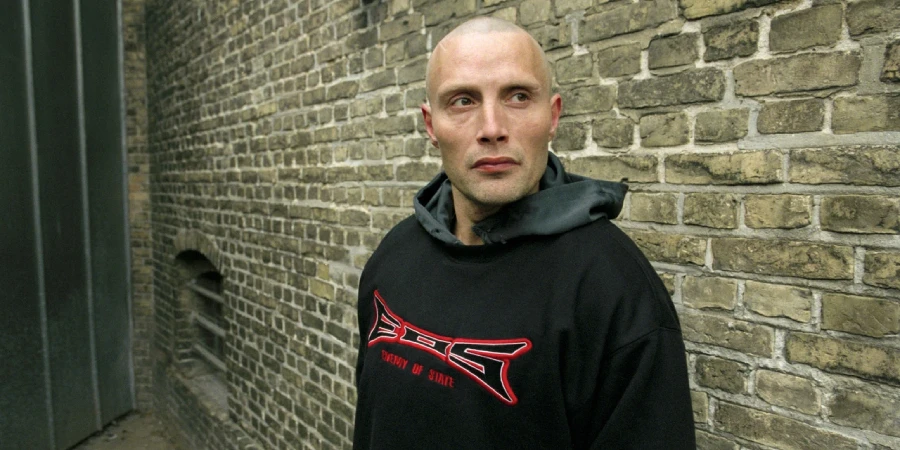
Tonny walks out of prison with “RESPECT” tattooed across the back of his shaved skull. By the end of Pusher II, he has earned almost none of it, and that gap is the whole movie. Nicolas Winding Refn’s 2004 sequel trades the first film’s panic for something sadder: a son begging a monster for love. It’s brutal, oddly tender, and features Mads Mikkelsen’s career-best early performance.
Table of Contents
Detailed Summary
A Cellmate’s Parting Advice
The film opens before Tonny’s release, as his cellmate delivers a monologue urging him to conquer his fear. The man also reminds Tonny about money he owes.
Instead of collecting, though, he lets Tonny off the hook. He does it out of respect for Tonny’s father, a vicious gangster called the Duke.
A Cold Welcome From the Duke
Once free, Tonny heads to his father’s garage looking for work. The Duke now has a younger son with another woman, and he greets Tonny coldly.
Still, he gives Tonny a trial job. It’s less a second chance than a test Tonny seems built to fail.
The Ferrari Fiasco
Eager to impress, Tonny steals a Ferrari and presents it to his father. The Duke rejects the car outright and tears into Tonny for being reckless.
That scene sets the pattern. Every attempt Tonny makes to win approval only proves the Duke’s low opinion of him.
Surprise, You’re a Dad
While hanging out with his friend Ø, Tonny learns he fathered a child with a local woman named Charlotte. She has raised the baby alone, and she wants child support.
At first, Tonny offers only empty promises. Gradually, however, he starts to care about the boy.
Riding in the Trunk
Tonny pulls off a car heist for the Duke without a hitch. Even so, the getaway car has no seat left for him, so he rides in the trunk.
It’s funny and humiliating at once. Refn keeps mixing those two flavors throughout the film.
Kurt the Cunt’s Toilet Disaster
Tonny joins a pimp known as Kurt the Cunt on a heroin buy from Serbian drug lord Milo. Later, one of Milo’s thugs shows up, and Kurt panics, assuming it’s the police. He flushes the heroin.
Kurt now has neither drugs nor money to repay his backer. His solution: Tonny helps him get a gun and shoots him in the arm, so the backer believes he was robbed.
Diapers and Wedding Plans
During a visit with Charlotte, Tonny learns to change his son’s diaper. It’s a small moment, but it shows a man capable of growth.
Meanwhile, Ø reveals big news. He plans to marry his girlfriend Gry, and they are expecting a baby too.
The Wedding Meltdown
At Ø’s reception, the Duke raises a toast saying he sees Ø as a son. In the same speech, he takes shots at Tonny.
Drunk and stung, Tonny spots Charlotte doing cocaine with Gry in the kitchen while ignoring the baby. He demands she take their son home; she refuses and berates him. Tonny chokes her until several men drag him off.
Kurt’s Trap
Outside, Kurt is waiting. He talks Tonny into trashing his apartment to strengthen the robbery story, promising to put in a good word with the Duke.
Then things turn ugly. Kurt attacks a sex worker who comes out of the bedroom and insists Tonny kill her to sell the scene. Tonny refuses.
Kurt then drops the bombshell. His backer is the Duke, and he lied specifically so Tonny would share the debt.
An Impossible Assignment
Tonny goes to his father, desperate to reconcile and clear the debt. He offers to intimidate Jeanette, the Duke’s ex-wife, who is fighting for custody of Tonny’s half-brother.
The Duke hesitates. However, Tonny’s uncle Red vouches for him because of the successful heist. The Duke agrees, with one change: Tonny must kill Jeanette.

Movie Ending
Tonny tracks Jeanette to her workplace, which happens to be Kurt’s brothel. He can’t bring himself to kill her.
Back at the garage, he confesses his failure. The Duke unloads on him one more time, and Tonny finally snaps. He stabs his father to death.
Now on the run, Tonny searches for Ø. Instead, he finds Gry and Charlotte getting high. They mock him and leave the baby unattended.
That settles it. Tonny takes his son, boards a bus, and leaves the city behind.
Why Does Tonny Kill the Duke?
Tonny spends the entire film absorbing his father’s contempt. When the Duke berates him for refusing to murder a woman, the last of Tonny’s hope breaks.
In other words, the killing isn’t planned. It’s decades of rejection erupting in a single moment.
Is the Ending Hopeful?
Partly. For the first time, Tonny chooses to be a better father than his own. Taking the baby is his one unselfish act.
On the other hand, he leaves as a killer, with no money and no plan. Refn gives him a door, not a happy ending.
What Happens to Tonny Next?
Refn never says. Pusher 3 shifts its focus to Milo, so Tonny’s fate stays a mystery.
What Does “With Blood on My Hands” Mean?
The alternate title, Pusher II: With Blood on My Hands, points straight at the ending. Tonny wanted his father’s respect; instead, he gets his father’s blood.
Are There Post-Credits Scenes?
No. Pusher II has no post-credits scene. The bus ride is the final word.
Type of Movie
Pusher II is a Danish crime drama. It shares a fictional Copenhagen underworld with the other two films in the trilogy.
Compared with the first film, it feels more emotional. The thriller beats remain, but the real subject is fatherhood and the hunger for approval.
The tone stays grim and grubby. Still, dark comedy keeps sneaking in, especially around Kurt the Cunt and that trunk ride. For how that grime compares with real criminal life, see our analysis of how realistic the Pusher trilogy really is.
Cast
- Mads Mikkelsen – Tonny
- Leif Sylvester – Smeden, aka the Duke
- Anne Sørensen – Charlotte
- Øyvind Hagen-Traberg – Ø
- Kurt Nielsen – Kurt the Cunt
- Karsten Schrøder – Red
- Maria Erwolter – Gry
- Zlatko Burić – Milo
- Ilyas Agac – Muhammed
- Linse Kessler – Jeanette
- Sven Erik Eskeland Larsen – Svend
Film Music and Composer
Peter Peter composed the soundtrack with Peter Kyed. His band, The Bleeder Group, performed it.
The score also brings back an updated “Pusher Theme,” originally written by Peter Peter and Povl Kristian for the first film. As a result, the sequel instantly sounds like part of the same world.
Refn also crowdsourced some music. He ran a contest called the “Pusher II Soundtrack Hunt” with GAFFA magazine and the site Mymusic to find songs playing within scenes. One winner was “Sad Disco” by Keli Hlodversson.
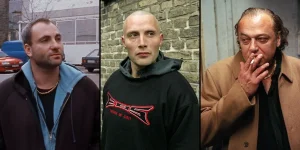


Filming Locations
Refn returns to Copenhagen’s criminal underworld for the sequel. The story moves through grim, ordinary spaces: the Duke’s garage, Kurt’s brothel, cramped apartments, and a wedding reception that curdles fast.
Those settings matter. The garage is the father’s kingdom, where Tonny begs for a place. Meanwhile, the bus out of town is the first location that feels like freedom.
Awards and Nominations
Mads Mikkelsen swept Denmark’s top acting honors, winning Best Actor at the Bodil Awards, the Robert Awards, and the Zulu Awards.
Leif Sylvester also earned a Bodil nomination for Best Supporting Actor. In addition, the film led the Robert Awards with 12 nominations, including Best Film, Best Director, and Best Screenplay.
Behind the Scenes Insights
- Refn never planned a sequel. In 2003, his ambitious flop Fear X left him 5.5 million kroner in debt, so he turned to Pusher II and Pusher 3.
- He wrote the screenplay fast. According to the Danish Film Institute, he wrote it over a single weekend. He finished the Pusher 3 script shortly afterward.
- Unlike the original, Refn wrote this one solo. He also served as a producer.
- Cinematographer Morten Søborg returned from the first film.
- Refn’s money troubles during this period became the subject of Gambler (2006), a documentary by Phie Ambo.
- Henrik Danstrup produced the film through NWR Productions, with Nordisk Film handling Danish distribution. In the US, Magnolia Pictures handled distribution.
Inspirations and References
Refn built Pusher II from his own universe rather than adapting a book or true story. Frank’s mess in the original created the perfect launching point.
Specifically, the sequel takes a sidekick and makes him a tragic lead. Tonny’s crude bravado in the first film becomes a mask over deep insecurity.
Thematically, the film digs into fathers and sons. Tonny is caught between the Duke, who rejects him, and the baby, who needs him.
Alternate Endings and Deleted Scenes
No alternate ending or notable deleted scenes from Pusher II have been released publicly.
Book Adaptations and Differences
Pusher II is not based on a book. Refn wrote it as an original sequel to his 1996 film.

Memorable Scenes and Quotes
Key Scenes
- The prison monologue: A cellmate forgives Tonny’s debt only out of fear of his father.
- The Ferrari rejection: Tonny’s grand gesture lands with a thud.
- The trunk ride: Even after succeeding, Tonny can’t earn a seat.
- The diaper change: A hardened criminal fumbles through basic fatherhood.
- The wedding toast: The Duke praises Ø as a son while belittling his real one.
- Kurt’s reveal: Tonny discovers he’s been tricked into owing his own father.
- The stabbing: Years of rejection explode in seconds.
- The bus: Tonny leaves with his son and nothing else.
Iconic Quotes
- The cellmate’s opening speech (paraphrased): conquer your fear, or it will conquer you.
- The Duke’s wedding toast (paraphrased): he tells Ø he thinks of him as a son, in front of Tonny.
- Milo’s casual question (paraphrased): has Tonny seen Frank lately?
- Charlotte’s demand (paraphrased): the baby is his, so he’d better start paying.
Easter Eggs and Hidden Details
- Charlotte comments on the scars on Tonny’s head. Those come from Frank’s baseball bat beating in Pusher.
- Milo asks Tonny whether he has seen Frank recently. The line reveals that Frank vanished after the first film, without saying whether he escaped or died.
- Tonny’s “RESPECT” tattoo works as a running joke. Almost nobody in the film gives him any.
- Milo’s appearance sets up Pusher 3, which follows him through one chaotic day.
- The updated “Pusher Theme” ties all three films together musically.
Trivia
- Pusher II opened in Denmark on 25 December 2004. That makes it a very bleak Christmas release.
- The film runs 100 minutes.
- On Rotten Tomatoes, it holds a 100% critics’ score based on 11 reviews. Metacritic gives it 78 out of 100.
- Mikkelsen played Tonny in both of the first two films, eight years apart.
- Each film in the trilogy follows a different character, so you can watch Pusher II as a standalone story.
Why Watch?
Pusher II turns a loudmouth sidekick into one of crime cinema’s most heartbreaking leads. Mads Mikkelsen is extraordinary, swinging between menace and childlike need. Moreover, the father-son story hits harder than most gangster films ever try. It might be the trilogy’s best.
Nicolas Winding Refn’s Other Movies
- Pusher (1996)
- Bleeder (1999)
- Fear X (2003)
- Pusher III (2005)
- Bronson (2008)
- Valhalla Rising (2009)
- Drive (2011)
- Only God Forgives (2013)
- The Neon Demon (2016)
- Her Private Hell (2026)
Recommended Films for Fans
- Mean Streets (1973)
- La Haine (1995)
- Gomorrah (2008)
- A Prophet (2009)
- Animal Kingdom (2010)
- Easy Money (2010)
- Bullhead (2011)
- Good Time (2017)