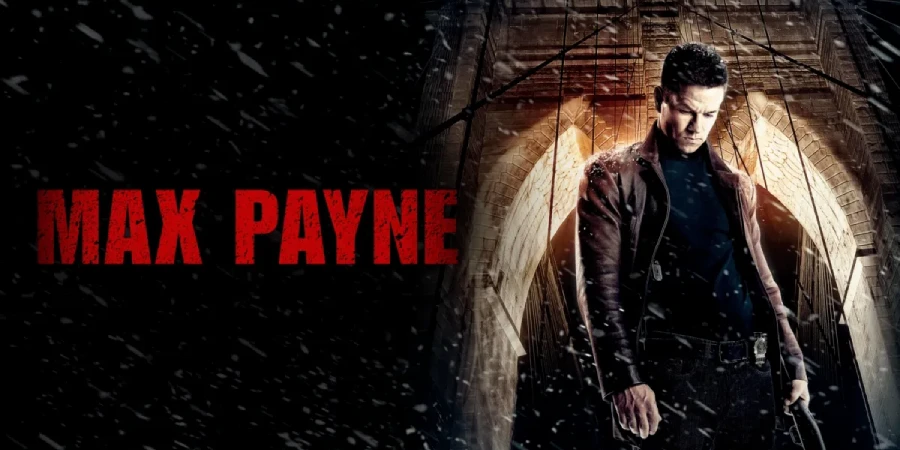

Mark Wahlberg’s career has included some curious detours, but few are as aggressively stylized as his 2008 video game adaptation where a grief-wrecked cop wanders through a snow-soaked New York that looks less like a city and more like a waking nightmare. Director John Moore commits fully to the bleached, shadowy palette of the source game, and the film’s visual design deserves more credit than critics gave it.
What nobody warned audiences about was how little of the game’s famous bullet-time action would actually survive the translation to screen. This is a noir mystery dressed in action-movie clothes, and that tension, whether it works for or against the film, is worth examining in full.
Detailed Summary
Opening: A Man Defined by Loss
We open on Max Payne standing in icy water, apparently near death, and the film flashes back to explain how he got there. Max is a NYPD detective who has spent three years in the cold case unit, obsessed with finding the men who murdered his wife Michelle and their newborn daughter. His marriage, his career trajectory, and his emotional life all collapsed on the same night.
Michelle was killed by junkies who broke into their home. Max survived. He carries that guilt like a stone around his neck, and Wahlberg communicates it mostly through a flat, deadened affect that critics read as bad acting but actually tracks logically for a man who stopped feeling anything the night his family died.
The Drug Called Valkyr
Max begins encountering people connected to a military-grade drug called Valkyr. Developed originally as a battlefield performance enhancer, Valkyr causes extreme aggression in most users, along with vivid hallucinations of dark, winged demonic figures. Only a small percentage of soldiers responded positively to it, and the program was supposedly shut down.
A young woman named Natasha, connected to the Valkyr supply chain, is murdered after spending time with Max. Her sister, Mona Sax (Mila Kunis), immediately suspects Max and comes after him. Their dynamic starts hostile and slowly shifts toward a reluctant alliance as they realize they share an enemy.
The Corporate Conspiracy
Max investigates the Aesir Corporation, the pharmaceutical company that developed Valkyr. He discovers that BB Hensley, his late wife’s partner and a man Max trusted like family, has been covering up the drug’s continued existence. Aesir never truly buried Valkyr. Someone inside the company has been distributing it illegally.
Max’s old partner Alex Balder had been getting close to the same truth before someone put a bullet in him. Max finds himself framed for that murder, which pushes him further outside the law and gives him even less to lose.
Mona Sax and the Underground
Mona operates in the criminal underworld through connections to a Russian mob family. Her sister Natasha’s death pulls her into the conspiracy against her will. Kunis brings a sharp energy to Mona that the film genuinely needs, and her confrontational scenes with Wahlberg give the movie its only real sparks of chemistry.
Mona and Max piece together that a hitman named Lupino has been distributing Valkyr to street-level users. Lupino is clearly unhinged, a man who took too much of the drug and lost whatever sanity he had. His scenes carry a genuinely unsettling texture, with wide pupils and erratic movement that sells the drug’s hallucinatory effects.
The Hallucination Sequences
Some of the film’s most visually striking moments come when Valkyr users experience their hallucinations. Dark, massive winged creatures sweep across the sky in a desaturated hellscape. These sequences look expensive and distinctly weird, drawing on Viking mythology since Valkyr takes its name from the Valkyries, divine figures who chose warriors for death.
This mythological thread is more decorative than thematic, but the imagery genuinely lands. Moore and cinematographer Jonathan Sela build something cold and oppressive from the hallucination palette that feels appropriately otherworldly.
BB Hensley’s Betrayal
Max eventually learns the full scope of the betrayal. BB Hensley, played with smooth menace by Beau Bridges, was not just covering for Aesir. He personally ordered the hit on Michelle Payne after she discovered documents proving Valkyr’s continued illegal distribution. Max’s wife died because she stumbled onto a corporate secret.
This revelation reframes everything. Max was never just a grieving husband chasing random killers. He was always one step away from the man truly responsible, and that man had been shaking his hand at memorial services for three years.
Aesir Executive Jason Colvin
Aesir’s CEO, Jason Colvin, initially appears to be the film’s top villain. Chris O’Donnell plays him as a slick corporate predator who treats human lives as acceptable collateral for profit projections. Max confronts him expecting answers, and Colvin confirms that Valkyr’s development cost lives and that the company buried the evidence.
Colvin is shot dead before Max can extract everything he knows, which the film uses to redirect suspicion toward BB. It is a mechanical plot device, but it works well enough given the genre’s expectations.

Movie Ending
Max takes Valkyr himself. This is the film’s boldest narrative swing. He injects the drug, and rather than hallucinating demons, he experiences a vision of his dead wife and daughter urging him forward. Max is one of the rare individuals who responds positively to the compound, a detail the film uses to justify a climactic action sequence where he charges through Aesir’s rooftop facility in the snow.
BB has fled to the building’s roof. Max pursues him through a vertical, ice-coated environment that finally delivers the action movie spectacle audiences waited for. Wahlberg physically commits here in a way the first two acts do not quite allow, and the rooftop fight has real momentum.
Max corners BB and confronts him with the full truth about Michelle’s murder. BB tries to justify his actions with corporate logic and pragmatism. Max shoots him. There is no courtroom, no redemption arc, no last-minute hesitation. Three years of grief resolve in a single, quiet moment of revenge rather than justice, and the film lets that moral ambiguity sit without resolving it neatly.
Mona survives. She and Max part on uneasy terms, connected by mutual loss and mutual violence but not by anything warmly optimistic. Max returns to active duty, and the final shot echoes the opening, with Max standing in the snow, still haunted but no longer frozen by it. A post-narration line signals that his war is not over, setting up a sequel that never arrived.
Are There Post-Credits Scenes?
No post-credits scene exists in the theatrical cut of Max Payne. You can safely leave when the credits roll. Some home video versions include brief extended footage, but nothing constitutes a meaningful scene or sequel setup beyond what the film’s final narration already provides.
Type of Movie
Max Payne sits at the intersection of neo-noir thriller and action film, with a visible layer of supernatural horror aesthetic borrowed from its source game. It leans heavily on classic noir mechanics: a wronged man, institutional corruption, femme fatale adjacency, and a conspiracy that gets more personal the deeper the protagonist digs.
Tonally, the film is relentlessly grim. It has almost no humor, which frustrated mainstream audiences expecting a propulsive shoot-em-up. Think of it as a slow-burn revenge thriller that occasionally remembers it came from an action game.
Cast
- Mark Wahlberg – Max Payne
- Mila Kunis – Mona Sax
- Beau Bridges – BB Hensley
- Chris O’Donnell – Jason Colvin
- Ludacris – Jim Bravura
- Olga Kurylenko – Natasha Sax
- Amaury Nolasco – Lupino
- Chris Ludlow – Alex Balder
- Kate Burton – Nicole Horne
Film Music and Composer
Marco Beltrami and Buck Sanders composed the score together. Beltrami is a veteran of genre films with a talent for creating oppressive sonic atmospheres, and his work here suits the film’s cold visual palette. The score avoids action-movie bombast in favor of something more textural and unsettling.
Strings, processed percussion, and low ambient drones define the sound. Nothing in the score sounds hopeful. It functions almost as a second visual layer, reinforcing that Max’s world is a place where warmth has been surgically removed.


Filming Locations
Principal photography took place primarily in Toronto, Canada, which stood in for New York City. Toronto’s industrial neighborhoods, including its port and warehouse districts, provided exactly the kind of brutalist, desolate architecture the film needed.
New York streets were recreated with remarkable fidelity, and the constant snowfall (partly real, partly manufactured) gives the film a geographical nowhere quality that actually serves the noir atmosphere. Max inhabits a city that feels abandoned, and Toronto’s off-season industrial zones sell that feeling without a single frame shot in Manhattan.
Awards and Nominations
Max Payne did not attract serious awards attention. It received a Razzie nomination for Mila Kunis, which is worth mentioning only because it was wildly unfair given that she is one of the film’s stronger elements and was working with a thinly written part.
Behind the Scenes Insights
- Director John Moore pushed hard for the film’s R rating and was upset when studio pressure resulted in a PG-13 theatrical cut. An unrated version was later released on home video with additional violence restored.
- Mark Wahlberg reportedly wanted to honor the game’s mythology while acknowledging that a direct translation of bullet-time mechanics to live action was not cinematically practical.
- The production design team studied classic noir films and graphic novel aesthetics to build the film’s desaturated, high-contrast visual world.
- Mila Kunis was cast against type for Mona Sax. At the time, she was primarily associated with comedy, and the choice raised eyebrows before filming began.
- The Valkyr hallucination sequences required extensive visual effects work to achieve the large-scale winged creature imagery without breaking the film’s gritty realism.
- Toronto winters provided genuinely brutal shooting conditions, and the cast filmed several outdoor sequences in authentic sub-zero temperatures.
Inspirations and References
Most directly, the film draws from Remedy Entertainment’s 2001 video game Max Payne, which itself drew heavily from John Woo’s bullet-time action aesthetic and hard-boiled American crime fiction. The game’s graphic novel storytelling style and its mythology around Norse Valkyries both carry into the film.
The noir tradition of Raymond Chandler and Dashiell Hammett hovers over the screenplay’s structure. A lone detective, a murdered woman, layers of institutional corruption, and a city that actively tries to kill its inhabitants are all genre furniture borrowed from classic pulp fiction.
Visually, Moore references Blade Runner‘s industrial rain-soaked urban dread and the grim chiaroscuro of Se7en, particularly in how darkness is used as a compositional element rather than just a lighting condition.
Alternate Endings and Deleted Scenes
The unrated home video cut restores several scenes that were trimmed to secure the PG-13 rating. These include more explicit violence during the action sequences and additional character moments that flesh out Mona Sax’s backstory. None of the restored content changes the ending or the film’s core structure.
No radically alternate ending has been documented in public production materials. The rooftop confrontation between Max and BB appears to have been the intended conclusion from early in production.
Book Adaptations and Differences
Max Payne is not based on a book. It adapts the 2001 video game of the same name developed by Remedy Entertainment and published by Rockstar Games. Any discussion of source material differences applies to the game rather than literary fiction.
The game’s plot involves the same core conspiracy around Valkyr and the murder of Max’s family. Key differences include the game’s deeper exploration of mob politics through the Punchinello crime family, which the film largely omits. Mona Sax’s role in the game is also structured differently, and her fate in the original game differs from her survival in the film. The game’s bullet-time mechanics and graphic novel cutscene presentation, the defining artistic feature of the source material, barely register in Moore’s adaptation.
Memorable Scenes and Quotes
Key Scenes
- The Valkyr hallucination sequences, particularly the first time a street-level user sees the winged creatures descending from a gray sky, establish the film’s visual identity in under two minutes.
- BB’s betrayal reveal, where Max pieces together that the man at every memorial was the man who gave the order, lands with quiet, devastating efficiency precisely because the film underplays it rather than scoring it for maximum drama.
- Max injecting Valkyr before the rooftop assault is the film’s emotional fulcrum. He closes his eyes, sees his wife’s face, and walks into the storm. It is simple, and it works.
- Mona’s introduction, where she holds a gun on Max in a parking structure with dead-level contempt in her eyes, establishes her as the film’s most watchable presence.
- The opening apartment murder, where Michelle is killed while holding their newborn, is shot with cold restraint. No dramatic score swell. Just silence, then blood.
Iconic Quotes
- “There are no choices. Everything is pre-decided.” (Max, voiceover)
- “The past is never dead. It’s not even past.” (This is a spoken allusion in the film’s voiceover, reflecting Max’s inability to leave his grief behind.)
- “I don’t believe in heaven. I believe in pain. I believe in fear. I believe in death.” (Max, establishing his worldview in the opening narration)
Easter Eggs and Hidden Details
- Several background posters and visual elements in the Aesir Corporation offices use design language directly pulled from the original game’s corporate aesthetic.
- Lupino’s apartment contains graffiti and iconography that mirror imagery from the game’s most disturbed enemy environments.
- The Norse mythology thread, Valkyr, Valkyries choosing warriors for death, is seeded in background visual details including artwork and tattoos before the film makes it explicit.
- The cold case unit where Max works is depicted as physically buried in the basement of the precinct, a visual metaphor for how the department views his obsession with a closed file.
- A brief shot of a pill bottle early in the film uses the same Valkyr logo that appeared in the game’s interface, a small reward for players watching closely.
Trivia
- Mila Kunis learned to handle firearms for the role and trained extensively despite knowing her screen time would be limited.
- The film was released the same year the game series was restarting development on Max Payne 3, though the film and the third game had no direct creative overlap.
- John Moore had previously directed action films including Behind Enemy Lines and Flight of the Phoenix, making him a reasonable studio choice for a high-concept action adaptation.
- The theatrical PG-13 cut frustrated fans of the game, who felt the source material’s violence was inseparable from its tone. The unrated cut partially addressed those complaints.
- Despite poor critical reception, the film performed reasonably at the international box office, opening at number one in several markets.
- Ludacris plays Jim Bravura, a character who in the game’s sequel becomes a much more significant figure. His underuse in the film reflects the truncated scope of Moore’s adaptation.
Why Watch?
Watch it for Jonathan Sela’s cinematography, which treats every frame of a snow-choked city like a still photograph from a crime scene nobody has touched in years. Wahlberg’s affectless performance, widely mocked on release, actually suits a man who has been clinically numb for three years and suddenly gets his hands on the man responsible. This is a genuinely strange studio film, too cold for mainstream crowds and too compromised for genre purists, but that strangeness is precisely what makes it worth revisiting.
Director’s Other Movies
- Behind Enemy Lines (2001)
- Flight of the Phoenix (2004)
- The Omen (2006)
- A Good Day to Die Hard (2013)