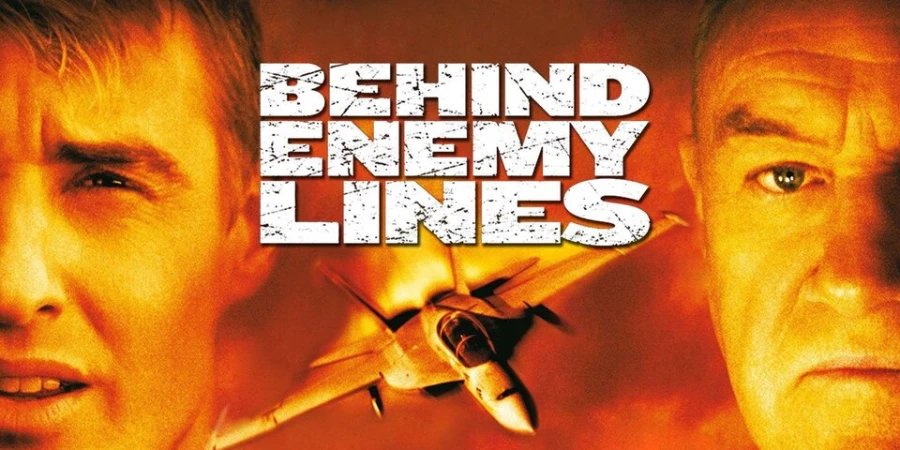

A Navy pilot shot down over Bosnia, hunted through snow-covered mountains by a paramilitary death squad, filmed with the frantic MTV energy of a music video crossed with a war film: Behind Enemy Lines arrives loud, fast, and surprisingly effective. Director John Moore made his feature debut here and swung hard on visual style, sometimes at the expense of logic. Owen Wilson, best known at the time for comedies and supporting work, carries the whole thing on his surprisingly capable dramatic shoulders. This is a film that knows exactly what it is and commits completely.
Detailed Summary
Aboard the USS Carl Vinson: Burnett’s Frustration
Lieutenant Chris Burnett, played by Owen Wilson, is a Navy reconnaissance officer stationed on the aircraft carrier USS Carl Vinson in the Adriatic Sea. He is bored, restless, and actively planning to leave the Navy when his enlistment is up. His commanding officer, Admiral Reigart, played by Gene Hackman, pushes back hard on that plan.
Burnett and Reigart clash over purpose and duty from the very first scene together. Burnett feels underused and undervalued. Reigart sees a talented officer throwing away his career out of impatience.
Christmas Day Reconnaissance Flight
On Christmas Day, Burnett and his navigator, Lieutenant Jeremy Stackhouse, played by Gabriel Macht, fly a reconnaissance mission over Bosnia. Their assigned flight path keeps them away from sensitive areas, but Burnett spots something unusual on the ground and diverts off course to photograph it.
What they photograph is a mass grave, fresh evidence of a Serbian war crime. Serbian military commander Miroslav Lokar has ordered the execution and burial of Bosnian Muslim civilians, a direct violation of the Dayton Peace Accords.
Shot Down Over Bosnia
Serbian forces, led by a cold-blooded tracker named Sasha, identify the jet as a threat to their secret. A surface-to-air missile locks onto the plane. The crew ejects safely, but both pilots land in hostile territory controlled by Serbian paramilitary forces.
Stackhouse is captured almost immediately after landing. Sasha executes him in the snow at close range, shooting him in the head while Burnett watches helplessly from a distance. It is a brutal, no-nonsense scene that sets the film’s stakes without any sentimentality.
Reigart Tries to Launch a Rescue
Admiral Reigart immediately orders a rescue operation when he learns Burnett is alive and evading. NATO Admiral Piquet, played by Joaquim de Almeida, shuts the rescue down. Piquet is worried about disrupting delicate peace negotiations with Serbian General Miroslav Lokar, the very man responsible for the mass grave.
This political obstruction is the engine that drives Reigart’s frustration across the film’s second act. He watches satellite feeds of Burnett running through the mountains, begging for permission to act, and getting none. Hackman plays this slow-burn fury with tremendous control.
Burnett on the Run
Burnett spends the bulk of the film’s second act moving through frozen Bosnian landscape, dodging Sasha and a full military patrol. He transmits his position using his emergency radio, stays in contact with the carrier, and improvises constantly to stay alive.
His route takes him through ruined towns, through the mass grave site, and into contact with a wounded Bosnian soldier who helps him briefly before being killed. Burnett photographs the mass grave with his flight camera, realizing those images are why everyone wants him dead.
The Mass Grave Discovery
Burnett physically walks through the mass grave site, cataloguing evidence with his camera. Bodies fill the snow-covered field. Serbian soldiers are bulldozing more graves to hide the evidence before any peace deal inspection can reach the area.
This sequence is the moral center of the film. Burnett stops being a pilot trying to survive and becomes a witness who understands exactly what he is carrying. The photographs on that camera represent dozens or hundreds of lives.
Reigart Defies Orders
Reigart, denied official permission and facing the real possibility that NATO will simply let Burnett die to protect negotiations, goes around Piquet entirely. He orders a covert rescue mission, putting his career on the line and defying the chain of command.
Piquet threatens to have Reigart removed from command. Reigart does not back down. It is the film’s clearest argument that individual conscience sometimes outranks institutional politics.

Movie Ending
Burnett makes it to the extraction point, a bombed-out soccer stadium in a ruined town called Hac. Sasha and his men close in from multiple directions. Reigart’s rescue helicopters are inbound but not yet visible.
Sasha catches Burnett inside the stadium and lines up a shot. Burnett pops a smoke grenade, the exact color-coded smoke that guides the rescue helicopters, flooding the field with dense colored clouds. It creates just enough chaos and cover that the helicopters arrive before Sasha can finish the job.
The rescue helicopters swoop in low and fast. Burnett gets pulled aboard under fire. Sasha, still trying to complete his mission, is killed by the rescue team. The chase ends not with a dramatic hand-to-hand confrontation but with military firepower cutting the threat down cleanly.
Back on the carrier, Burnett hands over the camera with the mass grave photographs. Those images reach NATO command and blow up the peace negotiations entirely. General Lokar, who had been protected by the political process, finds himself exposed.
Reigart, having violated direct orders, fully expects to face a court-martial. Burnett, in a direct reversal of his opening arc, chooses to re-enlist rather than walk away. He had spent the entire film resenting his service; surviving what he survived changes his mind completely. Reigart tears up Burnett’s resignation papers. The two men, who spent the film in tension, close it in mutual respect. It is a conventional ending for an unconventional survival film, but it earns the sentiment because Burnett’s change feels motivated rather than forced.
Are There Post-Credits Scenes?
Behind Enemy Lines has no post-credits scene. Once the final shot fades, the film is done. You can leave when the credits start rolling.
Type of Movie
This is a military action-thriller with a strong survival chase structure underneath the geopolitical plot. John Moore shoots it with a music-video aesthetic, heavy on quick cuts, desaturated color palettes, and handheld chaos. It plays closer to an action film than a prestige war drama.
Tonally it sits between the gritty realism of Black Hawk Down and the bombastic nationalism of 1990s military actioners. It is patriotic, propulsive, and deliberately crowd-pleasing.
Cast
- Owen Wilson – Lt. Chris Burnett
- Gene Hackman – Admiral Leslie Reigart
- Gabriel Macht – Lt. Jeremy Stackhouse
- Joaquim de Almeida – NATO Admiral Piquet
- Vladimir Mashkov – Sasha
- Olek Krupa – General Miroslav Lokar
- David Keith – Captain Burnett’s crew superior
Film Music and Composer
Don Davis composed the score for Behind Enemy Lines. Davis was best known at the time for his orchestral work on The Matrix, and his style here leans into urgent, percussion-driven orchestral tension rather than electronic ambience.
The score works hard to keep the chase sequences moving. It never overpowers the action but gives Burnett’s lonelier moments a genuine weight. The opening and closing cues lean patriotic without becoming saccharine, which is harder to pull off than it sounds.
Filming Locations
Behind Enemy Lines filmed primarily in Slovakia, using the country’s landscapes to stand in for Bosnia-Herzegovina. The rugged terrain, destroyed buildings, and wintry mountains provided exactly the look the production needed without requiring filming in an actual post-conflict zone.
Bratislava and surrounding rural areas served as key locations. The bombed-out urban environments, particularly the stadium sequence, used real Soviet-era abandoned structures that required minimal dressing to read as war-damaged Bosnian towns.
Aircraft carrier sequences filmed aboard an actual US Navy vessel. That authenticity adds genuine texture to the carrier scenes, which feel lived-in rather than set-bound.
Awards and Nominations
Behind Enemy Lines did not receive nominations from major awards bodies. It performed well at the box office but sat outside the conversation for prestige year-end awards entirely.
Behind the Scenes Insights
- John Moore directed Behind Enemy Lines as his feature debut after a career directing commercials and music videos, which explains the film’s heavy visual style.
- Owen Wilson pushed hard for the role, which surprised the studio since his profile was almost entirely comedic at that point.
- Gene Hackman reportedly brought significant gravitas to Reigart that elevated what was written as a fairly standard commanding officer role on the page.
- The production had full cooperation from the US Navy, which provided access to an operational aircraft carrier for filming.
- Vladimir Mashkov, playing the tracker Sasha, is a highly regarded Russian actor and brings a cold, methodical quality to the role that makes Sasha far more frightening than the script alone would suggest.
- The missile launch and ejection sequence required extensive visual effects work and remains one of the more technically ambitious sequences in the film.
Inspirations and References
The film draws loose inspiration from the real story of Captain Scott O’Grady, a US Air Force pilot shot down over Bosnia in 1995. O’Grady survived for six days behind enemy lines before NATO rescue forces extracted him.
O’Grady was reportedly unhappy with the fictional liberties the film took with his experience, particularly the action-heavy framing and the inventing of a mass grave conspiracy. His story was essentially the launch point, not a blueprint.
The broader geopolitical backdrop draws from the actual Bosnian War and the documented reality of mass graves and war crimes that emerged from that conflict during the 1990s.
Alternate Endings and Deleted Scenes
No widely documented alternate endings for Behind Enemy Lines are part of the public record. No significant deleted scenes have been prominently discussed in interviews or released materials.
The DVD release included some behind-the-scenes material, but no major cut sequences that would meaningfully change the film’s structure or resolution appear to exist in any released form.
Book Adaptations and Differences
Behind Enemy Lines is not based on a book. It is an original screenplay inspired loosely by the Scott O’Grady incident. No novelization preceded the film’s development.

Memorable Scenes and Quotes
Key Scenes
- Stackhouse’s execution: The navigator is shot in the snow almost immediately after landing, with the camera holding on the moment without cutting away. It is stark, fast, and completely effective at telling you this film will not protect its characters.
- The mass grave walk: Burnett moves through the burial field alone, photographing bodies while Serbian soldiers work nearby. The silence in this sequence is striking given how loud the rest of the film is.
- The missile chase: Shot from multiple angles including the missile’s own perspective, this sequence uses fast editing and point-of-view framing to create genuine disorientation. It is the film’s most visually audacious set piece and the clearest showcase of Moore’s commercial-director instincts applied to narrative film.
- Reigart defies Piquet: Hackman sits behind a desk, completely still, and quietly tells a NATO admiral that he is launching the rescue anyway. No raised voice, no dramatic speech. Just a man deciding.
- The smoke grenade in the stadium: Burnett pops smoke to both signal his rescuers and blind his pursuers simultaneously. It is the film’s cleverest action beat.
Iconic Quotes
- “You don’t work for NATO. You work for me.” (Reigart to Burnett, establishing the personal loyalty that drives the rescue)
- “I’m not going to sit here and watch a man get killed when I can do something about it.” (Reigart, justifying his decision to defy orders)
Easter Eggs and Hidden Details
- The film’s color grading shifts noticeably when Burnett enters Serbian-held territory, pushing toward colder blues and grays to signal danger without any dialogue needed.
- Sasha’s methodical tracking is shown through small visual cues: he picks up torn fabric, studies boot prints, and reads the landscape the way a hunter reads an animal trail. Moore lets the camera dwell on these details briefly but never over-explains them.
- The carrier scenes use actual crew members in background roles, which gives those sequences an authenticity that studio extras rarely provide.
- The mass grave location is lit differently from every other outdoor scene, with a flat, gray overcast light that removes all shadow, giving the sequence a documentary quality that contrasts with the film’s usual high-contrast visual energy.
Trivia
- The film opened in November 2001, roughly two months after the September 11 attacks, and its themes of American military valor resonated strongly with audiences in that specific cultural moment.
- Owen Wilson trained with Navy pilots and spent time on an actual carrier to prepare for the role.
- Vladimir Mashkov performed many of his own physical scenes as Sasha, contributing to the character’s unsettling physical presence throughout the chase sequences.
- Gene Hackman was reportedly initially reluctant to take the role but committed fully once he read the Reigart scenes in the second and third acts.
- The film spawned three direct-to-video sequels, none of which featured Wilson or Hackman and none of which recaptured anything close to the original’s box office success.
- John Moore went on to direct studio films after this debut, but his work here remains his most viscerally focused effort as a director.
Why Watch?
Gene Hackman turns a stock military commander into something genuinely moving, mostly by doing very little: sitting still, controlling his voice, letting frustration harden into resolve across his face without a single overplayed moment. That performance alone justifies two hours. Wilson surprises you, the chase through Slovakia is relentless, and the mass grave sequence gives the action real moral weight.
Director’s Other Movies
- Flight of the Phoenix (2004)
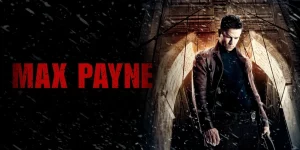
- Max Payne (2008)
- A Good Day to Die Hard (2013)
Recommended Films for Fans
- Black Hawk Down (2001)
- Rescue Dawn (2006)
- Lone Survivor (2013)
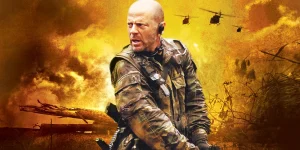
- Tears of the Sun (2003)
- The Hurt Locker (2008)