A bouncer who throws away two drinking glasses because Black workmen used them ends up as the closest friend of a Black concert pianist. That is the strange, true-ish engine driving Green Book. Peter Farrelly’s 2018 road movie won Best Picture, sparked a bitter debate about who gets to tell whose story, and still charms audiences with two of the decade’s warmest performances. Spoilers follow, every single one of them.
Detailed Summary
Tony Lip and the Copacabana
Tony “Lip” Vallelonga (Viggo Mortensen) works the door at the Copacabana nightclub in 1962 New York. He talks fast, eats faster, and handles trouble with his fists. In the opening scene he pockets a mobster’s hat, hides it, then “finds” it for a fat tip.
At home in the Bronx, his wife Dolores (Linda Cardellini) serves lemonade to two Black plumbers. Tony quietly drops their glasses in the trash afterward. Dolores fishes them back out, and the film has told us everything we need to know about its hero’s starting point.
The Job Interview Above Carnegie Hall
The Copa closes for two months of renovations, so Tony needs cash. He wins fifty dollars in a hot dog eating contest, then hears about a driving job for a “doctor.” The address turns out to be an apartment above Carnegie Hall.
Dr. Don Shirley (Mahershala Ali) sits on a literal throne surrounded by ivory, jade, and African art. He is a classically trained pianist, not a physician, and he wants a driver for an eight-week concert tour through the Midwest and Deep South. Tony refuses to act as a valet; however, the money wins him over, and Dolores gives her blessing.
Hitting the Road With the Green Book
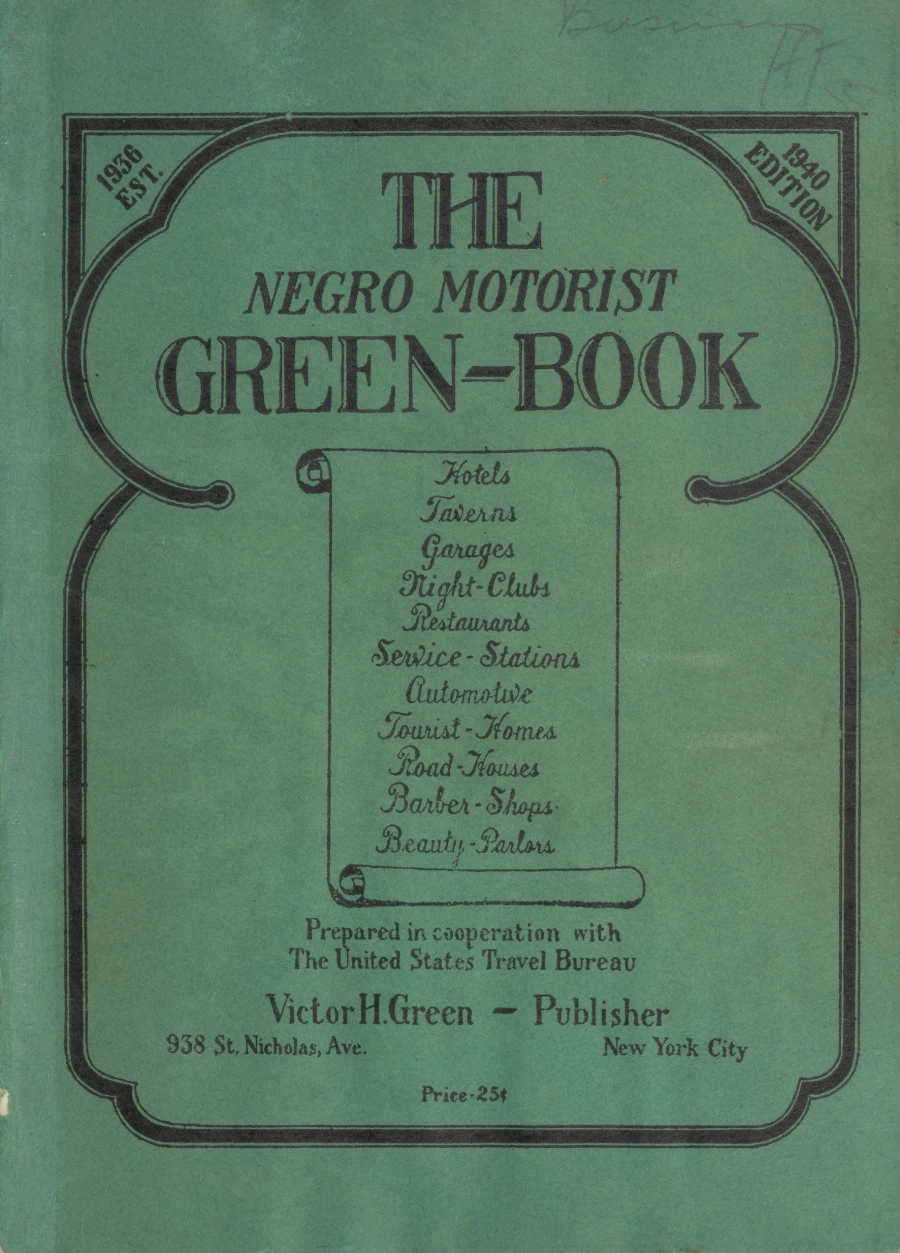
Shirley’s record label hands Tony The Negro Motorist Green Book, a guide to the hotels and restaurants that would serve Black travelers. Shirley will stay at those listings while Tony sleeps in whites-only hotels. Tony also meets the other two members of the Don Shirley Trio, cellist Oleg and bassist George.
The early miles play as pure odd couple comedy. Tony smokes, talks with his mouth full, and tosses litter out the window. Shirley makes him pull over to pick it up.
Letters Home and Kentucky Fried Chicken
Tony’s letters to Dolores read like grocery lists, so Shirley starts dictating poetry over his shoulder. Dolores swoons, and her sisters-in-law cannot believe Tony wrote them. Meanwhile, Tony introduces Shirley to Little Richard, Chubby Checker, and Aretha Franklin on the radio; Shirley has never heard of any of them.
In Kentucky, Tony forces a bucket of fried chicken on his boss. Shirley eats it with his fingers for the first time in his life. It is the warmest scene in the film, and Farrelly plays it like a first date.
The Steinway and the Jade Stone
Before one concert, Tony finds garbage stuffed inside a battered upright piano. Shirley’s contract demands a Steinway. Tony persuades the stagehand to fix the problem, with a little help from a punch to the face.
Later, Tony pockets a green jade stone from a roadside stand. Shirley insists he return it or pay for it. Tony puts it back, grumbling, and the stone becomes a running symbol of his slow moral education.
Trouble in a Louisville Bar
Shirley wanders alone into a white bar in Louisville and gets beaten by a group of men. Tony arrives, bluffs about a gun, and drags him out. In the car, Tony tells him to never go anywhere without him again.
The moment flips the dynamic. Tony is no longer just the hired muscle; he has become Shirley’s protector by choice.
Shame in Georgia
In a Georgia tailor shop, the owner refuses to let Shirley try on a suit. Tony watches, confused and then angry, as his boss is humiliated over a jacket. Shortly afterward, police arrest Shirley at a YMCA pool with a white man.
Tony bribes the officers to make the charges disappear. Shirley is furious at being “rescued” with a payoff, yet he is also exposed. His homosexuality, rarely spoken aloud, now sits in the open between them.
A Mississippi Jail Cell and a Phone Call to Bobby Kennedy
Rain pours down in Mississippi when cops pull the Cadillac over in a sundown town. One officer insults Tony’s Italian heritage with a slur, and Tony punches him. Both men end up in a cell.
Shirley demands his phone call and reaches Attorney General Robert F. Kennedy. The sheriff turns pale, and the pair walk free. In the car afterward, Shirley delivers the film’s emotional thesis: he is not Black enough for Black people, not white enough for white people, and not man enough for the rest. “So what am I?”
The Birmingham Walkout
The tour ends in Birmingham, Alabama, at a country club where Shirley is the evening’s headliner. The maître d’ refuses to let him eat in the dining room, offering a storage closet instead. Tony is ready to fight, but Shirley makes the call himself: no dinner, no show.
They leave and end up at the Orange Bird, a Black juke joint down the road. Shirley sits at a beat-up piano, plays Chopin’s “Winter Wind” étude, then launches into a jam with the house band. For the first time in the film, he looks free.

Movie Ending
Snow falls on Christmas Eve as the Cadillac races north toward New York. Tony has driven for hours and can barely keep his eyes open. A highway patrolman pulls them over, and the audience braces for another ugly stop; instead, the officer simply warns them about a flat tire and wishes them a merry Christmas.
Tony cannot go on. Shirley, who has not touched the wheel in two months, takes over and drives his driver home. It is a quiet reversal of every power dynamic the film has set up.
Back in the Bronx, Tony invites Shirley inside for dinner. Shirley declines and returns to his empty apartment above Carnegie Hall. He sits alone with his throne and his treasures, and the film lets that silence sting.
Then Shirley changes his mind. He shows up at the Vallelonga door carrying a bottle of champagne, and Tony’s rowdy family goes silent. Tony breaks the tension by introducing him, and the room welcomes him in.
Dolores hugs Shirley and whispers the film’s final line: “Thank you for helping him with the letters.” She knew all along. Title cards reveal that Tony returned to the Copa as maître d’, and that the two men remained friends until they died within months of each other in 2013.
Why does the ending work? Because Shirley, not Tony, makes the first move. Tony learned earlier that “the world’s full of lonely people afraid to make the first move,” and the final scene shows Shirley acting on that advice.
Are There Post-Credits Scenes in Green Book?
No. The credits run over archival-style photos of the real Tony and Don, and nothing follows them. Once the final title card plays, you can leave the theater or switch off the stream.
Type of Movie
Green Book is a biographical road comedy-drama. It blends buddy comedy rhythms with a period civil rights story, and Farrelly keeps the tone gentle even when the subject matter turns harsh.
Expect laughs in the first hour and lumps in the throat in the second. Admittedly, it is a crowd-pleaser first and a social critique second, which is exactly why some critics pushed back.
Cast
- Viggo Mortensen – Tony “Lip” Vallelonga
- Mahershala Ali – Dr. Don Shirley
- Linda Cardellini – Dolores Vallelonga
- Sebastian Maniscalco – Johnny Venere
- Dimiter D. Marinov – Oleg
- Mike Hatton – George
- P.J. Byrne – Record Executive
- Iqbal Theba – Amit
- Brian Stepanek – Graham Kindell
- Don Stark – Jules Podell
- Tom Virtue – Morgan Anderson
Film Music and Composer
Kris Bowers composed the score and did far more than write music. A Juilliard-trained jazz pianist, Bowers coached Mahershala Ali on keyboard posture and technique for months before shooting. His hands appear in several close-ups of Shirley playing.
The soundtrack mixes Bowers’ original pieces with period jukebox hits. Notably, the Orange Bird sequence moves from Chopin’s Étude Op. 25 No. 11 straight into a swinging blues jam, and that jump sums up Shirley’s entire conflict in about ninety seconds.
Bowers went on to score Bridgerton and King Richard. He also won an Oscar in 2024 for the documentary short The Last Repair Shop.
Filming Locations
Farrelly shot almost the entire film in and around New Orleans, Louisiana. The city doubled for 1960s New York, Pittsburgh, Kentucky, Georgia, Mississippi, and Alabama. Louisiana’s tax incentives and preserved period architecture made it a practical choice.
The choice matters because the South is the film’s antagonist. Shooting on real Southern streets and in real old mansions gave the country club and tailor shop scenes a lived-in hostility that a backlot would have softened.
Awards and Nominations
At the 2019 Academy Awards, Green Book won Best Picture, Best Supporting Actor for Mahershala Ali, and Best Original Screenplay. Viggo Mortensen earned a Best Actor nomination, and the film also received a nomination for Best Film Editing.
The Golden Globes gave it Best Motion Picture (Musical or Comedy), Best Supporting Actor, and Best Screenplay. Ali added BAFTA and Screen Actors Guild wins, and the film took the People’s Choice Award at the Toronto International Film Festival, a traditional Oscar bellwether.
Behind the Scenes Insights
- Nick Vallelonga, Tony’s son, co-wrote the script from interviews with his father and with Shirley himself. Shirley asked him to wait until after both men had died before telling the story.
- Peter Farrelly, best known for Dumb and Dumber, had never directed a straight drama before this one.
- Viggo Mortensen gained a significant amount of weight to play Tony and ate constantly on camera.
- Mahershala Ali learned enough piano to fake the fingering convincingly, with Bowers doubling the trickier passages.
- The shoot lasted only around 35 days, a tight schedule for a period road movie.
- Shirley’s surviving relatives, including his brother Maurice, publicly disputed the film’s portrait of him, arguing that he was not estranged from his family and that Tony was an employee rather than a close friend.
- Mortensen apologized after using a racial slur during a post-screening discussion while making a point about changing language.
- Nick Vallelonga also apologized for an old tweet that resurfaced during awards season.
Inspirations and References
The film draws on the real 1962 tour that Tony Vallelonga and Don Shirley took through the South. Nick Vallelonga grew up hearing the stories and taped his father recounting them.
The title comes from The Negro Motorist Green Book, published by Victor Hugo Green from 1936 to 1966. It listed safe lodging, gas stations, and restaurants for Black travelers during segregation. The film treats it as a prop, but the real book saved lives.
The real Tony Lip later became an actor. He appeared in Goodfellas and played Carmine Lupertazzi on The Sopranos, which explains why his son knew how to pitch a screenplay.
Alternate Endings and Deleted Scenes
No alternate ending has ever surfaced for Green Book, and the finished film mirrors the shooting script closely. Farrelly has described cutting the movie for pace rather than for story, so the trims mostly involved longer road montages and extended dinner table scenes.
The home release focuses on featurettes about the real men and the piano training. If a deleted scenes reel exists in the vault, it has not been shown publicly.
Book Adaptations and Differences
Green Book is not based on a novel or memoir. It adapts an oral history: Nick Vallelonga’s recorded interviews with his father and with Shirley.
The only “book” involved is the real travel guide of the title, which contains listings, not a narrative. Consequently, there is no page-to-screen comparison to make, only the dispute between the filmmakers’ version and the Shirley family’s memories.

Memorable Scenes and Quotes
Key Scenes
- Dolores rescues the two drinking glasses from the trash.
- Tony meets Shirley on his throne above Carnegie Hall.
- Shirley eats fried chicken for the first time and tosses the bones out the window.
- The Louisville bar rescue.
- Shirley’s rain-soaked breakdown: “So what am I?”
- The Birmingham walkout and the Orange Bird performance.
- Shirley driving a sleeping Tony home through the snow.
- Shirley arrives at the Vallelonga Christmas dinner.
Iconic Quotes
- “You never win with violence, Tony. You only win when you maintain your dignity.”
- “Being genius is not enough. It takes courage to change people’s hearts.”
- “So if I’m not Black enough and if I’m not white enough and if I’m not man enough, then tell me, Tony, what am I?”
- “The world’s full of lonely people afraid to make the first move.”
- “Thank you for helping him with the letters.”
Easter Eggs and Hidden Details
- Nick Vallelonga appears in a small role as Augie, one of the men at the Copa.
- The hands playing piano in extreme close-up belong to composer Kris Bowers, not Mahershala Ali.
- Tony hangs onto the nickname “Lip” because, as he explains, he is the best talker in the Bronx.
- Shirley never once calls Tony by his first name until the friendship deepens; the shift in address tracks the arc.
- The jade stone sits on the dashboard in later scenes, a quiet reminder of the roadside argument.
- The patrolman who helps with the flat tire mirrors the earlier Mississippi stop, and the contrast is deliberate.
Trivia
- Tony Lip and Don Shirley both died in 2013, just months apart, exactly as the title cards state.
- Peter Farrelly shares screenwriting credit with Nick Vallelonga and Brian Hayes Currie.
- The film cost roughly 23 million dollars and grossed over 300 million worldwide, making it one of the biggest Best Picture hits of its era.
- Shirley’s Cadillac is a period-correct early 1960s DeVille in a striking turquoise finish.
- Linda Cardellini filmed most of her scenes in just a few days, yet her final line lands the movie.
- Dimiter D. Marinov, who plays Oleg, is a real cellist and Bulgarian-born actor.
Why Watch?
Watch it for two actors at the top of their game, trading insults and fried chicken across a Cadillac front seat. The film goes down easy, lands its emotional punches, and sparks arguments worth having. Few Best Picture winners are this fun on a Sunday afternoon.
Director’s Other Movies
- Dumb and Dumber (1994)
- Kingpin (1996)
- There’s Something About Mary (1998)
- Me, Myself & Irene (2000)
- Shallow Hal (2001)
- Stuck on You (2003)
- Fever Pitch (2005)
- The Heartbreak Kid (2007)
- Hall Pass (2011)
- The Three Stooges (2012)
- Dumb and Dumber To (2014)
- The Greatest Beer Run Ever (2022)
- Ricky Stanicky (2024)
Recommended Films for Fans
- Driving Miss Daisy (1989)
- Hidden Figures (2016)
- The Intouchables (2011)
- Rain Man (1988)
- Planes, Trains & Automobiles (1987)
- Loving (2016)
- The Help (2011)
- Selma (2014)
- BlacKkKlansman (2018)