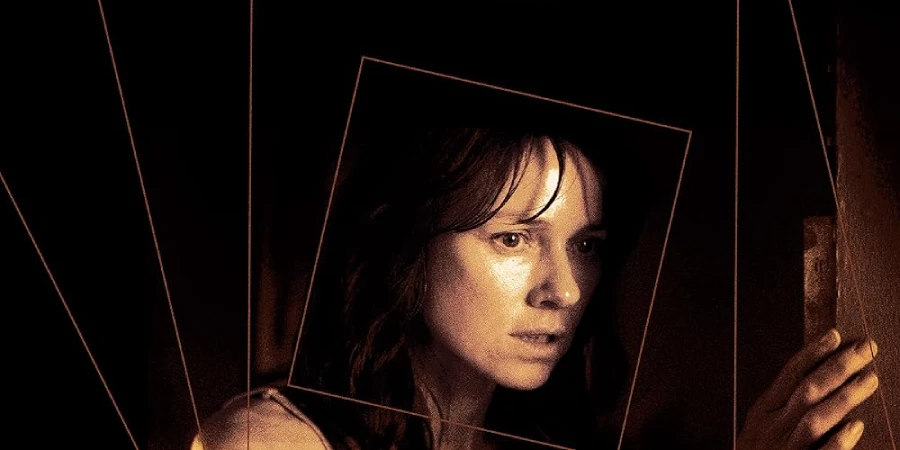

June 1977, the South Bronx: a woman hasn’t left her apartment in two years. The Wolf Hour traps you inside that tenement with her, turning agoraphobia into a pressure cooker that the sweltering heat and the Son of Sam murders slowly bring to a boil. Naomi Watts carries nearly every scene on her own in this slow-burn psychological thriller.
Detailed Summary
June Leigh’s Self-Imposed Prison
We meet June Leigh, a once-celebrated counterculture novelist now completely reclusive in her late grandmother’s South Bronx apartment. Struggling with severe creative paralysis and trauma following the intense public backlash to her book The Patriarch, she has completely withdrawn from society.
Outside, New York City is fracturing under the weight of a fiscal crisis, garbage strikes, suffocating heat, and a serial killer stalking the streets. June’s daily existence is reduced to rigid rituals: she orders groceries by phone, drinks heavily, and avoids looking out the window. Her only consistent human contact is Hector (Emory Cohen), a deliveryman who brings her supplies and treats her with an odd, transactional tolerance.
The Buzzer and the Terror
A stranger keeps buzzing June’s apartment intercom at random hours, leaving only dead air when she answers. June’s mind, already corroded by isolation, builds an escalating terror out of these silences. Unable to verify who it is and unwilling to go downstairs, every buzz cracks her composure further. Watts plays each intercom ring like a small detonation behind the eyes.
Visitors from the Outside World
Two key visitors puncture June’s bubble, exposing her deep vulnerability:
- Iris (Jennifer Ehle): June’s sister arrives out of genuine concern, bringing frantic outside energy. Their confrontation reveals how fiercely June defends her withdrawal, viewing it as armor rather than weakness.
- Margot (Sophie Lowe): A young woman sent by an escort service that June blindly called during a drunken, lonely night. Margot is youthful, free-moving, and unbothered by the city’s menace. June watches her with a painful mix of envy, suspicion, and deep discomfort.
The City Erupts: The 1977 Blackout
New York City’s historical blackout of July 13, 1977, serves as the film’s pivotal climax. As looting and riots erupt in the streets below, the grid failure plunges June’s apartment into total darkness. Shot entirely from June’s perspective, the sounds of breaking glass, screaming, and sirens filter through the walls. Her absolute paralysis in the face of genuine external danger forces her to confront her own psychological entrapment.
Son of Sam Haunts the Margins
David Berkowitz (the “Son of Sam”) is never shown. His presence exists entirely through radio broadcasts, newspaper headlines, and neighborhood anxiety. Director Alistair Banks Griffin uses the killer as atmospheric dread rather than a plot mechanism—a symbol of the chaotic violence June believes is waiting for her the moment she steps outside.
The Intercom Mystery Resolved
Late in the film, the persistent tormentor is revealed to be Officer Blake (Jeremy Bobb), a predatory and corrupt NYPD officer who has been using the buzzer to psychologically harass June before forcing his way into her apartment to assault her. June fights back violently, severely injuring him with a broken bottle. This brutal, terrifying confrontation shatters her paralysis; the horror has finally breached her sanctuary, forcing her to make a choice.

Movie Ending
June finally steps outside. After ninety minutes of claustrophobic buildup, she opens the door, walks down the stairs, and stands on the street. Griffin deliberately avoids Hollywood melodrama—there is no swelling music or slow motion. She is simply there, standing in the harsh daylight, breathing. Watts plays the breakthrough with incredible restraint: a slight widening of her stance, her eyes painfully adjusting to an open space she hasn’t inhabited in two years.
Background radio chatter simultaneously reveals that the Son of Sam has been caught. However, Griffin doesn’t position his capture as the catalyst for her exit; June steps out because her internal breaking point forced her outward, not because the streets became safe.
The film then transitions to a brief, clean coda: a television studio interview. We see a transformed, composed June with her hair cut short. She is promoting her newly published book, Season in the Abyss, which documents her period of isolation. This flash-forward provides concrete confirmation of her survival. The final narrative choice remains honest: one step outside didn’t magically cure her agoraphobia, but it was the definitive catalyst for reclaiming her life.
Are There Post-Credits Scenes?
The Wolf Hour has no post-credits scenes. Once the film ends, it ends. No additional footage, no teaser, nothing.
Type of Movie
The Wolf Hour is a psychological thriller with strong elements of character drama. Its tone is slow-burn and claustrophobic, closer to a chamber drama than a conventional genre thriller. Pacing is deliberate rather than propulsive, focusing entirely on anxiety as a lived condition rather than fast-paced plot mechanics.
Cast
- Naomi Watts as June Leigh
- Emory Cohen as Hector (The Deliveryman)
- Jennifer Ehle as Iris (June’s Sister)
- Sophie Lowe as Margot (The Escort)
- Jeremy Bobb as Officer Blake
- Kelvin Harrison Jr. as Harrison (The young man who tries to help June fix her intercom)
Film Music and Composer
Danny Bensi and Saunder Jurriaans composed the original score. Their work leans heavily into psychological unease rather than melodrama, utilizing sparse, low-frequency drone textures that accumulate tension without tipping into conventional horror tropes.
This original music is seamlessly balanced with late-1970s source music that bleeds through radios and walls, grounding the film in the paranoid cultural atmosphere of a fractured New York City.

Filming Locations
Despite the story being set in the South Bronx, The Wolf Hour was shot entirely on location in Manhattan, New York City over a tight 18-day schedule.
- Interiors: The decaying, cramped apartment was dressed inside a real residential building in Harlem.
- Exteriors: The rare street-level scenes were filmed on a heavily modified block in Chinatown, dressed with era-appropriate vehicles and 1970s signage.
Awards and Nominations
The Wolf Hour did not receive major awards recognition. It screened at Sundance Film Festival in 2019, which gave it its most significant moment of visibility, but it did not generate sustained awards momentum from that platform.
Behind the Scenes Insights
- Naomi Watts was heavily invested in the project, serving as both the lead actress and an executive producer.
- Director Alistair Banks Griffin worked with Watts extensively in pre-production to build June’s psychological history before cameras rolled.
- To help Watts naturally track and portray June’s progressive psychological and physical deterioration, Griffin shot the majority of the apartment scenes in sequential order.
- The production design team visually turned up the heat across the runtime. June wears heavy clothing early on, transitioning to progressively lighter, sweat-soaked garments as the summer heatwave and her internal panic peak simultaneously.
- Griffin deliberately kept the shooting environment small and contained, both to serve the budget and to reinforce the claustrophobic experience for the cast.
Inspirations and References
Griffin drew on the real historical backdrop of New York City in the summer of 1977, a period marked by fiscal crisis, the garbage strike, intense heat, the blackout, and the Son of Sam murders. These were documented events that he wove into a fictional character study.
Thematically, the film echoes works exploring female isolation and creative paralysis. Roman Polanski’s Repulsion (1965) and Chantal Akerman’s Jeanne Dielman (1975) are obvious cinematic touchstones, as are various literary explorations of a writer unable to write.
Alternate Endings and Deleted Scenes
No alternate endings or deleted scenes from The Wolf Hour have been made publicly available or discussed in detail by the filmmakers. Griffin has not commented publicly on cut material in widely documented interviews.
Book Adaptations and Differences
The Wolf Hour is an original screenplay written by Alistair Banks Griffin. It is not based on a novel, short story, or any pre-existing source material. No adaptation comparison applies here.
Memorable Scenes and Quotes
Key Scenes
- The first buzzer sequence: June creeps to the intercom, presses the button, and gets dead air. Watts’ face does everything. Her jaw tightens, her breathing goes shallow, and she steps back as if the wall itself threatened her.
- The blackout: June sits in total darkness while chaos rages outside. Griffin shoots her in near-silhouette, the orange glow of distant fires the only light source. It’s the film’s most visually striking composition.
- Margot’s visit: June watches Margot move freely around the apartment and then outside without hesitation. The contrast between the two women is quietly devastating, no dialogue needed.
- The buzzer revelation: Officer Blake forces his way in, revealing the true, predatory nature of the threat. The sudden escalation from psychological dread to physical confrontation is a massive turning point.
- June stepping outside: No score swell, no speech. She just opens the door and walks into the light. Ninety minutes of buildup for a beautifully restrained action, and it works completely.
Iconic Quotes
The film is heavily driven by silence and isolation rather than prominent, highly-quoted dialogue lines, keeping the focus entirely on Watts’ visual and physical performance.
Easter Eggs and Hidden Details
- Radio broadcasts throughout the film include real news language referencing the Son of Sam investigation, grounding the fictional story in documented 1977 chronology.
- June’s bookshelf contains titles consistent with a 1970s counterculture intellectual, a subtle character detail that reinforces who she was before her withdrawal.
- The temperature inside the apartment appears to climb visually across the film: Watts is in heavier clothing early, progressively lighter clothing as the heat and her psychological state both intensify.
- Hector’s visits grow slightly shorter as the film progresses, a background detail suggesting June’s support network is quietly contracting even as her crisis deepens.
Trivia
- The Wolf Hour premiered at the Sundance Film Festival in January 2019.
- “The wolf hour” (vargtimmen) is a Scandinavian expression for the deepest, most psychologically oppressive point of the night, roughly 3 to 5 a.m., when anxieties feel sharpest. Griffin uses it as both title and thematic anchor.
- Naomi Watts physically prepared for the role by spending extended periods in limited spaces to understand the specific quality of that kind of confinement.
- Alistair Banks Griffin’s previous feature, Two Gates of Sleep (2010), also dealt with isolation and grief in a similarly slow, atmospheric register.
- The film runs under 100 minutes, which is a disciplined choice for a story that could easily have bloated into shapelessness.
Why Watch?
Naomi Watts gives a performance that deserves far more conversation than this film received. She communicates panic, shame, and buried grief through posture and eye movement alone, often in total silence.
If you’ve ever watched a thriller and wished it would slow down and actually sit inside a person’s fear rather than chase it, this is that film.
Director’s Other Movies
- Two Gates of Sleep (2010)