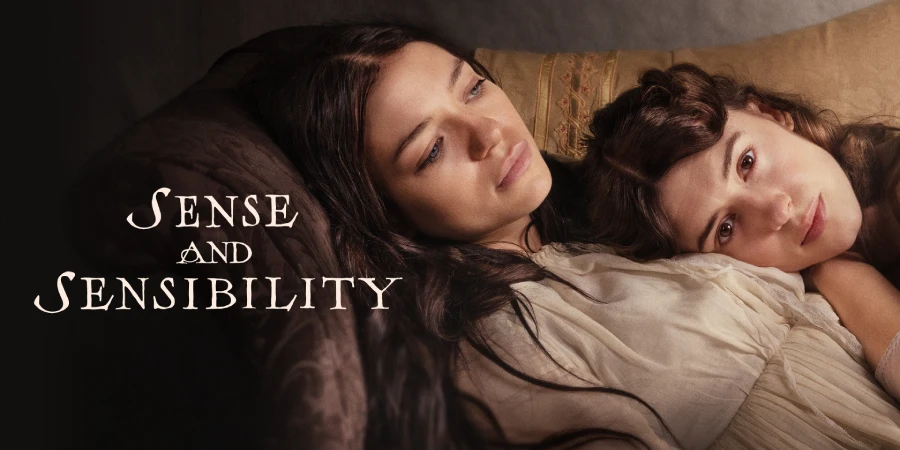
Marianne Dashwood clutches a poached pear in her gloved hand, spots the man who ghosted her, and yells his name. That messy, glorious moment sums up Georgia Oakley’s Sense and Sensibility: earthy, funny, and stubbornly alive. Grab your bonnet, because we are spoiling everything, from the rewritten duel to the weddings you never get to see.
Table of Contents
Detailed Summary
A Will That Leaves the Dashwoods Penniless
Mr Dashwood dies, and his estate, Norland Park, passes to John Dashwood, his son from an earlier marriage. His widow and three daughters, Elinor, Marianne, and young Margaret, now face real poverty.
John’s snobbish wife, Fanny, talks him out of the support his father had suggested. Worse, the couple move straight into Norland, upending the sisters’ lives.
Elinor tries to explain the grim numbers to her mother. Mrs Dashwood, warm and a little flighty, waves the figures away with breezy optimism.
Edward Ferrars Comes to Norland
Fanny’s brother, Edward Ferrars, arrives for a visit and quickly bonds with Elinor. Before long, they share a wry sense of humor and a lovely afternoon tossing stones into the Norland lake.
Fanny is not amused. Meanwhile, distant relative Mrs Jennings offers the family a Devonshire cottage owned by her son-in-law, Sir John Middleton, at a reduced rent.
Mrs Dashwood accepts immediately. Elinor hopes Edward will propose before they leave; instead, he only promises to visit.
Life at Barton Cottage
Barton Cottage is a cold, drafty shock after Norland. Luckily, the Middletons’ loud household, always trailed by a pack of dogs, keeps everyone distracted.
Here Marianne meets Colonel Brandon, a quiet family friend of Mrs Jennings. At first, she finds him unappealing, yet he falls for her almost at once.
Elinor’s spirits sink when Edward writes that he will not visit after all.
Willoughby to the Rescue
During a beach outing with Margaret, Marianne sprains her ankle. A handsome stranger, John Willoughby, sweeps her up and carries her home.
Marianne falls for him instantly. Soon they are courting openly, and their dance at a lively country hop is pure, reckless joy.
Everyone expects a proposal. Out of nowhere, Willoughby announces that he must leave for London for twelve months.
London and Lucy Steele’s Secret
Mrs Jennings invites Elinor and Marianne to London, along with Lady Middleton and her cousin Lucy Steele. The carriage ride alone is an endurance test, since Mrs Jennings chatters for hours.
Lucy has noticed Elinor’s feelings for Edward. Consequently, she makes sure Elinor hears the news: she and Edward have been secretly engaged for years.
Edward later explains that his parents arranged the match back when Lucy was wealthy. After she lost her fortune, he refused to abandon her, quietly hoping she would end things herself. Crushed, Elinor accepts the situation and promises to keep the secret.
Heartbreak at the Christmas Ball
Willoughby ignores Marianne’s letters and never calls. At a glittering Christmas ball, she spots him from the refreshment table, a poached pear in her gloved hand.
To make matters worse, he has arrived with his wealthy fiancée, Miss Grey, and treats Marianne like a stranger. Devastated, she makes a public spectacle of herself.
Afterward, she confesses to Elinor that Willoughby never formally proposed. Unlike her sister, she insists, she cannot simply swallow her disappointment.
Colonel Brandon Exposes Willoughby
Brandon finally explains his hostility toward Willoughby. Willoughby once seduced Brandon’s widowed sister-in-law, Eliza, got her pregnant, and abandoned her.
She later died along with her unborn child. Suddenly, Marianne’s dashing hero looks like the cad he always was.
Edward Is Disinherited
Edward’s secret engagement eventually reaches his family, and they cut him off. His younger brother, Robert, becomes the new heir.
Brandon, impressed by Edward’s integrity, offers him a nearby parsonage. As a result, Edward can now afford to marry Lucy.
A Goodbye at the Gallery
Elinor meets Edward at a London gallery for what she believes is their final conversation. Heartbreakingly, she urges him to keep his promise to Lucy.
In other words, both of them choose duty over desire, and it hurts to watch.
Lost in the Rain
On the trip home, Mrs Jennings stops to visit her youngest daughter, Mrs Palmer, bringing the sisters and Brandon along. Marianne learns that Willoughby’s estate lies nearby.
Heartsick, she walks out into a storm to see it and gets lost. Predictably, the soaking leaves her gravely ill.

Movie Ending
Willoughby barges into the Palmers’ house drunk, swearing he still loves Marianne and begging to see her. Elinor listens, and for a moment she almost pities him.
That pity vanishes when he shrugs off what he did to Eliza. Brandon, back from fetching Mrs Dashwood, physically throws him out.
The Duel That Changes Everything
Brandon challenges Willoughby to a duel as the Dashwood women watch from Marianne’s sickroom. Willoughby fires and misses. Brandon deliberately aims at the sky.
Here is the twist that matters: Marianne only worries about Brandon. In that moment, she finally sees the passion she craved, coming from the man she once dismissed.
Notably, Austen never puts this duel on the page. Oakley turns a passing remark into the emotional hinge of Marianne’s arc.
Do Marianne and Colonel Brandon End Up Together?
Yes, though slowly. Marianne recovers, the family returns to Devonshire, and she grows closer to Brandon.
In a quiet scene by a river, she admits her feelings and hints at a shared future once she heals. Brandon gladly gives her all the time she needs.
Screenwriter Diana Reid has praised the performances in that river scene. In her view, they made any further proof of a happy ending unnecessary.
How Elinor and Edward Get Their Happy Ending
Back at Barton, the family hears that Lucy has become Mrs Ferrars. Soon after, Edward appears, apparently ready to declare his love.
Elinor assumes a married man is behaving dishonorably. Hurt and proud, she sends him away.
Mrs Jennings then delivers the twist. Lucy dropped the penniless Edward and married his brother Robert, who now holds the fortune.
Overjoyed, Elinor races across the hills after him, hair tumbling loose and dress caked in mud. She declares her love, and the two share a clifftop kiss and an engagement.
Why the Film Skips Both Weddings
Neither wedding appears on screen. Instead, the story closes on Elinor and Edward’s reunion, leaving Marianne’s future implied, not shown.
Ultimately, Reid has explained, the structure mirrors a swap between the sisters. Elinor gets the classic romantic chase, and Marianne finds something just as intense, only far calmer.
Fittingly, Marianne wears one of Elinor’s dresses in her final scenes with Brandon, plus her own frilly scarf.
What Happens to Willoughby and Lucy?
Willoughby exits the story after the duel. Unlike the 1995 film, this version never cuts to him brooding over Marianne’s wedding.
Lucy, on the other hand, lands exactly what she wanted: a rich husband. It is Austen’s sharpest joke, and the film keeps it intact.
Are There Post-Credits Scenes?
No. The film has no mid-credits scene and no post-credits stinger.
In short, once the credits roll, the story is truly over. Feel free to beat the crowd to the exit.
Type of Movie
Sense and Sensibility is a period romantic drama adapted from Jane Austen’s 1811 novel. It runs 132 minutes and carries a PG rating.
Tonally, it blends aching romance with earthy realism and a surprising dose of physical comedy. Picture mud, rain, untamed hair, and dances that would make any Regency chaperone faint.
Producer India Flint has described it as a coming-of-age story more than a conventional romance. Above all, the bond between Elinor and Marianne drives every scene.
Cast
Here is the main ensemble, led by two actresses who first worked together as teenagers.
- Daisy Edgar-Jones – Elinor Dashwood
- Esmé Creed-Miles – Marianne Dashwood
- Caitríona Balfe – Mrs Dashwood
- Bodhi Rae Breathnach – Margaret Dashwood
- George MacKay – Edward Ferrars
- Frank Dillane – John Willoughby
- Herbert Nordrum – Colonel Brandon
- Fiona Shaw – Mrs Jennings
- Stacy Martin – Fanny Dashwood
- Tom Brooke – John Dashwood
- Turlough Convery – Sir John Middleton
- Chloe Pirrie – Lady Middleton
- Ceara Coveney – Lucy Steele
- Eliot Sumner – Mr Palmer
- Bethany Slater – Mrs Palmer
Film Music and Composer
London-based Spanish composer Roger Goula wrote the original score. He moved to the UK in the early 2010s to study at the National Film and Television School.
His earlier credits include Next Goal Wins, All That Breathes, and The Frankenstein Chronicles. In addition, he is a trained classical and jazz guitarist who favors contemporary minimalism over sweeping melodies.
Goula skips big leitmotifs. He gives Elinor a solo violin and Marianne a solo female voice. Over time, the two sounds trade traits, mirroring how the sisters change each other.
Goula describes the result as a hybrid, post-classical blend. Analogue synths, period-style strings, and manipulated acoustic textures all share the spotlight.
Remarkably, Oakley kept around 80 percent of the sketches Goula wrote during early rushes. She revealed that detail at Edith Bowman’s Soundtracking event.
These cues stand out most:
- “Meeting Willoughby”: piano and voice for Marianne’s swoon-worthy rescue.
- “Rage – Lost”: raw shouting and chanting as Marianne wanders into the storm.
- “Pistols!” and “The Duel”: jittery tremolo strings and pulsing electronics.
- “No One Knows Your Heart Like a Sister”: both sisters’ musical signatures, intertwined at last.
- “Elinor and Edward Kiss”: a warm romantic payoff laced with shimmering synths.
Back Lot Music released the 28-track album digitally on October 9, 2026. Separately, music supervisor Connie Farr sourced 18th-century English folk songs and commissioned fresh recordings for the film.
The Fibonacci Quartet performs on screen, and Graham McCusker served as music director and pianist. Unsurprisingly, the film skips modern pop covers entirely, which suits Oakley’s timeless aims.
Filming Locations
Principal photography began in the UK in July 2025. Oakley wanted homes that felt lived in, not polished to perfection.
Kingston Russell House, a 17th-century manor in West Dorset, plays Norland Park. Oakley fell for its long grass and the daisies growing out of its front steps.
Surprisingly, the house had never appeared on screen before. For the Norland lake scenes, the crew moved to nearby Parnham Park.
Ditsworthy Warren House, deep in Dartmoor National Park, becomes Barton Cottage. Oakley described the building as little better than a cattle shed, with no roof and no windows.
Production designers transformed it, and the crew shot every Barton Cottage scene there, inside and out. Consequently, the family’s fall from Norland feels painfully real.
Originally, the producers hunted for a coastal cottage. However, most seaside options had become twee holiday lets.
Locations manager Ian Hutchinson has called Ditsworthy the toughest site on the shoot, thanks to weather, mud, and isolation.
On the coast, Mothecombe Beach stands in for the beach where Willoughby rescues Marianne. Meanwhile, Broughton Castle in Oxfordshire supplies Barton Park and some of the Palmers’ grounds.
For the London chapters, the National Trust’s Rainham Hall becomes Mrs Jennings’ townhouse. Similarly, West Wycombe Park in Buckinghamshire plays the Ferrars house, ballroom included.
Inside the National Gallery, the crew staged the Royal Academy visit where Elinor bids Edward farewell. Lincoln’s Inn and Horse Guards Parade round out the city scenes.
Lastly, Knebworth House in Hertfordshire becomes Cleveland, the Palmers’ Somerset home, where the film’s most nail-biting moments unfold. Penshurst Place in Kent and the private Wormsley Estate complete the map.
Cinematographer Arnaud Potier shot everything on 35mm film. His camera moves fluidly at Norland, then grows stiller once the family reaches the cottage.
Awards and Nominations
Esmé Creed-Miles earned a Gotham Award nomination for Outstanding Supporting Performance. The ceremony takes place on November 30, 2026, at Cipriani Wall Street in New York.
Scenes
- Shooting on 35mm film meant only two or three takes per scene. As a result, Daisy Edgar-Jones admits she never left a day on set without wishing she had done more.
- Three months after wrap, Edgar-Jones phoned Oakley to request a reshoot of a scene she had literally dreamed about. Oakley calmly reassured her that the scene worked and she was already in the edit.
- Edgar-Jones and Esmé Creed-Miles first acted together as teenagers in Pond Life (2018). According to Oakley, that shared history made their first chemistry read a joy.
- Oakley cast Caitríona Balfe as a mother who barely looks older than her daughters. She found that more historically accurate, and she notes that the novel’s men can’t help falling for Mrs Dashwood.
- One actor had never read the book or seen the 1995 film. When he asked whether he should, Oakley gently suggested he skip both.
- Costume designer Grace Snell landed the job the day after her interview and had nine weeks to prepare. It was her first period film, right after the biker romance Pillion.
- In fact, every color in the wardrobe came from natural dyes, including elderflower, logwood, walnut, madder root, and rust.
- Hair and makeup designer Nadia Stacey traded stiff updos for loose, rain-soaked styles, partly inspired by a 1930s photograph. Both leads wore extensions to pull it off.
- Creed-Miles sometimes played Marianne without a corset, a choice Snell admits bends history. By contrast, Elinor stays tightly laced throughout.
- Choreographer Holly Blakey staged both the country hop and the London ball. Her backbends and sweeping arm movements raised the eyebrows of at least one Regency dance historian.
- Focus Features pushed the US release back a month, from September 11 to October 16, 2026.
Inspirations and References
The film adapts Jane Austen’s first published novel, Sense and Sensibility (1811). Interestingly, Austen drafted an early version called Elinor and Marianne in the 1790s, the same decade the film depicts.
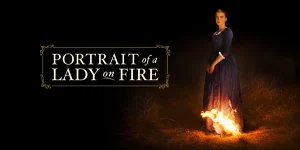
Oakley and her team studied John Schlesinger’s Far from the Madding Crowd, Céline Sciamma’s Portrait of a Lady on Fire, and Hlynur Pálmason’s Godland. All three fed into the film’s tactile, weather-beaten look.
Moreover, Austen’s nerve inspired Oakley. She admires how Austen poked at customs like male primogeniture when other writers hid their critiques in distant centuries.
Likewise, Snell pictured Lady Emma Hamilton and Marie Antoinette playing peasant at the Hameau de la Reine when dressing Marianne. Her moodboard even borrowed from Comme des Garçons, Romeo Gigli, and John Galliano runway shows.
Ang Lee’s 1995 adaptation inevitably looms over any new version. Nevertheless, Stacey says the team avoided comparisons, since they were adapting Austen rather than remaking Lee.
Alternate Endings and Deleted Scenes
Yes, there is a cut ending, and it sounds lovely. Reid revealed that the team filmed an epilogue set months later, with Elinor and Edward already married.
On a sunny beach, both couples relax together on the morning of Marianne and Brandon’s wedding. A final shot returns to the two sisters, keeping their bond at the center.
Reid remembers it as one of the final shoots and everyone’s favorite day on set. However, the river scene between Marianne and Brandon already said enough, so the epilogue never made the final cut.
Reid has said she would love to see that footage someday. For now, no other deleted scenes or alternate versions have surfaced publicly.
Book Adaptations and Differences
Reid’s script keeps the novel’s backbone, so this is very much Austen’s story. Even so, several changes reshape key moments.
- Edward’s engagement: In the book, a young Edward secretly commits to Lucy on his own. Here, his parents arrange the match when Lucy’s family is still rich.
- Eliza’s backstory: Austen’s Willoughby seduces Brandon’s young ward, Eliza Williams. In the film, Eliza is Brandon’s widowed sister-in-law, and she dies with her unborn child.
- Marianne’s accident: Austen’s Marianne falls while running down a rainy hill. In contrast, Oakley moves the sprain to the beach.
- Cottage offer: Sir John offers the cottage himself in the novel. On screen, Mrs Jennings makes the offer for him.
- Duel on screen: Brandon only mentions the duel in passing in the book. Oakley stages it in full, with the family watching.
- Willoughby’s confession: The novel’s late-night visit earns Willoughby some sympathy from Elinor. Here, Brandon tosses him out the door.
- Edward’s return: Austen lets Edward explain Lucy’s marriage himself, and Elinor bursts into happy tears. The film adds a rejection, a reveal from Mrs Jennings, and a muddy sprint.
- Weddings and kisses: Austen marries off both sisters, yet her couples never kiss on the page. Oakley skips the weddings and gives Elinor and Edward a proper clifftop kiss.

Memorable Scenes and Quotes
Key Scenes
- Pear-fueled meltdown: Marianne spots Willoughby at the Christmas ball, pear in gloved hand, and shouts his name before he snubs her.
- Country hop chaos: Marianne and Willoughby dance as if no chaperone exists, backbends and all.
- A London dance: Elinor and Edward share a quieter, aching counterpart to her sister’s whirlwind.
- Gallery goodbye: Elinor pushes Edward toward Lucy, choosing honor over her own happiness.
- Storm walk: Marianne stumbles through the rain toward Willoughby’s estate as Goula’s score erupts in shouts and chants.
- Brandon’s wasted shot: One bullet aimed at the sky, and Marianne’s terror reveals her heart.
- River confession: Marianne opens up to Brandon in the scene Reid credits with making the epilogue unnecessary.
- Clifftop kiss: A muddy, breathless Elinor says what she feels at long last.
Iconic Quotes
- “The man who loves me must burn with it…” (Marianne, describing her ideal suitor)
- Marianne insists a man ought to be “at least artificially passionate or he’d be sincerely dull.”
- “Numbers can mean lots of things.” (Mrs Dashwood, dodging the family’s money troubles)
- During a fight, Marianne tells Elinor it must be awful “to expect so little, and to always, always be right.”
- “I require so much.” (Marianne, admitting her romantic appetite to Elinor)
Easter Eggs and Hidden Details
- Real Dashwoods: West Wycombe Park, the Ferrars house, has been home to the real-life Dashwood family for over 300 years. It even appeared in the 2008 BBC Sense and Sensibility.
- A nod to 1995: Mothecombe Beach sits on the Flete Estate, where Ang Lee’s film found its own Barton Cottage. By all accounts, the overlap was a happy coincidence.
- Spielberg connection: Ditsworthy Warren House previously appeared in War Horse (2011).
- Wood versus flowers: Snell dyed Elinor’s lavender gowns with logwood and Marianne’s yellow ones with elderflowers. Sense comes from wood; sensibility comes from blossoms.
- Unraveling hair: Elinor’s hairstyle loosens gradually over the film, tracking her slow surrender to feeling.
- Matching blues: Elinor and Edward both wear blue during their most painful conversation. Oddly enough, Snell says the coordination happened by accident.
- Sequins as a red flag: Willoughby’s ball waistcoat glitters with tiny sequins. Beside him, Miss Grey wears a hand-painted 17th-century Chinese silk gown that screams money.
- Clash by design: At the hop, Willoughby’s burnt-red jacket fights Marianne’s big pink bow, and Snell loves the clash.
- Walnut bonnet: Elinor’s standout bonnet in the gallery scene uses taffeta dyed with walnuts.
- Fanny’s armor: Stacy Martin wore a bald cap and blond wig to create Fanny’s rigid, traditional updo.
Trivia
- Its world premiere took place at London’s Odeon Luxe Leicester Square on September 15, 2026.
- UK audiences saw it on September 25, three weeks before the October 16 US release.
- With a reported budget of $20 to $25 million, it had earned roughly $44 million worldwide by mid-November 2026.
- In the US, it opened in fifth place with $7.3 million, the same weekend as Street Fighter.
- CinemaScore audiences graded it an A-minus.
- On Rotten Tomatoes, 78 percent of 139 critics’ reviews are positive, and Metacritic gives it a 71.
- Robbie Collin of The Telegraph awarded five stars, calling it Austen “with the bonnets blown off.”
- Conversely, Peter Bradshaw of The Guardian settled on three stars.
- Bodhi Rae Breathnach, who plays Margaret, previously landed the role of Susanna, Shakespeare’s eldest child, in Hamnet.
- Herbert Nordrum, the film’s Brandon, is Norwegian and best known for The Worst Person in the World.
- Oakley sets the story in the late 1790s, an awkward fashion moment before the Regency column dress took over.
- Until December 19, 2026, Rainham Hall is displaying costumes and props from the film.
- Kingston Russell House’s south wing appears on Airbnb, and the listing proudly mentions the film.
- Marianne’s tangled hair sparked a genuine debate, including a Wall Street Journal column on messy period hair. Creed-Miles has said the fuss distracts from the film.
- Edgar-Jones confirmed her casting with an Instagram selfie holding a copy of the novel.
- Ang Lee’s 1995 version earned seven Oscar nominations and won Emma Thompson the award for Best Adapted Screenplay.
Why Watch?
Watch it for Esmé Creed-Miles, whose wild, aching Marianne earned a Gotham nomination. Stay for Daisy Edgar-Jones, who turns Elinor’s silence into heartbreak. Add muddy landscapes, a daring duel, and a sisterhood that outshines every suitor, and you get Austen at her most alive.
Georgia Oakley’s Other Movies
- Blue Jean (2022)
- Little Bird (2017)
- Callow & Sons (2014)
- Frayed (2013)
- Hush (2012)
Recommended Films for Fans
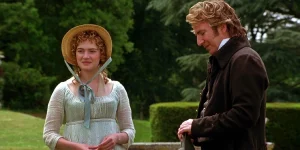
- Sense and Sensibility (1995)
- Pride & Prejudice (2005)
- Persuasion (1995)
- Emma. (2020)
- Love & Friendship (2016)
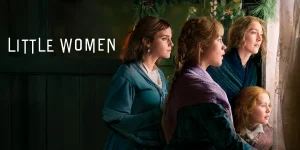
- Little Women (2019)
- Portrait of a Lady on Fire (2019)
- Far from the Madding Crowd (1967)
- Bright Star (2009)
- Godland (2022)