
Hayao Miyazaki drew a teenage girl who could talk to giant insects, dropped her into a dying world soaked in poison, and somehow made her feel more real than most live-action heroes ever do. Nausicaä of the Valley of the Wind arrived in 1984 with a scope and moral seriousness that most big-budget films still cannot match. It is a war film, an ecological horror story, and a character study all at once. Nausicaä herself, calm and fierce and genuinely curious about the creatures everyone else wants to burn, is one of the best protagonists in animation history.
Table of Contents
Detailed Summary
A World Buried in Spores
One thousand years before the story begins, a catastrophe called the Seven Days of Fire destroyed industrial civilization. Giant mutant insects called Ohmu now roam the land, and a toxic forest called the Sea of Corruption (or Fukai in Japanese) spreads its poisonous spores across what little habitable ground remains.
Humans survive in scattered kingdoms ringed by clean wind. Any unprotected breath inside the forest is fatal. This is not backstory decoration; Miyazaki makes you feel the weight of it in the opening sequence, where a lone traveler in a gas mask picks his way through dead orange trees while spore clouds drift around him like smoke.
Nausicaä and the Valley
Nausicaä is the young princess of the Valley of the Wind, a small agricultural kingdom powered by windmills. She flies a one-person aircraft called a mehve and spends her free time studying the forest, collecting samples, and growing Fukai plants in a secret underground lab. What she discovers there shocks her: plants grown in clean water and clean soil produce no toxins at all. The forest is not poisoning the world. It is purifying it, breaking down the contamination left by the Seven Days of Fire and locking the poison inside its own roots.
Nobody else knows this yet. To the other kingdoms, the forest is simply an enemy to be destroyed.
The Tolmekian Invasion
A massive Tolmekian cargo ship crashes into the Valley at night, killing Nausicaä’s father Jihl in the chaos. Inside the wreck, soldiers are transporting a giant embryo: a God Warrior, one of the colossal bio-weapons that caused the Seven Days of Fire. Tolmekian soldiers, led by Princess Kushana, then occupy the Valley by force.
Kushana’s plan is blunt and frightening. She wants to revive the God Warrior and use it to incinerate the Sea of Corruption entirely. She sees this as salvation. Miyazaki makes sure we understand she is not simply a villain; she is a woman with a mutilated body and a military worldview that follows its own ruthless logic.
Lord Yupa and the Pejite Prisoners
Lord Yupa, a legendary swordsman and Nausicaä’s mentor, arrives just before the invasion and cannot prevent it. Among the Tolmekian prisoners is Asbel, a young man from the city of Pejite. His city discovered another God Warrior embryo first, and Tolmekia destroyed Pejite to claim it.
Pejite survivors, including Asbel’s twin sister Lastelle, who dies aboard that crashing ship at the story’s start, have their own plan. They intend to lure a massive Ohmu stampede toward the Valley to destroy the Tolmekian army, even if it kills every Valley resident in the process. Pejite’s grief has curdled into the same kind of violence it suffered.
The Sea of Corruption
Nausicaä and the Valley elders are taken aboard a Tolmekian airship heading toward Pejite. During an attack, the airship goes down over the forest. Nausicaä falls into the Fukai and survives by landing on a giant fungal shelf deep below the spore canopy.
Down in the forest’s lower levels, the air is clean. She stands there without her mask, breathing freely, and stares up through layers of bioluminescent fungi. It is the film’s most quietly devastating visual choice. She has been right all along, and the proof is simply the air in her lungs.
She encounters a young Ohmu separated from the herd and helps protect it from gunfire. The creature trusts her completely, and that bond is the emotional spine of everything that follows.
Asbel’s Revelation
Asbel finds Nausicaä and brings her to the surviving Pejite refugees. She learns their plan to use a baby Ohmu as bait, dragging it on a rope beneath a low-flying aircraft to trigger a herd stampede aimed directly at the Valley. Nausicaä escapes and races back on her mehve to warn the Valley and stop the stampede.


Movie Ending
Nausicaä reaches the Valley ahead of the stampede, but only barely. She lands her mehve directly in front of the charging Ohmu herd, standing alone on the ground with her arms spread wide. It is a suicide move. The herd hits her, her body goes limp across the golden antennae of the lead Ohmu, and for a long, brutal moment she appears dead.
What happens next is one of the most earned miracle sequences in animated film. The Ohmu, who act as a hive mind sharing emotion across the herd, feel Nausicaä’s sacrifice and her love for the young one she protected. They stop. They extend their golden tendrils outward in a gesture the film has coded as profound compassion throughout its runtime. Those tendrils lift Nausicaä’s broken body and suffuse it with golden light until she stands upright, healed.
An old Valley woman recognizes the fulfillment of an ancient prophecy: a blue-clad warrior standing on golden fields. Nausicaä wears her flight suit. The golden tendrils are the field. The prophecy was never about military glory; it was about a person willing to die rather than let violence continue.
Meanwhile, the God Warrior that Kushana attempted to revive fires its beam weapon and promptly begins rotting alive. It was premature, unstable, essentially stillborn. Kushana’s entire military strategy collapses in that single image: a weapon that destroys itself the moment it activates.
Nausicaä stands alive at the end of her world’s worst day. No political order is restored. No war is decisively won. What shifts is something smaller and more durable: the people of the Valley have seen that coexistence with the forest is possible, that the ecosystem is working toward something, not against them. That is enough for Miyazaki.
Are There Post-Credits Scenes?
No. Nausicaä of the Valley of the Wind has no post-credits scene of any kind. Once the final frames play, the film is over. Stay if you love Joe Hisaishi’s closing music; leave if you want. Nothing extra is waiting.
Type of Movie
Nausicaä of the Valley of the Wind is a science fantasy epic with strong elements of ecological horror, anti-war drama, and adventure. Its tone swings between wonder and grief with unusual confidence, spending equal time on aerial action sequences and quiet scenes of a girl growing plants in a basement lab.
This is not a children’s film dressed as one. Death arrives early, violence carries real consequence, and the moral landscape refuses easy resolution. Miyazaki trusts his audience to handle ambiguity.
Cast
- Sumi Shimamoto – Nausicaä (original Japanese voice)
- Goro Naya – Lord Yupa
- Yoji Matsuda – Asbel
- Yoshiko Sakakibara – Kushana
- Iemasa Kayumi – Kurotowa
- Mahito Tsujimura – Jihl
Film Music and Composer
Joe Hisaishi composed the score, and this was the film that cemented his long creative partnership with Miyazaki. His music here leans heavily on synthesizers alongside orchestral passages, giving the soundtrack a slightly raw, analog warmth that fits the film’s post-industrial world better than a fully orchestral approach would have.
The main theme is immediately recognizable: a sweeping, hymn-like melody that plays over Nausicaä’s flight sequences and returns, transformed in texture, during the climactic stampede. Hisaishi also composed the pop song “Nausicaä Requiem,” performed by singer Narumi Yasuda, which plays over the end credits.
What makes the score quietly remarkable is its restraint. Hisaishi knows when to drop out entirely. The scene of Nausicaä breathing clean air deep in the forest plays in near-silence, and that choice does more work than any swell of strings could.


Filming Locations
Nausicaä of the Valley of the Wind is a fully hand-drawn animated film produced by Topcraft (later absorbed into what became Studio Ghibli). There are no live-action filming locations.
Miyazaki drew visual inspiration from several real-world landscapes. The polluted industrial regions of Japan in the 1970s and 1980s informed the aesthetic of environmental collapse. The windswept coasts of western Japan shaped the Valley’s design. Some of the forest’s bioluminescent imagery draws loosely from deep-sea photographs and cave ecosystems.
Awards and Nominations
Nausicaä of the Valley of the Wind won the Ofuji Noburo Award at the Mainichi Film Awards in Japan. It did not receive major Western awards attention at the time of its release, which is a failure of institutional taste, not of the film.
Behind the Scenes Insights
- Miyazaki began the Nausicaä manga in Animage magazine in 1982, and the film was produced as a direct adaptation of the early chapters before the manga was complete.
- The film was financed partly on the strength of the manga’s popularity; publisher Tokuma Shoten backed the production.
- Miyazaki reportedly drew storyboards for the entire film himself, an extraordinary workload that became something of a standard practice for him in later productions.
- Topcraft, the studio that made the film, was not yet Ghibli. Studio Ghibli was officially founded in 1985, the year after Nausicaä‘s release, and Nausicaä is considered a spiritual precursor rather than an official Ghibli film.
- The film runs approximately 117 minutes, unusually long for a Japanese animated feature at the time.
- Producer Isao Takahata, who would go on to direct Grave of the Fireflies, pushed hard for the production to move forward and played a key role in securing funding.
Inspirations and References
Miyazaki has cited several direct influences. Ursula K. Le Guin’s science fiction, particularly her ecological and anthropological concerns, shaped the film’s worldview. Frank Herbert’s Dune is an obvious structural ancestor: a desert (or in this case, a poisoned wasteland), a messianic young protagonist, and giant creatures that function as both threat and spiritual symbol.
Japanese environmental disasters of the mid-20th century, particularly the mercury poisoning of Minamata Bay and its long-term effects on communities and ecosystems, gave Miyazaki a visceral local reference point for what industrial catastrophe actually does to a living world.
The Ohmu themselves draw visually from real insects. Miyazaki was an avid entomologist as a child, and the precision of the creatures’ segmented bodies and compound eyes comes from genuine observation rather than pure fantasy design.
Alternate Endings and Deleted Scenes
No alternate ending or significant deleted scenes have been officially documented or released. Given Miyazaki’s storyboard-driven production process, structural changes tend to happen on paper before animation begins rather than in a cutting room afterward. No alternate version of the film is known to exist in any form.
Book Adaptations and Differences
The film is adapted from Miyazaki’s own manga of the same name, serialized in Animage magazine starting in 1982. The manga ran until 1994 and spans seven volumes. The film covers only the early portion of that story.
The differences are significant. In the manga, the world is vastly larger in scope. Kushana becomes a more complex, almost sympathetic figure with a fully developed military arc. The God Warriors play a central role across multiple volumes. The manga’s ending challenges the very idea of the forest’s purification goal in a way the film does not, raising darker questions about whether humanity deserves a clean world at all.
Many readers argue the manga is a richer, more demanding work. That is fair. But the film has a tightness and emotional clarity the manga, by necessity of its length, cannot always match.


Memorable Scenes and Quotes
Key Scenes
- The clean air revelation: Nausicaä removes her mask deep in the forest and stands in silence, breathing freely. No music. Just the sound of spores settling around her.
- The baby Ohmu rescue: Nausicaä throws herself in front of Tolmekian soldiers to shield the wounded young Ohmu, her arms out, her voice steady. It is her character in a single image.
- The God Warrior’s first step: The massive creature rises, fires, and immediately begins to disintegrate. Its jaw falls away. It reaches a rotting arm toward Nausicaä and calls her “mother.” It is genuinely disturbing.
- The golden field: Nausicaä’s body lifted on glowing tendrils while the stampede stills around her. This scene is so carefully built toward that it earns every second of its sentimentality.
- Nausicaä’s secret lab: She shows Lord Yupa her underground garden, clean plants growing in pure water. The camera holds on her face as she explains what she has found. Pure scientific joy, with no audience for it yet.
Iconic Quotes
- “Don’t be afraid. I’m not going to hurt you.” (Nausicaä to the baby Ohmu)
- “All those people… they’re trying to live as best they can.” (Nausicaä, on the people of the Valley)
- “The forest is not our enemy.” (Nausicaä, confronting the Tolmekian plan)
Easter Eggs and Hidden Details
- A small Ohmu shell decorates Nausicaä’s room, establishing her affection for the creatures long before the film makes it plot-relevant.
- The Valley’s windmills serve a double function in the world’s logic: they generate power and they filter incoming air. Miyazaki worked this out at a practical level, not just a visual one.
- The pattern on Nausicaä’s blue flight suit subtly echoes the geometric patterns on Ohmu shells, a visual suggestion of her spiritual alignment with the creatures.
- Lord Yupa’s fox-squirrel Teto appears throughout the film as a small emotional barometer: the creature only relaxes around people Nausicaä trusts.
- A Totoro plush can be spotted briefly inside the Valley, a self-referential nod from Miyazaki, years before My Neighbor Totoro was released.
Trivia
- A heavily edited and redubbed English version titled Warriors of the Wind was released in 1985 and cut roughly 22 minutes from the film. Miyazaki was reportedly furious about it. Studio Ghibli later adopted a strict no-edits policy for international releases.
- Joe Hisaishi has said in interviews that this score was his first major film assignment, and he composed it quickly under tight deadlines.
- The Nausicaä manga is the only long-form manga Miyazaki has ever completed. His other works were adapted from shorter source material or created directly for the screen.
- Nausicaä’s name comes from a character in Homer’s Odyssey: the Phaeacian princess who helps Odysseus after he washes ashore.
- Roger Ebert gave the film a positive review decades after its release and cited it as a film he had underestimated on first encounter.
- The film’s environmental message predates most mainstream ecological cinema by nearly a decade.
Why Watch?
Watch it because Miyazaki makes you care about an insect the size of a school bus within about four minutes of screen time, and that care never feels manipulated. The film argues, through pure visual storytelling, that empathy is not weakness but the only form of intelligence that actually works. Few films of any era make that case as viscerally as this one does.
Director’s Other Movies
- The Castle of Cagliostro (1979)
- Castle in the Sky (1986)
- My Neighbor Totoro (1988)
- Kiki’s Delivery Service (1989)
- Porco Rosso (1992)
- Princess Mononoke (1997)
- Spirited Away (2001)
- Howl’s Moving Castle (2004)
- Ponyo (2008)
- The Wind Rises (2013)
- The Boy and the Heron (2023)
Recommended Films for Fans
- Princess Mononoke (1997)
- Castle in the Sky (1986)
- Grave of the Fireflies (1988)
- Spirited Away (2001)
- Fantastic Planet (1973)
- Wolfwalkers (2020)
- Dune (1984)
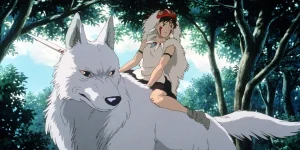
- Princess Mononoke (1997)