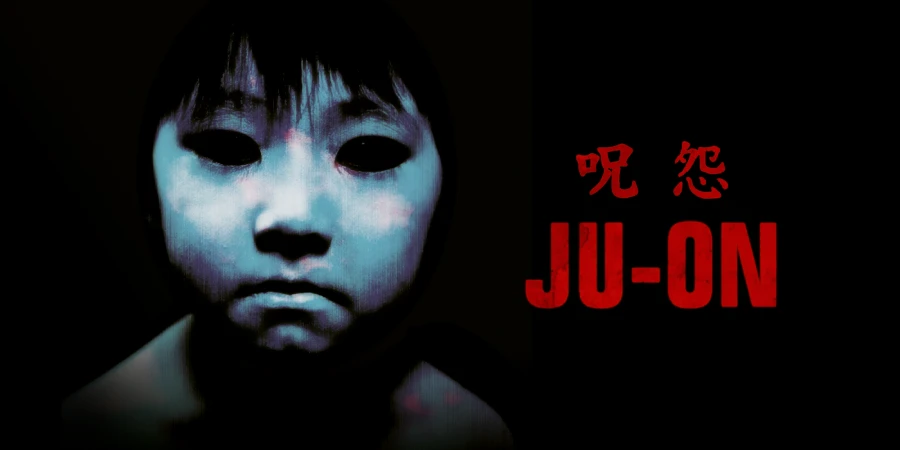

Ju-on: The Grudge (2002), directed by Takashi Shimizu, is a landmark in Japanese horror cinema. It’s a film that redefined the haunted house subgenre and introduced audiences worldwide to a new type of terror—one that doesn’t rely on jump scares alone but on the eerie inevitability of a curse that cannot be escaped.
Detailed Summary
The Birth of the Curse
The movie begins with a domestic tragedy. Takeo Saeki, in a fit of jealous rage, murders his wife Kayako after discovering her obsession with another man, their son’s teacher. He also kills their young son Toshio and the family cat. The intense anger and sorrow from their deaths give birth to the Ju-on, a curse born from powerful emotions that stain the house forever. Anyone who enters the house becomes a target of the curse, doomed to die and become part of the haunting.
The Social Worker’s Visit
Social worker Rika Nishina (played by Megumi Okina) visits the Saeki house to check on an elderly woman living there. The house is eerily quiet and filled with an oppressive sense of dread. Rika discovers the woman dead and encounters the ghost of Toshio, a pale boy who meows like a cat. This is one of the most chilling moments in the movie, setting the tone for the horrors to come.
The Domino Effect of the Curse
The story unfolds through an anthology-style structure, with multiple interlinked segments focusing on different characters who encounter the house. Each person—be it a detective, a caretaker, or a family member—is drawn into the web of the curse. The curse doesn’t just kill them; it consumes them, erasing their presence from the world.
Katsuya and Hitomi’s Fate
Rika’s co-worker Katsuya Tokunaga and his wife Hitomi also fall victim. Hitomi, trying to escape the ghostly presence, hides in her apartment. In one of the film’s most iconic scenes, she climbs into her bed, only to be pulled under the covers by Kayako’s ghost. The camera’s slow zoom into the bed is pure nightmare fuel and remains one of J-horror’s most unforgettable images.
The Police Investigation
Detective Nakagawa, who investigates the mysterious deaths, begins to uncover the dark history of the Saeki family. He realizes that everyone who steps into the house disappears or dies under inexplicable circumstances. His own attempt to destroy the house ends tragically, further proving that the curse cannot be stopped.
Movie Ending
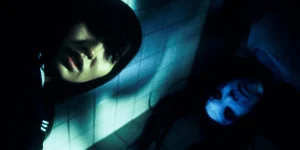
Rika returns to the Saeki house, drawn by both guilt and curiosity. Inside, she experiences vivid visions of the night Kayako was murdered. In these scenes, the film blurs the line between time and reality—Rika witnesses the murder as if she were there, reliving the trauma imprinted on the house.
As Rika tries to escape, she encounters Kayako’s ghost crawling down the stairs in her now-iconic contorted motion, bones cracking, hair trailing behind her like a shadow. The film reaches its climax when Rika is finally confronted by Kayako face-to-face.
In the end, Rika’s body is found, and it is revealed that she has been overtaken by the curse. Her reflection in a mirror shows Kayako’s dark eyes staring back—suggesting that the curse has now spread to her. The house remains standing, and the curse endures, waiting for the next victim to cross its threshold.
The ending is not a simple closure—it’s a cycle. The curse never dies; it only passes on. The film closes with the sound of Kayako’s rattling croak echoing in the darkness.
Are There Post-Credits Scenes?
No, Ju-on: The Grudge (2002) does not have any post-credits scenes. The film’s final shot is the ending—ominous, unresolved, and intentionally lingering. The curse doesn’t need extra footage to remind viewers that it continues forever.
Type of Movie
Ju-on: The Grudge is a Japanese supernatural horror film. It’s known for its non-linear narrative, psychological dread, and minimalist use of sound and music to evoke unease. Rather than relying on gore, it terrifies through atmosphere and the inevitability of doom.
Cast
- Megumi Okina as Rika Nishina
- Misaki Itō as Hitomi Tokunaga
- Takako Fuji as Kayako Saeki
- Yuya Ozeki as Toshio Saeki
- Takashi Matsuyama as Takeo Saeki
- Kanji Tsuda as Katsuya Tokunaga
Film Music and Composer
The haunting sound design and sparse score were created by Gary Ashiya, who focused on ambient noises—creaking floors, whispers, and Kayako’s iconic croak—to build dread. The minimalistic approach amplifies the realism and claustrophobic horror.

Filming Locations
Most of the film was shot in Tokyo, Japan, primarily in residential neighborhoods and indoor sets designed to mimic the traditional Japanese home. The mundane setting is crucial—it emphasizes how ordinary spaces can hide unspeakable horrors. The Saeki house itself becomes a character, its narrow hallways and sliding doors amplifying tension.
Awards and Nominations
While not a major awards contender, Ju-on was a commercial and critical success in Japan and internationally. It won acclaim for its innovative structure and atmosphere, leading to a wave of Japanese horror exports to the West. The film’s success eventually inspired an American remake, The Grudge (2004).
Behind the Scenes Insights
- Director Takashi Shimizu first explored the Ju-on concept in two short films before expanding it into a feature.
- The infamous “croaking” sound made by Kayako was performed by actress Takako Fuji using only her throat.
- Many of the scares were achieved in-camera, with minimal CGI.
- The film’s non-linear timeline was a deliberate choice to make the audience feel as disoriented as the cursed victims.
- Shimizu shot the movie on a modest budget, relying heavily on creative lighting and sound rather than expensive effects.
Inspirations and References
The story is based on Japanese folklore surrounding Onryō, vengeful spirits bound by rage. Shimizu was inspired by the cultural belief that intense negative emotions can linger in physical spaces. The film also draws influence from earlier Japanese ghost stories like Kwaidan and modern J-horror classics like Ringu (1998).
Alternate Endings and Deleted Scenes
Some early drafts included a scene showing the curse spreading beyond the house, hinting at a global infection. This idea was later expanded in sequels. Deleted footage reportedly included extended versions of Kayako’s appearances, which were trimmed for pacing and to maintain tension.
Book Adaptations and Differences
A novelization of Ju-on was released, expanding on the lore of the curse and the backstory of the Saeki family. The book goes deeper into Kayako’s psychological state before her death and adds more detail about Toshio’s haunting presence. The film, however, keeps things ambiguous and visual, leaving much to interpretation.



Memorable Scenes and Quotes
Key Scenes
- Rika discovering Toshio hiding under the table
- Hitomi being dragged under the bed by Kayako
- Kayako’s terrifying stair crawl
- The flashback to the murder of the Saeki family
- Rika’s transformation in the final moments
Iconic Quotes
- “Once you enter, you can never escape.”
- “It never forgives. It never forgets.”
Easter Eggs and Hidden Details
- The cat’s meow associated with Toshio is symbolic—he was killed alongside his cat, merging their souls.
- The film subtly shows newspaper clippings in the background hinting at other disappearances linked to the house.
- Kayako’s ghost often appears reflected in mirrors before being seen directly.
- The blue-gray tint of the movie represents both death and decay—used to mimic the pallor of corpses.
Trivia
- The Ju-on curse operates like a virus, a concept later mirrored in Western horror like The Ring.
- Takashi Shimizu directed both the Japanese original and its American remake—a rare occurrence in horror cinema.
- Actress Takako Fuji played Kayako in every Ju-on and The Grudge movie for nearly a decade.
- The film’s budget was only around $3.5 million, yet it became a box office phenomenon.
Why Watch?
Because Ju-on: The Grudge isn’t just a horror movie—it’s a masterclass in dread. The film doesn’t rely on cheap tricks; it crawls into your subconscious and stays there. If you love slow-burn horror with deep cultural roots and psychological chills, this is essential viewing.
Director’s Other Movies
- Marebito (2004)
- Reincarnation (2005)
- The Grudge (2004) – U.S. remake
- Ju-On 2 (2003)
- Ju-on: The Curse (2000) – TV version
Recommended Films for Fans
- Ringu (1998)
- Dark Water (2002)
- Pulse (2001)
- The Eye (2002)
- The Grudge (2004) – U.S. version
- Noroi: The Curse (2005)