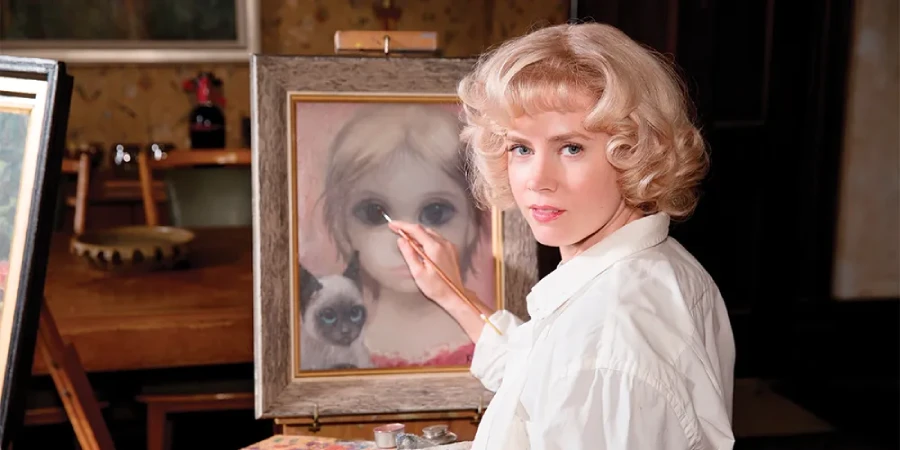

Tim Burton swaps his usual gothic shadows for the pastel-soaked sunshine of mid-century California in this bizarre true story. Margaret Keane painted haunting children with oversized eyes while her husband took every ounce of credit. This colorful drama exposes the most audacious art fraud in American history through a lens of domestic manipulation.
Detailed Summary
Escaping the Past
Margaret leaves her first husband in 1958 and heads to San Francisco with her young daughter. She works a grueling job painting furniture to make ends meet. During her weekends, she paints portraits of children with hauntingly large eyes at outdoor art markets.
There, she meets Walter Keane, a charming man who paints Parisian street scenes. He quickly sweeps her off her feet with tales of his studies in France. They marry quickly, giving Margaret the stability she desperately craves as a single mother.
The Big Lie Begins
Walter attempts to sell their work at a local jazz club, but the owner relegates the paintings to the dark hallway near the toilets. Surprisingly, customers ignore Walter’s landscapes and flock to Margaret’s big-eyed waifs. When a buyer asks if he painted them, Walter claims the work as his own to secure a sale.
Margaret eventually discovers the deception and confronts him in their home. Walter manipulates her by arguing that people will not buy art from a female painter. Consequently, he convinces her that they are a team where he handles the public persona and she provides the talent.
A Commercial Empire
The Keane brand explodes in popularity during the early 1960s with Walter as the face of the movement. He pioneers the sale of cheap mass-produced posters and postcards of Margaret’s work. This strategy makes them incredibly wealthy while the traditional art world scorns their commercial success.
Margaret lives like a prisoner in her own home, painting in a locked room for sixteen hours a day. Walter becomes increasingly abusive and paranoid as the pressure to maintain the lie grows. He even threatens her life during a drunken rage when a critic mocks his apparent lack of skill.
Movie Ending
Margaret finally flees to Hawaii with her daughter after Walter nearly burns their house down in a fit of anger. She joins the Jehovah’s Witnesses and finds the moral strength to stop lying about her secret career. During a radio broadcast from Honolulu, she publicly reveals that she is the true artist behind every big-eyed painting.
Walter strikes back in the press, calling his wife delusional and insane. They eventually meet in a federal courtroom to settle the defamation lawsuit once and for all. The judge loses patience with Walter’s theatrics and orders a “paint-off” right there in the room.
Margaret finishes a beautiful painting of a child in less than an hour. In contrast, Walter refuses to touch his canvas, claiming a sudden shoulder injury prevents him from working. The jury rules in favor of Margaret, restoring her legal rights and her identity as the creator of her own art.
Are There Post-Credits Scenes?
There are no post-credits scenes in Big Eyes. However, the film concludes with a heartfelt tribute showing a modern photograph of the real Margaret Keane. This final image reinforces the authenticity of the struggle portrayed throughout the movie.
Type of Movie
This film is a biographical drama with a satirical edge. It utilizes a bright, saturated palette to contrast the dark themes of domestic abuse and fraud. While it stays grounded in reality, the tone occasionally feels surreal because of the sheer absurdity of Walter’s lies.
Cast
- Amy Adams – Margaret Keane
- Christoph Waltz – Walter Keane
- Danny Huston – Dick Nolan
- Krysten Ritter – DeeAnn
- Jason Schwartzman – Ruben
- Terrence Stamp – John Canaday
- Jon Polito – Enrico Banducci
Film Music and Composer
Danny Elfman composed the musical score for the film. Interestingly, this project marked a departure from his typical bombastic and eerie style. The music focuses instead on delicate melodies that mirror Margaret’s internal emotional journey.
Lana Del Rey contributed two original songs to the soundtrack, including the title track. Her melancholic voice captures the 1960s aesthetic and the sadness of the protagonist’s isolation. These songs received critical praise for their atmospheric quality.

Filming Locations
Major portions of the movie were filmed in Vancouver, British Columbia. The production designers meticulously transformed local streets into 1950s San Francisco using vintage cars and signage. These locations provide a vibrant backdrop that highlights the era’s optimism.
The crew also traveled to Honolulu, Hawaii, to capture the final act of the story. The tropical scenery emphasizes Margaret’s sense of freedom after escaping California. Furthermore, the lush greenery contrasts sharply with the stifling, dark studio where she spent years in hiding.
Awards and Nominations
Amy Adams won the Golden Globe for Best Actress in a Motion Picture – Musical or Comedy. The film also earned several nominations for its original songs and Christoph Waltz’s performance.
Behind the Scenes Insights
- Tim Burton is a long-time collector of Margaret Keane art and actually commissioned a portrait from her in the 1990s.
- The real Margaret Keane was present on set during the filming of the outdoor art market scene.
- Amy Adams spent time with the artist to observe her specific painting techniques and hand movements.
- Christoph Waltz intentionally leaned into a theatrical acting style to mimic Walter Keane’s real-life hunger for the spotlight.
Inspirations and References
The screenplay draws heavily from the real-life court transcripts of the 1986 trial. Notably, the writers interviewed Margaret extensively to capture her perspective on the marriage. The film also references the World’s Fair of 1964, where the controversial painting Tomorrow’s Forever caused a massive scandal.
Alternate Endings and Deleted Scenes
No major alternate endings exist for this film because it adheres strictly to historical facts. However, deleted scenes reportedly included more interactions between Margaret and her daughter. These cuts helped the film maintain a tighter focus on the psychological battle between the two leads.
Book Adaptations and Differences
This film is not based on a specific book. Instead, the screenwriters Scott Alexander and Larry Karaszewski developed it from years of direct research. They previously wrote Ed Wood, showing a consistent interest in eccentric figures from art history.
Memorable Scenes and Quotes
Key Scenes
- The confrontation in the hallway of the hungry i jazz club.
- The sequence where Margaret sees everyone in a supermarket with “big eyes” during a mental breakdown.
- The courtroom paint-off where Walter fails to produce a single stroke.
Iconic Quotes
- “I think you’re the one who doesn’t know what I’m capable of.”
- “People don’t buy lady art.”
- “Why does it have to be your name on the bottom?”
Easter Eggs and Hidden Details
- The real Margaret Keane makes a cameo sitting on a park bench during the Palace of Fine Arts scene.
- Many of the paintings seen in the background are actual Keane originals borrowed for the production.
- The color of the walls in Margaret’s studio changes as she becomes more oppressed by Walter’s demands.
Trivia
- This was Tim Burton’s first film since Mars Attacks! not to feature Johnny Depp or Helena Bonham Carter.
- Walter Keane continued to claim he was the true artist until his death in 2000.
- The “big eyes” style influenced many future artists, including the creators of The Powerpuff Girls.
Why Watch?
This movie offers a fascinating look at the struggle for female creative identity. Amy Adams delivers a masterful, quiet performance against the backdrop of a vibrant mid-century world. Ultimately, the story celebrates the power of truth over commercial greed.
Director’s Other Movies
- Beetlejuice (1988)
- Edward Scissorhands (1990)
- Batman Returns (1992)
- Ed Wood (1994)
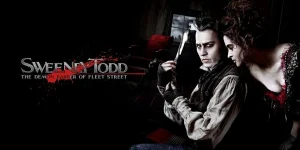
- Sweeney Todd: The Demon Barber of Fleet Street (2007)
Recommended Films for Fans
- Frida (2002)
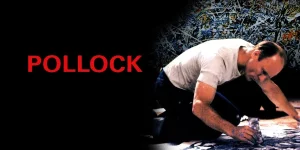
- Pollock (2000)
- The Eyes of Tammy Faye (2021)
- Ghost World (2001)