
A murderer becomes a saint, and a saint becomes a martyr. The Widow of Saint-Pierre (2000) is a French-language period drama that refuses to let you off the hook emotionally. Director Patrice Leconte builds a story about capital punishment, moral courage, and institutional cruelty with the patience of a surgeon and the heart of a poet. By the final frame, you will have watched two people lose everything for doing exactly what was right.
Detailed Summary
A Brutal Crime on a Remote Island
Set in 1849 on the French island of Saint-Pierre, off the coast of Newfoundland, the film opens with a senseless killing. Two fishermen, Neel Auguste and a companion, murder an old man named Monsieur Coupard while drunk, cutting off his legs to use him as a seat and then killing him. It is a grotesque, almost absurd act of violence, and Leconte does not glamorize it.
Auguste is arrested and tried. His companion dies before sentencing, so Auguste alone faces justice. A death sentence follows quickly, leaving the small colonial community in an uncomfortable position: they have a condemned man but no guillotine.
The Captain and His Wife Take Charge
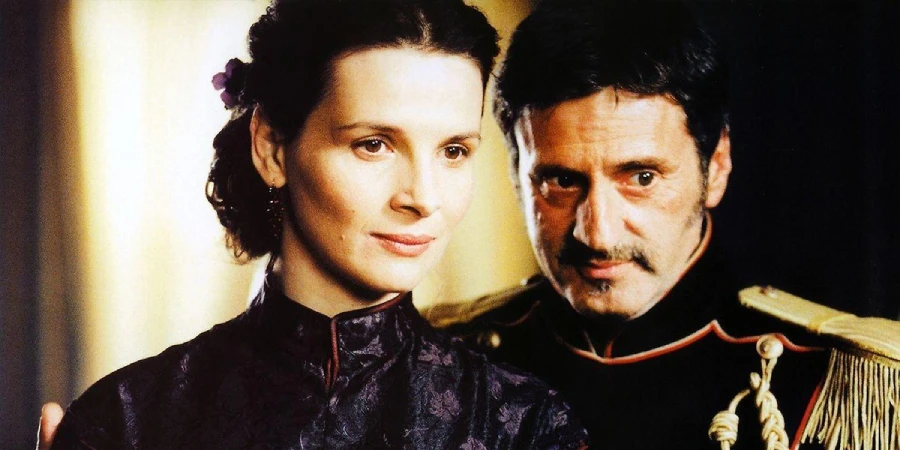
While the authorities wait for the guillotine and an executioner to arrive from mainland France, Auguste is placed in the custody of Captain Jean, the island’s military commander, and his wife, Pauline, known simply as Madame La. Juliette Binoche plays Pauline with fierce, quiet conviction. She becomes the moral engine of the entire film.
Pauline refuses to treat Auguste as a dead man walking. She puts him to work in her garden, allows him to move through the community, and treats him with full human dignity. Her husband supports her completely, even when it creates serious political friction.
Auguste’s Transformation
What Leconte presents next is genuinely surprising. Auguste, played by Emir Kusturica, begins to change. He works hard, saves a child from drowning, and earns the genuine respect and affection of the islanders. He becomes, in every observable sense, a good man.
Pauline’s belief in his capacity for redemption does not look naive; it looks correct. Moreover, this transformation creates a profound ethical crisis for everyone watching, because the state still intends to execute him regardless of who he has become.
Political Pressure Builds
Meanwhile, mainland authorities grow increasingly irritated. The Governor, local officials, and the council of Saint-Pierre view the Captain’s permissive custody arrangements as a threat to order and colonial authority. They send repeated communications demanding tighter control over the prisoner.
Captain Jean refuses to change course. His loyalty to Pauline and his own moral compass override institutional obedience. In contrast, the political machinery around him has no interest in the man Auguste has become; it only cares about the example his execution will set.
A Guillotine Arrives
After delays and logistical complications, a guillotine finally arrives from France. However, the island still lacks an official executioner. Authorities attempt to recruit local men for the role. Each one refuses, a small but powerful act of collective moral resistance.
Consequently, the authorities must import an executioner as well. By this point, the community has developed a real bond with Auguste. His impending death feels less like justice and more like a bureaucratic inevitability grinding toward a foregone conclusion.
The Captain Pays the Price
As the execution date approaches, Captain Jean faces formal charges related to his handling of the prisoner. Authorities strip him of his command. He is to be court-martialed and removed from the island.
Pauline, in desperation, helps Auguste escape, or at least attempts to create the opportunity. Auguste, however, chooses to return. He refuses to run, partly from fatalism and partly from a kind of dignity he has developed. He will not make Pauline and Jean pay for a freedom he did not choose to take.
Movie Ending
Auguste walks calmly to his execution. Leconte films it without melodrama, which makes it hit harder. The guillotine does its work. A man who became genuinely good dies because the paperwork demanded it.
What follows is the film’s cruelest beat. Shortly after Auguste’s execution, Captain Jean is shot dead, not by enemies in battle, but by a firing squad ordered by the very authorities he refused to obey. His court-martial ends in the harshest possible verdict.
Pauline survives, and she will outlive both men by many years. The film’s title finally snaps into focus: she is the widow of Saint-Pierre, a woman defined by the loss of a good man who stood for something. The title also gestures toward the guillotine itself, historically called “the widow” in French slang, a detail Leconte layers with grim irony.
Notably, the ending refuses any comfort. Nobody is punished for their moral cowardice. The island moves on. Pauline carries the weight alone. It is a devastating conclusion precisely because it is so plausible, so historically grounded, and so devoid of cinematic consolation.
Are There Post-Credits Scenes?
The Widow of Saint-Pierre contains no post-credits scenes. The film ends on its own terms, quietly and without epilogue or addendum.
Type of Movie
This is a French-language period drama with strong romantic and philosophical undercurrents. Its tone is somber, restrained, and deeply humanist. It belongs to a tradition of literary French cinema that prioritizes character and moral complexity over plot mechanics.
Audiences expecting action or courtroom theatrics will find neither. Instead, Leconte offers sustained emotional tension built from small gestures, quiet performances, and an overwhelming sense of fate closing in.
Cast
- Juliette Binoche – Pauline, “Madame La”
- Daniel Auteuil – Captain Jean, “Le Capitaine”
- Emir Kusturica – Neel Auguste
- Michel Duchaussoy – The Governor
- Philippe Magnan – Louis Ollivier
- Reynald Bouchard – Chevassus
Film Music and Composer
Pascal Esteve composed the score for The Widow of Saint-Pierre. His music keeps a low profile, favoring spare, mournful arrangements that complement the film’s restrained visual style rather than underlining every emotional moment.
The score leans on strings and quiet melodic passages. It does not push the audience toward a feeling; it simply accompanies the characters with a kind of sad respect.


Filming Locations
Principal photography took place on the actual island of Saint-Pierre, a French territorial collectivity off the coast of Newfoundland, Canada. Using the real location gives the film an authentic, wind-battered texture that no studio set could replicate.
The isolation of the island is not just a backdrop; it is a character. The remoteness from mainland France physically represents the distance between the community’s humanity and the cold machinery of French colonial law. Furthermore, the grey skies and rugged coastline reinforce the film’s emotional palette at every turn.
Awards and Nominations
The Widow of Saint-Pierre earned Juliette Binoche a César Award nomination for Best Actress, one of France’s most prestigious film honors. The film also received attention at various international festivals upon its release.
It did not sweep major awards ceremonies, but its critical reception was strong, particularly in France and among international arthouse audiences.
Behind the Scenes Insights
- Emir Kusturica, primarily known as a celebrated director (of films like Underground), took the role of Auguste as an actor, a relatively rare move for someone of his directorial stature.
- Shooting on the actual island of Saint-Pierre presented significant logistical challenges, including unpredictable Atlantic weather that frequently disrupted the schedule.
- Juliette Binoche and Daniel Auteuil were already among the most respected names in French cinema, and their real-world rapport contributed to the convincing intimacy of their on-screen relationship.
- Patrice Leconte deliberately avoided sensationalizing the violence or the execution, aiming for a tone that felt more like a moral fable than a thriller.
- The production design team worked to recreate mid-19th-century Saint-Pierre accurately, sourcing period-appropriate materials and costumes to ground the story in its specific historical moment.
Inspirations and References
The film draws directly from a true historical case that occurred on the island of Saint-Pierre in the 19th century. A man named Neel committed a murder and was sentenced to death, and the logistical difficulty of carrying out the execution on the remote island created exactly the kind of extended, community-altering wait that the film depicts.
Screenwriter Claude Faraldo shaped the historical record into a narrative that emphasizes the love story between Pauline and Jean as the emotional and moral center. The true events provided the skeleton; the screenplay provided the soul.
Alternate Endings and Deleted Scenes
No documented alternate endings or significant deleted scenes have entered the public record for The Widow of Saint-Pierre. Leconte has not publicly discussed major cuts that changed the film’s direction during editing.
Given the film’s deliberate pacing and tight narrative structure, the released version appears to reflect Leconte’s intended vision without significant compromise.
Book Adaptations and Differences
The Widow of Saint-Pierre is not based on a novel or any single literary source. It originates from Claude Faraldo’s original screenplay, which drew on historical accounts of the real events on Saint-Pierre rather than a specific published work.
Therefore, there is no book-to-film comparison to make here. The screenplay itself is the primary creative document.



Memorable Scenes and Quotes
Key Scenes
- Auguste saves the child from drowning: a pivotal moment that crystallizes his transformation and shifts the community’s perception of him from condemned criminal to valued neighbor.
- Pauline puts Auguste to work in her garden: the first visible act of her radical humanization of the prisoner, quiet and almost domestic, yet politically explosive in context.
- The refusal to serve as executioner: one by one, islanders decline the role, a wordless collective moral statement that carries enormous weight.
- Auguste chooses to return after the escape opportunity: the moment that defines his character fully, prioritizing dignity and protecting Pauline and Jean over his own survival.
- Captain Jean faces the firing squad: the film’s second execution, which arrives almost without warning and lands like a gut punch because of how quietly it is staged.
Iconic Quotes
- “He is not the same man who committed the crime.” Pauline’s central argument, simple and unanswerable, yet entirely ignored by the law.
- “The widow” as a term for the guillotine, invoked with dark irony once we understand that Pauline herself will become a widow before the film ends.
Easter Eggs and Hidden Details
- The film’s title operates on at least two levels simultaneously: it references both the guillotine (historically nicknamed “la veuve,” meaning “the widow” in French) and Pauline’s own fate as a woman left alone after losing her husband.
- Leconte frames several scenes so that the guillotine is visible in the background of everyday community life, a constant, silent reminder that normalcy and death are coexisting on this island.
- Auguste’s garden work mirrors a kind of symbolic rebirth, with soil, growth, and cultivation used throughout as visual shorthand for the life he is building while simultaneously being condemned to die.
- Captain Jean’s uniform becomes progressively less formal as the story advances, a subtle visual cue that his allegiance to institutional authority is dissolving in favor of personal morality.
Trivia
- Emir Kusturica won the Palme d’Or at Cannes twice as a director, making his appearance here as an actor a notable career detour.
- The island of Saint-Pierre remains French territory to this day, one of only two French territorial collectivities in North America.
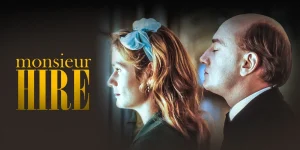
- Director Patrice Leconte was already known for character-driven, emotionally precise films like Monsieur Hire (1989) and The Hairdresser’s Husband (1990) before making this film.
- The film was a co-production between France and Canada, reflecting the geographical and cultural duality of its setting.
- Daniel Auteuil was one of the most decorated actors in French cinema at the time of filming, having won a César Award for Jean de Florette-era work.
Why Watch?
The Widow of Saint-Pierre makes a genuine case for human dignity without resorting to speeches or sentiment. Binoche and Auteuil deliver two of their finest performances, and Kusturica matches them beat for beat. For anyone who wants cinema that trusts its audience to feel without being told how, this film is essential.
Director’s Other Movies
- Monsieur Hire (1989)
- The Hairdresser’s Husband (1990)
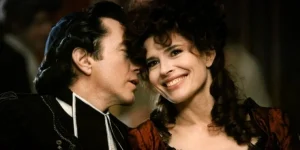
- Ridicule (1996)
- The Girl on the Bridge (1999)
- Intimate Strangers (2004)
Recommended Films for Fans
- Ridicule (1996)
- A Man Escaped (1956)
- The Return of Martin Guerre (1982)
- Camille Claudel (1988)
- Of Gods and Men (2010)
- Germinal (1993)