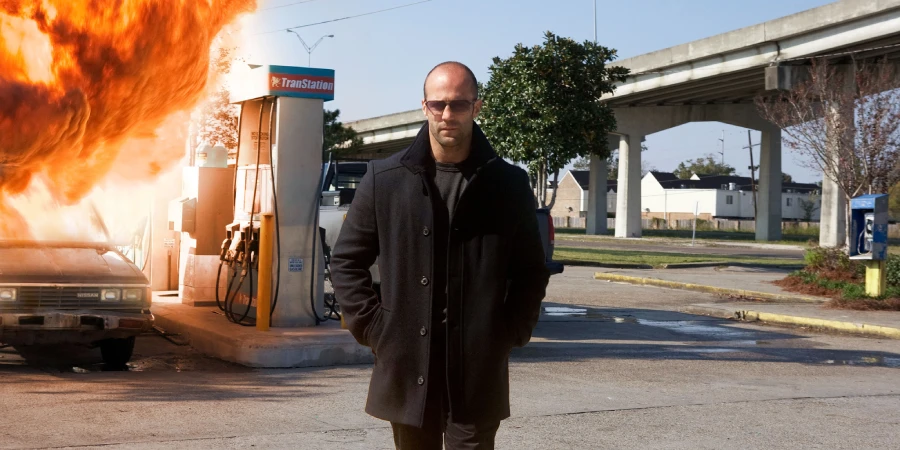

Arthur Bishop kills people and makes it look like an accident. That single premise drives The Mechanic (2011) with a lean, brutal efficiency that most action films fail to achieve in twice the runtime. Jason Statham plays Bishop as a man of few words and precise habits, and director Simon West leans hard into that quietness, letting scenes breathe before erupting into violence. What makes this remake worth dissecting is how it uses its mentor-apprentice structure to set up a betrayal that most viewers feel coming yet still lands with genuine sting.
Detailed Summary
Introducing Arthur Bishop
We meet Arthur Bishop (Jason Statham) in the film’s opening sequence, a near-wordless assassination set in New Orleans. Bishop infiltrates a Colombian drug lord’s fortified lake compound, drowns the target in his own pool, and stages it as a drug-induced accident. No music cues push emotion at you; the scene simply plays out with cold procedural logic.
Bishop drives a classic car, listens to vinyl records at home, and reads philosophy. West builds a portrait of a man who takes enormous pride in clean work, a professional who believes messy kills are a failure of preparation.
Harry McKenna and the Betrayal
Harry McKenna (Donald Sutherland) is Bishop’s mentor, handler, and the closest thing Bishop has to family. Harry is confined to a wheelchair following an attack, and his son Steve McKenna (Ben Foster) is an undisciplined, self-destructive drifter.
Bishop’s employer, Dean (Tony Goldwyn), contracts Bishop to kill Harry, presenting evidence that Harry betrayed a team of operatives in South Africa, causing their deaths. Bishop reluctantly accepts the contract. He stages Harry’s death as a street robbery, shooting him twice on a quiet road. It is the film’s quietest, most painful moment, Statham’s face doing most of the heavy lifting as Bishop pulls the trigger on someone he loved.
Taking on Steve as an Apprentice
Steve finds Bishop at Harry’s funeral and pushes his way into Bishop’s life, demanding to know how to do what Bishop does. Bishop resists, then relents. He begins training Steve in the craft of contract killing.
Steve is reckless where Bishop is disciplined. His first assigned kill, a contract on a predatory cult leader, nearly falls apart because Steve improvises. He beats the man to death in a bathroom rather than executing a clean staged death. Bishop has to bail him out, and the contrast between the two men sharpens into something genuinely interesting.
The Partnership Develops
Bishop and Steve take on a contract together targeting Burke (Jeff Chase), a massively built enforcer. Steve poses as a gay man to get close to Burke at a bar. The sequence plays partly as dark comedy before escalating into a brutal close-quarters fight. Steve survives by the skin of his teeth.
West shoots these action sequences with practical emphasis, favoring real stunt work over digital enhancement. Statham is in his element here, and the film earns its R rating without wallowing in gore.
Steve’s Volatility and the Growing Cracks
Steve’s unpredictability becomes a recurring problem. He sleeps with his prostitute contact rather than maintaining professional distance. He acts on impulse and emotion in situations that demand cold calculation.
Bishop continues training him, and a grudging respect develops. West frames their dynamic as something almost paternal, which makes what follows hit harder.
The Truth About Harry
Bishop eventually uncovers the truth: Dean manipulated the evidence against Harry McKenna. Harry was not a traitor. Dean fabricated the South Africa file to have Harry eliminated, likely to consolidate control or eliminate someone who knew too much. Bishop killed an innocent man, his mentor and closest friend, based on a lie.
Steve discovers this too, and his rage is immediate and visceral. Ben Foster plays the revelation as pure, barely contained fury. His grief over his father’s death finds a target.


Movie Ending
Bishop and Steve move against Dean and his organization. Bishop kills Dean’s associates and ultimately confronts Dean himself. Dean dies, and Bishop appears to have walked away clean, driving off with Steve in a truck loaded with cash.
Then Steve makes his move. He detonates a bomb hidden in the truck, killing Bishop. Or so it appears. Steve drives away, seemingly having avenged his father by eliminating the man who actually pulled the trigger on Harry, regardless of Dean’s manipulation. It is a cold, well-executed turn, and Ben Foster sells Steve’s ruthless pragmatism without a single line of dialogue in that moment.
West does not let Steve win. Bishop, having anticipated exactly this betrayal, survives. He had already planted a device on Steve’s car. Bishop triggers it remotely, and Steve’s car explodes on the highway. Bishop walks away alone, mission complete, mentor unavenged in any emotionally satisfying way.
What the ending refuses to do is moralize. Bishop did kill Harry. Steve’s rage was not irrational. The film lets both men be right and both men be killers, and it ends with the lone professional still standing, not triumphant, just surviving. That refusal to offer easy closure is the most honest thing the film does.
Are There Post-Credits Scenes?
The Mechanic (2011) has no post-credits scene. Once the credits roll, the film is done. You can leave the theater without missing anything.
Type of Movie
This is a neo-noir action thriller with a significant procedural streak. It prioritizes craft and methodology over spectacle, at least in its first half. The tone is cool and deliberate, occasionally darkly comic, and consistently violent.
Think less summer blockbuster, more pulp crime fiction in motion. West keeps the pacing efficient without rushing past character moments.
Cast
- Jason Statham – Arthur Bishop
- Ben Foster – Steve McKenna
- Donald Sutherland – Harry McKenna
- Tony Goldwyn – Dean
- Jeff Chase – Burke
- Mini Anden – Sarah
Film Music and Composer
Mark Isham composed the score for The Mechanic. Isham brings a minimalist sensibility to the film, favoring low, controlled textures over big orchestral swells. His work complements the procedural tone West establishes early.
Isham is a prolific composer with credits spanning decades, including crime thrillers and dramatic features. His score here stays out of the film’s way, which is exactly the right instinct for a movie that trusts silence as much as sound.

Filming Locations
Principal photography took place in New Orleans, Louisiana. The city’s bayou geography and dense urban architecture give Bishop’s world a specific, humid texture that generic studio environments cannot replicate.
New Orleans suits the film thematically. A city built on contradiction, beauty over rot, luxury over poverty, fits a story about a man who makes violence look peaceful. West uses the location intelligently rather than as mere backdrop.
Some sequences also filmed in the broader Louisiana region. The location choices ground the film’s otherwise heightened premise in physical reality.
Awards and Nominations
The Mechanic did not receive significant awards attention or major nominations. It was a commercial rather than critical event, and the awards circuit largely ignored it.
Behind the Scenes Insights
- Jason Statham performed many of his own stunts, consistent with his established practice across action films.
- Ben Foster reportedly prepared extensively for his role, researching the psychological profile of someone drawn to violence as a profession.
- Director Simon West cited the original 1972 Charles Bronson film as a key reference point, aiming to honor the lean, cold tone of the source material.
- West deliberately kept dialogue minimal in action sequences, preferring physical performance over exposition.
- The opening assassination sequence in the lake compound was one of the more technically demanding shoots, requiring coordination between underwater photography and surface action.
Inspirations and References
The 2011 film remakes the 1972 film of the same name, directed by Michael Winner and starring Charles Bronson. That film was written by Lewis John Carlino, and the remake draws directly from Carlino’s original screenplay structure and core premise.
The original 1972 film is itself rooted in the tradition of cold-war era assassination thrillers and hardboiled crime fiction. Both films share a clinical fascination with the mechanics of killing as craft.
West and the production team were open about the influence of classic 1970s action cinema, particularly films that treated their protagonists as professionals rather than heroes.
Alternate Endings and Deleted Scenes
No widely documented alternate endings or significant deleted scenes from The Mechanic (2011) have been confirmed in official release materials or interviews. The ending as released reflects the production’s intended vision.
Given the film’s straightforward commercial production, extensive alternate cut material appears unlikely to surface, though no official statement has ruled it out entirely.
Book Adaptations and Differences
The Mechanic (2011) is not based on a novel. It is a remake of the 1972 film, which was based on an original screenplay. No prose source material exists to compare against.


Memorable Scenes and Quotes
Key Scenes
- The lake compound opening: Bishop swims into a fortified estate, drowns his target silently, and exits without firing a single shot. The camera watches his hands throughout, unhurried and precise.
- Harry’s death: Bishop shoots Harry on a deserted road. Statham keeps his expression almost completely neutral, but something behind his eyes closes down. It is the film’s most emotionally loaded 30 seconds.
- Steve versus Burke: Steve goes undercover at a bar to get close to Burke, a physically intimidating enforcer. The tonal shift from awkward social comedy to desperate, messy violence happens fast and without warning.
- The truck explosion: Steve triggers the bomb he planted under the assumption that he has won. The film lets the moment breathe for a beat before pulling the rug.
- Bishop’s remote detonation: Bishop, alive and unhurt, watches Steve’s car explode from a distance. West frames it as pure, quiet professionalism, no satisfaction on Bishop’s face, just completion.
Iconic Quotes
- “A good mechanic knows every tool’s strength and weakness, including himself.” Bishop, early in the film, establishing the film’s central philosophy.
- “Don’t rush the work. It’s what separates us from common killers.” Bishop to Steve during training.
Easter Eggs and Hidden Details
- Bishop’s home is filled with classical music and philosophy books, a direct callback to the Charles Bronson version’s characterization of the original mechanic as a cultured, solitary professional.
- Steve’s recklessness during his first kill mirrors a specific story Harry told about Steve earlier, suggesting Bishop knew what he was dealing with from the start.
- The truck Bishop and Steve share at the end is established earlier in the film, a detail that rewards attentive viewers who might have wondered why Bishop was so calm about getting into it with Steve.
- Bishop’s vinyl record collection includes works that match the emotional register of each act; attentive viewers will notice the selections shift as his relationship with Steve develops.
Trivia
- This is a remake of the 1972 Charles Bronson film of the same name, directed by Michael Winner.
- Ben Foster is widely considered the most interesting casting choice in the film; his intensity consistently matches and sometimes exceeds Statham’s controlled cool.
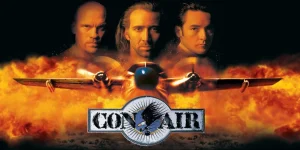
- Director Simon West previously directed Con Air (1997), giving him strong credentials in high-concept action filmmaking.
- A sequel, Mechanic: Resurrection, was released in 2016, again starring Statham.
- Statham and Sutherland have virtually no physical scenes together beyond the early mentorship sequences, a deliberate choice that makes Harry’s absence feel more acute as the film progresses.
- The film’s running time is lean, clocking in at roughly 93 minutes, a discipline rare in modern action releases.
Why Watch?
Ben Foster is the reason to sit through this film twice. While Statham anchors every scene with physical authority, Foster’s portrait of Steve as a man wired wrong yet not entirely unsympathetic gives the film something most Statham vehicles never bother with: a second character worth watching. This film rewards anyone who finds the genre’s usual emotional flatness frustrating.
Director’s Other Movies
- Con Air (1997)
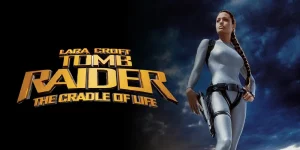
- Lara Croft: Tomb Raider (2001)
- The General’s Daughter (1999)
Recommended Films for Fans
- The Mechanic (1972)
- Leon: The Professional (1994)
- Collateral (2004)
- No Country for Old Men (2007)
- Grosse Pointe Blank (1997)
- Haywire (2011)