
Mary Shelley narrates from the afterlife, a reanimated gangland witness names herself, and Christian Bale dances like a 1930s matinee idol. The Bride! swings big on every front. Maggie Gyllenhaal turns horror’s most famous silent monster into a loud, furious antihero with a black tongue. This breakdown spoils all of it, from the first possession to the last twitching hand.
Detailed Summary
Mary Shelley Possesses Ida in 1936 Chicago
Speaking from the afterlife, Mary Shelley explains that she had a story to tell after Frankenstein but death got in the way. To tell it, she possesses Ida, a young woman in 1936 Chicago, who then publicly blurts out the criminal dealings of crime boss Vito Lupino. Nobody at the gathering understands what just happened.
Lupino’s henchmen Clyde and James quietly take her aside and push her down a staircase to her death. Shelley’s story has barely started, and her narrator is already a corpse.
Frank Asks Dr. Euphronius for a Companion
Elsewhere in Chicago, Frankenstein’s creature, who calls himself Frank, shows up at the home of scientist Dr. Cornelia Euphronius. He has read about her reanimation work and wants a companion after a century of loneliness. After plenty of argument and hesitation, she agrees.
They pick Ida’s corpse and revive her successfully, but she wakes with no memory. Frank exploits the gap and tells her she is his bride who lost her memory in an accident. His love story begins with a lie.
A Night Out Ends in Blood
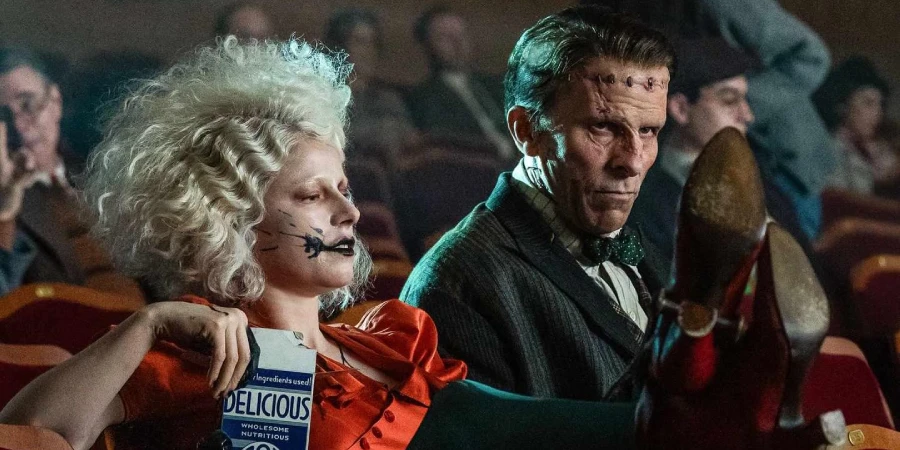
Frank takes her to see a movie starring Ronnie Reed, his favorite actor, and then to a dance club. Two men try to assault her as they leave, and Frank kills both of them. So much for a quiet first date.
He tells her to leave him. Instead, she decides to run away with him. Her choice here matters: she picks the outlaw life before she knows who she really is.
The Train to New York
They stow away on a train to New York City and kill a police officer who discovers them, after Shelley triggers one of her outbursts. Shelley’s possession keeps turning small moments into violent ones.
Meanwhile, Detective Jake Wiles and his assistant Myrna Malloy investigate the murders and eventually follow the trail to New York. Wiles carries a secret about Ida that the film saves for later.
Penelope Rogers and the Zombie Screening
While in hiding, Frank tells her that her name is Penelope Rogers. Penelope causes chaos at a screening of Revolt of the Zombies, and the pair flee police and an angry mob into a high-class party.
Frank runs into Ronnie Reed at the party and gushes at him, only to get brushed off. He starts dancing the way Reed does in his films, Penelope joins in, and party guests possessed by Shelley follow. This sequence is the film at its strangest and most alive.
The Party Standoff
Wiles and the police arrive, but they fall back when Penelope holds Reed at gunpoint and calls out the men in attendance for abusing women. Wiles recognizes her real identity as Ida.
Penelope kills a police officer, and she and Frank escape the city in a stolen car. Their body count now has a headline attached.
Lupino Wants Her Dead Again
Their crime spree hits the newspapers, and Lupino recognizes her face. He executes James for failing to silence her and sends Clyde to kill her a second time.
Malloy, meanwhile, connects the murder reports and sightings to cities where Reed’s films were set. That insight sends her and Wiles to Niagara Falls, where they find the couple. A secretary cracks the case that the detective could not.
Niagara Falls and the Drive-In Confession
Wiles confronts them and tells Penelope she was once Ida, and she responds by shooting him in the foot. Furious, she drags an injured Frank to a drive-in, where he finally tells her the truth about her origins.
Wiles then admits to Malloy that he and Ida had planned to take down Lupino, and he blames his own inaction for her death. He retires and promotes Malloy as his replacement. Guilt, not duty, has driven him the whole time.
Movie Ending
Malloy tracks the couple to the drive-in. Frank apologizes for everything and affirms his love, and the woman once called Ida and Penelope finally picks her own name: the Bride. Not “Bride of Frankenstein.” Not Ida. Simply the Bride.
As Frank proposes, Clyde fatally shoots him. The Bride escapes with Frank’s body and returns to Euphronius’s laboratory, with Malloy close behind. Her first instinct after losing him is to bring him back, exactly as he once did for her.
Euphronius refuses to reanimate Frank. She reveals that her attempts to revive her own husband went wrong, and she had to kill him. That confession reframes her entire character; she knows precisely what resurrection costs.
Clyde breaks into the lab and fatally shoots the Bride before fleeing. Police arrive, and Malloy orders them to search for Clyde, leaving Euphronius alone with the two corpses.
Encouraged by Malloy and by Shelley’s presence, Euphronius decides to revive the couple. Outside, the police arrest Clyde. Malloy sees bright lights flash from the laboratory, and inside, the revived corpses hold hands.
Why does this matter? When Ida first came back, she had no memory of her identity, so Frank and the Bride will likely not remember who they are now. Gyllenhaal gives you the romantic image and quietly poisons it. These two may wake up as strangers.
Shelley’s role also pays off here. Earlier she explained that she came to tell a story Frankenstein never told, and she used Ida as a vessel for it. The ending suggests the story outlives any single body it borrows.
Are There Post-Credits Scenes?
Yes, one mid-credits scene. Jake Wiles, now retired from the police, leads an informal raid on Lupino’s safehouse alongside a large group of women dressed as the Bride, all part of the revolution she started. They apprehend Lupino and his associates and smash his jars of tongues.
Treat this as the real ending of the Bride’s arc. Her idea survives even though she is dead, or at best stripped of her memories and her true self. Nothing waits after the credits finish rolling.
Type of Movie
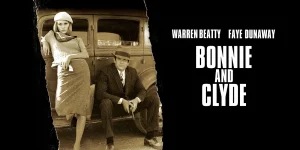
The Bride! is a 2026 American gothic romance that draws inspiration from the 1935 film Bride of Frankenstein, itself based on Mary Shelley’s 1818 novel. It also borrows heavily from lovers-on-the-run crime pictures. Fangoria called it one part Bonnie and Clyde, one part The Bride of Frankenstein.
Expect dance numbers, but not a musical. Gyllenhaal told Entertainment Weekly that it is not a musical at all and asked people to put that idea to bed. Running time lands at 126 minutes.
Tone-wise, the film divided critics sharply. On Rotten Tomatoes, 57% of 335 reviews are positive, with a consensus praising its sloppy-yet-inspired creative chaos, while Metacritic scored it 55 out of 100. CinemaScore audiences handed it a C+.
Cast
- Jessie Buckley – Ida / Penelope Rogers / The Bride, and also Mary Shelley
- Christian Bale – Frank
- Peter Sarsgaard – Detective Jake Wiles
- Annette Bening – Dr. Cornelia Euphronius
- Jake Gyllenhaal – Ronnie Reed
- Penélope Cruz – Myrna Malloy
- John Magaro – Clyde
- Matthew Maher – James
- Zlatko Burić – Vito Lupino
- Jeannie Berlin – Greta
- Julianne Hough – Iris / Jinx
- Louis Cancelmi – Officer Goodman
- Fever Ray – cameo as a performer
Buckley plays a dual role, and Fever Ray appears performing music from the soundtrack.
Film Music and Composer
Hildur Guðnadóttir composed the score, replacing the previously announced Jonny Greenwood. Her credits include Joker, Chernobyl, Women Talking, Tár, and A Haunting in Venice. She is an Academy Award winner, so Gyllenhaal hired serious firepower.
Gyllenhaal said the tone of the music was hard to pin down, no temp music fit the film’s language, and Guðnadóttir had to invent a mix of real punk and deep romance. The result pairs cello and percussion with something far more abrasive.
Swedish artist Fever Ray adds the contemporary edge. The album includes three original Fever Ray songs, Jessie Buckley’s take on Falling in Love Again (Can’t Help It), and several numbers performed by Jake Gyllenhaal with Vince Giordano and the Nighthawks. The two headline Fever Ray tracks are “The Lake” and “Wrong Flower,” released on an EP with both cinematic and studio mixes.
Randall Poster served as music supervisor. Waxwork Records handled the vinyl edition in partnership with WaterTower Music.
Filming Locations
Although the story unfolds across 1930s Chicago and New York, the production shot largely in New York State, beginning in March 2024. Key sites included the Snug Harbor Cultural Center on Staten Island and the town of Ancram, New York.
That choice nearly killed the project. Netflix pushed for cheaper filming in New Jersey while Gyllenhaal insisted on New York, and the dispute factored into Netflix leaving before Warner Bros. stepped in. Snug Harbor’s grand nineteenth-century architecture gave her the gothic bones the lab and party scenes needed.
Cinematographer Lawrence Sher shot the entire film on IMAX-certified digital cameras, mainly the Sony Venice 2. The aspect ratio opens up from 2.39:1 to taller IMAX frames at key moments.
Awards and Nominations
Jessie Buckley earned a Critics’ Choice Super Awards nomination for Best Actress in a Horror Movie, and the “Help!” teaser picked up a Golden Trailer Awards nomination.
At the 2026 Fangoria Chainsaw Awards, the film landed five nominations: Best Wide Release, Best Director, Best Lead Performance, Best Costume Design for Sandy Powell, and Best Makeup FX. It went home empty-handed. Obsession swept Best Wide Release, Director, and Lead Performance, Kate Hawley won Costume Design for Frankenstein, and Mike Hill took Makeup FX for Frankenstein.
Behind the Scenes Insights
- Production Weekly first reported the project in August 2023 as a Netflix remake of The Bride of Frankenstein; by January 2024, Warner Bros. had taken over.
- Warner Bros. chiefs Michael De Luca and Pamela Abdy footed the bill after Netflix walked, and Gyllenhaal credited them with giving her creative freedom.
- Deadline reported the budget at $80 million in January 2025; the film grossed $24 million worldwide, and projected losses reached as high as $100 million.
- Gyllenhaal cut several violent sequences, including moments of sexual violence, after negative test screenings. One deleted beat had Frank licking black vomit off the Bride’s neck.
- Buckley ended one take with an improvised moment, sticking out a tongue she had asked to have colored black.
- Bale spent long, silent hours in the makeup chair day after day during the shoot.
- Bale described his costar as a maniac and meant it as the highest praise, calling maniacs the best people on earth.
- Buckley previously starred in Gyllenhaal’s directorial debut, The Lost Daughter, and Deadline reported that Bale and Buckley were circling the project well before the 2023 strikes.
- This marked the first time Maggie Gyllenhaal directed her brother Jake; he revealed his casting in June 2024.
- Peter Sarsgaard, who plays Wiles, is Gyllenhaal’s husband.
- Dylan Tichenor edited the film.
- Warner Bros. originally dated the film for September 26 and then October 3, 2025, before moving it to March 6, 2026.
Inspirations and References
The film draws on the 1935 Bride of Frankenstein and Mary Shelley’s 1818 novel. Gyllenhaal noted how striking it was that Elsa Lanchester’s Bride made such a cultural impression despite having practically no lines. Giving that character a voice became the whole project.
Hollywood’s golden age looms large too. Gyllenhaal makes frequent references to Shelley herself and uses costuming to evoke films like Top Hat. Ronnie Reed functions as a Fred Astaire-style idol, and Frank’s obsessive mimicry of him drives the plot’s geography.
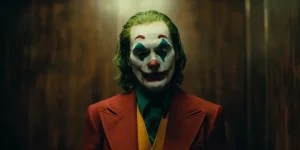
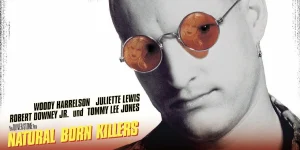
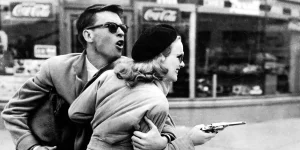
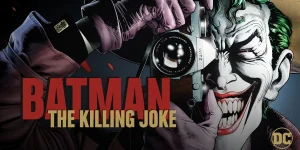
Critics spotted other DNA. Variety’s Owen Gleiberman compared it to Joker: Folie à Deux with a grunge Munsters flavor, plus dollops of Sid and Nancy and Natural Born Killers. The copycat Bride followers also recall how Gotham citizens copied Arthur Fleck’s clown look.
Alternate Endings and Deleted Scenes
No alternate ending has surfaced publicly. The confirmed cuts came from test screenings, where Gyllenhaal removed violent sequences, including sexual violence, and the black vomit licking moment.
Those cuts explain a few tonal seams. Early reviews described a film that lurched between modes, and some of that whiplash likely traces back to material that vanished late in the edit.
Book Adaptations and Differences
Official credits list the film as based on Frankenstein; or, The Modern Prometheus. In practice, Gyllenhaal wrote an original story that treats the novel as backstory.
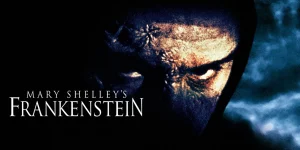
Shelley’s book contains no finished bride. Victor Frankenstein begins building a female companion and destroys her before she ever lives, which sends the creature into vengeful despair. Gyllenhaal’s film answers that abandoned thread a century later.
Other departures run deep. Victor never appears; Frank arrives alone in 1936 and recruits a woman scientist instead. Shelley herself becomes a character who narrates from the afterlife and possesses people on screen. The Bride’s blue-black tongue and cheek stain come from the reanimation treatment, which involved filling her with a murky liquid, a detail with no novel equivalent.
Memorable Scenes and Quotes
Key Scenes
- The opening in black-and-white purgatory, with only Mary Shelley’s face visible.
- Ida’s public outburst about Lupino and her fatal fall down the stairs.
- The reanimation in Euphronius’s laboratory and the Bride’s first waking moments.
- Frank killing two attackers outside the dance club.
- The Revolt of the Zombies screening that spirals into a riot.
- The high-society party where Frank dances like Reed and possessed guests join in.
- Penelope holding Ronnie Reed at gunpoint and naming the abusers in the room.
- The drive-in confession, where Frank admits he never knew who she was.
- The proposal interrupted by Clyde’s gunshot.
- Two hands clasping on the lab table in the final shot.
Iconic Quotes
- Shelley’s opening declaration that she has a story Frankenstein never told.
- Frank’s claim that she is his bride who lost her memory in an accident.
- The Bride’s demand at the party that the men present answer for how they treat women.
- Frank’s drive-in admission that he lied from the start and did not know her before she died.
- Her final self-naming: not Ida, not Penelope, just the Bride.
Easter Eggs and Hidden Details
- Revolt of the Zombies is a real 1936 film, so the screening fits the exact year of the story.
- Malloy solves the case by noticing that the murders cluster in cities where Reed’s films were set. Frank is literally following his idol’s filmography.
- Euphronius is familiar with Dr. Frankenstein’s original work, which quietly links her to the novel’s science.
- The Bride’s frizzy blonde look nods to 1930s superstar Jean Harlow.
- Her followers in the mid-credits scene wear black wedding veils and ink-blot makeup on one side of the mouth.
- The trailer used Florence + The Machine’s “Everybody Scream” to set the punk-gothic tone.
- Guðnadóttir scored Joker, and the Bride’s copycat uprising plays like a knowing echo of that film’s clown riots.
Trivia
- The world premiere took place at the Empire Leicester Square in London on February 26, 2026.
- France and South Korea got the film first, on March 4, 2026, two days before the US IMAX release.
- Opening weekend brought in just $7.3 million domestically, placing third behind Hoppers and Scream 7.
- Second-weekend earnings dropped 70% to $2.1 million.
- The Guardian’s Peter Bradshaw gave it four stars and called Buckley electrifying.
- Digital release arrived April 7, 2026, with 4K, Blu-ray, and DVD following on May 19.
- Costume designer Sandy Powell and production designer Karen Murphy rounded out the creative team.
- Saxophonist David Murray played alongside Fever Ray on the soundtrack.
Why Watch?
Few studio films this ambitious fail this interestingly. Buckley delivers a ferocious, funny, physically fearless performance, and Bale matches her with real vulnerability. Gyllenhaal takes genuine swings at the Frankenstein myth. Even when it stumbles, The Bride! never bores you.
Director’s Other Movies
Recommended Films for Fans
- Bride of Frankenstein (1935)
- Frankenstein (2025)
- Poor Things (2023)
- Bonnie and Clyde (1967)
- Natural Born Killers (1994)
- Sid and Nancy (1986)
- Badlands (1973)
- Young Frankenstein (1974)
- Lisa Frankenstein (2024)
- Joker: Folie à Deux (2024)