
Superstition and tradition collision in a moonlit Brooklyn landscape creates a masterpiece of romantic comedy. Cher delivers a transformative performance as Loretta Castorini, a widow who believes she is cursed. This bustling Italian-American family drama masterfully blends operatic passion with blue-collar grit. It remains a timeless exploration of how love defies logic and breaks every rule we set for ourselves.
Detailed Summary
The Safe Proposal
Loretta accepts a marriage proposal from Johnny Cammareri because she wants security. Johnny appears to be a kind but boring man who lacks passion. Consequently, she believes this routine arrangement will protect her from the bad luck that claimed her first husband.
Johnny must travel to Sicily to visit his dying mother before the wedding occurs. He asks Loretta to find his estranged brother, Ronny, and invite him to the ceremony. She agrees to this task despite never having met the mysterious younger brother.
Meeting Ronny Cammareri
Loretta visits the bakery where Ronny works to mend the sibling rivalry. She finds a brooding man played by Nicolas Cage who blames Johnny for losing his hand in a bread slicer. Eventually, their intense conversation leads back to Ronny’s apartment where a sudden spark ignites between them.
They spend a passionate night together fueled by the light of a massive, glowing moon. Afterward, Loretta tries to walk away and forget her impulsive transgression. Ronny agrees to leave her alone only if she attends the opera with him that evening.
A Night at the Opera
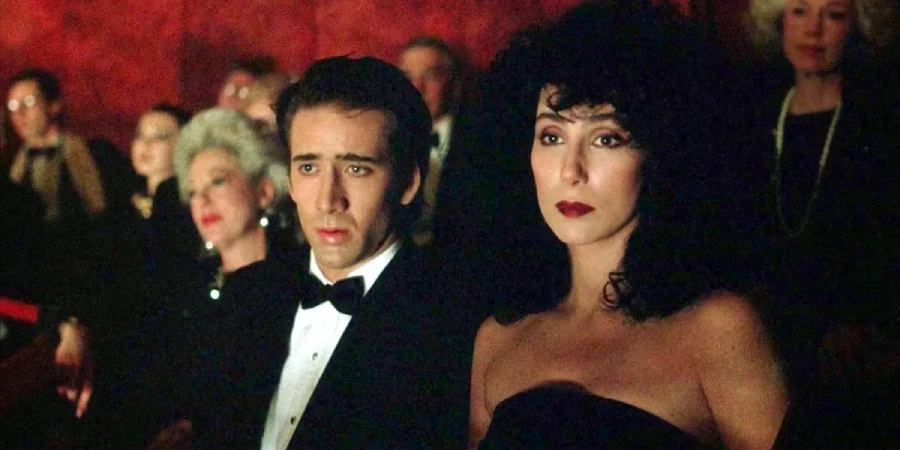
Loretta buys a glamorous dress and transforms her appearance for their date at Lincoln Center. She accidentally spots her father, Cosmo, at the theater with another woman. This discovery reveals that every member of the Castorini family is hiding a secret.
Both characters feel the immense weight of their betrayal during the performance of La Bohème. Meanwhile, Rose Castorini eats dinner alone and encounters an academic who specializes in women. She recognizes her husband’s infidelity but chooses to remain stoic and loyal to her heritage.


Movie Ending
Everyone gathers in the kitchen for a chaotic breakfast that forces every secret into the light. Johnny returns unexpectedly from Sicily because his mother experienced a miraculous recovery. He tells the family he can no longer marry Loretta because his mother would die of grief.
Loretta feels relieved until Ronny declares his love for her in front of the entire group. Cosmo and Rose confront their own marital issues while sitting at the table. Interestingly, the grandfather watches the drama unfold with his dogs as the only quiet witnesses.
The family toasts to the new couple after Loretta accepts Ronny’s impulsive proposal. They celebrate their shared confusion and the messy reality of being human. Ultimately, the film concludes with a portrait of a family that chooses love over perfect reputations.
Are There Post-Credits Scenes?
No, this film does not feature any post-credits scenes. The story concludes definitively as the credits roll over a family photo.
Type of Movie
Moonstruck is a quintessential romantic comedy with strong dramatic elements. It utilizes an operatic tone to elevate ordinary domestic disputes into grand spectacles. Humor arises naturally from the eccentric characters and their sharp, rhythmic dialogue.
Cast
- Cher – Loretta Castorini
- Nicolas Cage – Ronny Cammareri
- Olympia Dukakis – Rose Castorini
- Vincent Gardenia – Cosmo Castorini
- Danny Aiello – Johnny Cammareri
- Julie Bovasso – Rita Cappomaggi
- Louis Guss – Raymond Cappomaggi
- John Mahoney – Perry
- Feodor Chaliapin Jr. – Old Man
Film Music and Composer
Dick Hyman composed the original score for this production. He integrated classic Italian songs alongside sophisticated jazz arrangements. Notably, the film features Dean Martin singing That’s Amore during the opening credits to set a whimsical mood.
Sections of Puccini’s La Bohème play a vital role in the narrative and emotional landscape. These operatic swellings mirror the heightened emotions of the protagonists. Such musical choices emphasize the idea that love is a grand, tragic, and beautiful experience.
Filming Locations
Production took place primarily in Brooklyn Heights and Manhattan. The Castorini house is located at the corner of Cranberry and Willow Streets. This beautiful brownstone provides an authentic backdrop for the family’s multi-generational living situation.
Lincoln Center serves as the setting for the pivotal opera sequence. These locations matter because they ground the stylized dialogue in a recognizable, physical reality. Furthermore, the Contrast between the cozy Brooklyn streets and the grand New York structures highlights the characters’ internal shifts.
Awards and Nominations
The film won three Academy Awards out of six nominations. Cher earned Best Actress, while Olympia Dukakis won Best Supporting Actress. John Patrick Shanley also received an Oscar for his original screenplay.
Behind the Scenes Insights
- The studio initially doubted Nicolas Cage because they wanted someone more traditional for the lead.
- Cher insisted on his casting and threatened to quit if he did not get the role.
- Actors spent weeks practicing the specific Brooklyn-Italian rhythms of the script.
- Director Norman Jewison wanted the moon to feel like a character that watched over the city.
Inspirations and References
The screenplay draws heavily from the traditions of Italian opera. Writer John Patrick Shanley wanted to capture the flavor of his own upbringing in the Bronx. Additionally, the plot structure mirrors the dramatic ironies found in classical theater.
Alternate Endings and Deleted Scenes
The theatrical cut remains the definitive version of the story. No significant alternate endings exist in public records. Most deleted footage consisted of shorter transitions between the main household scenes.
Book Adaptations and Differences
This movie is not based on a book. John Patrick Shanley wrote it as an original screenplay. Therefore, no literary source material exists for comparison.


Memorable Scenes and Quotes
Key Scenes
- Loretta delivers the iconic slap to Ronny while yelling at him to snap out of it.
- Rose accepts a walk home from a lonely professor but refuses to enter his apartment.
- The grandfather leads his pack of dogs into the moonlight for a nightly howl.
- Ronny explains the loss of his hand while standing in front of a flaming oven.
Iconic Quotes
- Snap out of it!
- Everything seems like nothing to me now.
- Ma, I love him awful.
- Your life’s going down the toilet!
Easter Eggs and Hidden Details
- The opera tickets Loretta holds show the actual date the scene was filmed.
- Cher chose her own gray hair dye to make Loretta look older and more repressed.
- Characters often wear red, symbolizing the passion brewing beneath their mundane lives.
- Multiple scenes feature background characters who reappear in different parts of the city.
Trivia
- The film shot during a very cold winter, making the outdoor scenes difficult for the cast.
- Nicolas Cage is the nephew of legendary director Francis Ford Coppola.
- Most of the interior kitchen scenes were filmed on a soundstage in Toronto.
- This movie became one of the highest-grossing films of its year.
Why Watch?
This story celebrates the chaotic nature of the human heart with unmatched wit. Every performance feels authentic despite the theatrical dialogue and grand themes. Specifically, it reminds us that perfection is boring and that true life begins when we lose control.
Director’s Other Movies
- In the Heat of the Night (1967)
- Fiddler on the Roof (1971)
- Jesus Christ Superstar (1973)
- A Soldier’s Story (1984)
- The Hurricane (1999)
Recommended Films for Fans
- It Happened One Night (1934)
- Roman Holiday (1953)
- My Big Fat Greek Wedding (2002)
- Silver Linings Playbook (2012)