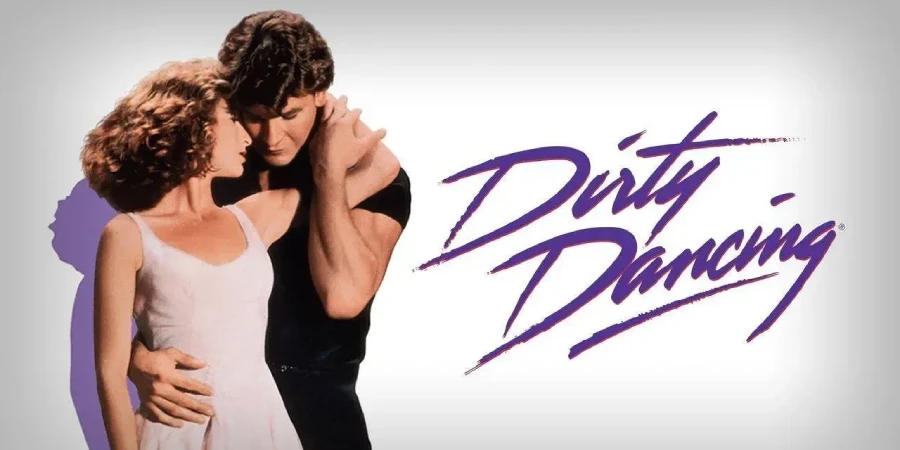

Nobody puts Dirty Dancing in a corner, and nobody has managed to replicate its magic in nearly four decades of trying. This 1987 film took a deceptively simple summer romance and packed it with class conflict, bodily autonomy, and a finale that still makes audiences leap out of their seats. Jennifer Grey and Patrick Swayze created one of cinema’s most electric screen partnerships, almost entirely by accident. What started as a low-budget passion project became a cultural landmark.
Detailed Summary
Baby Arrives at Kellerman’s Resort
It is the summer of 1963, and Frances “Baby” Houseman arrives at Kellerman’s Mountain Resort in the Catskill Mountains with her parents and older sister Lisa. Baby is idealistic, bookish, and quietly frustrated by her family’s comfortable upper-middle-class bubble. She has plans to study economics and join the Peace Corps; she is not here for a holiday romance.
Her father, Dr. Jake Houseman, is a respected and well-liked guest. Meanwhile, the resort staff occupy a world entirely separate from the guests, eating in different spaces and dancing in their own late-night quarters.
Baby Discovers the Staff’s World
Baby stumbles into the staff quarters one evening and finds a pulsing, sweaty, joyful dance party in full swing. She watches in fascination as bodies move together with complete uninhibited freedom. This moment cracks open her sheltered worldview immediately.
Here she meets Johnny Castle, the resort’s charismatic dance instructor, and his dance partner Penny Johnson. Johnny is guarded and proud; he has dealt with entitled guests his whole career and keeps his distance from them. Baby, however, refuses to be kept at arm’s length.
The Crisis That Changes Everything
Penny is pregnant, and the father is Robbie, a waiter who is also casually dating Baby’s sister. Robbie dismisses Penny callously and offers no support. Baby is furious and determined to help.
Penny has arranged an abortion with a provider in town, but the appointment falls on the same night she and Johnny are booked to perform at another resort. Consequently, without a replacement dance partner, Johnny would lose a major income source. Baby volunteers herself without hesitation.
Baby Learns to Dance
Johnny agrees to train Baby intensively for the performance, expecting little from a resort guest with no dance background. In contrast to his low expectations, Baby proves determined and hard-working. Their rehearsal scenes build genuine chemistry over sweat, frustration, and laughter.
A pivotal rehearsal moment arrives at a log crossing over a stream. Johnny guides Baby through the iconic trust exercise, arms stretched wide, preparing her for the lift in their routine. This sequence visualizes their growing emotional connection beautifully.
The Carried Watermelon and Growing Attraction
As Baby spends more time with Johnny, her attraction to him deepens. She carries a watermelon to the staff party, famously announcing herself with what she later admits was a ridiculous opening line. Their connection grows more charged with each rehearsal session.
Baby also begins to see how the staff endures quiet indignities from wealthy guests. Moreover, she recognizes that Johnny’s talent and dignity far exceed the limited role the resort assigns him. Her class assumptions start to crumble.
The Medley Performance and Its Aftermath
Baby and Johnny perform the Kellerman’s medley at the Sheldrake Hotel, and they pull it off well enough to satisfy the crowd. Their successful performance marks a clear turning point in their relationship. That same night, they sleep together for the first time.
Baby returns home glowing and changed. Her father notices the shift in her but attributes it to the summer air. He has no idea who actually caused it.
Penny’s Medical Emergency
Penny’s abortion goes catastrophically wrong. The provider was unqualified, and Penny is left in serious danger back at the resort. Baby runs to her father, who is a doctor, and he saves Penny’s life.
Dr. Houseman, however, assumes Johnny took advantage of Penny. He confronts Johnny directly and coldly. Baby does not correct her father’s assumption, and Johnny absorbs the blame in silence to protect her.
The Affair Deepens and Threatens to Unravel
Baby and Johnny continue their secret relationship throughout the summer. Their scenes together carry a beautiful, fragile tension because both know the social gap between them. Baby is falling in love; Johnny is trying not to.
Meanwhile, resort owner Max Kellerman is already suspicious of Johnny. A theft accusation soon surfaces involving a guest’s wallet. Robbie, the actual culprit, frames Johnny. As a result, Kellerman fires Johnny on the spot, and Baby’s silence during her father’s initial confrontation has already weakened her credibility as a witness.


Movie Ending
Baby finally tells her father the truth: she was with Johnny the night of the alleged theft, which makes the accusation impossible. Dr. Houseman believes her, and he acknowledges that Johnny is innocent of the theft. However, the damage to their relationship cuts deeper than a single misunderstanding; he tells Baby he is disappointed she lied to him and kept the relationship secret.
Johnny has already packed his car and said his quiet goodbye to Baby. He drives away, and the end of summer feels genuinely heartbreaking. Baby assumes it is over, that the summer exists in a separate universe that cannot follow her home.
Then Johnny walks back into the final talent show at Kellerman’s. He takes the microphone, credits Baby publicly, and delivers the legendary line: “Nobody puts Baby in a corner.” He pulls her onto the stage in front of every guest, every staff member, and her entire family.
They perform their full dance routine together, including the lift that Baby struggled with throughout the film. She nails it. The crowd erupts. Even Dr. Houseman walks over to Johnny afterward, acknowledges that he misjudged him, and tells Baby he is proud of her.
The film closes with the resort dancing together as social barriers dissolve, if only for one song. It matters because the moment is earned: Baby chose truth, Johnny chose dignity, and together they forced the room to see them clearly. Furthermore, the ending suggests that real change begins with individual acts of courage rather than grand social movements. For a film set in 1963, just before enormous cultural upheaval, that optimism feels precise and deliberate.
Are There Post-Credits Scenes?
Dirty Dancing contains no post-credits scenes. Once the final dance ends and the screen fades, the film is finished. You can leave your seat without missing anything.
Type of Movie
Dirty Dancing is a romantic drama with strong elements of coming-of-age storytelling. Its tone balances warmth and nostalgia against genuine emotional stakes, including class inequality and reproductive rights. It never tips into melodrama, which is part of why it endures.
In terms of genre classification, some critics also place it within the dance film category. However, the dancing always serves character and story rather than existing as spectacle for its own sake. That distinction keeps it grounded.
Cast
- Jennifer Grey – Frances “Baby” Houseman
- Patrick Swayze – Johnny Castle
- Jerry Orbach – Dr. Jake Houseman
- Cynthia Rhodes – Penny Johnson
- Kelly Bishop – Marjorie Houseman
- Jack Weston – Max Kellerman
- Jane Brucker – Lisa Houseman
- Max Cantor – Robbie Gould
- Lonny Price – Neil Kellerman
Film Music and Composer
The music in Dirty Dancing functions almost as a third main character. John Morris composed the original score, but the soundtrack drew most of its power from carefully selected songs spanning early 1960s pop and soul alongside newly recorded tracks.
“(I’ve Had) The Time of My Life” by Bill Medley and Jennifer Warnes became the film’s signature song and won the Academy Award for Best Original Song. It anchors the climactic final dance and carries enormous emotional weight. Audiences still associate it instantly with the film’s triumphant finale.
In addition, “Hungry Eyes” by Eric Carmen and “Do You Love Me” by The Contours contributed significantly to the soundtrack’s cultural footprint. The compilation approach created a rich, layered musical world that felt authentically rooted in its era.

Filming Locations
Dirty Dancing was primarily filmed at Mountain Lake Lodge in Pembroke, Virginia, and at Lake Lure in North Carolina. These locations provided the lush, wooded, lakeside atmosphere essential to the story’s Catskills setting. The natural environments gave the film an organic, almost mythic summer quality.
Specifically, the famous lake lift scene was filmed at Lake Lure. That location’s misty mountain backdrop made the sequence feel genuinely cinematic rather than staged. The setting elevated a choreographic moment into something closer to poetry.
Mountain Lake Lodge stood in for Kellerman’s Resort throughout most interior and exterior resort scenes. Notably, the lodge has since leaned into its connection to the film, hosting Dirty Dancing-themed events for fans. The real location carries its own nostalgic resonance now.
Awards and Nominations
Dirty Dancing won the Academy Award for Best Original Song for “(I’ve Had) The Time of My Life.” The film also won a Golden Globe Award for Best Original Song for the same track.
Patrick Swayze received significant industry attention for his performance, and the film performed extraordinarily well relative to its modest budget. Its commercial success far outpaced any awards recognition it received.
Behind the Scenes Insights
- The film was made on a budget of approximately six million dollars and ultimately grossed over 170 million dollars worldwide at the box office.
- Patrick Swayze performed many of his own dance sequences despite dealing with a significant knee injury throughout production.
- Jennifer Grey and Swayze had previously worked together in Red Dawn (1984), but their initial chemistry on Dirty Dancing required some effort to develop; early rehearsals were reportedly awkward.
- Director Emile Ardolino came from a background in documentary filmmaking, which influenced his preference for capturing naturalistic, spontaneous-feeling performances.
- The iconic lift in the lake was filmed with Grey and Swayze in genuinely cold water; their visible shivering added an unplanned layer of authenticity to the scene.
- Eleanor Bergstein, who wrote the screenplay, based significant elements on her own experiences dancing in the Catskills during her youth.
- Several studios passed on the project before Vestron Pictures agreed to fund it; many executives considered the story too small and too female-focused for commercial viability.
- The line “Nobody puts Baby in a corner” was written by Bergstein and was not workshopped or focus-grouped; it came directly from her script and stayed in through every revision.
Inspirations and References
Eleanor Bergstein drew heavily from her own childhood and adolescence for the screenplay. She grew up dancing in the Catskills at resorts very similar to Kellerman’s. Her personal memories gave the film its specific texture and emotional credibility.
The 1963 setting was chosen deliberately. Bergstein positioned the story on the exact cusp of the social upheaval that would define the rest of that decade. Baby’s awakening functions as a microcosm of a generation about to change the world.
Bergstein has also cited the broader culture of mambo and Latin dance that filtered into American popular culture during the late 1950s and early 1960s as a direct inspiration for the film’s dance vocabulary. Furthermore, the film’s treatment of abortion reflects Bergstein’s desire to show how women navigated limited options before Roe v. Wade.
Alternate Endings and Deleted Scenes
No widely documented alternate endings for Dirty Dancing have been released publicly. The film’s finale as released appears to reflect Bergstein’s original creative intention throughout production.
Some deleted scenes have circulated over the years in home video releases, including additional character moments between Baby and her family. However, none fundamentally alter the story’s direction or conclusion. The core narrative remained consistent from script to screen.
Book Adaptations and Differences
Dirty Dancing is not based on a book. Eleanor Bergstein wrote an original screenplay. A novelization of the film was subsequently published after the film’s release, which is the reverse of the typical adaptation process.


Memorable Scenes and Quotes
Key Scenes
- Baby carrying a watermelon into the staff party and immediately regretting her opening words to Johnny.
- The log balance rehearsal sequence, where Johnny guides Baby with arms outstretched against a forest backdrop.
- The lake lift sequence, mist rising off the water as Baby runs toward Johnny and rises above him.
- Dr. Houseman saving Penny’s life, followed by his cold dismissal of Johnny in the hallway.
- Johnny’s return to the talent show, microphone in hand, walking straight toward Baby.
- The final performance, culminating in the perfect lift in front of the entire resort.
- Baby telling her father the truth about where she was the night of the theft.
Iconic Quotes
- “Nobody puts Baby in a corner.” (Johnny Castle)
- “I carried a watermelon.” (Baby Houseman)
- “Me? I’m scared of everything. I’m scared of what I saw, I’m scared of what I did, of who I am, and most of all I’m scared of walking out of this room and never feeling the rest of my whole life the way I feel when I’m with you.” (Baby Houseman)
- “Look, spaghetti arms. This is my dance space, this is your dance space. I don’t go into yours, you don’t go into mine.” (Johnny Castle)
- “I’ve had the time of my life, and I owe it all to you.” (Baby Houseman)
Easter Eggs and Hidden Details
- Robbie hands Dr. Houseman a copy of The Fountainhead by Ayn Rand early in the film, a deliberate character shorthand: it signals his selfishness and moral hollowness before his actions confirm it.
- Baby’s real name, Frances, is mentioned only briefly; almost everyone calls her Baby throughout the film, reinforcing how the summer forces her to shed a childhood identity.
- The year 1963 places the story just months before the Kennedy assassination, which Bergstein has noted was intentional; the film’s summer innocence sits on the edge of national tragedy.
- Johnny’s wardrobe stays consistently darker and more muted than the bright, preppy clothing worn by the resort guests, a visual marker of class difference built into the costume design.
- During the final dance sequence, several cast members and crew reportedly joined in spontaneously on set, and some of those genuine reactions made the final cut.
Trivia
- Patrick Swayze also co-wrote and performed the song “She’s Like the Wind” featured on the soundtrack.
- The film was initially released with limited expectations; Vestron Pictures planned a small theatrical run before moving it to home video. Word of mouth turned it into a major theatrical hit instead.
- Jennifer Grey has said in interviews that she felt enormous pressure during the filming of the final lift, partly because earlier attempts in cold water had gone poorly.
- Dirty Dancing was one of the first films released on home video to sell more than one million copies.
- Eleanor Bergstein insisted on keeping the abortion subplot in the script despite significant pressure from producers to remove it.
- A Broadway musical adaptation of Dirty Dancing ran in several countries during the 2000s and 2010s.
- Swayze’s dancing background included formal ballet training, which gave his movement a precision that contrasted effectively with the more grounded, earthy style the film required.
Why Watch?
Dirty Dancing earns its reputation not through nostalgia alone but through the honesty of its emotional performances and the clarity of its social conscience. Grey and Swayze generate a chemistry that very few romantic pairings in cinema history have matched. For a film this fun, it carries real weight on class, gender, and personal courage.
Director’s Other Movies
- He Makes Me Feel Like Dancin’ (1983)
- Sister Act (1992)
Recommended Films for Fans
- Footloose (1984)
- Flashdance (1983)
- Grease (1978)
- Strictly Ballroom (1992)
- Save the Last Dance (2001)
- Dirty Dancing: Havana Nights (2004)
- Titanic (1997)
- An Officer and a Gentleman (1982)