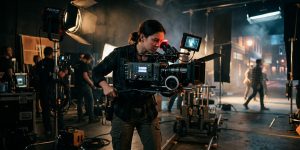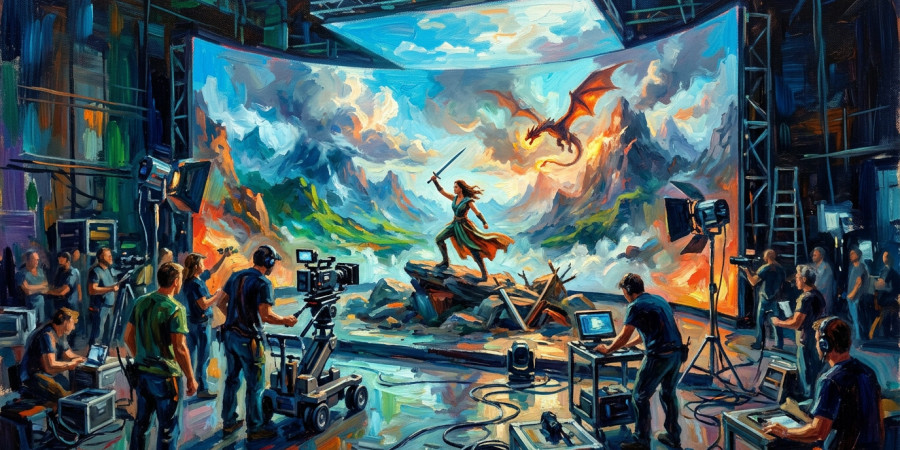

Filmmaking has always pushed the boundaries of what technology can achieve. However, something genuinely transformative has happened over the past decade, reshaping how studios build worlds, shoot scenes, and tell stories.
Virtual production technology has moved from experimental novelty to industry standard, and its fingerprints are all over modern blockbusters. Whether you noticed it or not, chances are your favorite recent spectacle relied on it heavily. In this post, we break down what virtual production actually means, how it works in practice, and why it matters for cinema’s future.
What Is Virtual Production Technology?
Virtual production refers to a broad set of tools and workflows that blend real-time digital environments with live-action filmmaking. At its core, it allows filmmakers to create and interact with computer-generated worlds on set, rather than adding them entirely in post-production. Consequently, directors and actors can see and respond to their environments in the moment.
Several interconnected technologies make this possible:
- LED volume stages: massive curved screens that display photo-realistic backgrounds in real time
- Real-time rendering engines (such as Unreal Engine) that generate environments dynamically
- Motion capture systems that track camera and actor movement with precision
- Virtual scouting tools that let directors walk through digital locations before shooting begins
- In-camera visual effects (ICVFX), which capture lighting and reflections directly onto actors on set
Together, these tools create a seamless bridge between physical and digital filmmaking. Moreover, they fundamentally change when creative decisions get made.



How Virtual Production Is Changing Modern Blockbusters
From Post-Production to On-Set Creativity
Traditional blockbuster filmmaking often involved actors performing in front of green screens, with the actual environment added months later. This approach created a significant disconnect between performance and environment. Actors struggled to react convincingly to things they could not see.
Virtual production workflows solve this problem directly. Performers now stand inside a digital world that surrounds them on all sides. As a result, performances feel grounded, lighting reacts naturally, and directors can make visual decisions in real time rather than waiting for a post-production render.
Cost, Efficiency, and Creative Flexibility
One common assumption is that cutting-edge technology always costs more. In practice, virtual production for film can actually reduce costs in specific areas. Fewer location shoots, less travel, and tighter schedules all contribute to savings that studios genuinely value.
Consider what this shift enables for productions:
- Shooting a desert landscape and a jungle scene on the same stage in the same week
- Adjusting the time of day or weather conditions with a few clicks
- Reducing the number of costly reshoots caused by post-production surprises
- Giving directors real-time feedback on how digital and physical elements interact
Furthermore, smaller productions are beginning to adopt these tools. Access to real-time rendering platforms has lowered the barrier significantly for independent studios.
The Role of LED Volumes in Blockbuster Filmmaking
LED volume stages have become the defining symbol of modern virtual production. Industrial Light and Magic pioneered the approach with their StageCraft technology, which debuted on The Mandalorian. That production demonstrated how in-camera visual effects could replace traditional green screen at scale.
Since then, major productions across multiple genres have adopted LED volume workflows. Films and series operating at blockbuster budgets now treat these stages as a standard production resource rather than a luxury. Notably, the technology has grown sophisticated enough to handle complex lighting scenarios that once required extensive post-production work.
Real-World Examples Across Major Franchises
Several high-profile productions have showcased what virtual production techniques in film can achieve at their best. The results speak clearly to the technology’s maturity.
- The Mandalorian (Disney Plus): widely credited with bringing LED volume production into mainstream awareness
- The Batman (2022): used virtual production tools extensively for environmental and atmospheric work
- Avatar: The Way of Water (2022): pushed the boundaries of performance capture combined with real-time virtual environments
- Various Marvel Cinematic Universe productions: increasingly relying on ICVFX stages to meet tight schedules
In contrast to earlier CG-heavy blockbusters, these productions often deliver more textured and believable visuals. Critics and audiences alike have responded positively to the increased sense of physical presence in digitally constructed worlds.
Challenges and Honest Limitations
No technology arrives without trade-offs. Virtual production introduces its own set of challenges that productions must manage carefully.
- Moiré patterns and screen artifacts can appear when cameras move too quickly in front of LED panels
- High initial infrastructure costs mean smaller productions still face access barriers
- Creative overreliance on digital environments risks producing a homogenized visual aesthetic across films
- Skilled operators and technicians are in high demand, creating a talent bottleneck across the industry
Additionally, some cinematographers argue that LED volume stages can limit certain natural lighting choices. However, as the technology matures, many of these constraints are being addressed through improved panel resolution and smarter integration workflows.
What This Means for the Future of Cinema
Democratizing High-End Visual Storytelling
Perhaps the most exciting implication of virtual production technology is its potential to democratize cinematic storytelling. Filmmakers who previously lacked the budget for location shoots or expensive VFX pipelines now have growing access to world-building tools. Real-time rendering engines, in particular, are available at accessible price points.
Similarly, film schools and emerging directors are beginning to train with these tools. A new generation of filmmakers will enter the industry already fluent in virtual production workflows, reshaping how stories get told from the ground up.
The Evolving Relationship Between Director and Technology
Great filmmaking has always required collaboration between vision and craft. Virtual production does not replace the director’s eye; it gives that eye more to work with in real time. Directors can iterate, experiment, and react on set in ways that were previously impossible.
Ultimately, the technology serves the story. Productions that use it most effectively treat virtual environments as a creative partner, not a shortcut.
Lights, Pixels, Action: Where Virtual Production Takes Us Next
Virtual production technology has already changed what modern blockbusters look and feel like. It has shifted creative decision-making earlier in the process, improved performance quality, and opened new possibilities for visual storytelling at every budget level. Furthermore, as real-time rendering and LED infrastructure continue to improve, the gap between what is physically possible and what is digitally achievable will keep shrinking.
If you want to stay ahead of how cinema is evolving, pay attention to the technology behind the frame. Next time you sit down for a blockbuster, look closely at the environments around the characters. You might be watching a world that never physically existed, rendered in real time, with the light falling exactly where the director intended. That is the promise of virtual production, and it is already being delivered.