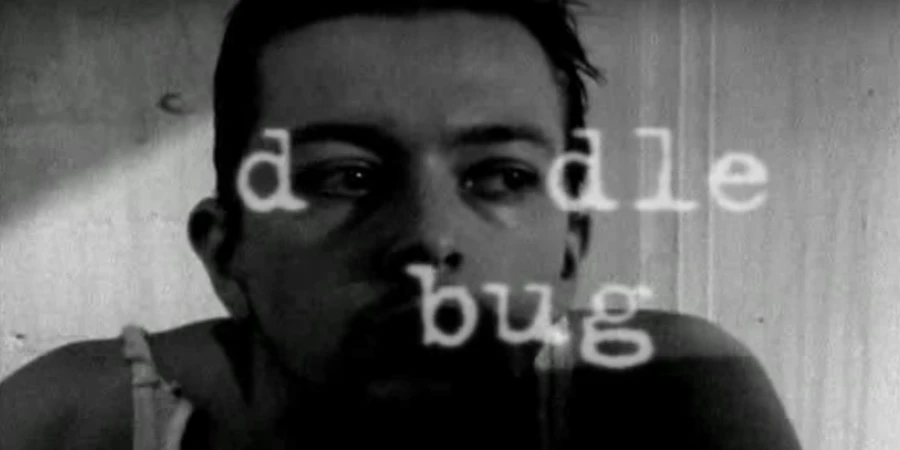

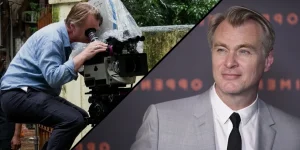
Doodlebug is a 3-minute black-and-white short film directed by Christopher Nolan, and despite its tiny runtime, it already carries many of the themes that would later define his career. Minimalist, disturbing, and deeply symbolic, this short is often described as Nolan in embryo form.
Detailed Summary (Scene-by-Scene Analysis)
A Man Alone in a Room
The film opens in a bare, claustrophobic apartment. A nameless man (played by Jeremy Theobald) is obsessively hunting something on the floor with a shoe. The camera stays tight, uncomfortable, and jittery, immediately creating a sense of anxiety.
There is almost no dialogue. Instead, we hear heavy breathing, scraping sounds, and frantic movement. The man appears distressed, paranoid, and increasingly unhinged.
The Hunt for the “Doodlebug”
Eventually, we see what he’s after: a tiny humanoid creature, moving erratically across the floor. It looks like a distorted miniature version of a person. The man chases it relentlessly, smashing the floor with his shoe again and again.
The creature squeaks in pain, and although it’s small, the violence feels excessive. At this point, the film subtly forces the viewer to ask:
Is this pest control… or murder?
Obsession Reaches Its Peak
As the man finally corners the doodlebug, his behavior becomes almost ritualistic. He hesitates, watches it, and then prepares for the final blow. The tension is disproportionate to the creature’s size, which is very much the point.
This is where Nolan’s fascination with perception, scale, and identity quietly enters the room.
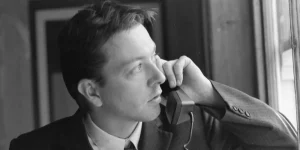
Movie Ending
The man kills the doodlebug with a final, decisive smash.
Silence.
He exhales in relief, believing the ordeal is over.
Then the camera slowly pulls back.
We suddenly realize that the man himself is inside a much larger environment, and looming above him is a gigantic shoe, descending toward him from above.
In the final moment, it becomes clear that:
- The man is also a doodlebug.
- The creature he killed was a smaller version of himself.
- He is trapped in an endless recursive cycle, where each being believes it is the “real” one.
The film ends as the shoe comes down, implying that he is crushed just as mercilessly as he crushed the creature below him.
This ending raises unsettling questions:
- Is violence an inherent loop?
- Are we all insignificant from a higher perspective?
- Is self-destruction inevitable?
The horror doesn’t come from gore, but from realization.
Are There Post-Credits Scenes?
No.
Doodlebug ends abruptly and definitively. There are no post-credits or hidden scenes, and adding one would arguably weaken the punch of its final revelation.
Type of Movie
Doodlebug is an experimental psychological horror short with strong elements of surrealism and philosophical science fiction. It leans heavily on visual storytelling rather than narrative exposition.
Cast
- Jeremy Theobald as the Man
That’s it. One actor, one room, infinite implications.
Film Music and Composer
There is no traditional musical score. Instead, the film relies on:
- Breathing
- Footsteps
- Scraping sounds
- Silence
This sound design enhances the paranoia and makes the ending feel even more brutal.

Filming Locations
- Filmed in a small London apartment
- The confined space reinforces themes of entrapment and obsession
- The lack of visual variety mirrors the character’s mental state
The location is not meant to feel real; it feels like a mental prison.
Awards and Nominations
- Screened at several independent and student film festivals
- While it didn’t win major awards, it became critically important in hindsight as Nolan’s first widely discussed work
Behind the Scenes Insights
- The film was made on an extremely low budget
- Shot in black and white to hide production limitations
- Jeremy Theobald would later appear in Following (1998)
- Nolan deliberately avoided dialogue to focus on pure visual meaning
- The shoe was chosen as a weapon because it is both mundane and humiliating
Inspirations and References
- Franz Kafka’s themes of existential anxiety
- Classic surrealist cinema
- Early experimental shorts by directors like David Lynch
- Philosophical ideas about recursion and self-similarity
Alternate Endings and Deleted Scenes
There are no known alternate endings or deleted scenes.
The film was designed to be short, sharp, and final. Nolan has never indicated that a longer version existed.
Book Adaptations and Differences
Doodlebug is not based on a book. It is an original concept created by Nolan, though it feels like a visual short story more than a traditional film.
Memorable Scenes and Quotes
Key Scenes
- The first glimpse of the doodlebug on the floor
- The man hesitating before the final smash
- The pull-back reveal of the giant shoe
Iconic Quotes
There is no spoken dialogue, which is precisely why the film works. Silence is the quote.
Easter Eggs and Hidden Details
- The doodlebug’s movements mirror the man’s earlier movements
- The apartment layout subtly resembles a maze
- The film’s grainy texture enhances the feeling of insignificance
- The final shot visually predicts Nolan’s later obsession with scale and perspective
Trivia
- Runtime: just over 3 minutes
- Shot on 16mm film
- Nolan was in his early 20s when he made it
- Often used in film schools as an example of concept-over-budget filmmaking
- The title “Doodlebug” refers to both a pest and a meaningless scribble
Why Watch?
You should watch Doodlebug if you want to:
- See Christopher Nolan’s ideas in their rawest form
- Experience a story that respects your intelligence
- Understand how powerful a film can be with almost nothing in it
- Feel existential dread in under 4 minutes
Director’s Other Works (Movies)
- Following (1998)
- Memento (2000)
- Insomnia (2002)
- The Prestige (2006)
- The Dark Knight (2008)
- Dunkirk (2017)
- Tenet (2020)
- Oppenheimer (2023)