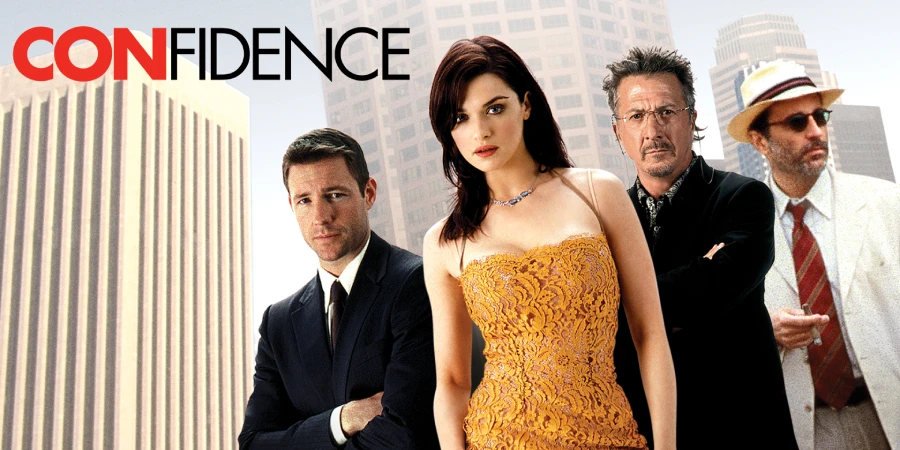

Confidence (2003) proves that the best con in any heist film is the one pulled on the audience itself. Director James Foley stacks layer upon deception upon layer, keeping viewers guessing until the very last frame. Jake Vig narrates his own story from beyond what appears to be his death, and that framing device alone should tell you everything about how much you can trust this film’s narrator. Buckle up, because nothing here is what it seems.
Detailed Summary
Jake Vig Sets the Stage
Jake Vig, played by Edward Burns, opens the film by narrating directly to the camera while bleeding out on the ground. He tells us he is dead, or at least that is what he wants us to believe. This unreliable narrator setup immediately signals that Confidence will play games with its audience from start to finish.
Jake runs a tight crew of small-time con artists. His team includes Gordo, Big Al, and Lupus, and together they execute slick street-level grifts across Los Angeles. However, their latest score accidentally skims money from a dangerous crime boss named Winston King, known simply as “The King.”
The King Enters the Picture
Dustin Hoffman plays The King, and his performance is genuinely unhinged in the best possible way. The King is a paranoid, volatile Los Angeles crime lord who surrounds himself with lackeys and delivers monologues that veer between menacing and absurd. He discovers that Jake’s crew lifted money from one of his bagmen, which triggers the central conflict of the entire film.
Rather than simply killing Jake, The King proposes a deal. Jake must run a large-scale con targeting a crooked banker named Morgan Price, and The King will take his cut in exchange for sparing Jake’s life. In addition, The King assigns his own enforcer, Lupus, to babysit the operation.
Assembling the Crew and Meeting Lily
Jake recruits additional muscle for the job, including a sharp pickpocket named Lily, played by Rachel Weisz. Lily is skilled, resourceful, and not entirely trustworthy, which makes her the perfect fit for this crew. Jake and Lily develop a prickly romantic tension that runs throughout the film.
Two corrupt detectives, Whitworth and Manzano, played by Donal Logue and Luis Guzman, also orbit the story. They smell a big score and want a cut. Meanwhile, a federal agent named Gunther Butan, played by Andy Garcia, is quietly closing in on everyone involved.
The Con Takes Shape
Jake’s plan targets Morgan Price, a corrupt banker who launders money for The King. Price is greedy and arrogant, which makes him the ideal mark. Jake and his crew construct an elaborate false identity, a fake deal, and a manufactured sense of trust to reel Price in.
Lily plays a key role as romantic bait, distracting Price and gaining his confidence. Each member of the crew performs a specific function within the grift, and Foley’s direction makes the mechanics of the con genuinely fun to follow. Consequently, audiences get the pleasure of watching professionals work while simultaneously wondering who is actually conning whom.
Complications and Double-Crosses
Nothing runs smoothly, of course. The two corrupt detectives keep pushing for a larger slice of the take, threatening to expose the operation. Agent Butan simultaneously tightens his surveillance, aware that something significant is happening but unable to pin it down yet.
Tensions within the crew also escalate. Jake must manage The King’s paranoia, the detectives’ greed, and Lily’s uncertain loyalties all at once. Moreover, the audience starts to wonder whether Jake’s smooth exterior hides a deeper play that nobody else sees coming.

Movie Ending
Jake seemingly gets shot during the film’s climax, which circles back to the opening narration scene. For a moment, the film suggests that the clever grifter finally ran out of luck. However, the shooting turns out to be the final layer of an elaborate con that Jake has been running on everyone, including the audience, the entire time.
It becomes clear that Jake orchestrated everything, including his own apparent death, to steal the money from both The King and Morgan Price simultaneously. His “death” was staged to clear the field and let the crew walk away clean. Furthermore, Lily was in on it from the beginning, confirming that her loyalty was always to Jake, regardless of how ambiguous her behavior seemed throughout.
Agent Butan eventually corners Jake at the airport. In a brilliantly understated final scene, it becomes apparent that Butan may not be entirely what he claimed to be either. Jake hands Butan an envelope and walks away, suggesting either a payoff or a reveal that Butan was playing his own angle all along.
The film ends with Jake breaking the fourth wall one final time. He winks at the camera, reinforcing the idea that he was always the one in control. It is a crowd-pleasing finale that rewards attentive viewers who noticed the breadcrumbs Foley scattered throughout.
Are There Post-Credits Scenes?
Confidence does not include any post-credits scenes. Once the credits roll, the film is finished. No additional footage, no hidden jokes, no extra scenes appear after the credits begin.
Type of Movie
Confidence is a neo-noir heist thriller with strong elements of dark comedy. Its tone sits somewhere between The Sting and early Guy Ritchie, stylish and self-aware without losing its edge. The film leans into genre conventions while simultaneously winking at them.
Foley keeps the pacing brisk and the dialogue sharp. In contrast to slower, more contemplative crime films, Confidence prioritizes momentum and entertainment above all else.
Cast
- Edward Burns – Jake Vig
- Rachel Weisz – Lily
- Dustin Hoffman – The King (Winston King)
- Andy Garcia – Gunther Butan
- Paul Giamatti – Gordo
- Donal Logue – Whitworth
- Luis Guzman – Manzano
- Robert Forster – Morgan Price
- Brian Van Holt – Big Al
- Franky G – Lupus
Film Music and Composer
Christophe Beck composed the score for Confidence. Beck brought a cool, jazzy sensibility to the film that suits its Los Angeles crime atmosphere perfectly. His work here favors understated tension over bombast, which complements Foley’s slick direction.
Beck is perhaps best known outside of film scoring circles for his Emmy-winning work on Buffy the Vampire Slayer. His score for Confidence demonstrates his range, moving comfortably into smoky, stylish crime territory. The music never overwhelms scenes but consistently reinforces the film’s playful-yet-dangerous mood.


Filming Locations
Confidence was filmed primarily in Los Angeles, California. The city’s mix of glamour and grime makes it an ideal backdrop for a story about con artists operating in the shadows of wealth. Foley uses LA not as a postcard but as a living environment full of transactional energy.
Certain scenes were also shot in downtown LA’s financial district, grounding the film’s banking con in a recognizable world of corporate architecture and suited professionals. On the other hand, seedier locations give The King’s world a grimy, unpredictable texture that contrasts sharply with the polished veneer of the con itself.
Awards and Nominations
Confidence did not receive significant awards attention during its release cycle. Dustin Hoffman’s eccentric performance earned some critical praise, but the film largely flew under the radar during awards season.
Behind the Scenes Insights
- Dustin Hoffman reportedly improvised a significant portion of his dialogue as The King, contributing to the character’s unpredictable, rambling energy.
- Director James Foley deliberately shot certain sequences out of chronological order to reinforce the film’s themes of misdirection and narrative unreliability.
- Rachel Weisz trained with professional pickpockets to make Lily’s street skills appear authentic on screen.
- The production design team worked closely with Foley to ensure LA locations felt lived-in rather than glamorized, grounding the film’s fantasy con in a recognizable reality.
- Writers structured the script so that key reveals in the final act recontextualize specific earlier scenes, rewarding repeat viewings with fresh details.
Inspirations and References
The screenplay by Doug Jung draws heavily from the classic Hollywood con-man tradition, particularly films like The Sting (1973) and House of Games (1987). Both those films use nested deceptions and unreliable narrators in ways that clearly influenced Confidence. Jung acknowledged that the genre’s conventions were both a toolkit and a set of audience expectations worth subverting.
Noir fiction also looms large over the film’s DNA. The femme fatale archetype, the corrupt city, and the morally compromised protagonist all trace their lineage back to classic hard-boiled literature. In addition, the film’s stylized voiceover narration pays direct homage to noir storytelling traditions stretching back to Raymond Chandler’s work.
Alternate Endings and Deleted Scenes
No officially released alternate endings or deleted scene packages for Confidence have been widely documented in publicly available sources. The film’s theatrical cut appears to represent Foley’s intended vision without significant documented alterations. Specific details about cut scenes remain largely unconfirmed in public record, so we will not speculate here.
Book Adaptations and Differences
Confidence is not based on a book, novel, or pre-existing source material. Doug Jung wrote the original screenplay specifically for the screen. Therefore, no literary comparison applies here.

Memorable Scenes and Quotes
Key Scenes
- Jake’s opening narration, delivered while he bleeds on the pavement, immediately establishes the film’s unreliable narrator dynamic and hooks the audience into the mystery of how he got there.
- The first meeting between Jake and The King crackles with tension; Hoffman’s improvised energy makes every second unpredictable, and Burns plays Jake’s forced calm brilliantly against it.
- Lily’s pickpocketing sequence showcases Rachel Weisz at her most effortlessly cool, cementing the character as a genuine force rather than mere eye candy.
- The staged shooting during the climax, which initially appears to be Jake’s actual death, delivers the film’s most satisfying gut-punch reversal.
- Jake’s final airport confrontation with Agent Butan, quiet and loaded with implication, leaves audiences debating exactly what was exchanged and what Butan truly knew all along.
Iconic Quotes
- “I’m not greedy. I just don’t like to lose.” (Jake Vig)
- “Everyone’s got an angle.” (Jake Vig, in voiceover, establishing the film’s central philosophy)
- The King’s rambling monologue about trust, in which Hoffman blends comedy and menace so completely that neither tone fully wins, stands as one of the film’s most quoted passages.
Easter Eggs and Hidden Details
- Careful viewers can spot subtle visual cues during early scenes that hint at Lily’s true allegiance to Jake, including shared glances that read differently on a second viewing.
- Agent Butan’s wardrobe shifts slightly in tone across the film, becoming progressively less formal, a subtle visual hint that his FBI-agent persona may not be entirely authentic.
- The King’s office is decorated with images of historical figures known for manipulation and political cunning, a background detail that reinforces his self-image as a criminal strategist.
- Jake’s voiceover contains minor factual inconsistencies when compared to events shown on screen, a deliberate technique signaling that his narration is itself part of the con.
Trivia
- Dustin Hoffman took the role largely because he wanted to play a villain, a type of character he had rarely explored up to that point in his career.
- Director James Foley is perhaps best known for Glengarry Glen Ross (1992), and Confidence similarly features a cast of men competing over money and status through verbal sparring.
- Paul Giamatti’s performance as Gordo received particular praise from critics, with many noting that he steals nearly every scene he appears in despite playing a supporting role.
- Confidence was shot before Ocean’s Twelve reignited mainstream interest in ensemble heist films, placing it ahead of a trend rather than riding one.
- Edward Burns took on the project partly because the role allowed him to inhabit a morally ambiguous character significantly different from his previous work as a writer-director of smaller personal dramas.
Why Watch?
Confidence delivers a sharp, stylish ride packed with great performances and a genuinely satisfying twist. Hoffman alone is worth the price of admission, and the film rewards repeat viewings with details you will absolutely miss the first time around. For fans of smart, fast-talking crime cinema, this one punches well above its weight.
Director’s Other Movies
- Reckless (1984)
- At Close Range (1986)
- Who’s That Girl (1987)
- After Dark, My Sweet (1990)
- Glengarry Glen Ross (1992)
- Two Bits (1995)
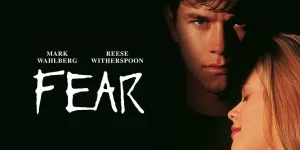
- Fear (1996)
- The Corruptor (1999)
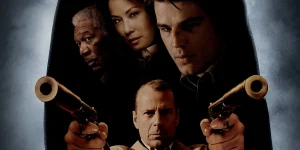
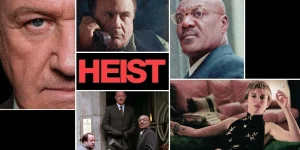
Recommended Films for Fans
- The Sting (1973)
- House of Games (1987)
- The Grifters (1990)
- Matchstick Men (2003)
- Ocean’s Eleven (2001)
- Catch Me If You Can (2002)
- Lucky Number Slevin (2006)
- The Usual Suspects (1995)