
A perfect heist requires three things: a plan, a crew, and nerves of steel. Films about elaborate robberies let audiences experience the thrill of planning, the tension of execution, and the chaos when everything falls apart. These stories work because they transform criminals into problem solvers, turning theft into a puzzle we can’t help but root for.
The best heist movies balance meticulous preparation with unexpected improvisation. Some build tension through silence and patience. Others explode into action the moment the first domino falls. From French minimalism to Hollywood spectacle, the heist film spans decades and continents, evolving with each generation while keeping the core formula intact.
This list ranks twelve essential heist movies chronologically, tracing the genre from postwar France to modern cinema. Each film refined the blueprint in its own way, proving that watching smart people steal things never gets old.
Rififi (1955)
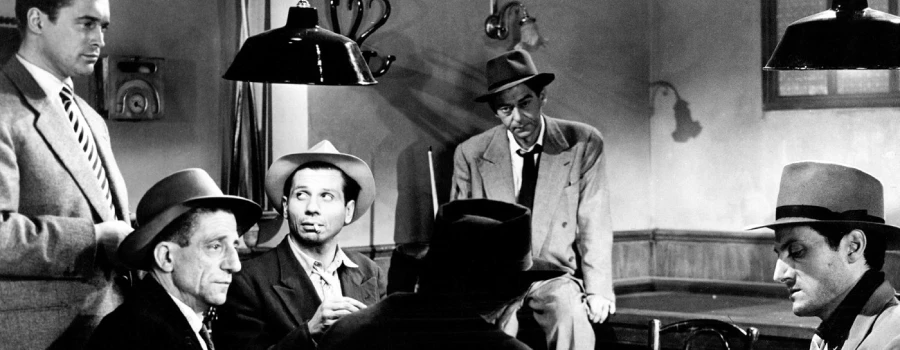
Paris, 1955. An ex-con assembles three specialists to crack a jewelry store safe in the middle of the night. The entire sequence unfolds without music, without dialogue, just the sound of drills, footsteps, and sweat hitting concrete. Director Jules Dassin stretches thirty minutes of pure technique into unbearable suspense, and the audience barely breathes.
Dassin shot the robbery from inside the safe, forcing viewers to experience every obstacle the crew faces. A dropped tool. A passerby on the street. An alarm system more complex than anticipated. The film taught future directors that silence can be louder than any score.
Rififi established the template nearly every heist film would follow: recruitment, planning, execution, betrayal. French critics called it poetry. American studios called it a manual. Both were right.
The Killing (1956)
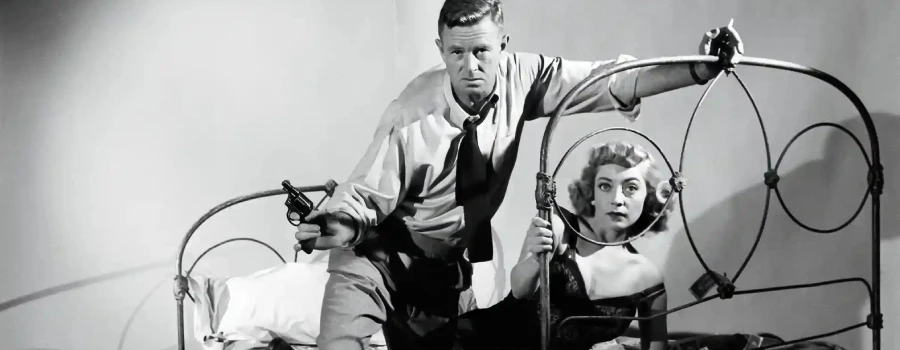
Stanley Kubrick’s racetrack robbery splinters time itself. The same twenty minutes replay from five different perspectives, each crew member’s story unfolding in parallel before converging in catastrophe. A petty crook’s jealous wife. A bent cop. A sharpshooter who arrives too early. Every small decision compounds into disaster.
Kubrick filmed the movie for $320,000, using real locations and non-union actors to stretch his budget. The fractured timeline confused test audiences in 1956, but it became the structural model for Reservoir Dogs and a dozen imitators. Film noir met procedural precision, and the result rewired how heist stories could be told.
The Italian Job (1969)
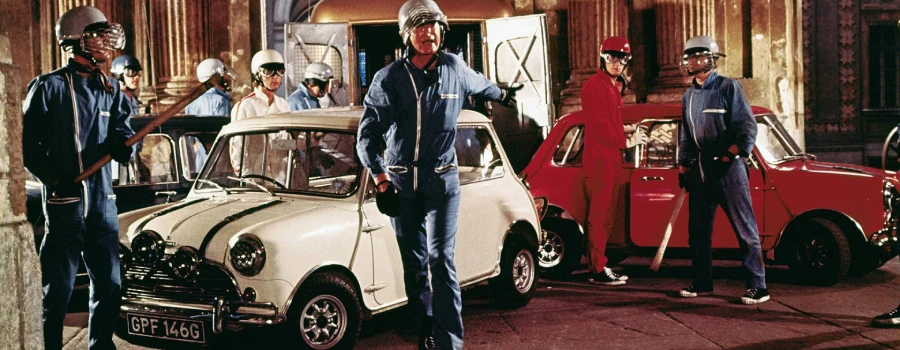
Three Mini Coopers tear through Turin’s sewers, staircases, and rooftops while Italian police scramble to keep up. Peter Collinson’s film turned a gold heist into a car ballet, using Rome’s architecture as an obstacle course. Michael Caine’s Charlie Croker coordinates the chaos from a tour bus, barking orders while tourists snap photos.
The production shut down Turin’s traffic for weeks to film the chase. Stunt drivers practiced for months to thread the Minis through impossibly tight spaces. Quincy Jones wrote a score that swings between jazz and suspense, never letting the audience settle.
Why it endures
That cliffhanger ending. A bus teetering on a cliff, gold sliding toward the edge, and no resolution in sight. Collinson refused to film a tidy conclusion, leaving audiences debating physics and possibilities for decades.
The Anderson Tapes (1971)
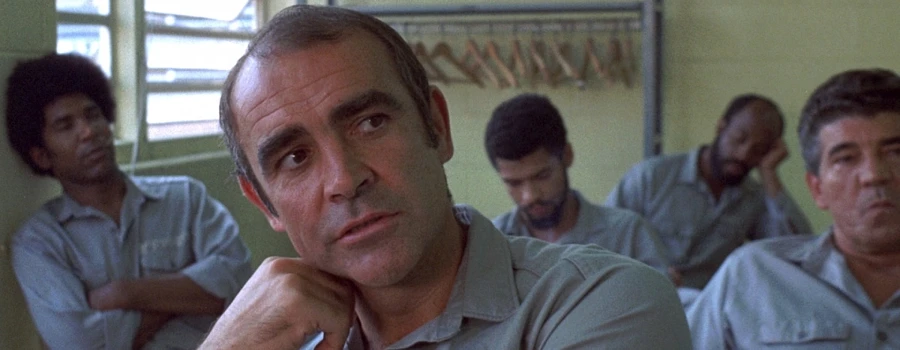
Sidney Lumet set his apartment-block robbery under total surveillance. Cameras, wiretaps, and microphones record every move the crew makes, but the footage lands in a dozen separate government files that never communicate. The heist succeeds while bureaucrats watch in real time, unable to connect the dots.
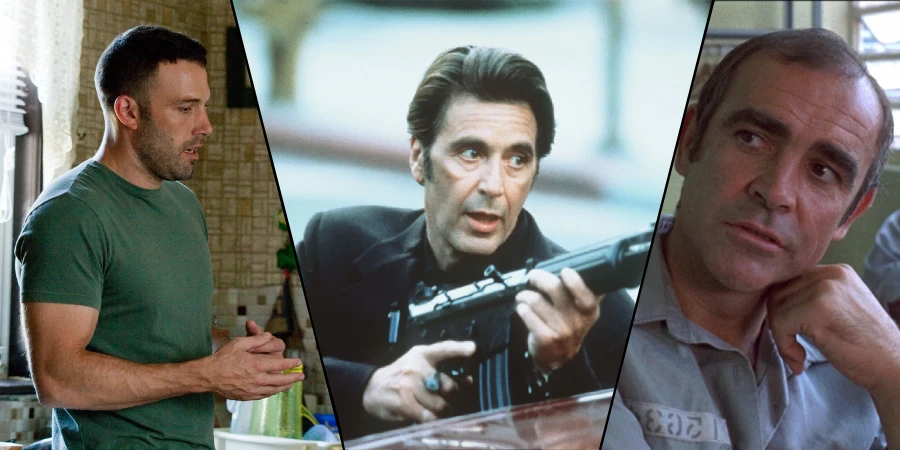
Sean Connery plays Duke Anderson, fresh out of prison and assembling one last crew. Lumet filmed on location in a real Manhattan building, using actual surveillance equipment to make the paranoia tangible. The tech feels dated now, but the critique of information overload remains sharp.
The Asphalt Jungle (1950)
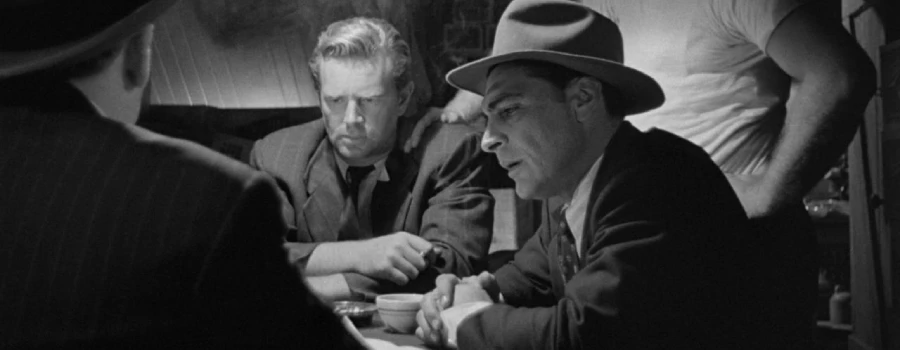
Few crime films have aged this well. John Huston’s jewelry heist strips away glamour, showing broke men desperate for a score that might never come. Sterling Hayden plays Dix Handley, a small-time thug who dreams of buying back his family’s Kentucky farm. The robbery works. The aftermath doesn’t.
Huston cast Marilyn Monroe in a tiny role that launched her career. She appears for three minutes, but every producer in Hollywood noticed. The film’s real legacy lives in its structure: assemble, plan, execute, scatter, fall. Dozens of heist movies copied the beats, but none matched the exhaustion in Hayden’s eyes as Dix bleeds out in a pasture, inches from home.
Le Cercle Rouge (1970)
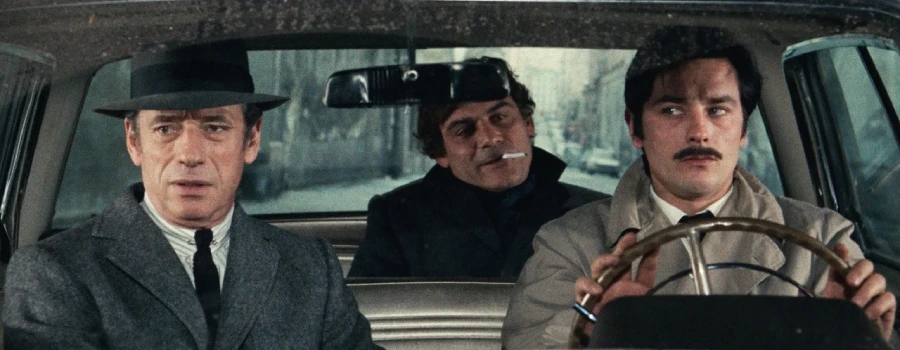
Jean-Pierre Melville’s Place Vendôme jewelry job unfolds with the precision of a Swiss watch. Three men, one recently released from prison, one escaped from a transport van, one former cop turned alcoholic. They don’t trust each other, but they need each other. The heist sequence runs twenty minutes without a word spoken, just footsteps and alarm systems and held breath.
Melville built the entire jewelry store on a soundstage to control every angle. His camera glides through the space like a ghost, watching the crew dismantle alarms and crack safes with surgical calm. The title refers to a Buddhist parable about criminals drawn together by fate. No such circle exists in Buddhism, but Melville invented it anyway because it sounded true.
The Sting (1973)
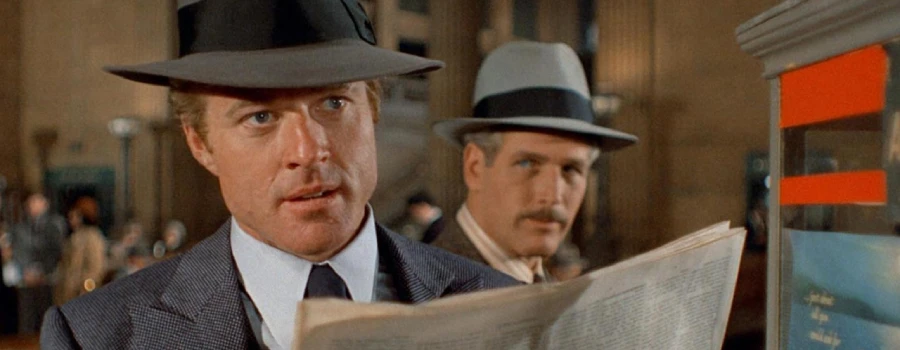
George Roy Hill’s con-man revenge plot won seven Academy Awards by making the audience the mark. Every scene plants a clue you won’t notice until the final reveal. Paul Newman and Robert Redford play grifters who construct an entire fake betting parlor to fleece a mob banker. The set dressing alone required fifty extras and six weeks of rehearsal.
Scott Joplin’s ragtime piano score, recorded decades earlier, became a surprise hit after the film’s release. Hill chose the music to evoke 1936 Chicago without resorting to big-band clichés. The anachronism worked because the film never took itself too seriously.
Cultural impact
Redgrave’s fedora became shorthand for old-school cool. The fake shooting. The double-cross that’s really a triple-cross. Half the heist films made in the next decade tried to copy Hill’s narrative sleight of hand, but most forgot to include characters worth caring about.
Heat (1995)
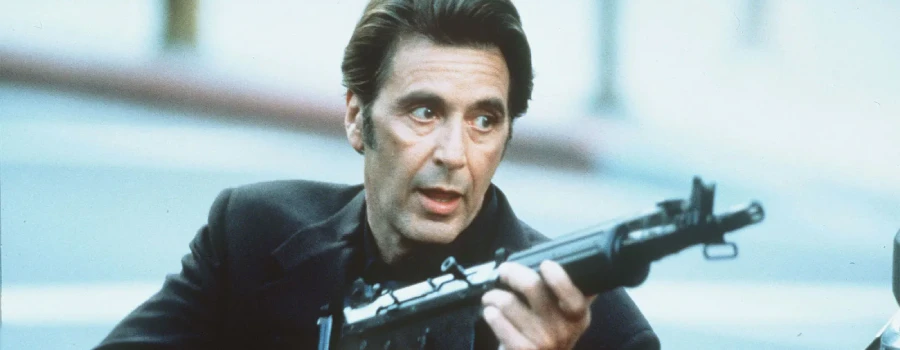
Michael Mann’s three-hour crime opera gives equal weight to the thieves and the cop hunting them. Robert De Niro’s Neil McCauley runs his crew with military discipline. Al Pacino’s Vincent Hanna chases him with obsessive focus. The two men sit across from each other in a diner halfway through the film, speaking like old friends who happen to be on opposite sides of the law.
Mann shot the downtown L.A. bank robbery with live ammunition and no music. The gunfight echoes through city blocks, each shot recorded with forensic clarity. Crew members reload, glass shatters, and bystanders scatter. The sequence redefined action filmmaking by prioritizing sound design over score.
De Niro trained with real burglars to learn how professionals move through a job. Pacino shadowed LAPD detectives. Mann spent months researching both sides, and the detail shows in every frame.
Oceans Eleven (2001)
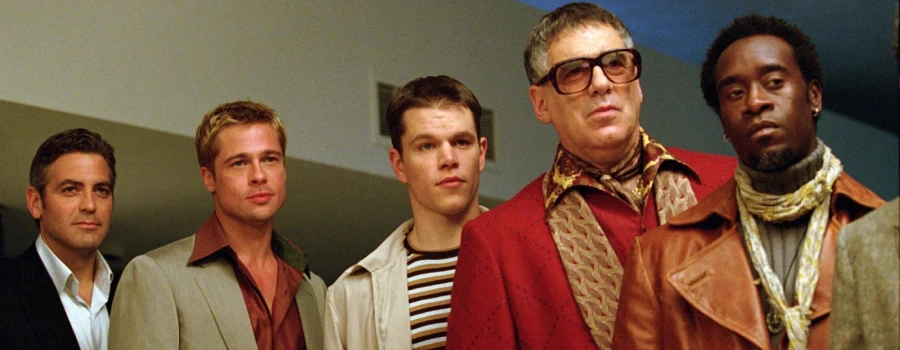
Steven Soderbergh remade the Rat Pack original as a Swiss timepiece of charm and wit. George Clooney assembles ten specialists to rob three Las Vegas casinos in one night. The tone stays light, the crew never stops bantering, and the entire caper unfolds like a magic trick you’re happy to fall for.
Soderbergh shot on location in the Bellagio, convincing casino management to let cameras inside the vault. The film cost $85 million, and most of that budget shows up on screen in star power and production value. Two sequels followed, but neither matched the effortless cool of watching Brad Pitt eat in every scene while explaining the plan.
Inside Man (2006)
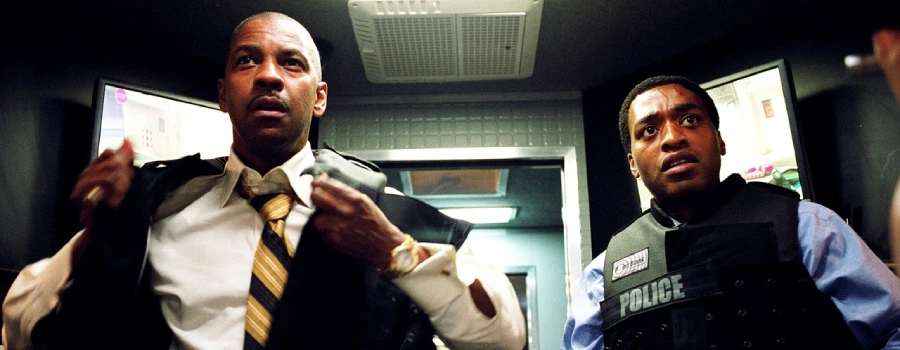
Spike Lee traps a bank robbery inside a Hitchcockian puzzle box. Clive Owen’s crew takes hostages, makes demands, and then… waits. Denzel Washington’s detective negotiates from outside, trying to understand what the thieves actually want. Every answer raises three new questions, and the film never stops tightening the screws.
Lee shot most of the movie inside a real bank after hours. The hostage sequences feel claustrophobic because the space is genuinely small, not a soundstage dressed to look confining. Jodie Foster appears as a fixer who represents interests more powerful than the police, adding layers of corruption the script never fully explains.
The Town (2010)
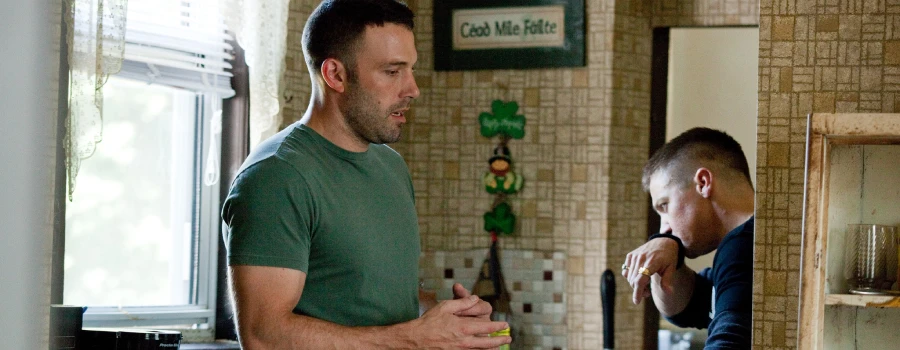
Boston, Charlestown. A neighborhood where robbing banks is a family trade. Ben Affleck directs and stars as Doug MacRay, a driver trying to escape the life while his crew plans one last job. The film opens with a brutal armored-car heist, then pivots into a character study about loyalty and escape velocity.
Affleck trained with Boston police and interviewed former bank robbers to nail the procedural details. The Fenway Park sequence required months of negotiation with the Red Sox organization. Jeremy Renner plays Jem, Doug’s volatile best friend, with the kind of wired intensity that makes every scene feel dangerous.
Standout performance
Renner earned an Oscar nomination for a role that could have been pure caricature. His Jem is violent, funny, and tragic, the friend you love but can’t save. The supporting cast, including Rebecca Hall and Jon Hamm, grounds the film in recognizable human stakes.
Hell or High Water (2016)
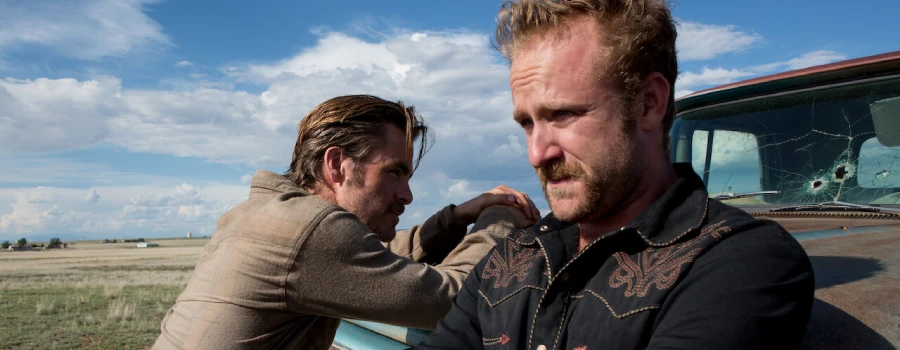
Two brothers rob small-town Texas banks to save their family ranch from foreclosure. David Mackenzie’s modern Western strips the heist film down to survival and desperation. Chris Pine and Ben Foster play siblings with nothing left to lose, while Jeff Bridges hunts them with weary determination.
Taylor Sheridan’s script uses the robbery plot to examine economic collapse in rural America. Every bank they hit is barely scraping by. Every teller looks as desperate as the thieves. The landscape itself feels like a character, all dust and faded paint and empty highways.
The film cost $12 million and shot across New Mexico in 40 days. Nick Cave’s score adds mournful weight without tipping into melodrama. The final confrontation plays out not in violence but in exhausted conversation, two men who understand each other too well to pretend justice means anything simple.
Why These Twelve Heist Films Still Work
These films share a fascination with process. Audiences love watching experts work, whether they’re safecracking or coordinating getaway routes. The best heist movies turn planning into foreplay, execution into climax, and aftermath into reckoning. They understand that the job itself matters less than the people doing it.
Each entry here advanced the formula in a different way. Rififi proved silence could be deafening. The Killing shattered time. The Sting made the audience the mark. Heat turned a shootout into opera. The genre keeps evolving because the core appeal never changes: watching smart people attempt the impossible, knowing everything will probably fall apart.
The heist film endures because it’s ultimately about control. Characters trying to impose order on chaos, even when the world refuses to cooperate. We watch them plan every detail, then hold our breath as those details unravel. The genre works in any era because desperation, greed, and the need for one last score never go out of style.
Start With the Silence
New to heist movies? Begin with Rififi. The 1955 film moves slowly by modern standards, but that thirty-minute robbery sequence remains the genre’s gold standard. Watch how Dassin builds tension without music or dialogue, relying entirely on image and sound. Every film on this list owes something to that French apartment in the middle of the night.
From there, pair The Killing with Heat to see how the fractured timeline evolved into full-blown character opera. Or jump straight to The Town if you prefer modern pacing and emotional weight. Inside Man works as the thinking person’s entry point, a puzzle that rewards attention. Hell or High Water gives you the genre stripped down to bone and gristle, no flash, just consequence.
For pure fun, Ocean’s Eleven delivers star power and charm without apology. For pure craft, Le Cercle Rouge offers Melville’s icy precision. Each film here opens a different door into the genre. Pick the one that sounds most appealing and let the plan unfold.