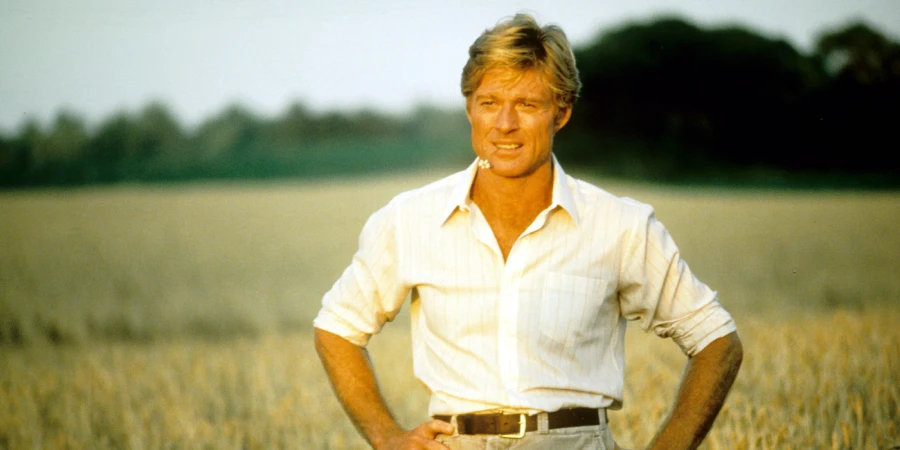

Robert Redford walks out of a stadium tunnel and into pure golden light, and for a moment you forget you are watching a baseball movie. The Natural (1984) is the kind of film that makes grown adults cry over a home run, and it earns every single tear. Director Barry Levinson takes Bernard Malamud’s dark, tragic novel and flips it completely on its head, turning a story about failure into a hymn about second chances. That decision is either a betrayal of the source material or a stroke of populist genius, depending on your mood.
Table of Contents
Detailed Summary
Roy Hobbs, the Boy From the Farm
We open on a farm somewhere in rural America, early in the twentieth century. Young Roy Hobbs watches his father die of a heart attack beneath a tree, and lightning later strikes that tree, splitting it apart. Roy carves a baseball bat from the fallen wood and burns a lightning bolt into its barrel. He names it Wonderboy.
Roy has a gift. His fastball is almost inhuman. His neighbor and childhood sweetheart, Iris Gaines, watches him throw and clearly sees something special in him.
The Train, the Silver Bullet, and Harriet Bird
Years later, a teenage Roy boards a train heading toward a tryout with the Chicago Cubs. On that train he meets The Whammer, a Babe Ruth-type slugger at the peak of his fame. Roy strikes him out on three pitches in a carnival side bet, impressing a sportswriter named Max Mercy.
Also on that train is Harriet Bird, a mysterious woman in black who carries a box of silver bullets. She has a pattern of targeting athletes at their peak. Roy, young and naive, invites her attention.
She invites Roy to her hotel room. She asks if he has achieved his goal of being the best there ever was. When he says not yet, she shoots him with a silver bullet. Roy nearly dies. His career ends before it begins. Harriet jumps from the window.
Roy Resurfaces, Sixteen Years Later
Cut to 1939. Roy Hobbs, now in his mid-thirties, shows up as a rookie for the New York Knights, a struggling National League team. Nobody knows his past. Pop Fisher, the Knights’ manager, has no interest in him and only signs him because the team’s owner, The Judge, forced his hand.
Pop Fisher is bitter, tired, and convinced the world is out to get him. His contract forces him to sell his share of the team if the Knights fail to finish in first place. The Judge actively wants the team to lose so he can buy Pop out.
Wonderboy Wakes Up
Roy sits on the bench for weeks. When he finally gets a chance, he is extraordinary. He steps in during a game, pulls out Wonderboy, and starts hitting with a power nobody on that team has ever seen. He drives balls into scoreboards. He shatters stadium lights.
Roy’s presence lifts the entire roster. Players who had given up start winning. Pop Fisher, reluctantly, comes to believe in his strange, aging rookie.
Memo Paris and the Corruption Plot
Roy becomes famous quickly, and with fame comes Memo Paris. She is Pop Fisher’s niece and the girlfriend of Bump Bailey, Roy’s predecessor in right field. Bump dies early in the film after a spectacular, grotesque collision with the outfield wall.
Memo is beautiful, reckless, and connected to the Judge’s fixer, Gus Sands, a gambler who profits from the Knights losing. Roy falls hard for Memo. Their relationship pulls him off course. He stops hitting. He gets sick. He spirals.
Gus and Memo are deliberately sabotaging Roy. Memo feeds Roy rich food before games. She drains his focus and his energy. It becomes clear she is part of the corruption scheme tied to the Judge.
Iris Returns
At Roy’s lowest point, during a game in Chicago, a woman in the stands stands up. It is Iris, his childhood sweetheart, wearing white. Roy sees her and immediately hits a home run. Her presence literally restores him.
They meet afterward. She tells him she has a son. Their reunion is warm but complicated. Roy still feels the pull of his ambition and does not yet understand everything she represents to him.
Iris eventually tells Roy that her son is his son. Roy had no idea the boy existed. This revelation reframes everything. Roy now has a reason that goes beyond personal glory.
Roy Takes the Bribe
With the Knights in a pennant race, the Judge calls Roy into his dark, shadowy office. He offers Roy money to throw the final game of the season. Roy, weakened and financially desperate after medical bills, actually accepts.
He goes to Memo’s party. He eats and drinks heavily. He gets violently ill. Doctors find that the old bullet wound has deteriorated and that playing again could kill him. Roy faces a genuine choice between his life and the game.
The Final Game
Roy decides to play. He tells the Judge to keep his money. He takes the field for the final game, bleeding internally, bandages under his uniform.
He struggles. He strikes out. Wonderboy cracks in half on a foul tip and splinters across the infield dirt. Roy picks a replacement bat from a ballboy named Bobby Savoy. He calls it Savoy Special.
Movie Ending
Roy steps to the plate in the bottom of the ninth, Knights trailing, needing to win the pennant. Iris and his son sit in the stands. Max Mercy, who knows Roy’s full story, watches from the press box.
Roy hits a towering shot into the stadium lights above the right field wall. Sparks and electricity cascade down onto the field in a slow-motion shower of fire. Roy rounds the bases as the lights explode above him, and the image becomes something close to myth: a man running through falling stars.
This ending is the film’s most deliberate departure from Malamud’s novel, where Roy strikes out and takes the bribe. Levinson and screenwriter Roger Towne chose the triumphant version, and it works because the entire film has been building Roy not as an archetype of failure but as a man who deserves one more chance at the life that was taken from him.
After the game, we see Roy in a field with his son, tossing a baseball back and forth. Iris watches. It mirrors the opening scene with Roy and his father. Roy has become the father he lost. That circular structure earns the sentiment instead of just manufacturing it.
One question audiences always ask: does Roy survive? The film suggests yes. His fate after the game is left warm and open rather than grim. Whether that reads as a cop-out or a mercy depends on how you feel about Malamud’s original intentions, but Levinson commits fully to hope, and the film does not undercut it.
Are There Post-Credits Scenes?
The Natural has no post-credits scenes. None. The film ends with that father-and-son image in the field, and the credits roll over it. Stay if you want to hear more of Randy Newman’s score. Leave if you need to compose yourself in the lobby.
Type of Movie
The Natural is a sports drama with deep mythological and fable-like qualities. It operates in a nostalgic, almost fairy-tale register rather than strict realism. There are elements of tragedy, romance, and moral parable woven through what is ostensibly a baseball movie.
The tone is earnest and unironic. Levinson treats Roy Hobbs with a reverence that borders on the religious, and the film leans into that without apology.
Cast
- Robert Redford – Roy Hobbs
- Robert Duvall – Max Mercy
- Glenn Close – Iris Gaines
- Kim Basinger – Memo Paris
- Wilford Brimley – Pop Fisher
- Barbara Hershey – Harriet Bird
- Robert Prosky – The Judge
- Richard Farnsworth – Red Blow
- Joe Don Baker – The Whammer
- John Finnegan – Sam Simpson
Film Music and Composer
Randy Newman composed the score, and it ranks among the finest work of his career. Newman, far better known at the time for sardonic pop songs, delivered something sweeping and sincere here. The main theme builds on brass and strings in a way that genuinely feels like summer afternoons and American myth.
Newman received an Academy Award nomination for his work on this film. His score does not underscore the action so much as amplify the emotional stakes until your chest physically tightens during that final at-bat.
The music during the climactic home run is, frankly, one of the great marriages of image and sound in 1980s Hollywood cinema. Newman holds back, lets it build, and then releases everything at once when Roy connects. It is a masterclass in restraint followed by release.
Filming Locations
Principal photography took place largely in Buffalo, New York, using War Memorial Stadium as the fictional Knights’ home park. That stadium, built in the 1930s, gave the film its authentic period feel without requiring massive set construction.
War Memorial Stadium was already aging and worn by 1984, which actually helped. Its crumbling grandstands and old-fashioned scoreboard looked exactly like a ballpark from the late 1930s should look.
Additional scenes were filmed in various locations across New York and Illinois. The pastoral farm sequences were shot to look timeless, all soft light and wide open fields, establishing the mythic America that Roy comes from and eventually returns to.
Awards and Nominations
The Natural received four Academy Award nominations: Best Supporting Actress (Glenn Close), Best Cinematography (Caleb Deschanel), Best Art Direction, and Best Original Score (Randy Newman). It won none of them, which still feels like a mild injustice where Close is concerned.
Glenn Close’s performance here is quiet, luminous, and entirely dependent on physical presence rather than dialogue, and the Academy noticed even if it did not reward her.
Behind the Scenes Insights
- Robert Redford trained extensively to make his swing look credible. The production brought in real baseball coaches to work with him, and the effort shows. His swing is not perfect, but it looks like an athlete’s swing.
- Barry Levinson shot the film with a very specific visual philosophy alongside cinematographer Caleb Deschanel: every frame should look like a Norman Rockwell painting come to life. That decision explains the golden light that saturates almost every outdoor scene.
- The explosion of stadium lights during the final home run required significant practical effects work. Levinson wanted the sparks to feel real and physical rather than obviously artificial.
- Robert Duvall reportedly brought a lot of his own ideas to Max Mercy, shaping him into a more slippery, ambiguous figure than the script originally specified.
- Kim Basinger has spoken about enjoying the complexity of Memo Paris, a character who could have been a simple femme fatale but carries genuine sadness underneath her manipulation.
- Wilford Brimley’s Pop Fisher became a beloved performance partly because Brimley played him as exhausted rather than angry. That choice gives the character weight.
Inspirations and References
The Natural draws directly from Arthurian legend. Roy Hobbs is a version of Percival, the knight who seeks the Holy Grail. Wonderboy is his sword. Pop Fisher’s drought-stricken, failing team mirrors the wasteland of the Fisher King myth. Even Pop’s name signals the connection.
Bernard Malamud built those mythological bones deliberately into his 1952 novel. Levinson kept the structure while replacing Malamud’s tragic ending with a redemptive one.
The character of Harriet Bird, with her silver bullets, draws on folklore about supernatural creatures and the idea of greatness as a kind of dangerous exposure. She targets men at their peak the way myths suggest hubris invites destruction.
Some film scholars have also noted parallels to the life of Eddie Waitkus, a real Philadelphia Phillies first baseman who was shot by an obsessed female fan in 1949. Malamud drew on that incident for inspiration.
Alternate Endings and Deleted Scenes
No officially released alternate ending exists for The Natural. The most significant creative fork came in the adaptation process itself. Malamud’s novel ends with Roy striking out, taking the bribe, and facing the full weight of his failure. Levinson and screenwriter Roger Towne consciously rejected that ending.
Malamud apparently disapproved of the change. Whether deleted scenes from the darker version of the story exist in any studio archive is not publicly confirmed.
Book Adaptations and Differences
The Natural is based directly on Bernard Malamud’s 1952 novel of the same name. The film keeps the major structural bones: the origin, Harriet Bird, the Knights, Pop Fisher, the Judge, Memo, Iris, and the climactic game. What it fundamentally alters is the ending and the moral weight of the story.
In Malamud’s novel, Roy accepts the bribe, strikes out in the final at-bat, and fails. Iris reveals her pregnancy but Roy cannot escape his pattern of self-destruction. The book is a tragedy about a man who squanders every gift he has been given.
Levinson’s film turns that tragedy into a parable about redemption. Some readers of the novel find the movie version saccharine. Others find it emotionally truer to what baseball mythology actually means to American culture. Both arguments have merit, and picking a side says something about you as a person.
Memorable Scenes and Quotes
Key Scenes
- Striking Out the Whammer: Roy, lanky and unknown, faces a professional slugger at a carnival. Three pitches. Three strikes. Each one faster than the last. The crowd goes silent and then erupts. It sets up everything the film promises.
- Harriet Bird’s Hotel Room: Barbara Hershey asks Redford if he is the best there ever was. His face opens with pride. She lifts the gun. The scene is quiet and strange, like a fairy tale going wrong in slow motion.
- Iris Standing in the Stands: Roy is in a slump, visibly shrinking at the plate. A woman in white stands. Sunlight hits her. Roy’s eyes find her. He swings. The ball disappears. Nothing in the scene is subtle, and nothing in the scene needs to be.
- Wonderboy Splinters: Roy fouls a ball straight down into the dirt. The bat cracks and breaks apart on the infield grass. It is a genuinely painful moment. Watching Redford look down at the pieces carries more emotion than most death scenes.
- The Final Home Run: Roy connects. Sparks pour down from exploding stadium lights like a waterfall of fire. Roy rounds the bases in slow motion as the lights rain down. Randy Newman’s brass section swells. It is shameless and gorgeous.
- Roy and His Son in the Field: The closing image. Father and son throw a ball in fading afternoon light. It mirrors the film’s opening. Everything has come full circle.
Iconic Quotes
- “I coulda been better. I coulda broke every record in the book.” – Roy Hobbs
- “God, I love baseball.” – Pop Fisher
- “Pick me out a winner, Bobby.” – Roy Hobbs, requesting the Savoy Special bat
- “You’ve got a gift, Roy, but it’s not enough. You’ve got to develop yourself.” – Roy’s father, early in the film
Easter Eggs and Hidden Details
- Harriet Bird’s black outfit and silver bullets echo werewolf and vampire folklore. Silver kills monsters. She targets athletic greatness as if it were something monstrous and unnatural.
- Pop Fisher’s name is a direct reference to the Fisher King of Arthurian legend, the wounded king whose land cannot heal until the right knight arrives and asks the right question.
- Wonderboy, carved from a lightning-struck tree, echoes the legend of Excalibur: a weapon of mythic origin that only its rightful owner can wield properly.
- Iris consistently wears white or light colors while Memo consistently wears red and dark shades. The color coding is not subtle, but it is consistent across every scene they appear in.
- War Memorial Stadium in Buffalo was nicknamed “The Rockpile” by locals, a detail that adds texture to the Knights’ identity as a down-and-out franchise.
- The scoreboard numbers during the final game sequence track in ways that careful viewers can cross-reference against the dialogue to confirm the exact game situation at each moment.
Trivia
- Robert Redford was in his mid-forties during filming, which actually made his casting more poignant. Roy is supposed to be too old for what he is attempting.
- Caleb Deschanel’s cinematography used natural light and golden-hour shooting extensively. Many of the most beautiful outdoor shots were filmed during very small windows of available light.
- The film was a significant commercial success despite receiving mixed critical notices on initial release. Critics of the era often found the mythological grandeur too earnest. Audiences disagreed loudly.
- Glenn Close wore a halo-like hat during the Iris-in-the-stands scene deliberately. Costume and visual design worked together to make her appear almost angelic from Roy’s perspective in the outfield.
- Barry Levinson had not directed a major studio feature before The Natural. His debut, Diner (1982), was a smaller, more intimate project. This was a significant scale jump.
- Joe Don Baker, who plays the Whammer, based his performance partly on the swagger of 1920s celebrity athletes, all self-satisfaction and performed boredom.
- The cracked-bat scene required multiple takes and multiple bats. Getting the fracture to look clean and dramatic on camera was more complicated than anticipated.
Why Watch?
Caleb Deschanel’s cinematography alone is worth the two hours: every shot of Roy Hobbs stepping into a batter’s box looks like someone distilled every golden summer afternoon you have ever loved into a single image. This is a film that commits completely to its own sincerity, asks you to believe in a man hitting a baseball as an act of spiritual reclamation, and somehow pulls it off.
Director’s Other Movies
- Diner (1982)
- Young Sherlock Holmes (1985)
- Good Morning, Vietnam (1987)
- Rain Man (1988)
- Avalon (1990)
- Bugsy (1991)
- Sleepers (1996)
- Wag the Dog (1997)
- Sphere (1998)
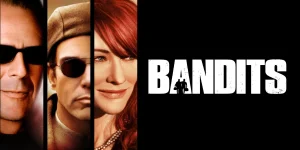
- Bandits (2001)
Recommended Films for Fans
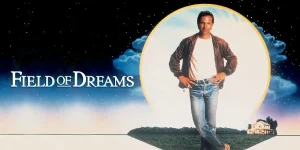
- Field of Dreams (1989)
- Bull Durham (1988)
- Eight Men Out (1988)
- A League of Their Own (1992)
- The Pride of the Yankees (1942)
- Moneyball (2011)
- Rookie of the Year (1993)