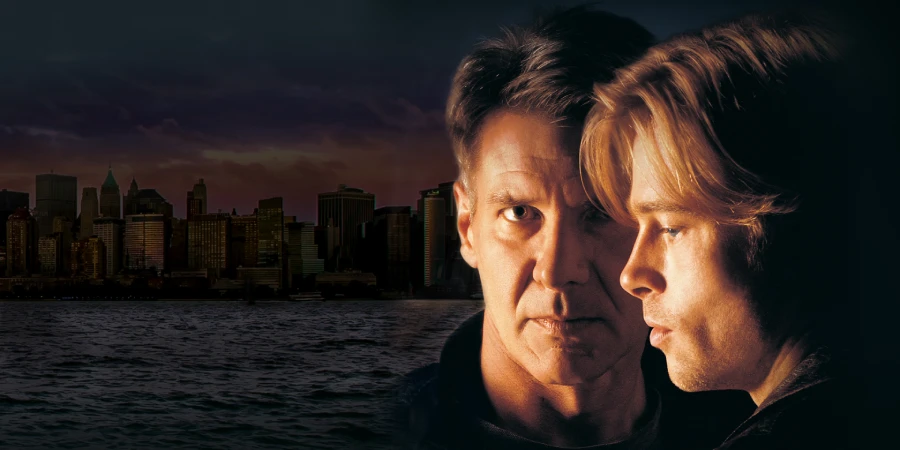

Brad Pitt plays an IRA gunman hiding in a New York cop’s home, and the film’s best trick is making you root for both men simultaneously. The Devil’s Own arrived in 1997 carrying tabloid-sized baggage: a notoriously troubled production, Pitt’s very public frustration with the script, and Harrison Ford looking visibly unhappy in every press photo. What survived all that noise is a genuinely melancholy thriller about two decent men on a collision course, held together by two performances that outclass the material around them. Director Alan J. Pakula got one of his last films made, and it is worth more than its reputation suggests.
Detailed Summary
A Boy Watches His Father Die
The film opens in Northern Ireland in 1972. Young Frankie McGuire watches British-aligned gunmen murder his father at the family dinner table. Pakula holds on the boy’s face, not the violence, and that choice costs the scene nothing in impact.
That image of the child’s blank, absorbing stare sets every motivation in motion. Frankie does not cry. He simply watches, and the film trusts us to understand what that silence means for the next twenty years of his life.
Frankie Arrives in New York
Adult Frankie, now a senior IRA operative, travels to New York under the alias Rory Devaney. His mission is to purchase Stinger missiles from an arms dealer named Billy Burke and smuggle them back to Ireland. He carries cash raised by Irish-American supporters, and the operation has clear political backing.
Frankie gets placed with a host family through IRA sympathizers. That family belongs to Tom O’Meara, a veteran NYPD sergeant played by Harrison Ford. Tom is steady, fair, and genuinely kind. He installs Frankie in his basement and treats him like a son almost immediately.
Two Men, One Roof
Pakula uses the domestic scenes wisely. Frankie eats at Tom’s table, watches television with his daughters, and slowly relaxes into something resembling a normal life. Brad Pitt plays these moments with a particular looseness, a man tasting peace and knowing it cannot last.
Tom has no idea who Frankie really is. His instincts as a cop are sharp, but his instinct toward decency keeps overriding suspicion. Ford plays this as a genuine character quality rather than naivety, and it is the most underrated element of his performance.
The Arms Deal Goes Wrong
Frankie negotiates with Billy Burke, a slippery local arms dealer played by Treat Williams. Burke takes the money but refuses to deliver the missiles. He pockets the cash and essentially dares Frankie to do something about it.
Frankie does. He and his contact kill Burke and recover as much money as possible. This sequence is where the film shifts tone decisively. Up to this point Frankie operates in moral gray. After Burke’s death, the net begins to close.
Tom Starts to See the Truth
Meanwhile Tom’s partner, Eddie Diaz, gets shot during a routine traffic stop. Tom freezes for one critical second before shooting the suspect. That hesitation haunts him, and the film earns real gravity from Ford’s reaction in the aftermath, a man questioning his own nerve for the first time in a long career.
Tom also begins noticing things about Frankie. Small inconsistencies. A gun. A wad of cash. He does not confront Frankie immediately, but the warmth between them starts carrying a new weight.
The IRA Connection Surfaces
British intelligence and the FBI close in. An investigator named Dessie arrives from Belfast, representing IRA interests and watching Frankie’s operation. Frankie’s contact network starts to fray. A fellow operative gets killed, and the missiles remain undelivered.
Tom receives information from law enforcement that connects the alias Rory Devaney to IRA activity. He drives home knowing what he will find. Pakula shoots this drive in near-silence, which is exactly the right call.
Confrontation in the Basement
Tom confronts Frankie at home and finds the money and the remaining weapons. Frankie does not deny who he is. He explains his history, the father murdered at the dinner table, the decades of occupation, the logic that brought him to this moment. Pitt delivers this quietly, without pleading.
Tom does not arrest him. He gives Frankie a chance to run, an act that violates every professional obligation Tom holds. It is a morally complicated choice, and the film refuses to judge it cleanly.
Movie Ending
Frankie makes one final attempt to recover the Stinger missiles. He tracks down Burke’s surviving associate and retrieves the weapons, intending to load them onto a boat bound for Ireland. Tom follows him to the docks.
What unfolds on that boat is not a clean action climax. Frankie shoots Tom in the abdomen. Tom, wounded, shoots Frankie. Neither man fires in pure anger. Frankie’s expression in those final seconds, looking at the man who showed him genuine kindness, registers something close to grief.
Frankie dies on the boat. Tom survives, barely. He does not take the credit for stopping an IRA operation. He sits with what he has done, and the film ends on his face rather than a debrief scene or a medal ceremony.
Audiences sometimes ask whether Tom could have saved Frankie. The film says no, but it does not say Tom was right to follow him. That ambiguity is deliberate. Pakula wanted viewers sitting with discomfort, not resolution. For a studio thriller released in 1997, that ending took nerve.
Whether Frankie ever really wanted to survive the mission is left genuinely open. His behavior throughout the final act suggests a man who has run out of futures he can imagine for himself. That reading makes the ending significantly sadder than a straightforward shoot-out.
Are There Post-Credits Scenes?
The Devil’s Own contains no post-credits scenes. The film ends, the credits roll, and that is that. No stingers, no tags, nothing hidden.
Type of Movie
This is a political thriller with strong dramatic elements. It sits closer to character study than action film, despite the marketing suggesting otherwise. The tone is somber and intimate throughout.
Pakula was drawn to stories about ordinary people caught in systems larger than themselves, and that sensibility shapes every scene here. Do not go in expecting a conventional chase film.
Cast
- Harrison Ford – Tom O’Meara
- Brad Pitt – Frankie McGuire / Rory Devaney
- Margaret Colin – Sheila O’Meara
- Ruben Blades – Edwin Diaz
- Treat Williams – Billy Burke
- George Hearn – Chief Jim Kelly
- Mitchell Ryan – General John Burke
- Natascha McElhone – Megan Doherty
- Paul Ronan – Dessie
Film Music and Composer
James Horner composed the score. Horner leaned into Irish folk textures, using uilleann pipes and understated string arrangements to keep the music rooted in Frankie’s cultural identity rather than generic thriller percussion.
The score avoids heroic swells during the action sequences, which suits the film’s reluctance to celebrate violence. Horner was one of Hollywood’s most reliable dramatic composers at this point in his career, and his restraint here pays off.
Filming Locations
Production shot primarily in New York City, using actual neighborhoods in Staten Island and Queens to ground Tom’s world in recognizable, working-class authenticity. These are not glamorized Manhattan locations.
Scenes set in Northern Ireland filmed in Belfast and surrounding areas. Shooting in the actual locations, rather than a studio substitute, gives the opening sequences a texture that mattered to the story’s credibility. Pakula reportedly insisted on that authenticity.
Awards and Nominations
The Devil’s Own did not make a significant mark on the major awards circuits. Brad Pitt received some attention for his Irish accent work from industry observers, but no major nominations followed for this particular film.
Behind the Scenes Insights
- Brad Pitt publicly called the script a disaster midway through production, telling reporters it was “the most irresponsible thing I’ve ever been part of.” That quote ran everywhere and damaged the film before release.
- Multiple writers worked on the screenplay at different stages, which contributed to the tonal inconsistencies Pitt was reacting to.
- Harrison Ford and Alan J. Pakula reportedly had a strong collaborative relationship and worked to stabilize the production after the script controversy erupted.
- Pitt trained extensively on the Irish accent and spent time in Northern Ireland before filming began. That preparation shows in his line delivery, which is far more controlled than casual viewers give it credit for.
- This was one of Pakula’s final completed films before his death in 1998.
- Columbia Pictures pushed for a more action-heavy cut. The version that reached theaters represented a compromise between Pakula’s dramatic instincts and studio commercial concerns.
Inspirations and References
The film draws on the real history of IRA fundraising and arms procurement in the United States during the Troubles. Irish-American communities in New York and Boston had documented networks that supported IRA operations financially, and the film reflects that reality without simplifying it into cartoon villainy.
Kevin Jarre, who wrote early drafts, reportedly researched the period extensively. The idea of placing an IRA operative inside a cop’s home draws on classic thriller setups about proximity and deception, but the political grounding distinguishes it from purely generic material.
Alternate Endings and Deleted Scenes
There were reportedly early script versions in which Frankie survived or escaped. Studio pressure and test screening feedback shaped the final outcome, pushing toward an ending where consequences land on both men rather than offering escape for either.
Some deleted material reportedly expanded the Northern Ireland sequences and gave more context to Frankie’s pre-New York life. These scenes would have strengthened the film’s first act considerably, and their absence is genuinely felt.
Book Adaptations and Differences
The Devil’s Own is an original screenplay, not based on a novel or prior source material. No book adaptation comparison applies here.
Memorable Scenes and Quotes
Key Scenes
- The opening dinner table murder, shot from young Frankie’s eye level, with Pakula keeping the camera on the child’s face rather than the gunfire.
- Frankie and Tom’s first shared meal, in which warmth and dramatic irony operate simultaneously without either canceling the other.
- Tom’s drive home after learning Frankie’s real identity, shot in silence with Ford doing everything through micro-expressions and stillness.
- The basement confrontation, in which Pitt delivers Frankie’s history without performance tics, flat and direct, staring at the floor.
- The final boat sequence, which Pakula shoots without musical swells, letting the sound design and both actors carry the weight of what is happening.
Iconic Quotes
- “It’s not an American story, it’s an Irish one.” Frankie says this to Tom near the end, and it is the film’s thesis in one line.
- “Don’t look for a happy ending. It’s not an American story.” A variation on the above, which Pitt delivers with a quietness that lands harder than any shout would.
Easter Eggs and Hidden Details
- The color palette in the Northern Ireland scenes runs colder and grayer than the New York sequences. Pakula and cinematographer Gordon Willis used this contrast deliberately to mark the shift between Frankie’s past and his temporary present.
- Frankie’s alias, Rory Devaney, is an entirely generic Irish name, which underlines how practiced and routine his deception has become.
- Tom’s daughters treat Frankie with uncomplicated affection throughout, which makes the final act harder to watch. Their trust functions as a quiet indictment of the situation.
- The uilleann pipes on the score appear for the first time in the film not during an Irish scene but during a quiet New York domestic moment, suggesting Frankie carries Ireland with him everywhere.
Trivia
- Brad Pitt’s comments about the script made this one of the most publicly troubled productions of the mid-1990s, before social media existed to amplify such things.
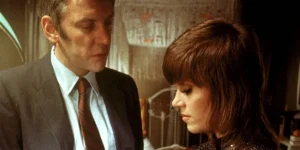
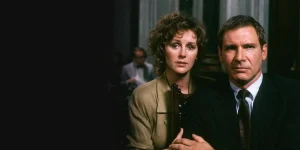
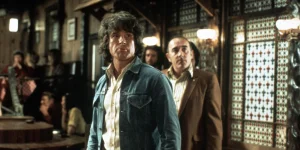
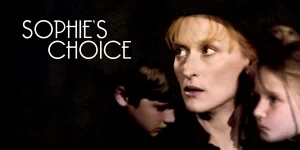
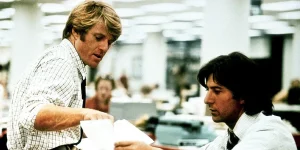
- Alan J. Pakula directed All the President’s Men, Klute, and Sophie’s Choice before this film. The Devil’s Own sits at the quieter end of his output but shares his recurring interest in moral compromise.
- Gordon Willis served as director of photography. Willis had shot The Godfather films and brought a naturalistic, low-key approach to light that suits this film’s refusal to glamorize its subject.
- The Troubles formally ended with the Good Friday Agreement in 1998, one year after this film’s release, which gives the film’s political content an accidental historical poignancy.
- Harrison Ford took the role partly because of his relationship with Pakula. The two had worked together previously and Ford trusted the director’s dramatic instincts.
Why Watch?
Brad Pitt’s Frankie McGuire is the performance people skip past when cataloguing his career, and that is a genuine mistake. Watch the basement confrontation scene specifically: Pitt holds completely still, speaks without inflection, and makes you feel twenty years of grief in ninety seconds of screen time. That scene alone justifies the runtime.
Director’s Other Movies
- Klute (1971)
- The Parallax View (1974)
- All the President’s Men (1976)
- Comes a Horseman (1978)
- Starting Over (1979)
- Rollover (1981)
- Sophie’s Choice (1982)
- Dream Lover (1986)
- Orphans (1987)
- See You in the Morning (1989)
- Presumed Innocent (1990)
- Consenting Adults (1992)
- The Pelican Brief (1993)
Recommended Films for Fans
- In the Name of the Father (1993)
- Michael Collins (1996)
- The Crying Game (1992)
- Patriot Games (1992)
- Cal (1984)
- Some Mother’s Son (1996)
- Blown Away (1994)