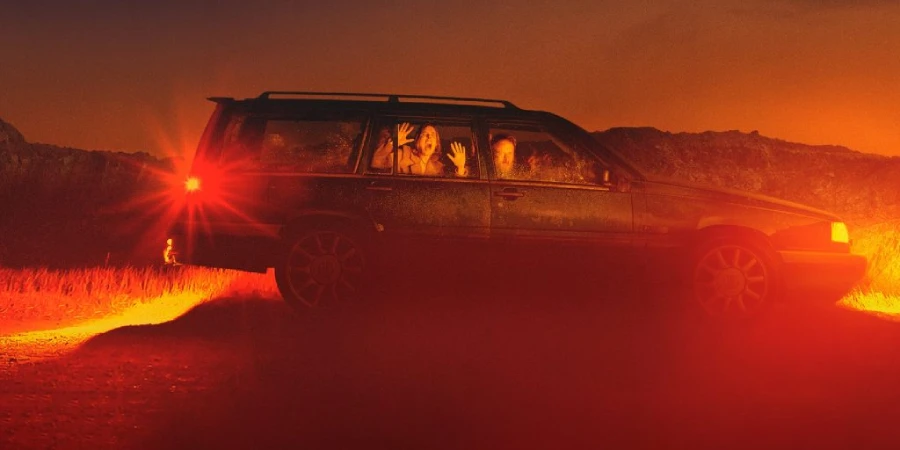
Politeness kills. That is the cold thesis of Speak No Evil, Christian Tafdrup’s Danish nightmare about a family too well mannered to run. Warning signs flash in plain sight for two hours, and the guests keep smiling through every one of them. By the last shot you will want to scream at the screen, then quietly wonder what you would have done.
Detailed Summary
A Tuscan Holiday and a Magnetic Stranger
Bjørn, Louise and their young daughter Agnes are Danes on holiday in Tuscany. Their marriage runs on autopilot, and Bjørn drifts through the trip in a fog of quiet disappointment. At the pool they meet Patrick and Karin, a Dutch couple travelling with their silent son Abel.
Patrick is loud, tactile and flattering. He treats Bjørn like a man with hidden depths, and Bjørn glows under the attention. Karin, meanwhile, plays gracious counterweight to her husband’s volume.
Abel says nothing at all. His parents mention a congenital defect, and nobody presses the point. Of course, nobody wants to be the tourist who asks a rude question.
The Invitation Arrives in the Post
Months later a postcard lands at the Danish family’s home. Patrick and Karin want them for a weekend in the Dutch countryside. Louise hesitates.
Bjørn, bored by his own life, treats the trip as an escape hatch. He wins the argument, and the family drives south with Agnes and her stuffed rabbit in the back seat. Their hosts turn out to live far from anything, down long roads with no neighbours in sight.
Small Cruelties at the Dinner Table
Dinner goes wrong almost at once. Patrick serves wild boar, Louise reminds him that she is vegetarian, and he slides a piece onto her plate anyway. She eats it, and Bjørn says nothing, which becomes his defining act.
More tests follow. Patrick roars at Abel over a small accident and hauls the boy out of the room. Karin smooths it over, and the guests end up apologising for awkwardness they did not create.
Sleeping arrangements curdle too. Abel slips into Agnes’s bed during the night, and the hosts wave the whole thing away as nothing worth discussing.
The Night Out and the Babysitter
A stranger turns up to babysit, arranged without warning or consent. Patrick and Karin then sweep their guests off to a restaurant, where the bill somehow lands in front of Bjørn. He pays, embarrassed, while Patrick shrugs off his empty wallet.
Dancing follows, and Louise finally reaches her limit. Her husband, by contrast, keeps performing enthusiasm for a man he barely knows. Every social muscle in his body works against his survival instinct.
Back at the house, Bjørn gets a clear look inside Abel’s mouth. There is no tongue there at all, and the tidy medical explanation collapses on the spot.
The Escape That Fails
At dawn the Danes creep out to their car and drive off without a goodbye. Relief lasts a few kilometres. Then Agnes realises her rabbit is still in the house, and her sobbing turns the car around.
That U-turn is the hinge of the entire film. Patrick and Karin greet the returning family with warmth and no questions, as if the escape had never happened. Good manners have now walked everyone back inside the trap.
The Photographs
Bjørn goes wandering through the house that night and finds a cache of photographs. Patrick and Karin appear in all of them, beaming, posed beside a long line of different children and different families. Abel was never their son.
Every previous holiday was a hunt, and this weekend is simply the current one. Bjørn wakes Louise, and the two of them grab both children and run for the car.
Movie Ending
Headlights find them on a dark country road. Their escape lasts only as long as it takes the hosts to catch up, and Patrick collects Abel with the bored calm of a man repeating a routine. No police arrive, no stranger intervenes, and nobody in this world is coming to help.
What happens next is the reason people still argue about the film. Patrick and Karin hold the family down and cut out Agnes’s tongue, exactly as they once did to Abel. Louise’s screaming changes nothing.
Both parents are then driven to a stone quarry in the dark. Their captors order them to undress, and the couple obey, still following instructions right to the end. Bjørn asks the only question left: why?
Patrick’s answer is four words. “Because you let me.” He and Karin pick up rocks and stone the pair to death, and the camera does not spare anyone.
No rescue arrives afterwards. Agnes rides away in the back seat of the killers’ car, silenced and slotted neatly into the role Abel has just vacated. Meanwhile the couple drive on toward another friendly holiday and another agreeable family.
Two questions dominate every discussion of that finale. Why keep a child at all? The film implies a working method rather than a psychology: a mute child cannot testify, and a fresh child replaces the last one once it stops being useful.
Why does Abel never warn them? He tries, in the only way a boy without a tongue can, and the adults read his distress as strangeness instead of a signal. Consequently the tragedy needs no supernatural force and no criminal genius, only four polite people ignoring a child.
Tafdrup withholds rescue, revenge and motive on purpose. A tidy explanation would let viewers file the couple under monsters and go home comfortable. Denied that exit, the audience is left with the far worse suspicion that Bjørn’s behaviour was completely normal.
Are There Post-Credits Scenes?
No. Nothing plays after the credits roll, and the film clearly wants it that way. Sitting through the names in silence is part of the experience.
Type of Movie
Psychological horror crossed with social satire, built as a slow burn thriller rather than a scare delivery system. Tension comes from etiquette, not from monsters in the dark.
Tone shifts in stages. Early scenes play like a cringe comedy of manners, all misread signals and forced laughter. By the third act that comedy has hardened into something genuinely brutal.
Fans of Michael Haneke will recognise the temperature immediately. There are almost no jump scares here; instead the film generates dread through recognisable behaviour and an aggressively ominous score.
Cast
- Morten Burian – Bjørn
- Sidsel Siem Koch – Louise
- Fedja van Huêt – Patrick
- Karina Smulders – Karin
- Liva Forsberg – Agnes
- Marius Damslev – Abel
Film Music and Composer
Danish composer Sune Kølster wrote the score, and it behaves like a character with an agenda. Huge orchestral stabs crash over images of a car on a motorway or a family carrying bags into a house. Nothing on screen justifies that much menace.
That mismatch is both the joke and the trap. Audiences learn to distrust the music, relax a little, and then get punished for relaxing. In contrast to most modern horror scores, this one is not sneaking up on you; it is shouting a warning that the characters cannot hear.
The main theme returns whenever the family travels, turning each drive into a countdown. By the final act the score has already done its work. Viewers arrive at the quarry exhausted, before a single rock is lifted.

Filming Locations
Tuscany opens the film in postcard mode: sunlight, stone terraces, wine at long tables. Holiday beauty makes the couple’s charm feel earned, because everyone is a slightly better person on vacation.
Everything then relocates to the flat, grey Dutch countryside. Patrick and Karin live at the end of a long road with no neighbours in sight, which does the job a horror film usually needs a forest or a basement to do.
Geography drives the plot here. Distance makes leaving expensive in both time and awkwardness, and the family has already committed a full day to the drive. As a result, every reasonable objection loses to the sunk cost of getting there.
Awards and Nominations
Speak No Evil premiered at the Sundance Film Festival in January 2022 and grew its reputation through festival word of mouth rather than trophies. Awards attention stayed modest; notoriety handled the marketing instead.
Behind the Scenes Insights
- Christian Tafdrup co-wrote the screenplay with his brother, Mads Tafdrup, a regular creative partner.
- The premise came from real life: the director met a Dutch couple while on holiday in Tuscany and found himself unable to decline their invitation.
- Tafdrup worked as an actor in Denmark before he moved behind the camera, which shows in how patiently he lets his cast squirm.
- English functions as the shared second language for both families, leaving every character short of the exact vocabulary needed to object.
- Interestingly, the director has spoken about chasing the bleakest ending he could justify and refusing to soften it for comfort.
- Shudder picked up the film for the United States, where it arrived in September 2022 and promptly became a word of mouth sensation.
Inspirations and References
The seed was autobiographical. Tafdrup and his wife met a Dutch couple abroad, received an invitation home, and later wondered what might have happened had they accepted.
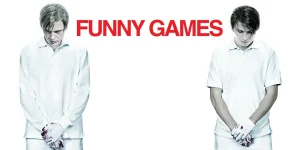
Critics reached instantly for Michael Haneke, particularly Funny Games, another film that punishes an audience for expecting deliverance. Comparisons to The Vanishing (Spoorloos) came just as fast, since both refuse to trade horror for relief.
Underneath sits a very Nordic social satire. Fear of causing a scene, of seeming ungrateful, of ruining a nice weekend: those instincts are the real antagonist. Patrick simply knows how to use them.
Alternate Endings and Deleted Scenes
No alternate ending has ever surfaced. Tafdrup shot the merciless version and kept it, and no home release offers a friendlier variant. Deleted material remains largely unpublicised.
In practice, the 2024 American remake serves as the alternate ending. That version hands the family a fighting chance, which is precisely the thing the original refuses.
Book Adaptations and Differences
Speak No Evil is not based on a book. Christian and Mads Tafdrup wrote an original screenplay, and no novel or short story sits behind it.
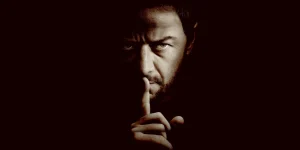
The closest thing to an adaptation is the English language remake, also titled Speak No Evil, directed by James Watkins in 2024 with James McAvoy as the host. Watkins keeps the setup and the escalating discomfort almost beat for beat.
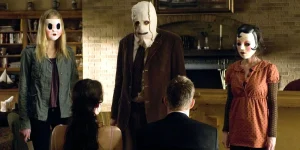
Endings split the two films completely. Where the Danish original ends in surrender, the remake turns into a survival thriller with a fightback. Purists prefer the original’s cruelty; newcomers often find the remake far easier to recommend.
Memorable Scenes and Quotes
Key Scenes
- The wild boar dinner, where Louise eats meat rather than embarrass her host.
- Patrick’s explosion at Abel over a trivial accident, followed by everyone pretending it did not happen.
- The unannounced babysitter and the restaurant bill that quietly becomes Bjørn’s problem.
- The dawn escape, abandoned because a little girl left her stuffed rabbit behind.
- The discovery of the photographs, and the moment Bjørn understands what those smiling family portraits actually record.
- The quarry, filmed with no music cue to soften it and no rescue on the horizon.
Iconic Quotes
- “Because you let me.” Patrick’s answer to the only question that matters, and the line that defines the film.
- “Why are you doing this?” Bjørn’s plea, arriving hours after the point where it might have helped.
Easter Eggs and Hidden Details
- The original Danish title, Gæsterne, translates as “The Guests,” pointing straight at hospitality as the film’s real weapon.
- Abel carries the name of the Bible’s first victim, while Agnes echoes agnus, the Latin word for lamb.
- Patrick’s professional claims go completely unchallenged over an entire weekend, because interrogating a host would be impolite.
- Both families speak English as a second language, which strips everyone of nuance at the exact moment nuance might save them.
- The explanation offered for Abel’s silence early on is, in retrospect, a confession delivered at the dinner table.
- Watch the hosts’ body language around Abel: they touch him like an object, never like a son.
Trivia
- The film premiered in the Midnight section at Sundance in 2022, a slot reserved for the festival’s nastiest offerings.
- It is a Danish-Dutch co-production, and its dialogue moves between Danish, Dutch and English.
- Shudder’s release turned it into one of the most talked about streaming horror titles of that year.
- Christian Tafdrup directed two features before this one, both of them dramas rather than horror.
- Hollywood remade the film only two years later, an unusually fast turnaround for a foreign language title.
- Many viewers report shouting advice at the screen, which is arguably the reaction Tafdrup engineered.
Why Watch?
Watch it for the dread, then stay for the argument it starts at the end. Tafdrup turns good manners into a murder weapon and never once blinks. Performances feel painfully ordinary, which makes the cruelty land harder. Few horror films leave a bruise this specific.
Director’s Other Movies
- Parents (2016)
- A Horrible Woman (2017)