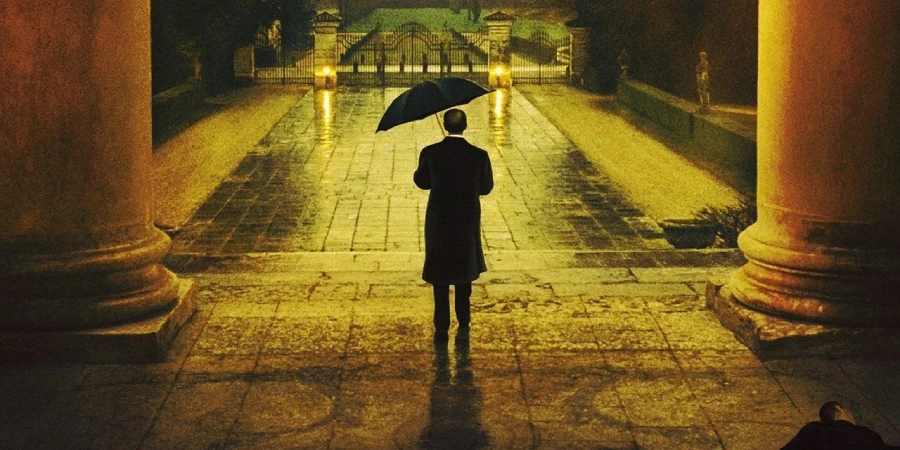

John Malkovich plays Tom Ripley here as a man who has perfected stillness as a weapon. He sits at his Venetian villa, drinks good wine, and judges everyone around him with a calm that borders on contempt. When a party host insults him in front of guests, Ripley files the slight away like a receipt he plans to cash later, and that patience is what drives every frame of this cold, elegant thriller.
Detailed Summary
The Insult at the Party
Tom Ripley lives in a beautifully restored villa near Venice with his wife Luisa. At a social gathering, a British picture framer named Jonathan Trevanny publicly dismisses Ripley as someone with no class. Ripley says nothing. He smiles.
That smile means everything. Ripley stores the humiliation with surgical precision, and when an opportunity arises to use Trevanny as a pawn in a dangerous game, he takes it without hesitation.
The Setup: A Dying Man Made Into a Killer
Trevanny, played by Dougray Scott, has leukemia. He is struggling financially, worried about his wife Simone and their young son. A German gangster named Reeves, played by Ray Winstone, needs someone to carry out a professional assassination and approaches Ripley for a recommendation.
Ripley sees his chance. He feeds false information suggesting Trevanny’s illness is far more advanced than it actually is, nudging the dying man toward desperation. Trevanny, believing he has less time than doctors claim, starts considering the unthinkable.
Trevanny Takes the Job
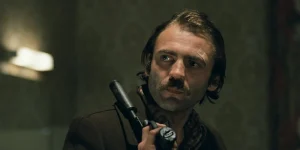
Reeves offers Trevanny a large sum of money to kill a man on a Munich subway platform. Trevanny accepts, convincing himself it is one terrible act for his family’s security. He carries out the hit, shooting the target at close range.
Scott plays this sequence with shaking hands and wide eyes. Every movement Trevanny makes feels amateur, unrehearsed, and genuinely frightened, which makes the audience feel the ugliness of the act rather than the cool detachment typical of the genre.
A Second Job and Ripley’s Unexpected Intervention
Reeves pushes for a second assassination, this time on a train. Trevanny is falling apart emotionally, and Ripley, to everyone’s surprise including his own, decides to ride the train with him. Ripley kills the second target himself when things go wrong.
This is the film’s most fascinating pivot. Ripley acts not out of guilt exactly, but out of something closer to proprietorial interest. He created this situation, and he intends to control how it ends.
The Gangsters Come Calling
Reeves’s bosses, unhappy with the messy executions, send men to eliminate both Trevanny and Ripley. Two killers arrive at Ripley’s villa in the film’s tense third act. What follows is a brutal, almost domestic sequence of violence inside Ripley’s meticulously curated home.
Ripley and Trevanny fight back together, killing both hitmen. Ripley disposes of the bodies with practiced efficiency. Trevanny watches this and realizes he is looking at a man who has done this before, many times, without losing sleep.
Movie Ending
Trevanny survives the night at the villa, but the experience has broken something in him. He drives away with the money, returns to Simone and his son, and tries to slot back into ordinary life. His body, still carrying leukemia, has its own timeline regardless of what gangsters or Ripley have planned.
Ripley watches Trevanny leave and offers nothing sentimental. There is no confession, no apology for the manipulation. Ripley simply returns to his wine and his paintings and his quiet life, as though a minor administrative task has been completed.
What makes the ending land is the imbalance. Trevanny has killed people, survived an assassination attempt, and discovered his illness was never as advanced as he was told. He carries all of that. Ripley carries nothing. Malkovich’s final moments on screen are almost serene, and that serenity is the film’s most chilling statement.
Trevanny dies offscreen, implied by his illness, not by violence. Ripley outlasts him, outlasts the gangsters, outlasts the moral chaos he engineered. The film refuses to punish him, which is entirely consistent with Patricia Highsmith’s vision of Ripley as someone the universe simply does not hold accountable.
Are There Post-Credits Scenes?
There are no post-credits scenes. Ripley’s Game ends cleanly and without addendum. Sit through the credits if you love Ennio Morricone, but nothing extra is waiting for you.
Type of Movie
Ripley’s Game is a psychological thriller with strong elements of crime drama. Its tone is cool, deliberate, and quietly menacing rather than action-heavy. Think chamber piece more than blockbuster.
Director Liliana Cavani keeps the pacing slow in a way that rewards attention. This is a film about power dynamics and moral erosion, and it takes its time making you feel both.
Cast
- John Malkovich – Tom Ripley
- Dougray Scott – Jonathan Trevanny
- Ray Winstone – Reeves
- Lena Headey – Simone Trevanny
- Chiara Caselli – Luisa Ripley
Film Music and Composer
Ennio Morricone composed the score, and it is one of the most underrated elements of the film. His music here is sparse and slightly off-kilter, sitting beneath scenes like something you cannot quite name.
Morricone avoided the lush orchestral grandeur of some of his other work and leaned into unease instead. Strings appear and disappear at unexpected moments, mirroring Ripley’s own emotional absence. It suits Malkovich’s performance perfectly.

Filming Locations
Much of the film was shot in and around northern Italy, leaning into the region’s combination of old-world beauty and underlying coldness. Ripley’s villa setting reinforces his character, a man who has draped himself in culture to disguise what he actually is.
Scenes set in Germany, including the subway assassination sequence, were shot to feel deliberately uglier and more industrial. That contrast is intentional. Ripley’s world is beautiful because he has designed it that way; violence intrudes from somewhere grittier.
Awards and Nominations
Ripley’s Game did not receive major awards recognition upon release, which remains one of the more baffling oversights in Malkovich’s career. The film circulated at festivals but attracted limited mainstream awards attention.
Behind the Scenes Insights
- Malkovich was deeply involved in shaping Ripley’s physical mannerisms, particularly the way the character moves through his own home as though conducting an inspection.
- Director Liliana Cavani had previously adapted literary and historical material throughout her career, and she brought the same rigorous approach to Highsmith’s novel.
- Dougray Scott reportedly prepared for the role by researching terminal illness, wanting Trevanny’s physical decline to feel gradual and real rather than dramatized.
- Ray Winstone’s Reeves was designed as a counterpoint to Ripley, loud and transactional where Ripley is quiet and strategic, and Winstone leaned into that contrast with obvious relish.
- The villa used for Ripley’s home was a genuine historic property, and its authenticity contributed to Malkovich’s performance, giving him a real environment to inhabit rather than a set to act around.
Inspirations and References
Patricia Highsmith published Ripley’s Game as a novel in 1974, and it is the third book in her Ripley series. Highsmith created one of literature’s most compelling sociopaths, a man who exists outside conventional moral frameworks without ever becoming a cartoon villain.
Highsmith herself was influenced by existentialist literature and a deep skepticism about American notions of guilt and punishment. Ripley never pays for his crimes, and that was a deliberate philosophical choice on her part.
Alternate Endings and Deleted Scenes
No alternate endings or officially documented deleted scenes have been widely reported for this production. Cavani’s version of the story follows Highsmith’s novel closely enough that major structural deviations seem unlikely to have existed in the cutting room.
Book Adaptations and Differences
Cavani’s film follows Highsmith’s novel quite faithfully in its broad strokes. Trevanny’s manipulation, the two assassinations, the gangster retaliation, and Ripley’s cold detachment throughout all come directly from the source material.
One notable tonal difference is that Malkovich’s Ripley feels slightly more theatrical than Highsmith’s version, who is more introverted on the page. Malkovich brings a watchful charisma that reads as performance, which Highsmith’s Ripley would likely have found vulgar. It is a trade-off, and an interesting one.
Worth noting: Wim Wenders adapted the same novel in 1977 as The American Friend, with Dennis Hopper playing a very different Ripley. Comparing the two adaptations reveals how much interpretive space Highsmith’s character actually contains.

Memorable Scenes and Quotes
Key Scenes
- Ripley’s expression at the party after Trevanny’s insult, a fixed half-smile with absolutely no warmth behind it, establishes the entire film’s power dynamic in about four seconds.
- Trevanny shooting his target on the Munich subway platform, his hand visibly trembling, the gun held like something he wishes he could put down.
- Ripley killing the second hitman inside his own villa, then immediately assessing the damage to his home with the same calm he brings to everything else.
- The car ride where Trevanny drives away from the villa and Ripley watches from a window, two men with completely different relationships to what just happened.
Iconic Quotes
- “I can get you enough money to outlive your prognosis.” Reeves delivering the pitch to Trevanny with blunt, transactional honesty.
- Ripley’s calm assertion that he has no conscience, delivered not as a confession but as a statement of fact, like describing eye color.
Easter Eggs and Hidden Details
- Several paintings visible inside Ripley’s villa are forgeries within the story’s internal logic, a quiet nod to Ripley’s established history as an art forger in the broader Highsmith series.
- Ripley’s habit of playing harpsichord in the film connects back to Highsmith’s original novels, where music functions as one of his few genuine pleasures rather than a social performance.
- The choice of northern Italy as Ripley’s base deliberately echoes The Talented Mr. Ripley, binding this film visually to the earlier story even without direct narrative reference.
Trivia
- This was the second theatrical film adaptation of Highsmith’s Ripley’s Game, following Wim Wenders’s The American Friend in 1977.
- John Malkovich had long expressed interest in playing Ripley before this production came together.
- Lena Headey, years before Game of Thrones made her a household name, plays Simone with a quiet domestic warmth that makes Trevanny’s compromises feel genuinely costly.
- Liliana Cavani is best known for the controversial The Night Porter from 1974, and her willingness to sit inside moral discomfort without flinching made her a logical choice for Highsmith material.
- The film received a limited theatrical release in some markets and a more substantial video-on-demand and home video presence, which partly explains its cult status rather than mainstream recognition.
Why Watch?
Malkovich’s physical restraint in this film is the reason to show up. He never raises his voice, never hurries, and never explains himself, and that refusal to perform guilt or regret makes every scene with him genuinely unsettling. Watching a man arrange another person’s moral destruction with the same care he applies to his dinner table is its own strange pleasure. Cavani and Malkovich make Ripley feel real rather than mythological, which is far more frightening.
Director’s Other Movies
- The Night Porter (1974)
- Beyond Good and Evil (1977)
- The Skin (1981)
- Francesco (1989)
Recommended Films for Fans
- The American Friend (1977)
- The Talented Mr. Ripley (1999)
- A Simple Plan (1998)
- The Comfort of Strangers (1990)
- Eastern Promises (2007)