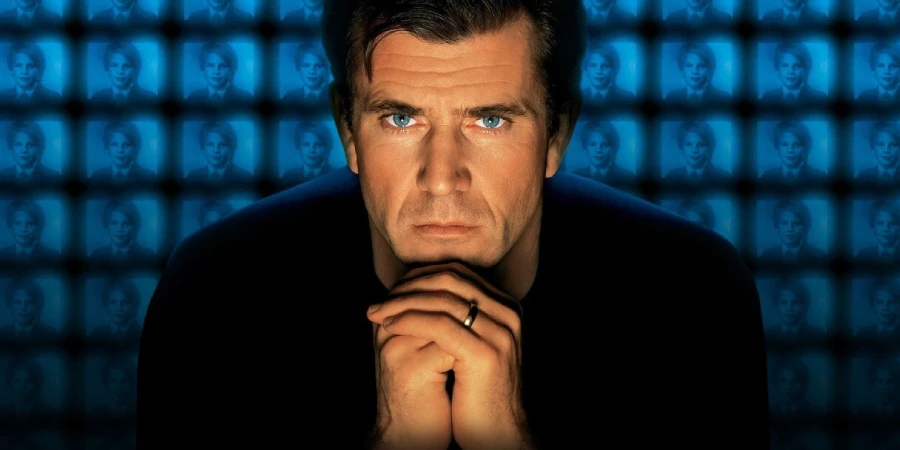

A desperate father turns the ransom money into a bounty on the kidnappers’ heads, and suddenly a thriller becomes something far more unpredictable. Ransom (1996) directed by Ron Howard is a high-stakes cat-and-mouse film that flips every expectation of the kidnapping genre on its head. Mel Gibson delivers one of his most electrifying performances, playing a man who decides that paying up is not the answer. This film still holds up as a masterclass in tension, moral ambiguity, and crowd-pleasing entertainment.
Detailed Summary
Tom Mullen’s World Before the Storm
Tom Mullen (Mel Gibson) is a wealthy airline executive living comfortably in New York City with his wife Kate (Rene Russo) and their young son Sean (Brawley Nolte). He is not a perfect man; a past bribery scandal with a union leader lingers over his reputation. However, his family life appears stable and loving.
Tom’s wealth makes him a target. In contrast to the average thriller protagonist, Tom is not naive about the risks of his lifestyle, but he never anticipates what is coming.
Sean Goes Missing
At a science fair in Central Park, kidnappers snatch Sean right under his parents’ noses. The abduction is swift and professional, signaling that this crew planned everything carefully. Tom and Kate are plunged into a nightmare almost instantly.
The kidnappers demand two million dollars in ransom. They contact Tom with specific instructions and issue warnings about involving law enforcement. Tom, however, contacts the FBI anyway, bringing in agent Jimmy Shaker (Gary Sinise) and his team.
The FBI Moves In
Agent Shaker takes charge of the case and sets up operations in the Mullen home. He appears competent, organized, and sympathetic. Meanwhile, Tom and Kate struggle to hold themselves together under the pressure.
Shaker’s team monitors communications and prepares for a ransom drop. Notably, there are early hints that something is off about Shaker, though the film plants them subtly enough that most viewers miss them on first viewing.
The Ransom Drop Goes Wrong
Tom attempts a ransom drop, and it falls apart completely. The kidnappers demonstrate they are always one step ahead. As a result, the two million dollars never reaches them, and Sean remains in captivity.
Tom grows increasingly frustrated with the FBI’s approach. He believes the conventional strategy is failing his son. This frustration plants the seed for his radical decision.
Tom’s Shocking Gamble
In the film’s most audacious moment, Tom appears live on television and refuses to pay the ransom. Instead, he converts the two million dollars into a bounty on the kidnappers. He tells them directly: deliver his son alive, and he will call off the bounty; harm Sean, and he will hunt them for the rest of his life.
This scene is a genuine jaw-dropper. Tom essentially declares war on the criminals while his wife collapses in disbelief and the FBI looks on in horror. It is a massive gamble with his son’s life, and it redefines the entire film.
The Kidnappers Begin to Crack
The bounty announcement sends shockwaves through the kidnapping crew. Internal tensions spike immediately. One member, Maris (Lili Taylor), grows increasingly unstable. Another, Clark (Donnie Wahlberg), becomes paranoid.
Shaker, who is secretly the ringleader of the kidnapping operation, scrambles to maintain control. His double life as both investigator and criminal mastermind becomes harder to sustain. Consequently, he starts making decisions that expose the cracks in his plan.
The Truth About Shaker
Shaker is revealed to be the architect of the entire kidnapping. He targeted Tom specifically because of the old bribery scandal, believing Tom would pay quietly and never press too hard. His corrupt nature runs deep; he coordinated the whole scheme from inside the FBI investigation.
This reveal recontextualizes every earlier scene. His apparent competence was actually him steering the investigation away from his own crew. Moreover, his concern for the Mullen family was pure performance.
Sean’s Fate Hangs in the Balance
As Shaker loses control of his crew, he makes a brutal decision: he kills his own accomplices to eliminate witnesses. Maris and the others are murdered. Sean survives, but only because Shaker pivots to a new plan.
Shaker cleans himself up, disposes of the evidence, and poses as a hero. He “rescues” Sean and returns the boy, aiming to collect the two million dollar bounty for himself while appearing to be the agent who cracked the case.
Movie Ending
Shaker arrives at the Mullen residence with Sean in tow, playing the role of the triumphant detective who saved the day. Tom and Kate embrace their son in overwhelming relief. For a brief, agonizing moment, it seems like Shaker might actually get away with it.
Tom, however, recognizes something deeply wrong. A combination of instinct and a small but telling detail tips him off. He quietly confirms his suspicion and realizes the man standing in his home is the person who stole his son and murdered his own crew in cold blood.
A tense confrontation unfolds inside a crowded restaurant. Tom manages to expose Shaker publicly. Shaker, cornered and desperate, pulls his weapon. In a chaotic struggle, Shaker is shot and killed. Tom physically survives. Sean is safe. The nightmare finally ends.
What lingers after the credits roll is not just relief but moral complexity. Tom’s gamble worked, but it was still a gamble with his child’s life. The film does not fully let him off the hook for that choice, even as it rewards him with a happy outcome. It is a thriller that earns its conclusion rather than simply delivering one.
Are There Post-Credits Scenes?
Ransom contains no post-credits scenes. The film ends conventionally after the climax. Audiences can leave their seats without missing any additional footage.
Type of Movie
Ransom falls squarely into the thriller genre, with strong elements of crime drama and psychological suspense. Its tone is intense and relentless, with very few moments of relief. Ron Howard keeps things grounded and realistic rather than stylized or action-heavy.
In contrast to glossy Hollywood thrillers of the same era, this film leans into discomfort. It wants audiences genuinely unsettled, not just entertained.
Cast
- Mel Gibson – Tom Mullen
- Rene Russo – Kate Mullen
- Gary Sinise – Jimmy Shaker
- Delroy Lindo – Agent Lonnie Hawkins
- Brawley Nolte – Sean Mullen
- Lili Taylor – Maris Conner
- Donnie Wahlberg – Clark Barnes
- Evan Handler – Agent Mike Weaver
- Liev Schreiber – Gary Scheck
Film Music and Composer
James Horner composed the score for Ransom. Horner was one of Hollywood’s most prolific composers at the time, known for his emotionally intelligent work across blockbusters and prestige dramas. His score here emphasizes dread and urgency rather than bombast.
The music stays largely understated, amplifying tension without overwhelming the performances. Horner understood that the best thriller scores feel like pressure building beneath the surface, not a soundtrack telling you how to feel.


Filming Locations
Production filmed primarily in New York City, using real Manhattan locations to ground the story in a credible, upscale urban world. The city’s density and anonymity reinforce the terrifying idea that a child could vanish in plain sight. Furthermore, the affluent settings help establish Tom Mullen’s world and the stakes involved.
Filming in actual New York neighborhoods gave the production a lived-in texture that studio sets rarely replicate. The locations feel like a character unto themselves.
Awards and Nominations
Ransom received an MTV Movie Award nomination for Mel Gibson. The film was a major commercial success but did not receive significant attention from the major awards bodies.
Behind the Scenes Insights
- Ron Howard replaced the original director after pre-production was already underway, bringing his own vision to the project.
- Mel Gibson reportedly lobbied hard to ensure the film retained Tom’s morally risky decision to convert the ransom into a bounty, feeling it was the heart of the story.
- Gary Sinise prepared extensively for Shaker’s dual nature, working to make the character’s warmth feel completely genuine in early scenes so the reveal would land harder.
- Rene Russo improvised several of Kate’s emotional reactions during the film’s most intense confrontations, and many of those takes made the final cut.
- The television address scene, where Tom announces the bounty, required multiple takes because the emotional stakes made it difficult to maintain a consistent level of controlled aggression.
- Brawley Nolte, son of actor Nick Nolte, gave a performance of real restraint for a child actor, which Howard specifically praised in interviews.
Inspirations and References
Ransom is a remake of the 1956 film of the same name, starring Glenn Ford. That earlier film tackled the same central premise of a father refusing to pay kidnappers. Ron Howard and the screenwriters significantly expanded and darkened the story for the 1990s version.
The screenplay by Richard Price and Alexander Ignon drew on real anxieties about wealth, visibility, and vulnerability in modern American life. The idea of a wealthy public figure being targeted specifically because of past moral compromises adds a layer of consequence the 1956 version did not explore as deeply.
Alternate Endings and Deleted Scenes
No officially released alternate ending exists for Ransom. Ron Howard has discussed in interviews that the filmmakers were committed to the confrontation ending from relatively early in production. Some trimmed scenes reportedly included additional moments of Sean’s captivity, which were shortened to maintain the film’s relentless pace.
In addition, some early cuts reportedly contained longer sequences exploring the kidnapping crew’s dynamics. These trims tightened the narrative focus considerably.
Book Adaptations and Differences
Ransom (1996) is not based on a book. It is a remake of the 1956 film, and the screenplay represents an original reworking of that earlier story rather than an adaptation of any published novel.


Memorable Scenes and Quotes
Key Scenes
- Sean’s abduction at the Central Park science fair, executed with terrifying efficiency and speed.
- Tom’s live television address converting the ransom into a two-million-dollar bounty on the kidnappers.
- Kate’s anguished breakdown after Tom makes his television announcement, capturing a mother’s raw terror.
- Shaker murdering his own accomplices to clean up loose ends, a genuinely chilling sequence.
- The restaurant confrontation where Tom faces Shaker, ending in gunfire and chaos.
- The reunion of Tom and Sean, which earns its emotional release after relentless tension.
Iconic Quotes
- “This is your ransom. Two million dollars in unmarked bills, just like you wanted. But this is as close as you’ll ever get to it.” (Tom Mullen, during the television address)
- “Give me back my son.” (Tom Mullen, the distillation of the entire film into four words)
- “You’re the most hated man in America right now.” (Agent Hawkins to Tom, after the bounty announcement)
Easter Eggs and Hidden Details
- Shaker’s behavior in early FBI scenes subtly contradicts standard procedure in small ways; a careful rewatch reveals he steers the investigation at key moments without drawing attention to it.
- The television used for Tom’s address is positioned so that its reflection briefly shows members of the FBI team looking uncertain, visually foreshadowing that not all of them are who they seem.
- Several background details in Sean’s captivity location change subtly between scenes, suggesting the boy was moved more than once, which is consistent with the kidnappers’ paranoia after the bounty announcement.
- Shaker’s name carries an ironic weight: he is literally the person shaking the Mullen family’s entire world apart, while appearing to stabilize it.
Trivia
- Ransom was a significant box office success, grossing over 300 million dollars worldwide against a production budget of around 70 million dollars.
- Mel Gibson was one of the biggest movie stars in the world at the time of production, coming off the back-to-back success of the Lethal Weapon franchise and his own directorial triumph with Braveheart.
- Gary Sinise had recently received enormous acclaim for Forrest Gump and Apollo 13, making his casting as a villain a deliberate subversion of audience goodwill toward him.
- Ron Howard and Mel Gibson had not previously worked together before this project.
- The film was rated R for language and violent content, which did not slow its commercial performance at all.
- Liev Schreiber appears in a supporting role that, despite being relatively small, showcases the early stages of a career that would grow considerably in the years following.
- The Central Park abduction sequence used a combination of real location shooting and controlled set pieces to achieve its sense of chaos.
Why Watch?
Few thrillers from the 1990s still generate genuine suspense on repeat viewings, but Ransom absolutely qualifies. Gibson’s performance is ferocious, Sinise plays one of cinema’s most underrated villains, and Howard keeps the screw turning from the first frame. Moreover, the film’s central moral question, whether a father’s gamble with his own child is brave or monstrous, never fully resolves, and that ambiguity is what makes it stick.
Director’s Other Movies
- Splash (1984)
- Cocoon (1985)
- Willow (1988)
- Parenthood (1989)
- Backdraft (1991)
- Far and Away (1992)
- The Paper (1994)
- Apollo 13 (1995)
- EDtv (1999)
- How the Grinch Stole Christmas (2000)
- A Beautiful Mind (2001)
- The Missing (2003)
- Cinderella Man (2005)
- The Da Vinci Code (2006)
- Frost/Nixon (2008)
- Angels and Demons (2009)
- Rush (2013)
- In the Heart of the Sea (2015)
- Inferno (2016)
- Hillbilly Elegy (2020)
Recommended Films for Fans
- Prisoners (2013)
- Changeling (2008)
- Panic Room (2002)
- Man on Fire (2004)
- Proof of Life (2000)
- Collateral (2004)
- The Negotiator (1998)
- Copycat (1995)
- John Q (2002)