
Power poisons the soul faster than any physical toxin. Willie Stark begins his journey as a crusading honest man but rapidly transforms into a ruthless demagogue. This gripping masterpiece captures the terrifying rise of a populist dictator in the American South.
Detailed Summary
Humble Beginnings
Burdened by corruption in his local county, Willie Stark decides to fight back against the established political machine. He honestly believes he can improve the lives of poor farmers. Jack Burden, a cynical reporter, follows the campaign and develops a strange fascination with Willie.
Political elites eventually manipulate Willie into running for governor to split the rural vote. He initially delivers dry, statistics-heavy speeches that fail to move the crowds. After learning about the betrayal, Willie gets drunk and delivers a fiery, populist rant that ignites the masses.
The Rise of a Dictator
Willie wins the election by promising massive infrastructure projects like hospitals and bridges. He quickly adopts the corrupt methods of his predecessors to maintain control over the state legislature. As a result, the once-noble politician becomes a master of blackmail and intimidation.
He hires Jack Burden as a private investigator to dig up dirt on his political enemies. Consequently, Jack finds himself compromising his own ethics to serve the “Boss.” Willie even moves his operations into a lavish mansion while his family life crumbles under the weight of his ego.
A Web of Scandal
Stark targets Judge Stanton, a respectable man who represents the old guard of political morality. He orders Jack to find a hidden scandal in the Judge’s past to force his cooperation. Meanwhile, Willie engages in a high-profile affair with the Judge’s niece, Anne Stanton.
This betrayal destroys Jack’s personal connection to the Stanton family. Eventually, Jack uncovers an old bribery case that ruins the Judge’s reputation. The discovery leads to a tragic suicide, marking a point of no return for everyone involved.


Movie Ending
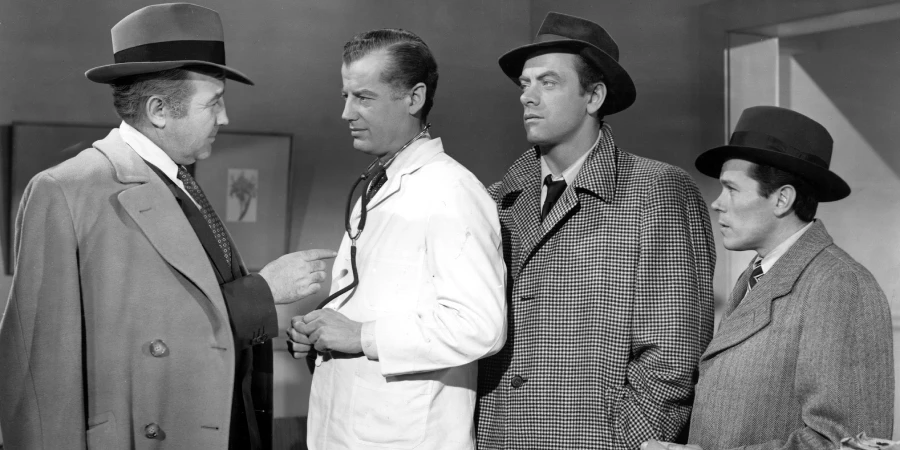
Gunshots ring out in the capitol building as the governor celebrates a hard-won political victory. Adam Stanton, a disillusioned doctor and Anne’s brother, decides that Willie is a cancer on the state. He confronts the governor in a crowded hallway and fires several shots at close range.
Security guards immediately retaliate by gunning Adam down on the spot. Stark lies dying on the cold floor while his political lackeys scramble in a blind panic. Jack Burden watches the life drain from the man who once promised to change the world for the better.
With his final breath, Willie wonders why the people turned against him after he gave them everything. The crowd outside continues to chant his name, unaware that their idol has fallen. Ultimately, the film suggests that the machinery of corruption will simply find a new face to wear.
Are There Post-Credits Scenes?
Standard practice in 1949 did not include extra footage after the final credits. All the King’s Men ends abruptly with a dramatic title card. Audiences typically exited the theater once the cast list finished scrolling.
Type of Movie
This film serves as a definitive political noir and social drama. It maintains a gritty, cynical tone that emphasizes the darker side of human ambition. The atmosphere feels heavy with tension and moral ambiguity throughout every scene.
Cast
- Broderick Crawford – Willie Stark
- John Ireland – Jack Burden
- Joanne Dru – Anne Stanton
- John Derek – Tom Stark
- Mercedes McCambridge – Sadie Burke
- Shepperd Strudwick – Adam Stanton
Film Music and Composer
Louis Gruenberg composed the dramatic and sweeping score for this production. His music underscores the transition from rural simplicity to urban political chaos. Specifically, the brass-heavy themes emphasize the aggressive nature of Willie Stark’s public appearances.


Filming Locations
The production took place primarily in Stockton, California. Director Robert Rossen chose this city because it offered a perfect mix of rural farmland and classical architecture. These locations effectively simulated the look of a fictional Southern state without the high costs of a cross-country move.
Awards and Nominations
The film dominated the 1950 Academy Awards by winning Best Picture. Broderick Crawford earned Best Actor, and Mercedes McCambridge took home Best Supporting Actress. Furthermore, it received nominations for Best Director and Best Supporting Actor.
Behind the Scenes Insights
- Robert Rossen used many local Stockton citizens as extras to create a sense of realism.
- Broderick Crawford was not the first choice for the lead role, but his screen test shocked the producers.
- The film utilized a documentary shooting style that felt revolutionary for a big-budget studio project.
- Mercedes McCambridge made her film debut in this movie and immediately won an Oscar.
Inspirations and References
Robert Penn Warren wrote the Pulitzer Prize-winning novel that served as the primary source material. Most historians agree that the character of Willie Stark mimics the life of Louisiana governor Huey P. Long. Both figures employed populist rhetoric to build a powerful political machine that eventually collapsed under scandal.
Alternate Endings and Deleted Scenes
Studio censors originally worried about the bleak nature of the final scene. However, Rossen fought to keep the assassination as gritty as the book described. No significant alternate endings exist, as the narrative follows a very linear path toward Stark’s doom.
Book Adaptations and Differences
The movie streamlines the complex timeline found in the original novel. Notably, the book features a much deeper exploration of Jack Burden’s ancestral history. The film focuses more intensely on Willie’s political maneuvers to keep the pacing snappy for theater audiences.
Memorable Scenes and Quotes
Key Scenes
- Willie’s first “drunk” speech where he abandons his notes and talks to the “hicks.”
- The confrontation between Jack and the Judge regarding the hidden past.
- The tense impeachment trial where Willie turns the crowd against his accusers.
- The frantic finale in the capitol hallway.
Iconic Quotes
- “To find something, anything, a man must lose his soul.”
- “Dirt makes the grass grow.”
- “I’m going to build a hospital that’ll be the pride of the world.”
Easter Eggs and Hidden Details
- The physical movements of Willie Stark closely mirror newsreel footage of populist leaders from the 1930s.
- Posters in the background of campaign scenes often transition from bright colors to dark, oppressive tones as Willie gains power.
- The recurring motif of shadows lengthening across the office floor signals the moral decay of the administration.
Trivia
- This film was one of the last major winners before the television era changed Hollywood forever.
- John Ireland and Joanne Dru were married in real life during the production.
- Willie’s son, Tom, plays a football player, which reflects the real-life athletic interests of Huey Long’s family.
Why Watch?
This cinematic triumph offers a haunting warning about the fragility of democracy. Crawford delivers a powerhouse performance that remains one of the greatest in film history. This story is essential viewing for anyone interested in the roots of modern political drama.
Director’s Other Movies
- Body and Soul (1947)
- The Brave Bulls (1951)
- Alexander the Great (1956)
- The Hustler (1961)
Recommended Films for Fans
- Mr. Smith Goes to Washington (1939)
- A Face in the Crowd (1957)
- The Candidate (1972)
- Network (1976)