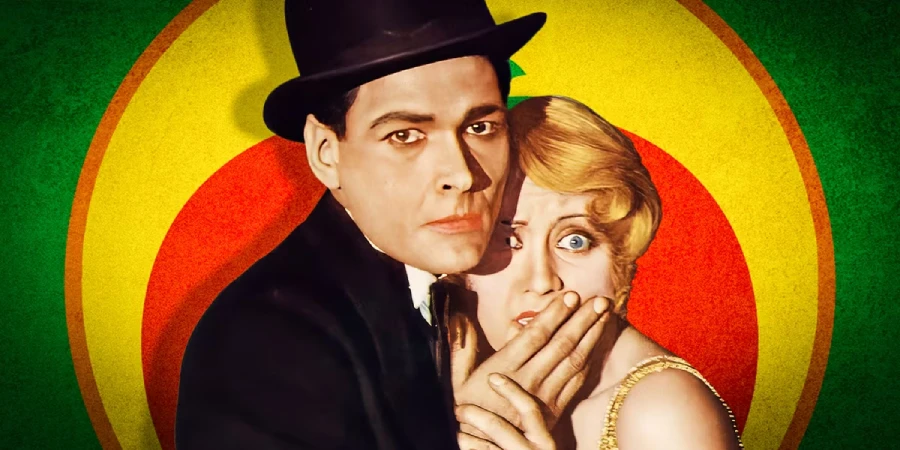

James Cagney’s raw energy defines The Public Enemy, a film that shocked audiences in 1931. It charts a hoodlum’s brutal rise and fall with unflinching honesty. Moreover, its infamous grapefruit scene cemented a new kind of screen violence. This pre-Code masterpiece remains a cornerstone of the gangster genre.
Detailed Summary
From Petty Crime to Bootlegging
The story begins in 1909 Chicago. Tom Powers and his friend Matt Doyle are just kids, already deep in a life of petty crime. They receive tutelage from Pat “Putty Nose” Fagan, a local fence who uses them for minor thefts.
As they grow into young men, the introduction of Prohibition presents a new opportunity. Tom and Matt quickly graduate from petty thievery to the lucrative world of bootlegging. Subsequently, they join forces with a gangster named Paddy Ryan, becoming enforcers for his beer-running operation.
Rise in the Ranks
Success comes quickly for Tom and Matt. They are soon enjoying a lavish lifestyle funded by illegal alcohol sales. Tom, in particular, embraces the role of a “big shot,” buying expensive suits and flaunting his new wealth. This creates a deep rift with his brother, Mike Powers, a clean-cut streetcar conductor who has just returned from fighting in World War I.
Tom’s callous nature is put on full display in his relationships. In one of cinema’s most famous scenes, he violently shoves half a grapefruit into the face of his girlfriend, Kitty, when she annoys him over breakfast. He later discards her for Gwen Allen, a sophisticated and alluring woman who seems drawn to his dangerous lifestyle.
Gang War and Downfall
Their dominance is soon challenged by a rival gang led by the ambitious “Schemer” Burns. A violent gang war erupts across the city. The first major casualty is Tom’s friend and mentor, Sam “Nails” Nathan, who dies in a horse-riding accident.
Tom, enraged and grieving, buys the horse that threw “Nails” and shoots it dead in its stable. This act of cold-blooded revenge escalates the conflict further. Consequently, Burns’s gang ambushes Matt Doyle, riddling him with machine gun fire in public. Tom vows revenge and single-handedly attacks Burns’s headquarters, but he is severely wounded in the ensuing firefight.

Movie Ending
Tom Powers stumbles from the gunfight and collapses in the rain-soaked street. He lands in a hospital, badly injured but alive. During his recovery, he has a seemingly heartfelt reconciliation with his mother and his brother Mike, showing remorse for the first time.
However, this moment of peace is a cruel illusion. Paddy Ryan informs Mike that “Schemer” Burns’s gang has kidnapped Tom from his hospital bed. Back at the Powers family home, Mike and his mother wait anxiously. Mike plays Tom’s favorite record, “I’m Forever Blowing Bubbles,” hoping for his safe return.
There is a knock at the door. When Mike opens it, he finds no one there. Then, the camera pans to a package propped against the doorway. It is Tom’s corpse, bound tightly in bandages like a mummy, which falls stiffly into the front hall. A title card appears, delivering a stark final message about the inescapable consequences of a life of crime.
Are There Post-Credits Scenes?
No. Post-credits scenes were not a convention in the 1930s. The film ends immediately after the final title card.
Type of Movie
The Public Enemy is a quintessential pre-Code gangster film and a crime drama. Its tone is gritty, fast-paced, and remarkably unsentimental for its era.
The film doesn’t glamorize the criminal lifestyle. Instead, it presents a stark cause-and-effect narrative, showing that violence and ambition lead directly to a brutal, unceremonious end.
Cast
- James Cagney – Tom Powers
- Jean Harlow – Gwen Allen
- Edward Woods – Matt Doyle
- Joan Blondell – Mamie
- Donald Cook – Mike Powers
- Leslie Fenton – “Nails” Nathan
- Beryl Mercer – Ma Powers
- Robert Emmett O’Connor – Paddy Ryan
- Murray Kinnell – “Putty Nose” Fagan
Film Music and Composer
The film does not have a traditional, continuous score, which was common for many early sound films. Instead, it uses a combination of source music and a few arranged orchestral cues composed and conducted by David Mendoza.
The most significant piece of music is the song “I’m Forever Blowing Bubbles”. It serves as a recurring motif, first appearing as a tune Tom’s mother hears and later played on a record just before his body is delivered, poignantly symbolizing the fragility of his life and success.
Filming Locations
The Public Enemy was filmed almost entirely at the Warner Bros. Burbank Studios in California. The studio’s famed New York Street backlot was repurposed to represent the grimy streets of pre-war and Prohibition-era Chicago.
This controlled environment allowed director William A. Wellman to maintain a consistent, bleak aesthetic. It also facilitated the complex staging of shootouts and action sequences efficiently.
Awards and Nominations
The Public Enemy earned a single Academy Award nomination. Writers John Bright and Kubec Glasmon were nominated for Best Writing, Original Story for their unpublished work that formed the basis of the screenplay.
Behind the Scenes Insights
- Director William A. Wellman made a crucial last-minute change. After viewing the first few days of rushes, he swapped the lead roles, giving the part of Tom Powers to James Cagney and relegating the originally cast lead, Edward Woods, to the role of Matt Doyle.
- The infamous grapefruit scene was reportedly inspired by the real-life behavior of Chicago gangster Hymie Weiss, who once threw an omelet at his girlfriend’s face. Cagney’s brutal execution of the scene was an improvisation.
- For added realism in the gunfight scenes, Wellman had live ammunition fired on set to create authentic reactions from the actors and to pepper the walls with real bullet holes.
Inspirations and References
The film’s story was based on an unpublished novel titled Beer and Blood, written by two former Chicago journalists, John Bright and Kubec Glasmon. They had firsthand knowledge of the city’s criminal underworld.
Interestingly, the character of Tom Powers is widely considered a composite of real-life Prohibition-era gangsters. His story contains elements inspired by figures like Chicago North Side Gang leader Dean O’Banion and the volatile Hymie Weiss.
Alternate Endings and Deleted Scenes
There are no known alternate endings for The Public Enemy. The shocking conclusion was a key part of the film’s intended impact from the start.
However, due to its violent and “immoral” content, the film was subject to cuts by various state and local censor boards upon its release. Scenes depicting violence and sexuality were often trimmed, though the core narrative and brutal ending generally remained intact.
Book Adaptations and Differences
The film is a direct adaptation of the unpublished novel Beer and Blood by John Bright and Kubec Glasmon. Since the book was never published, the film itself is the definitive and sole version of the story known to the public.

Memorable Scenes and Quotes
Key Scenes
- The Grapefruit: Tom Powers, irritated by his girlfriend Kitty, impatiently shoves a grapefruit half into her face during breakfast. This shocking act of casual cruelty instantly became iconic.
- Revenge for “Nails”: After his friend “Nails” Nathan is killed by a horse, Tom buys the animal. He walks into its stable, pulls out a pistol, and shoots it point-blank.
- The Final Delivery: In the film’s horrifying climax, Tom Powers’ bandaged corpse is delivered to his family’s home and falls through the doorway as his brother watches in horror.
Iconic Quotes
- “I’m a big shot now, see? And I’m gonna be a bigger shot, and a bigger shot.” – Tom to his tailor.
- “That’s a dirty, lousy, stinking, rotten trick!” – Putty Nose to Tom, before Tom kills him.
- “I ain’t so tough.” – Tom, wounded in the hospital, showing a moment of vulnerability to Mike.
Easter Eggs and Hidden Details
- Recurring Song: The tune “I’m Forever Blowing Bubbles” appears multiple times. It links Tom’s childhood innocence (hearing his mother with the sheet music) to his tragic end (the record playing before his corpse arrives), serving as a metaphor for his fragile, temporary success.
- Opening Disclaimer: The film opens with a title card disavowing any attempt to glorify criminals. This was a preemptive measure by Warner Bros. to appease moral watchdogs and the looming Hays Code, which would soon bring an end to such gritty cinematic portrayals.
Trivia
- The film was shot and completed in just 26 days on a very modest budget.
- Joan Blondell, who plays Matt Doyle’s girlfriend Mamie, had previously been paired with James Cagney in other Warner Bros. films, showcasing their strong on-screen chemistry.
- Jean Harlow was loaned out by her producer, Howard Hughes, to appear in the film. Her star power added significant box office appeal.
Why Watch?
This film is essential viewing. James Cagney’s electric, star-making performance is a force of nature. Furthermore, The Public Enemy offers a raw, unfiltered look at crime before Hollywood censorship toned things down, making it a historically significant and endlessly compelling classic.
Director’s Other Movies
- Wings (1927)
- A Star Is Born (1937)
- Beau Geste (1939)
- The Ox-Bow Incident (1943)
- The High and the Mighty (1954)
Recommended Films for Fans
- Little Caesar (1931)
- Scarface (1932)
- Angels with Dirty Faces (1938)
- The Roaring Twenties (1939)
- The Untouchables (1987)