Treat yourself to 167 minutes of slow, agonizing moral disintegration and you will understand why Prince of the City never gets the credit it deserves. Sidney Lumet dropped this film in 1981, sandwiched between flashier crime pictures, and most audiences walked past it. That was a mistake. Daniel Ciello is not a hero, not a villain, and watching Treat Williams hold that contradiction together for nearly three hours is genuinely unsettling.
Detailed Summary
Danny Ciello Agrees to Cooperate
Daniel Ciello, a detective in the NYPD’s Special Investigations Unit, agrees to work as an informant for a federal commission investigating police corruption. His condition is specific and firm: he will not give up his partners. That single condition poisons everything that follows.
The SIU operates in a grey zone. Its detectives confiscate drugs from dealers, skim cash, and feed information selectively. Ciello knows all of this because he participates in all of this.
The World of the SIU
Lumet gives us time inside the unit before things collapse. These men love each other in the way soldiers do, forged by shared danger and shared guilt. Ciello’s crew includes Gus Levy, Rick Cappalino, and others whose fates Ciello will eventually help determine, whether he intends to or not.
Their daily corruption is mundane, almost bureaucratic. They steal money from drug busts. They protect informants. They bend every rule while genuinely believing they are fighting crime.
The Investigation Widens
Federal prosecutors, led by figures including Brooks Paige and Bill Mayo, press Ciello for more than he bargained for. Each session pulls him deeper. His original promise, that he would protect his partners, starts cracking under legal and emotional pressure.
Ciello is not tortured or threatened. He simply cannot stop the machinery he set in motion. Every lie he tells the investigators costs him something, and every truth costs him more.
Gus Levy’s Death
This is the pivot on which the entire film turns. Gus Levy, one of Ciello’s closest partners and a man Ciello genuinely loves, kills himself when he learns that federal scrutiny is closing in. Ciello did not pull a trigger. He did not directly betray Levy. But the weight of that death lands entirely on him, and the film refuses to let it slide off.
Williams plays the aftermath with his face tight and his body slightly hunched, like someone bracing for a blow that already landed.
Ciello Breaks His Own Rule
Piece by piece, Ciello gives up his partners. Not all at once, not dramatically, but through attrition. Each grand jury session, each deal, each moment of legal jeopardy peels away another layer of his original vow. By the time he has fully cooperated, almost everyone he swore to protect is either dead, indicted, or destroyed.
His marriage strains. His friendships evaporate. His identity as a cop, the one thing he held onto as evidence that he was a good man, becomes incoherent.
The Perjury Trap
In one of the film’s cruelest structural moves, Ciello faces potential perjury charges himself. He lied to protect certain people during testimony, and the prosecutors he has been serving now turn that lie against him. The people he cooperated with are prepared to prosecute him if it serves their purposes.
This is where Lumet makes his sharpest point. Institutional justice does not operate on loyalty or gratitude. It operates on utility.
The Trial and Its Fallout
Several of Ciello’s former colleagues face trial as a direct result of his testimony. Some are convicted. Ciello testifies against men he ate dinner with, men whose children he knows by name. He does it because he is legally compelled to and because, somewhere underneath the wreckage, he still believes something about right and wrong.
That belief is not vindication. It is just the last thing left.
Movie Ending
Ciello survives. That is almost the cruelest detail. He is not imprisoned. He is not shot in retaliation. He walks through the legal fire and emerges on the other side, technically cleared, facing a perjury indictment that is ultimately dropped or left unresolved, and he is simply… still there.
What Lumet denies the audience is catharsis. There is no redemption arc that closes cleanly. Ciello sits with what he has done, and the film sits with him, refusing to assign a final moral grade. His handlers in the federal system got what they needed. His partners paid for it. He lives in the space between those two facts.
Williams, in the final stretch, stops performing anxiety and starts performing exhaustion. His eyes carry a flatness that is more disturbing than any outburst earlier in the film. You get the sense that Ciello has not made peace with anything; he has simply run out of the energy required to feel it acutely.
Lumet frames the ending without triumphant music or symbolic closure. Ciello’s continued existence is the punishment. That is a genuinely dark and intelligent conclusion, and it rewards anyone willing to sit through the film’s full length.
Are There Post-Credits Scenes?
Prince of the City has no post-credits scene. Lumet was not in the business of winking at audiences. When the film ends, it ends.
Type of Movie
This is a crime drama built on procedural architecture. It shares DNA with courtroom thrillers but spends far more time inside its protagonist’s psychology than inside any courtroom. The tone is relentlessly serious, almost punishing in its refusal to offer genre pleasures like shootouts or neat resolutions.
At roughly 167 minutes, it demands patience. Critics who bounce off it usually cite the runtime. Those who stay find one of American cinema’s most uncompromising portraits of institutional corruption.
Cast
- Treat Williams – Daniel Ciello
- Jerry Orbach – Frank Agano
- Richard Foronjy – Joe Marinaro
- Don Billett – Bill Mayo
- Kenny Marino – Dom Bando
- Carmine Caridi – Gus Levy
- Tony Page – Raf Alvarez
- Norman Parker – Rick Cappalino
- Paul Roebling – Brooks Paige
- Bob Balaban – Santimassino
- Lindsay Crouse – Carla Ciello
Film Music and Composer
Paul Chihara composed the score for Prince of the City. His work here is deliberately restrained. This is not a film that wants Bernard Herrmann-style swells pushing you toward an emotion you should be arriving at on your own.
Chihara’s music surfaces and retreats. It underlines dread without announcing it. For a film this long and this interior, that kind of compositional discipline is exactly right, and it is one of the more underrated elements of the production.
Filming Locations
Prince of the City shot extensively on location in New York City. Lumet was constitutionally incapable of faking New York on a backlot, and this film is no exception. The streets, the precinct interiors, the courtroom corridors all carry a documentary texture.
Lower Manhattan and various borough locations ground the story in specificity. This is not a mythologized city. It is gritty, institutional, and slightly exhausted, which mirrors Ciello’s internal state precisely.
Lumet’s insistence on real locations also serves the film’s themes. These corridors of power look ordinary, even shabby. Corruption does not live in gothic architecture; it lives in fluorescent-lit offices with bad coffee.
Awards and Nominations
Prince of the City received a Writers Guild of America Award nomination for Jay Presson Allen and Sidney Lumet for their screenplay adaptation. The film did not receive major Academy Award attention, which remains one of the more baffling oversights of the 1981 film season, particularly given Treat Williams’s performance.
Behind the Scenes Insights
- Sidney Lumet and Jay Presson Allen co-wrote the screenplay together, adapting Robert Daley’s book with significant structural ambition.
- Lumet rehearsed extensively with his cast before filming began, a practice he used throughout his career to build ensemble chemistry without wasting shooting days.
- Treat Williams had to sustain a performance arc across a shooting schedule that matched the film’s emotional length; Lumet reportedly structured the shoot to follow the story’s chronology as closely as possible to help Williams track Ciello’s deterioration.
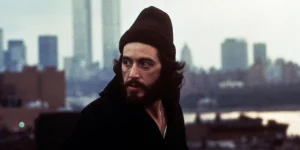
- Lumet drew on his earlier police drama experience, particularly from Serpico (1973), when approaching the institutional mechanics of the story.
- The film used a large number of non-professional actors and actual New York locations to keep the procedural scenes feeling authentic rather than staged.
Inspirations and References
The film adapts Robert Daley’s nonfiction book Prince of the City: The True Story of a Cop Who Knew Too Much. Daley based his account on the real case of Robert Leuci, an NYPD detective who cooperated with federal investigators in the early 1970s and whose cooperation led to widespread prosecutions within the department.
Leuci’s actual experience was, if anything, even messier than what the film depicts. His cooperation stretched over years and his testimony damaged an enormous number of careers and lives.
Lumet was clearly drawn to this story because it rhymes thematically with Serpico. Both films circle around a cop who steps outside the brotherhood. The crucial difference is that Serpico was a true believer from the start; Ciello is a participant trying to buy his way out of guilt.
Alternate Endings and Deleted Scenes
No widely documented alternate endings or significant deleted scenes from Prince of the City appear in the public record. Given the film’s already exceptional length, it is likely that Lumet’s editing process was ruthless about pacing rather than preserving alternate material.
Book Adaptations and Differences
The film derives from Robert Daley’s book Prince of the City. Daley’s book is reported journalism, naming real people and recounting real events in detail. The screenplay changes names, compresses a years-long investigation into a more manageable dramatic structure, and inevitably shapes the internal life of its protagonist in ways that a journalist cannot fully access.
The real Robert Leuci’s cooperation was reportedly even more extensive than Ciello’s is depicted in the film. Some colleagues felt the book and film let Leuci off more lightly than the full facts warranted. That debate is worth keeping in mind when watching Ciello’s moral suffering on screen.
Memorable Scenes and Quotes
Key Scenes
- Ciello’s first meeting with federal investigators: He leans forward in his chair, speaks quickly, and seems to believe he can control the situation. Every subsequent scene dismantles that belief piece by piece.
- Gus Levy’s suicide: Ciello learns of Levy’s death off-screen, and Williams registers it with a stillness that is more affecting than any breakdown could be. His hand drops slightly. He breathes once, slowly.
- Ciello testifying against his partners: He sits in the witness chair and the camera does not cut away. Lumet makes the audience watch the full discomfort of a man doing the thing he swore he would never do.
- The perjury confrontation: Ciello realizes the prosecutors he has served are willing to indict him. The bureaucratic language in the scene makes it worse, not better.
- The opening sequence: Lumet establishes the SIU’s world quickly and without moral commentary, letting the audience settle in before starting to pull the floor away.
Iconic Quotes
- “I’ll give you everybody. But not my partners.” Ciello’s foundational promise, and the line whose failure structures the entire film.
- Ciello’s exchanges with federal prosecutors carry a recurring subtext: they need him, they despise what he is, and they will discard him when convenient. Lines in those scenes rarely sound dramatic; they sound like paperwork, which is exactly the point.
Easter Eggs and Hidden Details
- Lumet occasionally places Ciello in frame with architectural elements, doorways, corridors, bars on windows, that subtly suggest entrapment without announcing it through dialogue.
- The SIU scenes early in the film use warmer practical lighting; as the investigation progresses, interiors become noticeably cooler and more institutional in their palette, suggesting Ciello’s world closing in without a single line of dialogue acknowledging it.
- Several actors in minor roles were reportedly connected to actual New York law enforcement, which adds an unscripted authenticity to procedural scenes that careful viewers can detect in body language and procedural detail.
- Lumet frames group scenes involving Ciello and his partners with compositions that gradually exclude him from the center of the frame as the film progresses, a visual record of his growing isolation.
Trivia
- The real Robert Leuci served as a consultant on the production.
- Sidney Lumet considered Prince of the City among his most personal films, despite it not being autobiographical.
- Treat Williams beat out other contenders for the role of Ciello; his casting was considered a gamble at the time given the film’s scope and length.
- Jay Presson Allen was already known as a sharp, literary screenwriter before this project; her collaboration with Lumet produced one of the tighter long-form screenplays of the era.
- The film’s 167-minute runtime made it a difficult sell to distributors, who wanted cuts. Lumet resisted significant changes to the length.
- Jerry Orbach, years before becoming universally known as Lennie Briscoe on Law and Order, brings considerable weight to his supporting role here.
Why Watch?
Treat Williams gives one of the great under-discussed American acting performances of the 1980s, and this film is the best argument for that claim. Lumet constructs a moral trap with no exit and then forces you to watch a man you almost like walk straight into it. Two hours and forty-seven minutes of that sounds punishing, and it is, but the punishment is the point.
Director’s Other Movies
- 12 Angry Men (1957)
- Serpico (1973)
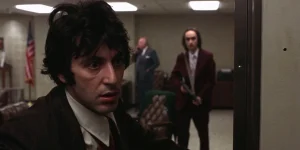
- Dog Day Afternoon (1975)
- Network (1976)
- The Verdict (1982)
- Running on Empty (1988)
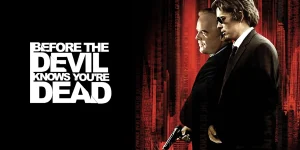
- Before the Devil Knows You’re Dead (2007)
Recommended Films for Fans
- Serpico (1973)
- Dog Day Afternoon (1975)
- The French Connection (1971)
- Witness to the Mob (1998)
- Q and A (1990)
- Night Falls on Manhattan (1996)
- The Godfather Part II (1974)