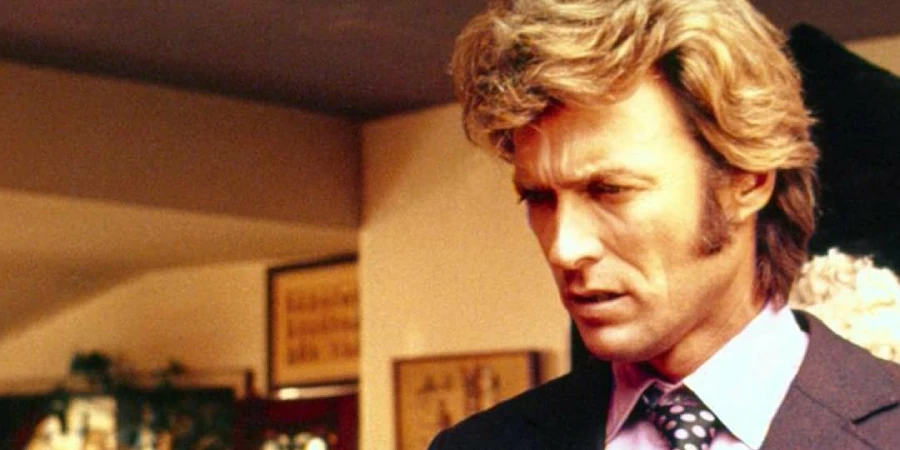

Play Misty for Me (1971) is Clint Eastwood’s directorial debut and a landmark psychological thriller that helped define the “obsessive fan” subgenre long before it became a Hollywood staple.
Detailed Summary
Opening: Dave Garver’s Comfortable Life
Dave Garver (Clint Eastwood) is a smooth-talking late-night radio DJ living in the laid-back coastal town of Carmel-by-the-Sea. His voice draws in a loyal audience, including one particular caller known only as “Evelyn”, who repeatedly requests the jazz standard “Misty.”
Dave’s life seems ideal: casual dating, a growing career, and the possibility of rekindling a relationship with his ex-girlfriend, Tobie. What he does not realize is that someone he considers a harmless admirer is about to hijack his life.
The Meeting with Evelyn
Dave meets Evelyn Draper (Jessica Walter) at a bar, and she reveals she is his mysterious caller. They have what Dave assumes is a one-night fling—a detail Evelyn interprets as the beginning of a serious relationship.
Her behavior quickly escalates from quirky to unstable. She appears unannounced, makes demands, sabotages Dave’s social life, and begins intruding on every aspect of his day.
Escalation: Obsession Turns Violent
As Dave attempts to distance himself, Evelyn’s emotional swings grow more dangerous. She stages a dramatic suicide attempt to keep him close, destroys his property, and aggressively stalks him and Tobie.
Evelyn’s fixation becomes the driving force of the narrative. Her unpredictability makes every interaction with Dave feel charged and suspenseful, underscoring the film’s psychological intensity.
The Truth About Evelyn
Through police investigation and Dave’s own discoveries, it becomes clear that Evelyn has a history of stalking, manipulation, and violent behavior. Her obsession with Dave is only the latest in a pattern of disturbed attachments.


Movie Ending
The film’s climax unfolds when Evelyn, pushed further into madness, launches a direct attack on the person she blames for taking Dave away: Tobie.
Evelyn infiltrates Tobie’s home disguised as a maid. Tobie—unsuspecting and trying to rebuild her relationship with Dave—lets her stay. When Evelyn reveals herself, the confrontation becomes terrifyingly intimate. She rants about Dave, accusing Tobie of ruining everything.
Evelyn then lunges with a knife, attempting to kill her.
Dave arrives just in time, bursting into the home and engaging in a desperate struggle with Evelyn. Their fight becomes a chaotic emotional and physical battle. Evelyn, in a final frenzy, charges at Dave one last time. He dodges, causing her to fall through a window and plunge off a cliff into the ocean below.
The film ends with police recovering her body from the waves, while Dave and Tobie silently attempt to process the trauma. The ending emphasizes the consequences of obsession and the fragility of perceived safety. It is stark, unsettling, and intentionally unresolved in its emotional fallout.
Are There Post-Credits Scenes?
No.
Play Misty for Me does not include any post-credits or mid-credits scenes. Once the credits roll, the story is complete.
Type of Movie
This film is a psychological thriller blended with elements of romantic suspense. It builds tension through character behavior rather than grand action sequences, relying on emotional volatility and dread.
Cast
- Clint Eastwood as Dave Garver
- Jessica Walter as Evelyn Draper
- Donna Mills as Tobie Williams
- John Larch as Sergeant McCallum
- Irene Hervey as Madge
- James McEachin as Burke
Jessica Walter’s performance remains one of the standout portrayals of obsessive psychosis in cinema, earning critical acclaim for its intensity.
Film Music and Composer
The soundtrack features smooth jazz, pop, and atmospheric tracks reflective of the 1970s California vibe. The music includes performances by Erroll Garner, whose rendition of “Misty” is central to the plot and becomes a haunting motif.
The score itself was arranged by Dee Barton, a longtime collaborator of Eastwood.


Filming Locations
The movie was shot primarily in Carmel-by-the-Sea, California, and the surrounding Monterey Peninsula. These locations were crucial because:
- The tranquil, picturesque coastal setting contrasts sharply with the escalating psychological tension.
- Eastwood, who lived in Carmel, used real local spots—including bars, beaches, and radio station locations—to add natural authenticity to the film.
- The dramatic cliffs and ocean vistas serve as visual metaphors for danger and emotional turbulence, especially in the final confrontation.
Awards and Nominations
- Jessica Walter received a Golden Globe nomination for Best Actress for her chilling performance.
- Though the film did not sweep major awards, it became a cult classic and is widely recognized as one of the strongest directorial debuts of its decade.
Behind the Scenes Insights
- Clint Eastwood chose to film in Carmel to avoid Hollywood studio interference and work in familiar surroundings.
- Much of the dialogue was partially improvised to create a naturalistic tone.
- Jessica Walter researched real cases of obsessive behavior to shape her character, which resulted in a disturbingly authentic performance.
- The budget was modest, forcing creative solutions; several scenes were shot with minimal crew.
- Eastwood insisted on long, uninterrupted takes to build tension without obvious editing cues.
Inspirations and References
- The film takes inspiration from real-life fan obsessions that were beginning to gain media attention in the late 1960s.
- The narrative echoes themes from Hitchcock’s thrillers—especially Psycho—with its focus on unstable psychology and sudden violence.
- It is also considered a precursor to later films like Fatal Attraction.
Alternate Endings and Deleted Scenes
There are no officially released alternate endings. However:
- Some early drafts featured Evelyn surviving the final confrontation, leaving the ending more ambiguous.
- A few minor character moments and extended scenes at the radio station were trimmed to improve pacing.
- Jessica Walter filmed more improvised monologues, some of which remain unreleased.
Book Adaptations and Differences
The film is not based on a novel, though its success led to novelizations and academic studies analyzing the themes of obsession, toxic attachment, and gender dynamics.


Memorable Scenes and Quotes
Key Scenes
- Evelyn’s first appearance at the bar, charming yet unsettling.
- The suicide attempt scene, establishing her emotional instability.
- The dinner party meltdown where Evelyn publicly confronts Dave.
- The final confrontation in Tobie’s home.
- The cliffside fall that concludes Evelyn’s arc.
Iconic Quotes
- “Play Misty for me.”
- “I’ve never hurt anyone in my life. I just want to love you.”
- “What do you want from me, Evelyn?”
- “You can’t walk out on me, Dave. I won’t let you.”
Easter Eggs and Hidden Details
- Eastwood included local Carmel residents as extras for authenticity.
- The jazz bar scenes use Eastwood’s own musical preferences—he is famously passionate about jazz.
- Several camera angles subtly mirror frames from Hitchcock’s Vertigo, set in nearby San Francisco.
- The house used for Tobie belonged to a real local artist, adding to the bohemian feel.
Trivia
- Clint Eastwood purchased the rights to the script after reading it in one night.
- This was one of the first mainstream films to depict a female stalker, flipping gender expectations.
- The movie was shot in only about four weeks.
- Universal Studios was initially skeptical of Eastwood directing but approved the project because he agreed to work cheaply.
Why Watch?
If you love tight psychological thrillers, character-driven suspense, and films that feel grounded in everyday reality, Play Misty for Me remains a must-see.
Its blend of intimate danger, strong acting, and coastal Californian atmosphere makes it a film that still feels fresh and unsettling.
Director’s Other Movies
- High Plains Drifter (1973)
- The Outlaw Josey Wales (1976)
- Unforgiven (1992)
- Mystic River (2003)
- Million Dollar Baby (2004)
- Gran Torino (2008)
Recommended Films for Fans
- Fatal Attraction (1987)
- Single White Female (1992)
- Misery (1990)
- Sleeping with the Enemy (1991)
- The Fan (1981)