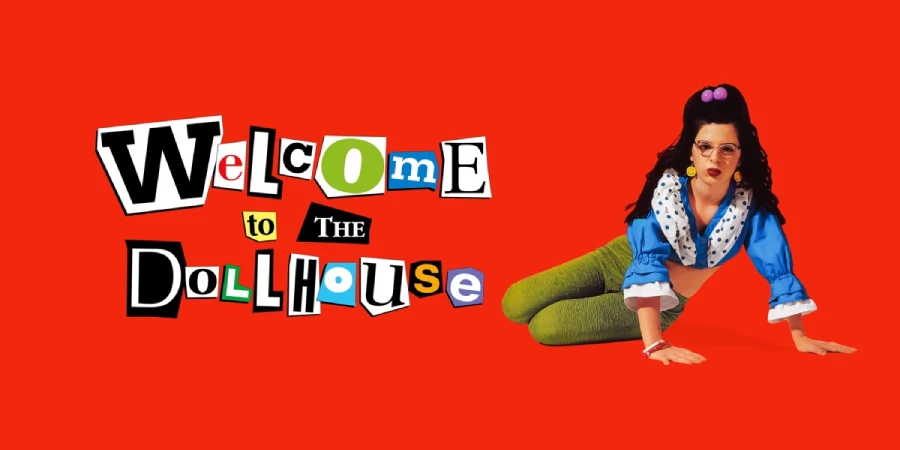

Middle school is supposed to be awkward, but Welcome to the Dollhouse weaponizes that awkwardness into something genuinely brutal. Director Todd Solondz refuses to soften a single edge of his 1995 debut feature, delivering a portrait of adolescent misery so precise it almost feels like evidence. Dawn Wiener is not a lovable underdog; she is painfully ordinary, and that is exactly the point. This film will make you cringe, laugh uncomfortably, and feel genuinely terrible about yourself for doing so.
Detailed Summary
Meet Dawn Wiener, the Perpetual Loser
We meet Dawn Wiener, a seventh-grader in suburban New Jersey, immediately surrounded by people who dislike her. Her classmates call her “Wiener Dog” and worse. Even her own family treats her as an afterthought compared to her younger sister Missy and her academically accomplished older brother Mark.
Dawn navigates school hallways like a soldier crossing a minefield. Every hallway, every cafeteria table, every classroom represents a fresh opportunity for humiliation. Solondz frames her small torments with a flat, almost documentary detachment that makes them hit harder.
Home Is No Sanctuary
Dawn’s home life offers zero relief. Her mother clearly favors Missy, a cute and ballet-dancing younger daughter who functions as the family’s golden child. Dawn’s father remains largely disengaged, and her brother Mark dismisses her without much thought.
Dawn occupies a clubhouse in the backyard that she insists on calling her “Special People Club.” Nobody joins. The clubhouse becomes a symbol of her isolation, a private world she guards fiercely because she has nothing else to guard.
Steve Rogers and the Crush That Hurts
Mark’s bandmate Steve Rogers visits the house and immediately becomes the object of Dawn’s intense romantic fixation. Steve is older, conventionally attractive, and completely indifferent to her. Dawn pursues this crush with a desperate single-mindedness that is both relatable and heartbreaking.
She fantasizes about Steve noticing her, wanting her, choosing her. In contrast, Steve barely registers her existence except in the most transactional moments. Her infatuation is not portrayed as cute; it is portrayed as the coping mechanism of a lonely kid with nowhere else to direct her longing.
Brandon McCarthy and the “Rape” Threat
Brandon McCarthy, a rough, troubled classmate, corners Dawn and tells her he is going to rape her after school. It sounds like a pure threat, and the scene plays with genuine menace. Dawn is terrified, and so is the audience.
However, what actually develops between Dawn and Brandon is far stranger and more complex. He does not assault her. Instead, their relationship mutates into something resembling a twisted friendship, with moments of unexpected vulnerability from Brandon alongside continued cruelty. Solondz refuses to resolve this dynamic neatly, which is deeply uncomfortable and also deeply honest.
Missy Goes Missing
Dawn’s sister Missy disappears, and the family erupts into panic. The neighborhood mobilizes; flyers go up. Dawn’s mother falls apart in grief and anxiety. Meanwhile, Dawn continues to be treated as secondary even in the middle of a family crisis.
Solondz uses Missy’s disappearance to sharpen his critique of the family dynamic. Everyone’s concern centers on the pretty, beloved child. Dawn’s internal experience during this crisis barely registers for her parents, which says everything about how invisible she truly is at home.
Missy is eventually found safe. The resolution feels deliberately anticlimactic, because the family dynamic snaps back to exactly what it was before. Nothing changes for Dawn.
Dawn and Brandon’s Strange Bond Continues
Brandon and Dawn share several charged scenes that oscillate between hostility and something approaching tenderness. He comes from a genuinely difficult home situation, and glimpses of that background complicate how the audience reads him. Dawn begins to see him as a peer in suffering, even as he continues treating her badly at school.
Their relationship never becomes romantic in any straightforward sense. It exists in a murky space that Solondz refuses to clean up or explain. Consequently, it stays with you long after the film ends.
The Special People Club and Its One Member
Throughout the film, Dawn tries and fails to get classmates to join her Special People Club. At one point, a younger, similarly bullied kid seems like a potential member. Dawn rejects him harshly, mirroring the cruelty directed at her. This moment is one of the film’s most quietly devastating observations: victims frequently replicate the systems that victimize them.
Steve’s Girlfriend and the Final Blow
Dawn eventually discovers that Steve has a girlfriend, a pretty, age-appropriate young woman who fits naturally into his world. Her romantic fantasy collapses completely. There is no dramatic confrontation; the hope simply drains away.
Solondz gives Dawn no cathartic moment here. She just absorbs the disappointment and keeps moving, because that is what her life has trained her to do.


Movie Ending
Brandon McCarthy runs away from home, and Dawn, who has begun to see him as one of her only genuine connections, waits for him. He told her to meet him. She waits, and he does not come. That absence is its own kind of answer about the reliability of every bond she has tried to form.
Dawn boards a school bus headed to a class trip to Disney World. She sits amid her classmates, who continue to ignore or mock her. As the bus rolls out of the New Jersey suburb, Dawn stares out the window. Her expression carries exhaustion rather than hope, resignation rather than relief.
Solondz does not offer a turnaround. There is no moment where Dawn finds her tribe, stands up triumphantly, or earns a single shred of acknowledgment from anyone who matters to her. The ending is deliberately, almost aggressively, unresolved. Life continues, as grinding and indifferent as ever.
What makes this ending so potent is its refusal to comfort. Most coming-of-age films insist that suffering builds character and eventually pays off. Welcome to the Dollhouse suggests instead that for some kids, the machinery just keeps grinding. Dawn is not broken in a cinematic way; she is diminished in a realistic one. That distinction is what audiences find both devastating and unforgettable.
Are There Post-Credits Scenes?
Welcome to the Dollhouse contains no post-credits scenes. After the final image of Dawn on the bus, the film simply ends. No bonus footage, no coda, no wink to the audience. Solondz leaves you sitting with the discomfort, which is entirely by design.
Type of Movie
Welcome to the Dollhouse occupies a very specific tonal space: dark comedy layered over coming-of-age drama. It is not a satire with safe distance; it gets uncomfortably close to its subject. The humor is dry, bleak, and often makes you feel guilty for laughing.
In terms of tone, the film belongs alongside works that treat suburban American life as a site of quiet violence. It refuses the warm nostalgia most coming-of-age stories traffic in. Instead, it treats adolescence as a brutal social system with real casualties.
Cast
- Heather Matarazzo – Dawn Wiener
- Eric Mabius – Steve Rogers
- Matthew Faber – Mark Wiener
- Brendan Sexton Jr. – Brandon McCarthy
- Daria Kalinina – Missy Wiener
- Angela Pietropinto – Mrs. Wiener
- Bill Buell – Mr. Wiener
Film Music and Composer
The score for Welcome to the Dollhouse was composed by Jill Wisoff. Her music matches the film’s tonal register perfectly: slightly off-kilter, mundane, and never emotionally manipulative. It does not tell you how to feel, which is consistent with Solondz’s entire approach.
Wisoff avoids swelling strings or triumphant cues. The music stays small and suburban, reinforcing the sense that nothing here is operatic. That restraint is itself a creative choice, and it works.


Filming Locations
Welcome to the Dollhouse filmed primarily in New Jersey, which is also where the story is set. Solondz grew up in New Jersey, and that familiarity shows in every frame. The locations feel lived-in rather than dressed.
Specifically, much of the shooting took place in areas around Morris County. The suburban streets, the beige school hallways, the unremarkable family home all function as characters themselves. These spaces communicate the suffocating ordinariness that traps Dawn as effectively as any dialogue does.
Awards and Nominations
Welcome to the Dollhouse won the Grand Jury Prize at the Sundance Film Festival in 1996, which significantly raised its profile. The film also earned significant critical attention for Heather Matarazzo’s performance, though major mainstream awards bodies largely overlooked it.
Its Sundance victory remains the film’s most significant formal recognition, and it helped establish Solondz as a major independent voice.
Behind the Scenes Insights
- Todd Solondz drew heavily on his own experiences growing up in New Jersey as a socially awkward outsider when developing Dawn’s character.
- Heather Matarazzo was a first-time actress when she took the role of Dawn, and her naturalistic performance resulted largely from her genuine inexperience with screen acting conventions.
- Solondz reportedly encouraged the young cast to improvise within scenes, which contributed to the film’s raw, unpolished texture.
- The production budget was extremely limited, which forced creative decisions that ultimately reinforced the film’s aesthetic: flat lighting, static shots, unglamorous locations.
- Solondz has said in interviews that he wanted to resist the typical arc of the bullied protagonist, deliberately refusing to give Dawn a redemptive moment.
Inspirations and References
Solondz has cited his own adolescence as the primary source material for the film. His experiences as an outsider in suburban New Jersey shaped virtually every aspect of Dawn’s world. The film functions partly as autobiographical excavation.
In terms of cinematic lineage, Welcome to the Dollhouse belongs to a tradition of American films that treat suburbia as a landscape of repression and quiet despair. However, Solondz is more interested in social granularity than in broad cultural critique. His inspiration stays close to the ground, at the level of hallways and lunch tables.
Alternate Endings and Deleted Scenes
No widely documented alternate endings or significant deleted scenes from Welcome to the Dollhouse have entered the public record. Solondz has not released a director’s cut or extended version. What exists in the theatrical release appears to represent his complete intention for the film.
Book Adaptations and Differences
Welcome to the Dollhouse is an original screenplay written by Todd Solondz. It is not based on a novel or any pre-existing literary source. Solondz worked directly from his own script, drawing on personal experience rather than adapting another work.



Memorable Scenes and Quotes
Key Scenes
- Brandon cornering Dawn and telling her he will rape her after school, followed by his actual appearance and the strange non-event that follows.
- Dawn sitting alone in her Special People Club, waiting for members who never arrive.
- Dawn discovering that Steve has a girlfriend, absorbing the blow with complete stillness.
- Dawn harshly rejecting the younger bullied classmate who wanted to join her club, mirroring the cruelty she constantly receives.
- The final bus scene, Dawn staring out the window as the suburbs recede, with no resolution in sight.
Iconic Quotes
- “You’re so pretty. No, you’re not. You’re ugly.” (Brandon to Dawn, capturing the film’s refusal to offer false comfort)
- “Junior high is real life.” (Dawn, expressing the film’s core thesis in three words)
- “Special People Club. Members only.” (Dawn’s recurring declaration, which grows sadder each time she says it)
Easter Eggs and Hidden Details
- Dawn’s last name, Wiener, functions as an obvious but pointed joke about her social status; even her name is something others can mock.
- Missy’s ballet and prettiness are consistently shot in warm, soft light, while Dawn occupies harsher, flatter lighting throughout.
- The Special People Club sign on Dawn’s clubhouse is slightly crooked, a small visual detail that reinforces how nothing in her world quite works.
- Steve Rogers shares his name with Captain America, an ironic detail given that Dawn’s idealized version of him bears no resemblance to reality.
- Solondz stages family dinner scenes with deliberate spatial separation, Dawn almost always physically on the edge of the frame or the table.
Trivia
- Heather Matarazzo was only twelve years old during filming, making her central performance even more remarkable in retrospect.
- Todd Solondz later revisited the character of Dawn Wiener in his film Palindromes (2004), where the character is played by multiple different actresses.
- The film was made on a very small budget and shot quickly, contributing to its rough, naturalistic visual style.
- Solondz initially struggled to get the film funded; it required significant persistence to bring it to production.
- Critics have frequently cited Welcome to the Dollhouse as one of the most accurate depictions of middle school social dynamics ever committed to film.
- Eric Mabius, who plays Steve, went on to much greater mainstream visibility through the television series Ugly Betty.
- Brendan Sexton Jr. reprised a version of his character, renamed and reworked, in Solondz’s follow-up film Happiness (1998).
Why Watch?
Welcome to the Dollhouse is essential viewing for anyone who survived adolescence feeling like an outsider, which is to say nearly everyone. Solondz and Matarazzo together create something genuinely rare: a portrait of loneliness that never exploits or sentimentalizes its subject. Furthermore, the film’s refusal to offer easy catharsis is precisely what makes it linger. It is uncomfortable, funny, and more honest than most films dare to be.
Director’s Other Movies
- Fear, Anxiety and Depression (1989)
- Happiness (1998)
- Storytelling (2001)
- Palindromes (2004)
- Life During Wartime (2009)
- Dark Horse (2011)
- Wiener-Dog (2016)
Recommended Films for Fans
- Happiness (1998)
- Ghost World (2001)
- Napoleon Dynamite (2004)
- Rushmore (1998)
- Carrie (1976)
- Election (1999)
- Thirteen (2003)
- The Perks of Being a Wallflower (2012)