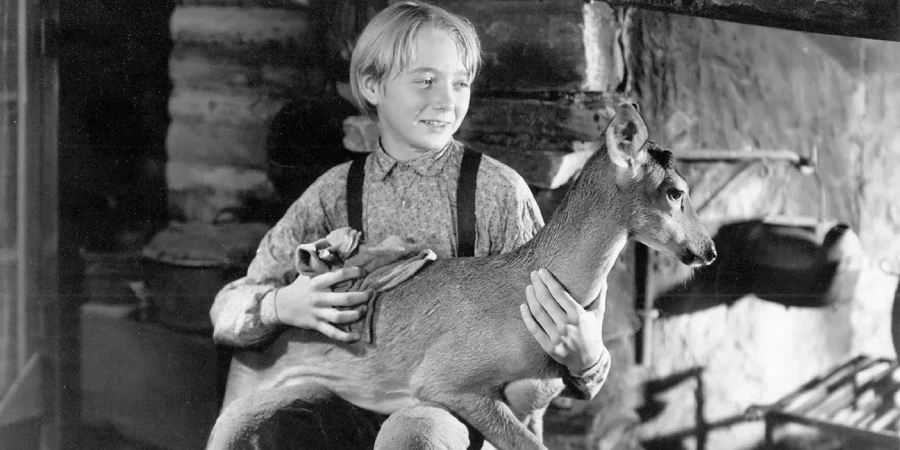

The Yearling (1946) is a heartfelt, beautifully filmed American drama that blends coming-of-age themes with family hardship and the unforgiving realities of nature. Based on Marjorie Kinnan Rawlings’ Pulitzer Prize–winning novel, the film remains a classic of early Technicolor cinema.
Detailed Summary
The Baxter Family and Life in the Florida Backwoods
The story follows young Jody Baxter (Claude Jarman Jr.) who lives with his parents, Penny (Gregory Peck) and Ora Baxter (Jane Wyman), in the remote scrublands of post–Civil War Florida. Life is difficult, and survival requires constant labor, sacrifice, and emotional resilience. Despite the hardships, Jody’s relationship with his father is warm and nurturing, while his mother maintains a tougher, emotionally distant demeanor shaped by past loss.
The Fawn Enters Jody’s Life
After Penny is bitten by a rattlesnake while hunting, Jody saves him by tracking down and killing a doe whose liver is needed to neutralize the venom. When Jody discovers the doe had a baby, he is overwhelmed with guilt and compassion. Penny reluctantly allows him to adopt and raise the orphaned fawn, whom Jody names Flag.
This moment becomes the emotional core of the film and a catalyst for Jody’s personal growth.
Trouble on the Homestead
As Flag grows, he becomes increasingly difficult to control. The Baxters’ crops—vital to their survival—are repeatedly destroyed by the now nearly full-grown deer. Jody’s attachment to Flag is deep, but the family’s survival is on the line. Penny, ever understanding, tries to buy time for Jody to accept reality, while Ora insists that Flag must go if they are to make it through the season.
The tension escalates into a powerful representation of childhood innocence colliding with adult reality.

Movie Ending
Flag continues to destroy the corn crop despite Jody’s attempts to build better fences. Penny finally tells Jody he must put the animal down himself because the family cannot survive otherwise. Jody, heartbroken and overwhelmed, cannot bring himself to do it. He sets Flag loose instead, hoping the deer will simply run away.
But Flag returns and damages the crops again. Ora, hardened by the constant threats to her family’s survival, reluctantly shoots the deer herself, wounding but not killing him. This forces Jody into a final, devastating act of responsibility: he must finish the job and end Flag’s suffering.
Unable to handle the emotional weight of what he’s done, Jody runs away from home. He floats downriver on a small boat, exhausted, heartbroken, and physically weakened. Penny eventually finds him and carries him home, reassuring him with compassion and telling him that “Life is bittersweet, and every boy must face pain to become a man.”
The film ends quietly, with Jody coming to terms—however painfully—with adulthood, loss, and the harsh beauty of life in the wilderness.
Are There Post-Credits Scenes?
No. Like most films of its era, The Yearling does not include any post-credits scenes.
Type of Movie
The Yearling is a coming-of-age frontier drama that explores themes of loss, responsibility, and the transition from childhood innocence to adult understanding.
Cast
- Gregory Peck as Penny Baxter
- Jane Wyman as Ora Baxter
- Claude Jarman Jr. as Jody Baxter
- Clem Bevans as Grandma Hutto
- Forrest Tucker as Lem Forrester
Film Music and Composer
The score was composed by Herbert Stothart. The music enhances the film’s natural setting and emotional landscape, supporting both the warmth of family life and the heartbreaking moments of loss.

Filming Locations
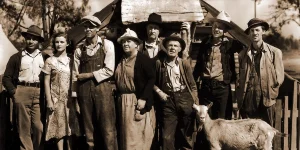
The movie was filmed primarily in Juniper Springs and Ocala National Forest, Florida.
These locations were chosen to authentically reflect the wild Florida scrub described in the novel. The lush yet rugged landscape is not merely a backdrop—it acts almost like a character itself, highlighting nature’s dual role as both nurturing and unforgiving.
Awards and Nominations
The Yearling received several honors, including:
- 7 Academy Award nominations, including Best Picture, Best Actor (Peck), and Best Actress (Wyman).
- 2 Oscar wins for:
- Best Cinematography (Color)
- Best Art Direction – Interior Decoration (Color)
Behind the Scenes Insights
- Gregory Peck was praised for creating a father figure who felt warm, grounded, and relatable, significantly boosting his rising stardom.
- Claude Jarman Jr., making his film debut, was specially chosen from hundreds of young actors and later received a Juvenile Academy Award.
- Filming with real deer proved extremely challenging; multiple deer had to be trained for different scenes and behaviors.
- The production was delayed multiple times due to weather and animal-related setbacks.
- MGM insisted on shooting in real forests rather than studio backlots to capture “authentic American wilderness.”
Inspirations and References
The film is adapted from Marjorie Kinnan Rawlings’ 1938 novel, which was inspired by the real environment and people she encountered while living in rural Florida. The book explores themes of growing up in harmony (and conflict) with nature.
Alternate Endings and Deleted Scenes
No fully alternate endings have been documented, but early script drafts included:
- A longer epilogue showing Jody as an adult reflecting on Flag.
- Additional scenes of the Baxter family interacting with neighboring settlers.
These were removed to maintain the tight emotional focus on Jody’s coming-of-age journey.
Book Adaptations and Differences
The film stays faithful to the core emotional arc of the novel but makes several changes:
- The movie softens Ora’s character slightly, while the book depicts her as more stern.
- The novel provides richer detail about Florida’s wildlife and the Baxter family’s daily struggles.
- Some supporting characters were reduced or combined for pacing.
Still, the central bond between Jody and Flag and the cruel but necessary ending remain intact.

Memorable Scenes and Quotes
Key Scenes
- Jody discovering the orphaned fawn for the first time.
- Penny teaching Jody about responsibility and survival after the rattlesnake attack.
- The heartbreaking scene where Jody must kill Flag.
- Jody drifting downriver after running away.
- Penny finding Jody and delivering his quiet but powerful lesson on life.
Iconic Quotes
- “You’ve got to learn that life’s full of sorrow as well as joy.”
- “Flag was a yearling, Pa… he trusted me.”
- “A man’s heart can be soft, but the world around him is often hard.”
Easter Eggs and Hidden Details
- The film’s costumes and props were meticulously researched to match authentic post–Civil War Florida life.
- Several shots of local wildlife were filmed documentary-style and incorporated to enhance immersion.
- The Baxter cabin was built entirely from local materials to match the rustic realism of pioneer homesteads.
Trivia
- Claude Jarman Jr. won a special Academy Award for his performance.
- The film was one of MGM’s most expensive productions of the 1940s.
- Jane Wyman considered Ora Baxter one of her finest early roles.
- The movie helped popularize Florida’s Ocala National Forest as a tourist destination.
- Several roles were recast after production difficulties during the early 1940s attempts to adapt the novel.
Why Watch?
Because The Yearling remains an emotionally rich, beautifully photographed coming-of-age masterpiece that still resonates. Its honest exploration of responsibility, grief, and the loss of childhood innocence feels timeless. For viewers who appreciate classic Hollywood storytelling, naturalistic performances, and heartfelt family drama, this film is essential.
Director’s Other Movies
Directed by Clarence Brown, known for:
- National Velvet (1944)
- The Human Comedy (1943)
- Anna Karenina (1935)
- Fury (1936)
Recommended Films for Fans
If you like The Yearling, consider watching:
- Old Yeller (1957)
- Lassie Come Home (1943)
- Where the Red Fern Grows (1974)
- Shane (1953)
- Sounder (1972)