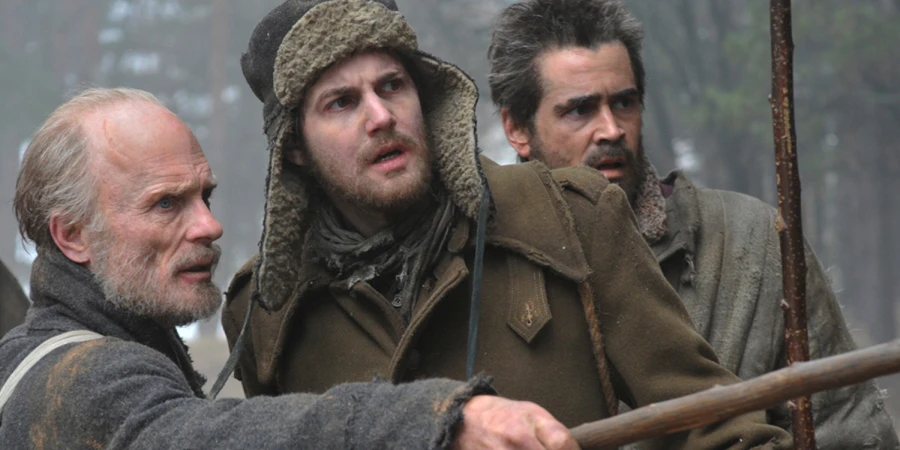

The Way Back (2010) is a survival drama inspired by one of the most extreme escape stories ever told. Directed by Peter Weir, the film focuses less on action and more on human endurance, moral strength, and the psychological cost of freedom.
Detailed Summary
Arrest and Imprisonment in Siberia
The story begins in 1940 during World War II. Janusz Wieszczek, a young Polish officer, is arrested by Soviet authorities after being falsely accused of spying. Despite the lack of evidence, he is interrogated brutally by the NKVD and sentenced to 20 years of hard labor.
He is transported to a remote Siberian Gulag, a frozen labor camp surrounded by endless wilderness. Life inside the camp is dominated by hunger, forced labor, cold, and psychological collapse. Prisoners survive on thin soup and bread rations while digging and hauling materials in subzero temperatures.
Here, Janusz meets other inmates from different countries and backgrounds, each imprisoned for political or fabricated reasons.
The Escape Plan
Among the prisoners are:
- Mr. Smith, an American engineer
- Valka, a hardened Russian criminal
- Tomasz, a young Polish artist
- Zoran, a violent Yugoslav
- Kazik, a priest
- Irena, a mysterious young Polish girl
As conditions worsen, rumors spread that prisoners are being “released” but never actually returning. Fear of execution pushes Janusz and several others to attempt the impossible: escape from Siberia on foot.
They study guard routines, weather patterns, and terrain. During a blizzard, they slip through the camp fence and vanish into the frozen wilderness.
Survival Across Siberia
The escapees face immediate danger. Temperatures drop far below zero, frostbite sets in quickly, and food is almost nonexistent. They hunt birds, eat raw meat, and melt snow for water.
One member collapses early and is left behind after begging the others not to stop. This moment sets the emotional tone of the journey: survival requires impossible choices.
As they move south, the environment slowly changes from ice fields to forests, but hunger and exhaustion remain constant.
Crossing Mongolia
After weeks of walking, the group reaches Mongolia. The land opens into wide grasslands, offering hope but little food. They steal a goat and briefly recover strength.
During this part of the journey, tensions rise. Zoran becomes increasingly unstable and violent. Eventually, he threatens the group and must be restrained. Shortly after, he dies from illness and exhaustion.
The group is now smaller, weaker, but determined.
The Gobi Desert
The most harrowing section of the journey is the crossing of the Gobi Desert.
There is no shade. No water. Temperatures soar. Food is gone.
One by one, members collapse. Tomasz, the artist, dies after walking into the desert in a delirious state, imagining his loved ones. His death is one of the film’s most heartbreaking moments, showing how the mind breaks before the body.
Kazik the priest later succumbs as well, quietly sitting down and accepting death.
Only a few remain.
The Himalayas and Final Push
Against all logic, the survivors reach the foothills of the Himalayas. The mountains represent both salvation and another near-impossible obstacle.
They climb barefoot, starving, and delirious. Several nearly freeze to death again, mirroring the Siberian opening of the film.
Finally, after months of walking and over 4,000 miles traveled, they collapse near an Indian village.
British soldiers find them and confirm they have reached India, a free territory.
Movie Ending
After rescue, the survivors are hospitalized and fed slowly to prevent shock. There is no triumphant music or celebration. The men are alive, but deeply changed.
A closing title card explains what happened afterward:
- Janusz learns that his wife was executed during the war, meaning the confession used to imprison him was forced.
- After the war, he returns to Poland but eventually emigrates to the United Kingdom.
- He lives a long life but never forgets the men who died along the way.
The film closes not with victory, but with reflection.
Freedom came at an unimaginable cost.
The final message emphasizes that survival is not about strength alone, but endurance, sacrifice, and the will to keep walking when stopping means death.
Are There Post-Credits Scenes?
No. There are no post-credits scenes or additional footage after the credits roll. The film ends definitively with the historical epilogue.
Type of Movie
The Way Back is a historical survival drama that blends war cinema with a long-form journey narrative. It focuses on realism, physical endurance, and emotional resilience rather than traditional action or heroism.
Cast
- Jim Sturgess – Janusz Wieszczek
- Ed Harris – Mr. Smith
- Saoirse Ronan – Irena
- Colin Farrell – Valka
- Mark Strong – Andrej
- Dragos Bucur – Zoran
- Alexandru Potocean – Tomasz
Film Music and Composer
The score was composed by Burkhard Dallwitz, known for his work with director Peter Weir.
The music is deliberately restrained. Long sections contain no score at all, emphasizing silence, wind, and footsteps. When music appears, it underlines emotional release rather than danger.
Filming Locations
The movie was shot across several countries:
- Bulgaria – forests and prison camp environments
- Morocco – Gobi Desert scenes
- India – Himalayan foothills
- New Zealand – mountain landscapes
These locations were crucial for realism. Peter Weir insisted on real environments instead of studio sets to ensure actors physically experienced exhaustion and climate stress similar to their characters.
Awards and Nominations
- Academy Awards (2011) – Best Makeup nomination
- Critics’ Choice Awards – Best Supporting Actress (Saoirse Ronan, nomination)
- Australian Film Institute – Multiple technical nominations
While not a major awards winner, the film was widely praised for authenticity and performances.
Behind the Scenes Insights
- The cast walked long distances daily to simulate exhaustion.
- Actors lost noticeable weight during filming.
- Ed Harris reportedly stayed in character between takes.
- Saoirse Ronan learned a Polish accent for the role.
- Temperatures during desert filming exceeded 45°C (113°F).
- Many scenes used natural light only.
Inspirations and References
The film is primarily inspired by:
- The Long Walk by Sławomir Rawicz
However, the book’s historical accuracy has been debated. Director Peter Weir treated the story as symbolic truth rather than documented history, focusing on the human experience instead of strict fact.
Alternate Endings and Deleted Scenes
- A longer Gulag introduction was filmed but removed for pacing.
- Several deaths originally had extended farewell scenes.
- No alternate ending was produced; the director insisted on a restrained conclusion.
Book Adaptation and Differences
Major differences between the book and film include:
- The real-life Janusz figure is fictionalized.
- Some characters are composites of multiple real people.
- The escape route is simplified geographically.
- The film removes political commentary found in the book.
The movie focuses more on shared humanity, while the book leans heavily into Cold War ideology.

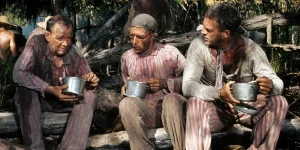
Memorable Scenes and Quotes
Key Scenes
- The blizzard escape from the Gulag
- Tomasz walking into the desert hallucinating home
- The silent crossing of the Gobi Desert
- The first sight of the Himalayas
- The collapse near the Indian village
Iconic Quotes
- “If we stop, we die.”
- “Hope is stronger than cold.”
- “The body learns to suffer. The mind must choose to continue.”
Easter Eggs and Hidden Details
- The route mirrors historical escape maps shown briefly on a camp wall.
- The number of days walked matches estimates from Rawicz’s book.
- Tomasz’s drawings resemble original Gulag survivor sketches.
- The priest’s final prayer is spoken in Latin, not Polish.
Trivia
- The journey covers roughly 6,500 kilometers.
- Only one modern vehicle appears in the entire film.
- Peter Weir came out of semi-retirement to direct this movie.
- The film contains fewer than 400 lines of dialogue.
- Several scenes were filmed in one continuous take.
Why Watch?
You should watch The Way Back if you appreciate:
- True survival stories
- Emotionally grounded performances
- Realistic depictions of endurance
- Slow-burn, meaningful cinema
- Stories about freedom without romanticism
This is not an easy film, but it is a deeply human one.
Director’s Other Works
- Picnic at Hanging Rock (1975)
- Gallipoli (1981)
- The Year of Living Dangerously (1982)
- Witness (1985)
- Dead Poets Society (1989)
- The Truman Show (1998)
- Master and Commander: The Far Side of the World (2003)
Recommended Films for Fans
- Into the Wild (2007)
- Alive (1993)
- Rescue Dawn (2006)
- 127 Hours (2010)
- The Revenant (2015)
- Paths of Glory (1957)
- The Grey (2011)