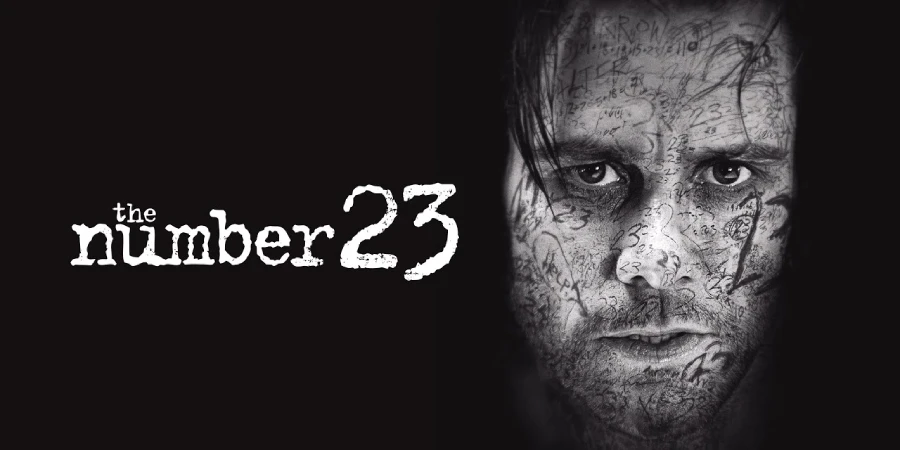

The Number 23 is a psychological thriller that leans heavily into obsession, numerology, and the idea that meaning can be dangerously manufactured by the human mind. Starring Jim Carrey in one of his darker roles, the film explores how a simple number can slowly unravel a person’s sanity.
Detailed Summary
A Normal Life, Until a Book Appears
Walter Sparrow is a mild-mannered animal control officer living a routine suburban life with his wife Agatha and teenage son Robin. His birthday passes uneventfully until Agatha gives him a strange novel titled The Number 23. The book tells the story of a man named Fingerling, whose life is ruled—and destroyed—by the recurring appearance of the number 23.
At first, Walter reads out of curiosity. Then discomfort sets in. The parallels between Fingerling’s life and his own become impossible to ignore.
The Pattern Takes Hold
Walter begins noticing that dates, names, addresses, and even casual conversations all seem to reduce to the number 23 through basic numerology. What starts as coincidence quickly mutates into obsession. Walter loses sleep, grows paranoid, and becomes emotionally distant from his family.
The film carefully shows how obsession doesn’t arrive loudly—it creeps in quietly, wearing the mask of logic.
Fingerling and Walter: A Blurred Identity
As Walter digs deeper into the book’s origins, he becomes convinced that Fingerling may be real—or worse, that Fingerling is somehow him. The novel includes violent acts, betrayal, and murder, which terrifies Walter as he fears he might be destined to repeat the same actions.
His mental state deteriorates further when he uncovers clues suggesting the book was written specifically for him.
Investigation and Revelation
Walter’s investigation leads him to abandoned buildings, cryptic symbols, and people connected to the book’s mysterious author. His wife Agatha, meanwhile, begins suspecting that the truth is far closer—and more painful—than Walter realizes.
The tension builds toward a revelation that recontextualizes everything Walter believes about the book, Fingerling, and himself.


Movie Ending
In the final act, the film reveals that Walter Sparrow himself wrote The Number 23—years earlier—while he was in prison.
Walter eventually remembers that he once lived under the name Fingerling. In his past life, he was obsessed with a woman named Laura Tollins and murdered her in a fit of jealous rage. Overcome with guilt, he wrote The Number 23 as a confession disguised as fiction, encoding the truth within numerological clues. He then attempted suicide but survived, losing his memory due to trauma.
Agatha, revealed to be Laura’s sister, discovered the book years later. She recognized Walter as the killer but saw that he had genuinely changed after his memory loss. Instead of exposing him, she orchestrated events so Walter would rediscover the truth on his own.
In the climax, Walter chooses accountability over escape. He confesses his crime to the police, accepting responsibility for his past actions. The obsession ends not by denying the truth, but by facing it fully.
The film closes with Walter in prison once again, this time at peace, having reclaimed his identity and broken free from the psychological prison created by his own mind.
Are There Post-Credits Scenes?
No. The Number 23 does not include any mid-credits or post-credits scenes. The story concludes definitively before the credits roll.
Type of Movie
The Number 23 is a psychological thriller with strong neo-noir and mystery elements. It focuses less on action and more on mental deterioration, guilt, and obsession.
Cast
- Jim Carrey as Walter Sparrow / Fingerling
- Virginia Madsen as Agatha Sparrow
- Logan Lerman as Robin Sparrow
- Danny Huston as Isaac French
- Lynn Collins as Laura Tollins
Film Music and Composer
The score was composed by Harry Gregson-Williams, whose music reinforces the film’s unsettling tone. The soundtrack relies on low, pulsating themes rather than memorable melodies, mirroring Walter’s descent into paranoia.
Filming Locations
The movie was primarily filmed in Los Angeles, California, using urban environments, tunnels, motels, and dimly lit streets to enhance its noir atmosphere. These locations visually reinforce the idea of a man trapped within his own city-sized labyrinth of thoughts.
Awards and Nominations
The film received no major awards or nominations. Critical reception was largely negative, though Jim Carrey’s performance was often singled out as a strong point.
Behind the Scenes Insights
- Jim Carrey actively sought darker roles at the time to break away from his comedic image.
- Director Joel Schumacher leaned heavily into stylized lighting to reflect Walter’s fractured mental state.
- Several scenes were rewritten to make the numerology more accessible to general audiences.
- The film was shot relatively quickly, with a tight production schedule.
Inspirations and References
- Numerology theories surrounding the number 23, often associated with chaos and synchronicity
- Existential thrillers like Se7en and Memento
- The concept of unreliable memory and guilt-driven identity loss
Alternate Endings and Deleted Scenes
Early drafts reportedly featured a more ambiguous ending where Walter’s guilt remained uncertain. Test audiences responded better to a clear resolution, leading to the definitive confession ending. Several deleted scenes expanded Laura’s backstory but were removed for pacing.
Book Adaptations and Differences
The movie is not based on a novel, despite featuring a fictional book at its core. This creative choice allows the film to play with meta-narrative ideas—a story about a story that rewrites reality.


Memorable Scenes and Quotes
Key Scenes
- Walter discovering how his name numerically equals 23
- The motel room sequence where past and present collide
- The moment Walter remembers writing the book
- The final prison confession
Iconic Quotes
- “It’s not just a number. It’s a pattern.”
- “You can find the number anywhere—if you want to.”
- “The only way to stop it… is to tell the truth.”
Easter Eggs and Hidden Details
- Addresses, phone numbers, and dates throughout the film often reduce to 23
- Clocks frequently display times that add up to 23
- Walter’s dog tag number references 2 and 3 repeatedly
- Background graffiti subtly spells out numerical equations
Trivia
- Jim Carrey lost weight to appear more physically fragile
- The number 23 appears over 200 times in the film
- Joel Schumacher later stated the film was intentionally polarizing
- The movie developed a cult following despite poor reviews
Why Watch?
If you enjoy psychological thrillers that explore obsession and identity, this film offers a dark, unsettling experience. While flawed, it raises intriguing questions about how meaning is constructed—and how easily the mind can become its own worst enemy.
Director’s Other Works (Movies)
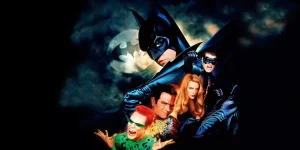
- Batman Forever (1995)
- Batman & Robin (1997)
- Falling Down (1993)
- The Lost Boys (1987)
- Phone Booth (2002)