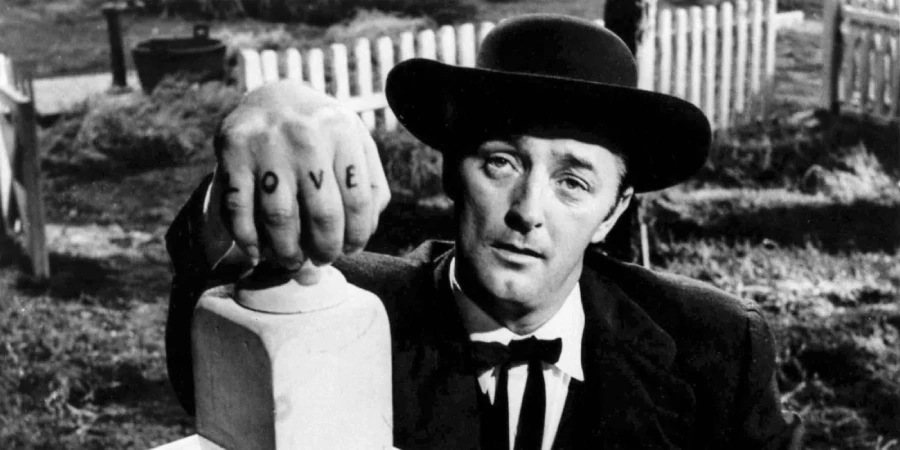

Few films conjure a nightmare as beautifully as The Night of the Hunter. It weaves a chilling fairy tale for adults, anchored by one of cinema’s most terrifying villains. This is a story where childhood innocence clashes violently with utter depravity. Ultimately, its stark visuals and moral simplicity create an unforgettable masterpiece.
Detailed Summary
The Robbery and the Secret
The story begins in Depression-era West Virginia. Ben Harper commits a bank robbery, killing two people before racing home with $10,000. Before the police capture him, he hides the cash inside his daughter Pearl’s doll.
Consequently, Ben makes his children, John and Pearl, swear an oath. They promise to protect the money and never reveal its location, not even to their mother, Willa.
The Preacher in Prison
Ben Harper is sentenced to hang for his crimes. In prison, he shares a cell with the charismatic but sinister Reverend Harry Powell. Powell is a serial killer who preys on widows for their money, justifying his murders as God’s work.
Powell tries to learn the location of the stolen money. However, Ben only mutters a Bible verse in his sleep: “And a little child shall lead them.” This cryptic clue sets Powell on his dark path.
Powell’s Arrival
Upon his release, Powell travels to Ben’s hometown. He quickly charms the local gossips and, most importantly, the vulnerable widow Willa Harper. She falls for his performance of piety, seeing him as a figure of salvation.
Young John, however, remains deeply suspicious. Unlike the adults, he sees the malice lurking beneath the preacher’s folksy exterior. His distrust sets up a tense battle of wits between the boy and the predator.
The Murder of Willa
Powell marries Willa, but his patience quickly wears thin. He relentlessly interrogates the children about the money, and Willa finally realizes his true nature when she overhears him threatening Pearl. Powell’s holy facade crumbles.
In a chillingly stylized bedroom scene resembling a chapel, Powell murders Willa. He then sinks her car into the river with her body tied inside, creating one of the most haunting underwater images in film history.
The Hunt Begins
With Willa gone, Powell drops all pretense of kindness. He openly terrorizes John and Pearl, determined to find the stolen cash. His pursuit becomes a relentless psychological assault on the two children.
During a tense confrontation, Powell finally corners Pearl and discovers the money is inside her doll. In the ensuing struggle, John manages to knock Powell out, allowing the children to grab the doll and flee into the night.
Flight Down the River
John and Pearl escape in their father’s old skiff. They float down the Ohio River in a dreamlike, almost surreal sequence. The journey is filled with images of nature, both threatening and beautiful, as they seek safety.
Powell, however, is never far behind. His silhouette on the horizon and his distant, haunting singing of the hymn “Leaning on the Everlasting Arms” serve as a constant reminder of the danger they face.
Sanctuary with Rachel Cooper
Exhausted and starving, the children are found by Rachel Cooper. She is a tough, devout woman who cares for a small group of orphaned and abandoned children. Rachel offers them food, shelter, and a sense of security they have not known.
She is sharp and perceptive. When Powell eventually tracks the children to her home, Rachel immediately sees the evil in him. She refuses to be charmed by his false piety and prepares to protect her flock.
The Final Standoff
Powell lays siege to Rachel’s house throughout the night. It culminates in a tense standoff between the forces of good and evil. He taunts her from the darkness, promising to claim the children.
Rachel, armed with a shotgun, becomes a formidable guardian angel. She engages Powell in a duel of hymns before shooting and wounding him as he tries to break in. His terrifying scream shatters the night, and he is finally captured by the state troopers Rachel had called.
Movie Ending
The film’s ending brings both justice and healing. After his capture, Reverend Harry Powell is put on trial. The same townspeople who once praised him now turn into a bloodthirsty lynch mob, screaming for his execution.
During the frenzy, John has a traumatic flashback, confusing the mob’s rage against Powell with the anger directed at his own father. Rachel fiercely protects him, shielding him from the town’s hypocrisy. John, in a moment of catharsis, gives her the money, finally accepting her as his true protector.
The final scene takes place on Christmas morning. Rachel gives the children their presents, and a sense of peace and normalcy returns. As she addresses the camera, she speaks of children as resilient survivors, ending the dark fairy tale on a note of enduring hope.
Are There Post-Credits Scenes?
No, there are no post-credits scenes in The Night of the Hunter. The film concludes entirely before the final credits roll, as was standard for movies made in the 1950s.
Type of Movie
The Night of the Hunter defies easy categorization. It is primarily a thriller blended with elements of film noir, seen in its dramatic lighting and morally ambiguous world. Moreover, its setting and themes firmly place it within the Southern Gothic tradition.
Visually, director Charles Laughton employed techniques from German Expressionism, creating a stylized, dreamlike atmosphere that often feels more like a silent film or a dark fairy tale than a realistic drama.
Cast
- Robert Mitchum – Reverend Harry Powell
- Shelley Winters – Willa Harper
- Lillian Gish – Rachel Cooper
- Billy Chapin – John Harper
- Sally Jane Bruce – Pearl Harper
- Peter Graves – Ben Harper
Film Music and Composer
The film’s unforgettable score was composed by Walter Schumann. The music is central to the movie’s good-versus-evil dichotomy. It masterfully creates a sense of dread and innocence.
The score’s most notable element is its use of contrasting themes. Powell’s menacing presence is often announced by his chilling, off-key singing of the hymn “Leaning on the Everlasting Arms.” In contrast, the children and Rachel are associated with the gentle lullaby “Pretty Fly,” creating a powerful musical conflict.
Filming Locations
While the story is set along the Ohio River in West Virginia and Ohio, The Night of the Hunter was almost entirely filmed on soundstages and at various ranches in California. This was a deliberate artistic choice by director Charles Laughton and cinematographer Stanley Cortez.
By avoiding on-location shooting, they were able to create a highly stylized and artificial world. The sets feature forced perspectives, abstract backgrounds, and dramatic lighting that emphasize the film’s fairy-tale quality over realism.
Awards and Nominations
Upon its release in 1955, The Night of the Hunter was a critical and commercial failure. Subsequently, it received no major awards or nominations at the time. Its unique, non-naturalistic style was misunderstood by audiences and critics alike.
Decades later, however, its reputation was completely re-evaluated. In 1992, the United States Library of Congress selected it for preservation in the National Film Registry, recognizing it as a “culturally, historically, or aesthetically significant” film.
Behind the Scenes Insights
- This was the first and only film directed by acclaimed actor Charles Laughton. The movie’s poor reception so discouraged him that he never directed again.
- Robert Mitchum was initially hesitant to play Powell, fearing the role was too dark. However, his performance is now considered one of the greatest portrayals of a villain in cinema history.
- Although Powell terrorizes children on screen, Mitchum had a great relationship with the child actors. Laughton, who found it difficult to direct children, would often explain scenes to Mitchum, who would then patiently relay the instructions to Billy Chapin and Sally Jane Bruce.
- Cinematographer Stanley Cortez leaned heavily on German Expressionist techniques, using stark shadows (chiaroscuro) and distorted angles to create a sense of unease and psychological dread.
Inspirations and References
The film is adapted from the 1953 novel of the same name by Davis Grubb. Grubb based the character of Harry Powell on the real-life serial killer Harry Powers. Powers was hanged in 1932 in Moundsville, West Virginia, for murdering two widows and three children he met through lonely-hearts ads.
Alternate Endings and Deleted Scenes
Director Charles Laughton shot an enormous amount of film, with the total footage of the “rushes” lasting for hours. This material was extensively edited down to the final 92-minute feature. Notable trims were made to Powell’s trial and the lynch mob sequence.
Unfortunately, virtually all of this cut footage is now considered lost. While no complete “alternate ending” exists, documentaries on the film have used newly discovered outtakes to provide a glimpse into Laughton’s meticulous and exhaustive creative process.
Book Adaptations and Differences
The film is a remarkably faithful adaptation of Davis Grubb’s novel, The Night of the Hunter. It retains most of the book’s plot, dialogue, and haunting, lyrical tone. Laughton and screenwriter James Agee successfully translated the novel’s poetic prose into a unique cinematic language.
The primary difference is in the presentation. Laughton amplified the fairy-tale and allegorical aspects of the story through his highly stylized, expressionistic visuals. Whereas the book provided more detailed psychological backstories for its characters, the film conveys their inner states through powerful imagery and symbolism.
Memorable Scenes and Quotes
Key Scenes
- Willa’s Underwater Grave: The hauntingly beautiful shot of Shelley Winters’ character submerged in her car, her hair flowing like seaweed, is one of cinema’s most iconic and surreal images.
- The River Journey: The children’s flight down the Ohio River is a lyrical montage. It juxtaposes their vulnerability against a backdrop of nature, with shots of toads, spiders, and rabbits, all framed against the constant threat of Powell’s silhouette.
- The Duel of Hymns: The final standoff at Rachel’s house, where she sings a harmony to Powell’s menacing “Leaning,” is a perfect encapsulation of the film’s good vs. evil theme.
Iconic Quotes
- Harry Powell: “The story of life is a story of love and hate. Left hand, right hand… It’s a tale of good and evil.”
- Rachel Cooper: “It’s a hard world for little things.”
- Harry Powell:
“Chil-dren!” (His terrifying, drawn-out call from the darkness). - Rachel Cooper: “Lord, save the little children. You’d think the world would be ashamed to name such a day as Christmas for one of them.”
Easter Eggs and Hidden Details
- Iris Shots: Laughton uses an old-fashioned circular iris effect, common in silent films, to open a scene focusing on the children, reinforcing the movie’s fairy-tale quality.
- Biblical Symbolism: When Powell first sees the children from a distance, a toad is framed in the foreground, representing evil. In contrast, the children are often accompanied by imagery of rabbits and other vulnerable creatures.
- Powell’s Shadow: In many scenes, Powell’s shadow appears long before he does, a classic noir/expressionist technique used to symbolize his looming and inescapable evil.
Trivia
- Robert Mitchum personally suggested silent film legend Lillian Gish for the role of Rachel Cooper, a part for which she received widespread acclaim.
- The famous underwater shot of Willa was not filmed with Shelley Winters. A mannequin was used, and the scene was shot in a studio tank by a cameraman wearing a diving unit.
- Laughton’s decision to cast Lillian Gish was a direct homage to the silent films of D.W. Griffith, whose work heavily influenced the look and feel of The Night of the Hunter.
Why Watch?
Watch this film for Robert Mitchum’s bone-chilling performance as one of cinema’s greatest villains. Its stunning black-and-white cinematography creates a beautiful nightmare you will not forget. This is a true, one-of-a-kind masterpiece of American cinema.
Director’s Other Movies
The Night of the Hunter (1955) is the only film ever directed by Charles Laughton.
Recommended Films for Fans
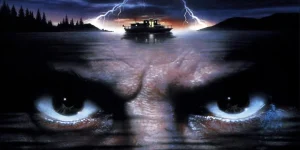
- Cape Fear (1962)
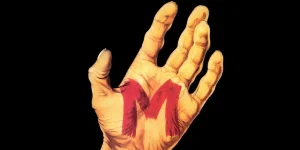
- M (1931)
- The Spirit of the Beehive (1973)
- No Country for Old Men (2007)
- The Innocents (1961)
- Touch of Evil (1958)