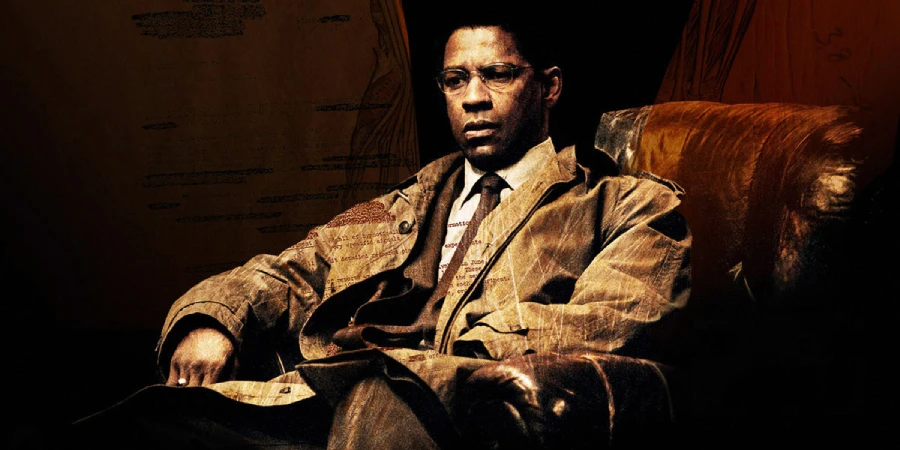

The Manchurian Candidate (2004) is a modern political thriller directed by Jonathan Demme. It is a remake of the 1962 classic and reimagines Cold War paranoia for a post–9/11 world dominated by corporate power, media manipulation, and psychological warfare. Dark, unsettling, and deliberately uncomfortable, the film explores how free will can be rewritten without the victim ever realizing it.
Detailed Summary
The Gulf War Incident
During the Gulf War in 1991, a U.S. Army platoon led by Captain Bennett Marco is ambushed in Kuwait. The mission turns chaotic, and several soldiers die under mysterious circumstances.
Afterward, Sergeant Raymond Shaw is declared a hero. He is awarded the Medal of Honor after supposedly saving his unit, although Marco remembers the mission very differently. His memories feel fragmented, dreamlike, and deeply wrong.
Disturbing Dreams and Mental Breakdown
Years later, Marco suffers from recurring nightmares in which the soldiers sit calmly in a peaceful environment that suddenly transforms into a sinister psychological experiment.
These dreams suggest the platoon was captured and brainwashed, though Marco cannot fully piece together what happened.
As his paranoia increases, Marco begins investigating Shaw’s past, convinced that something catastrophic is being hidden.
Rise of a Political Dynasty
Raymond Shaw is now a celebrated war hero and a rising political figure. His mother, Senator Eleanor Prentiss Shaw, is one of the most powerful politicians in Washington and is pushing her son toward national office.
She is ruthless, manipulative, and eerily emotionless. Her ambition goes far beyond patriotism and borders on obsession with power.
Behind the scenes, a powerful corporation named Manchurian Global appears to be pulling invisible strings throughout American politics.
The Brainwashing Conspiracy
Marco uncovers the horrifying truth:
- His unit was captured
- Subjected to advanced neurological conditioning
- Implanted with behavioral triggers
- Programmed to obey commands without awareness
Raymond Shaw has been turned into a human weapon, capable of assassination when activated by specific cues.
The terrifying part is that Shaw himself believes he is acting of his own free will.
The Trigger Mechanism
Through psychological cues and visual stimuli, Shaw can be remotely controlled. He experiences hallucinations, emotional detachment, and violent compulsions without understanding their origin.
As the election approaches, the conspiracy reaches its final phase.



Movie Ending
The final act reveals the full extent of the manipulation.
Senator Eleanor Shaw orchestrates a political catastrophe intended to place her son into the White House through tragedy and fear. Her plan involves a staged assassination that would elevate Raymond to national hero status once again, paving his path to the presidency.
However, Raymond begins to regain fragments of his suppressed memory.
In a moment of tragic clarity, he realizes:
- He has been used his entire life
- His identity was overwritten
- His own mother sacrificed him willingly for power
Instead of following his final programmed command, Raymond makes an independent decision.
He assassinated his mother and her corporate collaborator, preventing the political takeover.
Understanding that he can never be free from the programming inside his mind, Raymond then takes his own life, choosing death over becoming a permanent weapon.
The ending is bleak, emotionally devastating, and intentionally unresolved. There is no victory celebration, no heroic closure. The system remains intact, suggesting that the real enemy was never defeated.
The final message is chilling: the technology still exists, and the cycle can easily repeat.
Are There Post-Credits Scenes?
No. The Manchurian Candidate (2004) does not include any post-credits or mid-credits scenes. The film ends definitively, reinforcing its grim tone and lack of optimism.
Type of Movie
The film is a political thriller infused with psychological horror and science fiction elements. It blends conspiracy drama with mind-control paranoia, focusing more on atmosphere and unease than action.
Cast
- Denzel Washington – Major Bennett Marco
- Liev Schreiber – Raymond Shaw
- Meryl Streep – Senator Eleanor Prentiss Shaw
- Kimberly Elise – Eugenie Rose
- Jon Voight – Senator Jordan Clark
- Jeffrey Wright – Corporal Al Melvin
Meryl Streep’s performance is widely regarded as one of the most chilling political villains in modern cinema.
Film Music and Composer
The score was composed by Rachel Portman, known for emotionally restrained orchestral work.
Instead of dramatic themes, the music is subtle and clinical, reinforcing:
- Psychological tension
- Emotional detachment
- A sense of constant surveillance
Silence is used as aggressively as sound.



Filming Locations
The film was shot primarily in:
- New York City
- Washington, D.C.
- New Jersey
These real-world political locations were crucial for grounding the story in realism. The familiarity of these settings makes the conspiracy feel disturbingly plausible.
Awards and Nominations
- Saturn Awards – Best Supporting Actress (Meryl Streep, nominated)
- Broadcast Film Critics Association – Best Actress nomination
- Various critics associations praised its screenplay and political relevance
While not a major awards-season contender, the film gained strong retrospective appreciation.
Behind the Scenes Insights
- Jonathan Demme intentionally avoided flashy visuals to enhance realism
- Meryl Streep modeled her character after real political figures from both parties
- The brainwashing scenes were designed to feel dreamlike rather than sci-fi
- The remake updated Cold War fears into corporate and technological paranoia
- Denzel Washington described the film as “the most frightening script I’ve ever read”
Inspirations and References
- Based on the novel The Manchurian Candidate by Richard Condon
- Remake of the 1962 film starring Frank Sinatra
- Influenced by post–9/11 political anxiety
- Themes echo real-world concerns about data surveillance, neuromarketing, and behavioral conditioning
Alternate Endings and Deleted Scenes
No alternate ending was officially filmed.
However:
- Several extended brainwashing sequences were cut for pacing
- Additional political exposition scenes were removed to maintain suspense
- Early drafts reportedly featured a more explicit corporate resolution, which Demme rejected to preserve ambiguity
Book Adaptation and Differences
Major differences from the novel include:
- Cold War communism replaced with multinational corporate control
- Brainwashing updated from hypnosis to neurological implants
- Eleanor Shaw is far more prominent and terrifying in the film
- The novel’s satire is darker and more exaggerated
The film opts for realism over pulp thriller elements.

Memorable Scenes and Quotes
Key Scenes
- The rotating dream sequence revealing the brainwashing chamber
- Eleanor Shaw’s calm political speeches masking cruelty
- Raymond struggling against his own subconscious programming
- The final assassination scene, quiet and emotionally brutal
Iconic Quotes
- “I’m not sure where my thoughts end and yours begin.”
- “They gave me a reason. That was all I needed.”
- “You don’t have to believe in conspiracy when you’re part of one.”
Easter Eggs and Hidden Details
- News broadcasts subtly contradict each other throughout the film
- Repeated imagery of mirrors symbolizes fractured identity
- Manchurian Global logos appear briefly in background shots
- Television screens are often placed between characters, emphasizing manipulation
- Several shots mirror compositions from the 1962 original
Trivia
- The film was delayed due to sensitivity after 9/11
- Meryl Streep considers Eleanor Shaw one of her darkest roles
- Jonathan Demme avoided CGI to keep the film grounded
- The original 1962 version was banned for years after JFK’s assassination
- The remake predicted modern fears of algorithmic influence eerily well
Why Watch?
You should watch The Manchurian Candidate (2004) if you enjoy:
- Smart political thrillers
- Psychological horror rooted in realism
- Films that question democracy and free will
- Performances that quietly terrify rather than shock
It is not comforting, not optimistic, and not easy.
But it is disturbingly relevant.
Director’s Other Works (Movies)
- The Silence of the Lambs (1991)
- Philadelphia (1993)
- Beloved (1998)
- Rachel Getting Married (2008)
- Something Wild (1986)
Jonathan Demme was known for blending empathy with unease, a trait strongly present here.