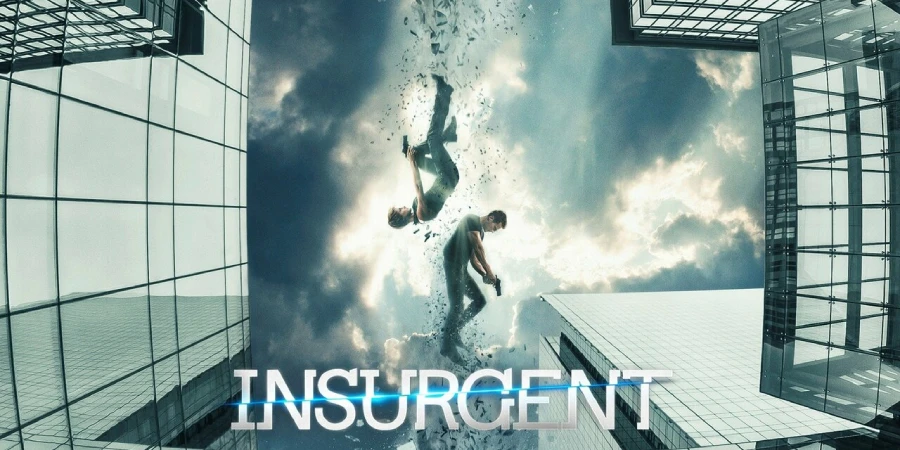

The Divergent Series: Insurgent is the second installment in the Divergent franchise, continuing the dystopian journey of Tris Prior and her fight against an increasingly authoritarian society. Darker, louder, and more emotionally intense than the first film, Insurgent expands the world, raises the stakes, and pushes its characters into morally complex territory.
Detailed Summary
Aftermath of the Abnegation Massacre
The film opens immediately after the destruction of Abnegation. Tris Prior is suffering from intense guilt after killing Will, her friend, during the previous movie. The faction system is still in place, but it is unstable, and society is close to collapse.
Jeanine Matthews, the leader of Erudite, tightens her grip on Chicago. She brands Divergents as dangerous anomalies and begins a city-wide hunt to eliminate them.
Tris, Four, Caleb, Christina, and Peter are forced into hiding.
The Mystery of the Box
Jeanine reveals a powerful artifact recovered from Abnegation. The box contains a message supposedly left by the city’s founders. However, it can only be opened by a true Divergent, and each attempt to unlock it requires surviving lethal simulation trials.
Many Divergents die trying.
Jeanine believes Tris is the only one capable of opening it.
Refuge with the Amity Faction
The group temporarily escapes to Amity, a peaceful farming faction that rejects violence. However, peace does not last long. Erudite forces invade Amity territory, proving that no faction is safe anymore.
This moment confirms an important theme of the movie: neutrality is no longer an option.
Capture and Escape
Tris and Four are eventually captured and taken to Erudite headquarters. Tris undergoes brutal psychological simulations designed to break her mind and extract the box’s secrets.
She barely survives.
Four later reveals that he is not fully Divergent but “Divergent-compatible,” meaning he does not have full immunity to simulations. This vulnerability becomes crucial later.
They escape with the help of the factionless.
The Factionless Revelation
The factionless, once ignored by society, have grown into a powerful underground force led by Evelyn Johnson, Four’s mother, who was presumed dead.
Their goal is not reform, but revenge.
They want to destroy the faction system entirely.
This introduces a major ideological conflict:
Jeanine seeks control through intelligence.
The factionless seek power through numbers.
Tris seeks truth.
Final Simulation and Confrontation
Tris voluntarily surrenders herself to Jeanine in order to prevent further deaths. She enters the final simulation sequence required to open the box.
The simulation is divided into five stages, each representing a faction’s core value. Tris completes all of them, proving her Divergence is genuine.
Before Jeanine can stop it, the box opens.

Movie Ending
The box reveals a recorded message from the original founders of Chicago.
The truth shocks everyone.
The faction system was never meant to be permanent. It was created as an experiment to heal humanity after global devastation caused by genetic warfare. People were divided based on personality traits to eliminate destructive behavior.
Divergents are not dangerous.
They are the successful result of the experiment.
The message explains that the city is isolated from the rest of the world and monitored by people outside the walls. The founders planned for Divergents to eventually dismantle the system and reconnect with humanity beyond the city.
Jeanine refuses to accept this truth.
She attempts to shut down the broadcast, but the factionless overthrow Erudite control. Jeanine is arrested.
Evelyn seizes power and announces the end of the faction system, but her rule immediately feels authoritarian, hinting that freedom may come with its own form of tyranny.
The film ends with Tris, Four, and their allies preparing to go beyond the city walls to discover what the outside world truly holds.
The story concludes on uncertainty rather than victory, setting the stage for Allegiant.
Are There Post-Credits Scenes?
No. Insurgent does not include any post-credits or mid-credits scenes. Once the credits roll, the movie is officially over.
Type of Movie
Insurgent is a dystopian science fiction action film that blends political rebellion, psychological thriller elements, and young-adult romance while expanding into large-scale war territory.
Cast
- Shailene Woodley – Tris Prior
- Theo James – Four (Tobias Eaton)
- Kate Winslet – Jeanine Matthews
- Ansel Elgort – Caleb Prior
- Miles Teller – Peter Hayes
- Zoë Kravitz – Christina
- Naomi Watts – Evelyn Johnson
- Octavia Spencer – Johanna Reyes
Film Music and Composer
The score was composed by Joseph Trapanese, known for blending orchestral music with electronic textures. The soundtrack emphasizes tension and emotional instability rather than heroic themes, reflecting Tris’s fractured mental state.



Filming Locations
The movie was filmed primarily in:
- Atlanta, Georgia
- Chicago, Illinois
- Sound stages at Pinewood Atlanta Studios
Chicago remains central to the story’s identity, symbolizing isolation and control. Many interior faction environments were constructed practically and enhanced digitally, giving the film a colder and more militarized aesthetic compared to the first movie.
Awards and Nominations
While not a major awards contender, Insurgent received:
- Teen Choice Award nominations
- MTV Movie Award nominations
- Recognition for visual effects and sound editing
The film performed strongly at the box office despite mixed critical reception.
Behind the Scenes Insights
- Shailene Woodley performed many of her own stunts.
- Kate Winslet joined the cast while recovering from a leg injury and still performed action scenes.
- The film expanded significantly beyond the book’s scope to increase cinematic scale.
- The simulation sequences required heavy coordination between stunt teams and VFX artists.
- Director Robert Schwentke emphasized darker tones to differentiate the sequel from the first film.
Inspirations and References
- Based on the novel Insurgent by Veronica Roth
- Influenced by classic dystopian literature such as 1984 and Brave New World
- Visual inspiration drawn from modern military surveillance states
Alternate Endings and Deleted Scenes
Several deleted scenes include:
- Extended factionless backstory involving Evelyn
- Additional conversations between Tris and her brother Caleb
- A longer version of the Amity invasion
No officially released alternate ending exists, but early drafts reportedly ended with Jeanine escaping instead of being captured.
Book Adaptation and Differences
Major differences from the novel include:
- The factionless play a far larger role in the film.
- Jeanine’s death occurs later in the book.
- The box storyline is entirely not in the novel and was created for the film.
- Tris’s internal trauma is more visualized through simulations rather than narration.
These changes were made to increase cinematic momentum and mystery.

Memorable Scenes and Quotes
Key Scenes
- The collapsing house fear simulation
- Tris facing her family’s death repeatedly
- The Amity invasion sequence
- The final Divergent trial simulations
- The message from the founders
Iconic Quotes
- “I am Divergent. And I can’t be controlled.”
- “The problem with power is that it corrupts.”
- “You don’t have to choose between being brave and being kind.”
Easter Eggs and Hidden Details
- The founder video subtly foreshadows the Bureau seen in Allegiant.
- Simulation environments reuse architectural designs from Dauntless initiation.
- Erudite propaganda screens mirror real-world authoritarian messaging styles.
- Jeanine’s office design resembles a glass cage, symbolizing intellectual isolation.
Trivia
- The film was shot before the third movie was officially greenlit.
- Theo James described Four as “emotionally broken” in this installment.
- Over 70 percent of the film includes visual effects.
- The movie grossed over $295 million worldwide.
Why Watch?
You should watch Insurgent if you enjoy:
- High-concept dystopian worlds
- Psychological sci-fi storytelling
- Female-led action franchises
- Stories about truth versus control
- Expanding mythology rather than simple rebellion plots
While flawed, the film deepens the emotional and ideological complexity of the Divergent universe.
Director’s Other Works
- Flightplan (2005)
- Red (2010)
- R.I.P.D. (2013)
- The Captain (2017)