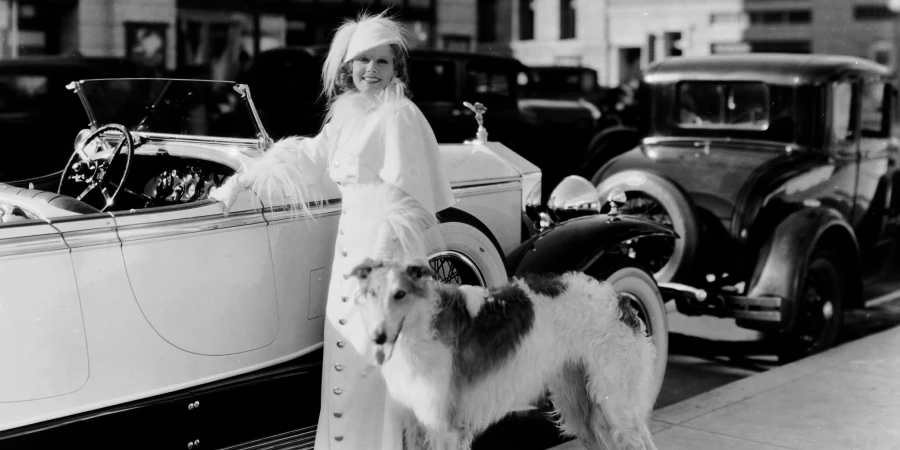

Lil Andrews burns through the screen with a fiery mane and a cold heart. She rejects the era’s traditional morality to climb the social ladder using her only weapon. Jean Harlow transforms this pre-Code masterpiece into a masterclass in unapologetic ambition.
Detailed Summary
The Office Seduction
Lil works as a stenographer for the wealthy Bill Legendre in a small town. She sets her sights on him despite his happy marriage to the elegant Irene. Soon, she manipulates Bill into a secret affair through sheer persistence and strategic wardrobe choices.
Irene eventually discovers the infidelity and files for divorce. Consequently, Bill marries Lil, but the town’s social elite refuses to accept her. Lil grows frustrated with her isolation and plots a way into high society.
The Move to New York
Bill sends Lil to New York City to keep her out of trouble. While there, she begins an affair with a wealthy businessman named Charles Gaerste. She uses Charles to force her way into the social circles that previously shunned her back home.
Charles eventually learns about her manipulative nature and exposes her to Bill. Enraged, Bill confronts his wife about her systemic lies. Lil realizes her comfortable life is crumbling around her.
A Violent Confrontation
Bill reveals he intends to return to Irene, which sends Lil into a manic rage. She grabs a pistol and shoots him in the chest. Miraculously, Bill survives the wound and chooses not to press charges to avoid further scandal.



Movie Ending
Lil flees to France after the shooting to escape the lingering social ruin in America. Years later, Bill and Irene attend a horse race in Paris while on their second honeymoon. They spot Lil across the track, looking more opulent and successful than ever before.
She has successfully seduced a French Marquis and now enjoys a life of luxury. Her loyal chauffeur, Albert, remains by her side as her accomplice. Notably, the film refuses to punish Lil for her crimes and manipulations.
This subversion of the Production Code allows the protagonist to walk away wealthy. She waves at Bill with a mocking smile from her carriage. Ultimately, the story confirms that ruthless ambition can indeed pay off.
Are There Post-Credits Scenes?
No post-credits scenes exist for this 1932 production. MGM followed the industry standard of placing all credits at the beginning of the film. Audiences simply saw a The End title card before the lights came up.
Type of Movie
This film is a classic Pre-Code romantic comedy and drama. It carries a cynical, satirical tone regarding sex and status. Writers avoided the heavy-handed moralizing found in later Hollywood features.
Cast
- Jean Harlow – Lil Andrews
- Chester Morris – Bill Legendre
- Lewis Stone – Gaerste
- Charles Boyer – Albert
- Leila Hyams – Irene Legendre
- Una Merkel – Sally
Film Music and Composer
Herbert Stothart provided the musical direction for this feature. Most scenes rely on diegetic sound rather than a heavy orchestral score. However, the title theme mirrors Lil’s energetic and disruptive personality perfectly.


Filming Locations
Production took place primarily on the MGM backlot in Culver City. Studio sets created the illusion of a bustling Ohio town and high-end New York apartments. These controlled environments allowed for the sharp lighting that emphasized Harlow’s platinum features.
Awards and Nominations
The film did not receive any major Academy Award nominations. It remains historically significant for its content rather than its trophy count.
Behind the Scenes Insights
- Screenwriter Anita Loos intentionally made the script more comedic to bypass censors.
- Jean Harlow wore a vibrant red wig over her famous platinum hair.
- Censors originally hated the script because the main character never faces justice.
- Irving Thalberg personally supervised the production to ensure it captured the zeitgeist.
Inspirations and References
The movie is based on the 1931 novel by Katherine Brush. Loos stripped away the novel’s darker tones to create a more playful predator. Specifically, the script leans into the Gold Digger archetype popular during the Great Depression.
Alternate Endings and Deleted Scenes
State censorship boards cut several provocative shots of Harlow before the general release. One deleted segment featured more explicit dialogue during the New York hotel sequence. Furthermore, original drafts considered a more tragic fate for Lil that the studio eventually rejected.
Book Adaptations and Differences
Brush’s original novel ends with Lil in a much more desperate and lonely state. In contrast, the film grants her a triumphant and wealthy conclusion. Moreover, the book provides a deeper psychological background for Lil’s hatred of her hometown.


Memorable Scenes and Quotes
Key Scenes
- Lil viewing her reflection and praising her own beauty while adjusting her undergarments.
- The moment Lil shoots Bill after he attempts to leave her.
- The final reveal of Lil’s new life in the French countryside.
Iconic Quotes
- “I’m not a lady. I’m a red-headed woman!”
- “I don’t want to be good. I want to be rich.”
- “Red hair is my lucky color.”
Easter Eggs and Hidden Details
- Lil’s wardrobe becomes more expensive and restrictive as she gains social status.
- Charles Boyer appears in a very early American role as the chauffeur.
- The painting in the Legendre home represents the traditional values Lil seeks to destroy.
Trivia
- Harlow’s performance turned her into a massive superstar for MGM.
- The film was banned in the United Kingdom for several decades.
- This movie helped trigger the strict enforcement of the Hays Code in 1934.
Why Watch?
Harlow delivers a performance of pure electric charisma. This film offers a rare look at a woman winning by her own rules. You will enjoy the sharp dialogue and the shocking lack of moral consequences.
Director’s Other Movies
- The Red Mill (1927)
- The Big House (1930)
- The Champ (1931)
- Treasure Island (1934)
Recommended Films for Fans
- Baby Face (1933)
- Design for Living (1933)
- Dinner at Eight (1933)
- Bombshell (1933)