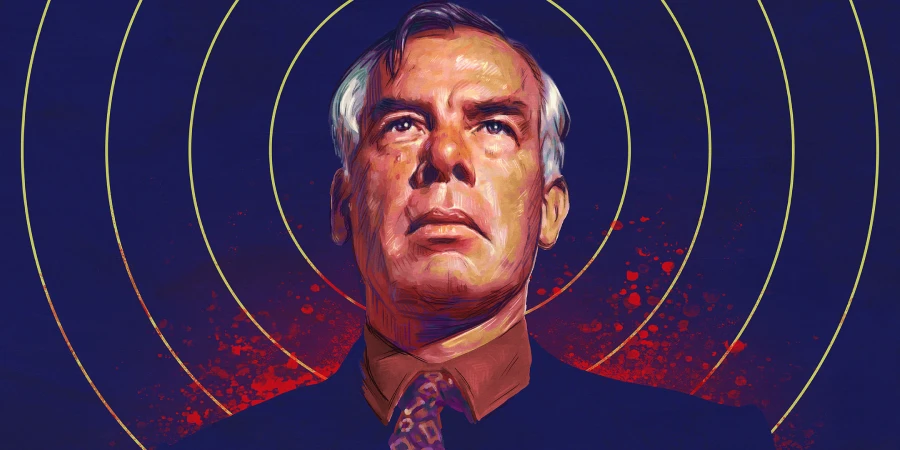

John Boorman’s Point Blank (1967) is a bold, stylized American neo-noir thriller that redefined revenge stories on screen. With minimalist dialogue, fragmented storytelling, and a hypnotic performance by Lee Marvin, the film remains a striking example of how genre cinema can bend structure and expectation.
Detailed Summary
Walker Is Betrayed on Alcatraz
The story begins with a violent heist betrayal. Walker (Lee Marvin) is double-crossed by his partner and friend, Mal Reese, who shoots him and leaves him for dead on Alcatraz Island, while also stealing his wife and his cut of the $93,000. The scene is fragmented and almost dreamlike, hinting that Walker’s survival may not be fully grounded in reality.
A Man on a Mission: Getting His Money Back
Walker’s objective is simple yet symbolically powerful: he wants his exact $93,000 returned, nothing more. This personal crusade pits him against a powerful criminal organization known only as “The Organization.” Walker begins tracking down Reese and other figures tied to the stolen money, interrogating people with ruthless focus.
Lynne and Chris: Betrayal and Alliance
Walker’s wife Lynne (Sharon Acker), now consumed by guilt and addiction, dies shortly after he finds her. Her sister Chris (Angie Dickinson), however, becomes his reluctant ally. The film suggests ambiguous emotions between them, but their connection is more symbolic than romantic. Chris ultimately helps Walker navigate “The Organization,” though the film leaves their relationship stark, tense, and uncertain.
The Organization’s Faces Keep Changing
Walker repeatedly confronts people who claim they can’t pay him because the money no longer exists as cash. Each time he reaches someone in authority, that person is replaced by someone higher in the hierarchy. The bureaucracy of crime is depicted as cold, corporate, and deliberately elusive. Walker’s mere persistence becomes a weapon.
Movie Ending
Walker is eventually led back to Alcatraz, the site of his initial betrayal. He prepares to retrieve his money from the Organization’s latest chairman, who has agreed to pay him. When the money delivery is arranged, a sniper shoots the man carrying the payoff, leaving Walker with nothing. The Organization still refuses to pay him, claiming the cash must now be accounted for and cannot simply be handed to him.
After the failed drop, Walker stays in the shadows, watching silently. The film ends with him disappearing into darkness, leaving the question unresolved: Was Walker ever alive to begin with? His apparent superhuman survival, his ghost-like presence, and the surreal structure suggest he may represent revenge incarnate rather than a literal man. The ending is purposefully ambiguous, turning the film into a meditation on violence, obsession, and existential justice.
Are There Post-Credits Scenes?
There are no post-credits scenes in Point Blank. The ending is deliberately abrupt, leaving the audience questioning the meaning of Walker’s existence and mission.
Type of Movie
Point Blank is a neo-noir crime thriller with a radical, psychological approach to narrative and character, blending existential tension with stylized violence.
Cast
- Lee Marvin as Walker
- Angie Dickinson as Chris
- Sharon Acker as Lynne
- Keenan Wynn as Yost
- Carroll O’Connor as Brewster
- John Vernon as Mal Reese
Film Music and Composer
The soundtrack was composed by Johnny Mandel, whose score mixes jazz with eerie orchestral sounds. The music reinforces the film’s hypnotic, moody tone, especially during moments where Walker’s internal state seems uncertain.



Filming Locations and Their Importance
The film features striking Los Angeles locations, portraying the city as a cold and detached urban maze:
- Alcatraz Island, San Francisco – Symbolizes betrayal and entrapment; both opening and ending scenes occur here.
- Los Angeles International Airport (LAX) – Depicted as sterile and impersonal, echoing Walker’s emotionless pursuit.
- Downtown Los Angeles high-rises and modernist interiors – These corporate-like sets reflect the structured, corporate criminal organization.
The environment reinforces the central idea: crime has become business, and revenge is the only personal act left.
Awards and Nominations
Point Blank did not receive major awards at release. However, it gained strong critical acclaim over the years and is now regarded as a cult classic that influenced modern crime cinema.
Behind the Scenes Insights
- Lee Marvin gave John Boorman full creative freedom, helping shape the film’s unique style.
- Marvin insisted on removing unnecessary dialogue; the character is intentionally quiet and emotionless.
- The fractured narrative was partly inspired by European art films Marvin admired.
- Many scenes were shot with ambient sound instead of traditional scoring to enhance realism.
Inspirations and References
- Based on the novel “The Hunter” by Donald E. Westlake (as Richard Stark).
- Influenced later films like Drive, Payback, and John Wick.
- The film blends noir with stylistic elements of French New Wave cinema.
Alternate Endings and Deleted Scenes
Boorman revealed that an early version involved Walker dying definitively. This was removed to preserve the film’s ambiguity. Some cut scenes developed Walker’s marriage, but Marvin insisted they be trimmed to keep him emotionally distant and mysterious.
Book Adaptations and Differences
- In the novel, Walker (named Parker) is far more brutal, and his motivations are less abstract.
- The book presents events realistically; the film makes them surreal and symbolic.
- The novel’s ending is straightforward, while the movie transforms the story into an existential puzzle.

Memorable Scenes and Quotes
Key Scenes
- The silent walkthrough of Lynne’s apartment while Walker realizes she has already given up on life.
- Chris physically attacking Walker, only to collapse, emotionally conflicted.
- Walker repeatedly knocking a man off a roof ledge with cold determination.
- The final Alcatraz sequence, where Walker dissolves into shadow.
Iconic Quotes
- “You’re a very persistent man, Walker.”
- “I want my money.”
- “You wouldn’t understand what I’m talking about.”
Easter Eggs and Hidden Details
- The name Walker suggests motion without purpose—someone who wanders.
- His trench coat visually echoes classic noir anti-heroes, but with colder intent.
- The repeated bureaucratic excuses about “accounting for the money” hint that modern crime is indistinguishable from business.
Trivia
- Actor Lee Marvin personally selected Angie Dickinson for the role of Chris.
- The film’s visual style influenced Michael Mann’s crime films decades later.
- Donald Westlake refused to let filmmakers use the character name “Parker” unless it was faithfully adapted, leading to the name change to Walker.
Why Watch?
Point Blank is essential viewing for anyone who loves stylized crime cinema, existential thrillers, and minimalist storytelling. Its bold structure, visual elegance, and harsh emotional tone make it more than a revenge story—it’s a cinematic experience.
Director’s Other Movies
- Deliverance (1972)
- Excalibur (1981)
- Hope and Glory (1987)
- The Tailor of Panama (2001)
- The General (1998)
Recommended Films for Fans
- Payback (1999)
- The Limey (1999)
- Drive (2011)
- Mean Streets (1973)
- Thief (1981)