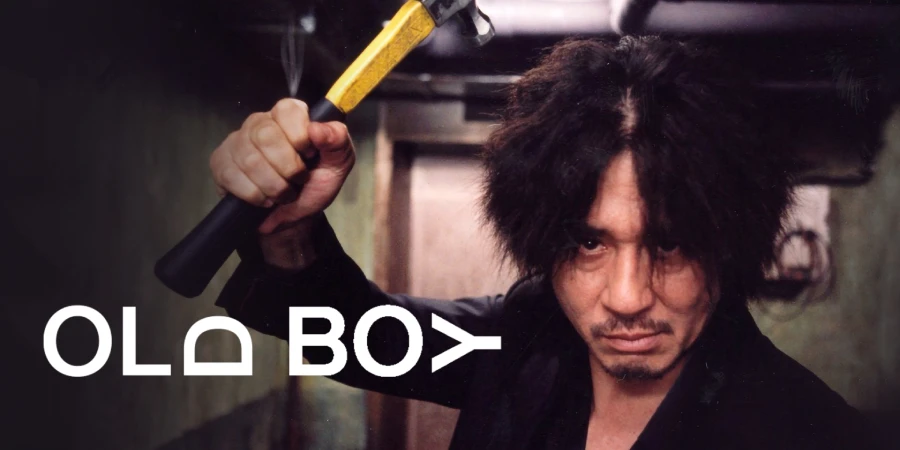

Park Chan-wook’s Oldboy (2003) remains one of the most gripping, shocking, and psychologically brutal films ever made. Part mystery, part revenge drama, and part tragedy, it challenges audiences with its uncompromising narrative and unforgettable twist.
Detailed Summary
The Strange Imprisonment of Oh Dae-su
Oh Dae-su, an ordinary man with a troubled past and a tendency toward drunken misbehavior, is mysteriously abducted and imprisoned in a private cell that resembles a cheap motel room. He has no human contact. All he receives is food, drugs, and a TV that broadcasts the outside world. During these 15 years of isolation, he learns nothing about why he’s imprisoned or by whom.
During this time, he trains his body, keeps his sanity by watching the news, and swears revenge on whoever ruined his life. Before his release, he also learns from TV reports that he has been framed for the murder of his wife. This detail turns his revenge into a necessity for clearing his name.
Unexpected Freedom and the Quest for Vengeance
Without explanation, Dae-su is suddenly released into the world. He carries nothing except a desire to uncover the reason behind his imprisonment. Soon after, he meets Mi-do, a lonely sushi chef, who seems inexplicably drawn to him. She becomes both a love interest and emotional companion as he begins his investigation.
Dae-su then encounters his tormentor, Lee Woo-jin, a wealthy, calm, and eerily composed figure who gives Dae-su a sinister challenge: find the motive behind your imprisonment within a limited time. If he fails, terrible consequences await.
The Truth Revealed: A Past Sin Comes Back
Dae-su’s investigation leads him to a high school memory he had forgotten. He once witnessed Lee Woo-jin in a sexual relationship with his own sister. Dae-su unknowingly spread rumors about it, causing humiliation, and the sister eventually committed suicide from disgrace and guilt. Dae-su never knew his gossip destroyed lives, but Woo-jin did.
This tragedy becomes the motive for Woo-jin’s elaborate revenge.


Movie Ending
Woo-jin’s horrific plan was not just imprisonment. He manipulated every detail of Dae-su’s life after release, including his relationship with Mi-do.
In the shocking final twist, Dae-su learns that Mi-do is actually his daughter, separated from him after his imprisonment. Woo-jin had orchestrated their meeting and romantic relationship as a cruel mirror of his own tragedy. He wanted Dae-su not only to suffer but to understand and live through the same taboo shame that destroyed his sister.
Faced with this revelation, Dae-su begs Woo-jin not to tell Mi-do the truth. In a moment of desperation, he humiliates himself, barking like a dog, and even cuts his own tongue, symbolizing punishment for the gossip that once ruined Woo-jin’s life.
Satisfied, Woo-jin leaves Dae-su and commits suicide, believing his revenge complete.
In the cryptic final sequence, Dae-su seeks a hypnotist to erase the truth from his memory. The film ends ambiguously: he embraces Mi-do, and we don’t know if the hypnosis succeeded. The smile on his face changes to something unsettling. The question lingers: even if he forgets, can he ever escape the truth?
Are There Post-Credits Scenes?
No. Oldboy (2003) does not have any post-credits scenes. Once the film ends, its impact is meant to linger without further distraction.
Type of Movie
Oldboy is a psychological revenge thriller and neo-noir tragedy. It blends mystery with brutal action, twisting morality and questioning whether revenge can ever truly bring peace.
Cast
- Choi Min-sik as Oh Dae-su
- Yoo Ji-tae as Lee Woo-jin
- Kang Hye-jung as Mi-do
- Ji Dae-han as No Joo-wan
- Kim Byeong-ok as Mr. Han
- Oh Dal-su as Park Cheol-woong
Music and Composer
The score, composed by Jo Yeong-wook, mixes sorrowful orchestral pieces with jazz elements. It strengthens the film’s tragic undertones and highlights Dae-su’s emotional transformation. The classical-like tracks are intentionally ironic, contrasting beauty with brutality.


Filming Locations and Their Importance
Shot primarily in Seoul, South Korea, locations such as narrow alleyways, dim restaurants, and gloomy apartments serve the film’s tone. The most significant set—the prison-like room—was built to amplify claustrophobia and the absurdity of emotional isolation. The famous hammer hallway fight scene was filmed in a real corridor to preserve raw physical struggle without flashy cinematic tricks.
Awards and Nominations
Oldboy achieved major international acclaim:
- Grand Prix at the Cannes Film Festival (2004)
- Nominated for the Palme d’Or
- Multiple Korean Film Awards, including Best Actor and Best Director
Quentin Tarantino (jury president at Cannes) personally championed the film, helping it gain global recognition.
Behind the Scenes Insights
- The iconic hammer fight scene was shot in one continuous take after 17 hours of rehearsal.
- Choi Min-sik performed most of his stunts himself, including eating a real live octopus, which required multiple takes.
- Park Chan-wook did not initially want to make a revenge movie, but changed his mind after reading the manga source material.
- The crew used real hypnosis techniques as research for the ending.
Inspirations and References
Oldboy is loosely based on the Japanese manga of the same name by Garon Tsuchiya and Nobuaki Minegishi.
Differences:
- The manga does not involve incest or hypnotism; revenge motives are different and less tragic.
- The film is darker, more psychological, and focuses on shame and moral consequence rather than pure revenge.
Alternate Endings and Deleted Scenes
Early drafts suggested Woo-jin would force Mi-do to witness the truth. This was scrapped for being too explicit and morally overwhelming. Deleted scenes mostly involved more interrogation sequences, removed to maintain pacing and ambiguity.
Memorable Scenes and Quotes
Key Scenes
- Dae-su eating the live octopus in the sushi restaurant.
- The brutal hallway hammer fight shot in one continuous side-scrolling take.
- Dae-su discovering Woo-jin’s motive via photographs.
- Dae-su cutting out his own tongue in apology.
- The final embrace after hypnosis, with a haunting half-smile.
Iconic Quotes
- “Even though I’m no better than a beast, don’t I have the right to live?”
- “Laugh, and the world laughs with you; weep, and you weep alone.”
- “Be it a rock or a grain of sand, in water they sink the same.”



Easter Eggs and Hidden Details
- The purple color theme symbolizes shame, memory, and taboo.
- The hypnotist’s dialogue includes fragmented references to identity, hinting at an unreliable sense of self.
- Woo-jin’s penthouse resembles a glass cage, paralleling Dae-su’s imprisonment.
Trivia
- Four octopuses were sacrificed for the sushi scene.
- Choi Min-sik, a Buddhist, prayed for the octopus before each take.
- The film inspired a failed Hollywood remake in 2013, often criticized for missing cultural nuance.
Why Watch?
Because it’s not simply a revenge movie. It’s a story about memory, shame, and the destruction that comes from buried sins. Oldboy challenges what we believe about justice, forgiveness, and whether secrets are better left hidden. It’s disturbing, beautiful, philosophical, and unforgettable.
Director’s Other Works
- Joint Security Area (2000)
- Lady Vengeance (2005)
- Thirst (2009)
- The Handmaiden (2016)