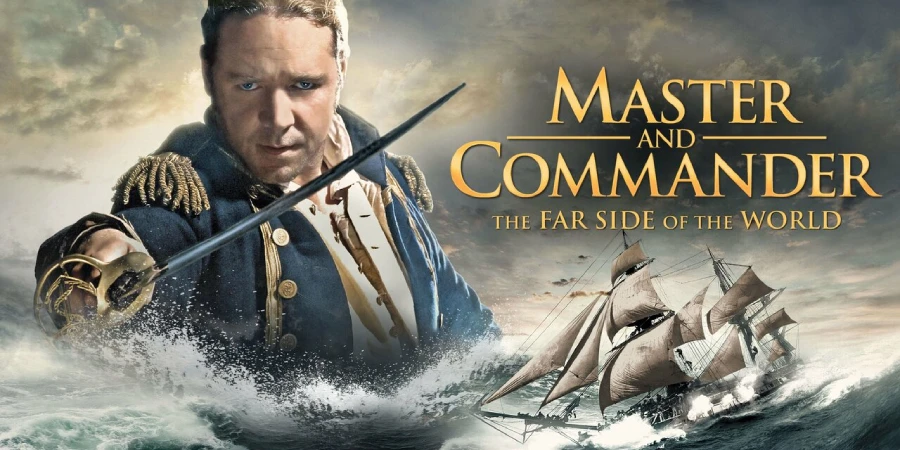
Master and Commander: The Far Side of the World is widely regarded as one of the most authentic and immersive naval war films ever made. Directed by Peter Weir and starring Russell Crowe, the movie is less about flashy battles and more about leadership, duty, survival, and obsession on the open sea during the Napoleonic Wars.
Detailed Summary
Opening at Sea: Life Aboard HMS Surprise
The film opens abruptly in darkness, throwing the audience directly into life aboard the British warship HMS Surprise. The atmosphere is tense and grounded: sailors sleep inches apart, discipline is strict, and hierarchy is absolute. Captain Jack Aubrey establishes himself early as a charismatic but demanding leader, balancing authority with genuine care for his crew.
First Encounter with the Acheron
Without warning, the Surprise is ambushed by the French privateer Acheron, a larger, faster, and more heavily armed ship. The attack is devastating. The Surprise barely escapes, badly damaged and with many wounded. This moment sets the central conflict: Aubrey’s decision to pursue the Acheron at all costs.
Obsession vs. Responsibility
As repairs are made and the chase begins, tension grows between Captain Aubrey and ship’s surgeon Dr. Stephen Maturin. Maturin, a man of science and reason, increasingly questions Aubrey’s single-minded pursuit, especially when it puts the crew at risk and interferes with a planned scientific expedition to the Galápagos Islands.
This conflict forms the emotional core of the film:
Duty to country versus duty to crew. Victory versus humanity.
Crossing the World
The Surprise undertakes an epic journey around Cape Horn into the Pacific Ocean. Along the way, the film meticulously portrays daily naval life: harsh discipline, medical procedures without anesthesia, music as morale, and the constant presence of death. A young midshipman’s injury and subsequent suicide deeply affect the crew, underlining the psychological toll of life at sea.
The Galápagos Interlude
The ship reaches the Galápagos Islands, where Maturin is briefly allowed to explore and document wildlife. This calm, almost peaceful section contrasts sharply with the violence at sea. It also becomes a turning point when Aubrey realizes the Acheron may escape while they remain ashore.
The Trap Is Set
Using deception, Aubrey cleverly lures the Acheron into battle by disguising the Surprise as a whaling ship. This strategic brilliance highlights Aubrey not as a reckless commander, but as a master tactician who understands his enemy.
Final Battle
The climactic naval battle is brutal, chaotic, and grounded in realism. There is no glamour—only smoke, blood, splintered wood, and fear. The British board the Acheron, fighting hand-to-hand in a visceral sequence that emphasizes the cost of victory.


Movie Ending
The HMS Surprise successfully captures the Acheron after an intense and costly battle. Captain Aubrey boards the enemy vessel and accepts the surrender of its captain, believing the threat is over. The crew celebrates their hard-earned victory, and Aubrey announces their return home, signaling the end of the long and dangerous pursuit.
However, in a quiet but crucial twist, Dr. Maturin realizes that the French captain has faked his death and switched places with the ship’s doctor. This revelation changes everything. The Acheron is still under enemy command, and allowing it to sail freely would endanger British interests.
Aubrey immediately orders a course change. There is no triumphant farewell, no return home, no rest. The hunt resumes.
The film ends not with closure, but with a statement about endless duty and war’s unrelenting nature. Aubrey and Maturin resume playing music together, underscoring their enduring friendship despite ideological differences. Victory, the film suggests, is always temporary.
Are There Post-Credits Scenes?
No. Master and Commander: The Far Side of the World does not include any post-credits or mid-credits scenes. The final moment aboard the Surprise is the definitive ending.
Type of Movie
This film is a historical naval war drama that blends military realism with character-driven storytelling. It prioritizes atmosphere, authenticity, and moral complexity over spectacle.
Cast
- Russell Crowe as Captain Jack Aubrey
- Paul Bettany as Dr. Stephen Maturin
- James D’Arcy as First Lieutenant Tom Pullings
- Edward Woodall as Midshipman Blakeney
- Billy Boyd as Barrett Bonden
- Max Pirkis as Lord Blakeney
Film Music and Composer
The score was composed by Iva Davies, Christopher Gordon, and Richard Tognetti. The music blends original compositions with classical works by Bach, Mozart, and Boccherini, reinforcing the refined inner lives of the officers amid brutal conditions. The violin-cello duets between Aubrey and Maturin are especially memorable.

Filming Locations and Their Importance
- Rosarito, Mexico (Water Tanks): Used to recreate open-ocean sailing with total control over lighting and weather.
- Galápagos-inspired Sets: Represent the untouched beauty of nature, thematically opposing human warfare.
- California Coast: Provided realistic ocean backdrops for long-distance shots.
These locations were chosen to ensure maximum historical realism, making the ship itself feel like a living, breathing character.
Awards and Nominations
- Academy Awards (2004):
- Won: Best Cinematography, Best Sound Editing
- Nominated: Best Picture, Best Director, Best Actor, Best Production Design, Best Costume Design, Best Sound Mixing, Best Film Editing
The film was critically acclaimed but underperformed at the box office.
Behind-the-Scenes Insights
- Russell Crowe lived aboard the replica ship during filming to stay in character.
- Many actors learned real naval duties, including knot-tying and sail handling.
- The ship was built to exact historical specifications.
- Peter Weir encouraged long takes to preserve realism and tension.
Inspirations and References
- Based on multiple novels from Patrick O’Brian’s Aubrey–Maturin series
- Influenced by classic naval paintings and historical logs
- Strong thematic parallels to Herman Melville’s Moby-Dick
Alternate Endings and Deleted Scenes
No alternate ending was filmed.
Several deleted scenes involved extended shore leave and additional character moments, cut to maintain pacing and tension.
Book Adaptations and Differences
The film primarily adapts The Far Side of the World but borrows elements from several books in the series.
Key differences include:
- A simplified timeline
- A stronger focus on action
- Reduced philosophical monologues compared to the novels
Memorable Scenes and Quotes
Key Scenes
- The opening ambush in fog
- The Cape Horn storm sequence
- The final boarding of the Acheron
- The quiet musical duets below deck
Iconic Quotes
- Captain Aubrey: “The lesser of two weevils.”
- Dr. Maturin: “A ship is a community, not just a weapon.”
- Aubrey: “We shall beat to quarters.”
Easter Eggs and Hidden Details
- Authentic naval commands taken directly from 19th-century manuals
- Period-accurate medical instruments used on screen
- Subtle class distinctions shown through language and posture
- Real species documented by Darwin later appear in Galápagos scenes
Trivia
- The film uses almost no CGI for ship interiors.
- Sailors’ diets were historically accurate, including hardtack and salted meat.
- Crowe performed many of his own stunts.
- Fans have long campaigned for a sequel that never materialized.
Why Watch?
Watch this film if you value historical authenticity, intelligent storytelling, and character-driven drama. It respects the audience’s intelligence and rewards patience. This is not a loud war movie—it is a serious, mature exploration of leadership under pressure.
Director’s Other Works
- Dead Poets Society (1989)
- The Truman Show (1998)
- Witness (1985)
- Gallipoli (1981)
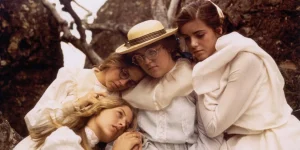
- Picnic at Hanging Rock (1975)
Recommended Films for Fans
- Das Boot (1981)
- The Hunt for Red October (1990)
- Greyhound (2020)
- Tora! Tora! Tora! (1970)
- Waterloo (1970)