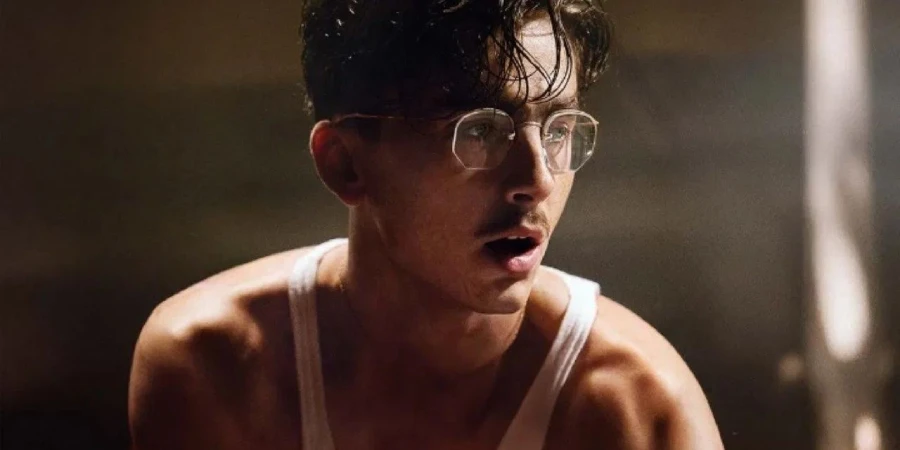

Timothée Chalamet trades his spice-filled desert for the smoky ping pong parlors of mid-century Manhattan. Marty Supreme delivers a frantic, stylized portrait of Marty Reisman, the self-proclaimed wizard of the table tennis world. This Safdie-directed frenzy captures the hustle of a man who treated a paddle like a magic wand. Consequently, viewers witness a rise and fall that feels as rhythmic as a high-speed volley.
Detailed Summary
A Bronx Tale of Paddles
Young Marty Reisman learns the art of the gamble in local New York halls. He realizes early on that pure talent earns pennies, whereas a good hustle earns dollars. Specifically, Marty develops a flamboyant style to distract opponents and delight the betting crowds. He quickly outgrows his neighborhood and sets his sights on international glory.
Conquering the World Stage
Success follows Marty across the Atlantic as he dominates the world stage with a hard-bat paddle. He wins multiple national titles while maintaining a persona that borders on caricature. However, the introduction of sponge rackets threatens his dominance and his pride. Marty refuses to adapt to the new technology, choosing instead to stick with his traditional wooden equipment.
The Hard-Bat Rebellion
Rejection from the professional establishment forces Marty back into the underground world of betting and exhibitions. He struggles to maintain his lavish lifestyle while the sport he loves leaves him behind. Furthermore, his personal relationships suffer as his obsession with being the greatest eclipses everything else. He becomes a relic of a bygone era, wandering through a changing New York.


Movie Ending
Marty enters the twilight of his career with a stubborn refusal to use modern equipment. He faces a crushing defeat at the 1952 World Championships because he rejects the new sponge rackets. This loss marks the beginning of his transition from a professional athlete to a legendary street performer. Meanwhile, his marriage dissolves as he prioritizes his ego over his domestic life.
He eventually reconciles with his past during a quiet moment in a New York park. He realizes that his identity exists outside of winning trophies. In contrast, the final scene shows him performing a trick shot for a group of mesmerized tourists. He smiles, knowing he still commands the room without a single gold medal.
Are There Post-Credits Scenes?
Audiences should not expect a Marvel-style teaser after the names finish scrolling. Silence fills the room as the screen remains black once the final credits conclude. Nonetheless, staying for the end rewards fans with a rare audio clip of the real Marty Reisman. This recording offers one last witty remark from the man who defined an era.
Type of Movie
Marty Supreme functions as a fast-paced biographical sports drama with a heavy emphasis on stylized realism. It blends kinetic energy with the intimate focus of a character study. Notably, moods shift between manic excitement and quiet, aging melancholy throughout the runtime.
Cast
- Timothée Chalamet – Marty Reisman
- Gwyneth Paltrow – Martha Reisman
- Tyler, the Creator – Sid
- Odessa A’zion – Young Fan
- Fran Drescher – Marty’s Mother
- Penn Jillette – Table Tennis Official
Film Music and Composer
Daniel Lopatin returns to collaborate with Safdie for a frantic, electronic score. He utilizes rhythmic pings and pops that mimic the sound of a table tennis match. Similarly, the soundtrack features underground jazz tracks from the late 1950s to anchor the period setting. These musical choices heighten the tension during Marty’s most desperate gambles.


Filming Locations
Safdie shot the production almost entirely on location in New York City. He utilized historic social clubs in Manhattan and weathered basements in the Bronx to maintain historical accuracy. These gritty settings provide a grounded contrast to Marty’s colorful outfits and expensive jewelry. Ultimately, the city itself feels like a secondary character that watches Marty’s slow decline.
Awards and Nominations
Marty Supreme entered the 2026 Oscar race with a staggering nine nominations, including Best Picture and Best Actor. Despite the massive hype, the film walked away with zero awards in a shocking total shutout. Many voters reportedly soured on the project following Timothée Chalamet’s dismissive comments about the ballet and opera communities.
His claim that “no one cares” about those art forms anymore ignited a firestorm of criticism across the industry. This controversy overshadowed the technical brilliance of the film during the final voting period. Consequently, the prestigious “ping pong movie” became one of the biggest snubs in Academy history. Voters seemingly chose to punish the star’s perceived arrogance rather than reward the cinematic achievement.
Behind the Scenes Insights
- Safdie insisted on shooting in authentic, cramped New York basements.
- Admittedly, the production faced delays due to the intense choreography required for the match sequences.
- Gwyneth Paltrow came out of semi-retirement specifically for this script.
- The director chose 35mm film to capture the grain and texture of 1950s New York.
Inspirations and References
Marty Reisman’s life inspired this film, specifically his 1974 autobiography The Money Player. It also mirrors the gritty visual style of 1970s character studies like The King of Marvin Gardens. Interestingly, the film pays homage to the frantic editing seen in early Martin Scorsese works.
Alternate Endings and Deleted Scenes
An earlier draft featured Marty winning one last professional tournament in the 1990s. Safdie cut this version to maintain the bittersweet tone of the actual ending. Furthermore, a deleted sequence showed Marty attempting to sell his own line of branded paddles to a disinterested corporation.
Book Adaptations and Differences
This film acts as an original narrative inspired by real events rather than a direct adaptation of a single book. It utilizes various accounts of Reisman’s life to construct its story. Consequently, the timeline of certain matches was compressed for dramatic effect.



Memorable Scenes and Quotes
Key Scenes
- The opening montage of Marty hustling sailors in a harbor-side bar.
- A tense confrontation with a Japanese player using the first sponge racket.
- The wordless final sequence where Marty plays for pennies in Central Park.
Iconic Quotes
- “A wooden paddle is a weapon; a sponge is a security blanket.”
- “I don’t play for the sport; I play for the spectacle.”
- “Winning is just a side effect of looking better than the other guy.”
Easter Eggs and Hidden Details
- A vintage 1950s tournament poster in the background features the real Marty Reisman.
- Penn Jillette’s character references a magic trick, nodding to his real-life career.
- Marty wears a specific fedora that belonged to the actual athlete during his peak years.
Trivia
- Chalamet learned to play with his left hand to match Reisman’s versatility.
- In addition, the crew used over 5,000 vintage ping pong balls during filming.
- Tyler, the Creator wrote an original song for the end credits.
- This project marks the first solo directorial effort for Josh Safdie after years of working with his brother.
Why Watch?
Josh Safdie delivers a kinetic masterpiece that turns ping pong into a high-stakes thriller. Timothée Chalamet gives his most electric performance to date as the stylish hustler. Interestingly, the film balances sports drama with deep character study perfectly. You will never look at a table tennis paddle the same way again.