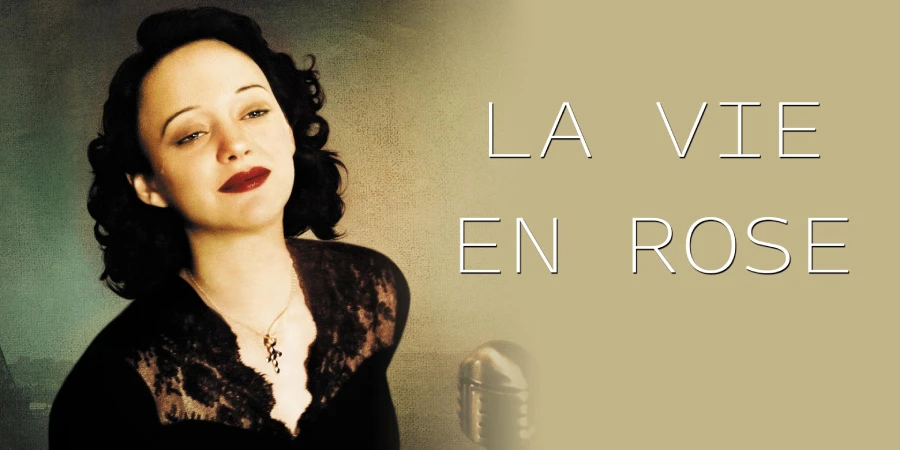

Marion Cotillard undergoes a terrifying and beautiful metamorphosis to inhabit the fragile shell of Edith Piaf. This non-linear biopic strips away the vanity of stardom to reveal a woman forged by poverty and tragedy. Ultimately, the film serves as a haunting requiem for the voice that defined French spirit.
Detailed Summary
A Childhood in the Shadows
Edith begins her life in the gutters of Belleville during the 1910s. Her mother abandons her to pursue a failed singing career in Italy. Consequently, her father leaves the child with her grandmother, who runs a brothel in Normandy.
The prostitutes raise the young girl with unexpected tenderness and care. However, Edith soon suffers from keratitis and loses her sight for several years. She miraculously recovers her vision after a pilgrimage to Saint Therese of Lisieux.
The Little Sparrow Takes Flight
Louis Leplee discovers Edith singing on a street corner for spare change. He gives her the iconic stage name La Mome Piaf to highlight her diminutive stature. This collaboration launches her into the spotlight of Parisian nightlife.
Tragedy strikes when gunmen murder Leplee in cold blood. Police suspect Edith of involvement, which briefly stains her rising reputation. She eventually recreates herself with the help of Raymond Asso.
The Great Love and Loss
Marcel Cerdan enters Edith’s life while she tours America in 1947. Their passionate affair becomes the emotional anchor of the narrative. Interestingly, she convinces him to fly from Casablanca to New York to see her sooner.
Disaster arrives when his plane crashes over the Azores. Edith wakes up to the news and collapses in a grief-stricken frenzy. This moment marks the beginning of her physical and emotional decline.
Movie Ending
Edith faces the end of her life in a sun-drenched villa in the South of France. Morphine addiction and liver failure have ravaged her body beyond recognition. Nevertheless, she prepares for one final performance at the Olympia in Paris.
Music gives her the strength to stand despite her crippling arthritis. She delivers Non, je ne regrette rien with a defiance that silences her critics. Meanwhile, flashbacks flicker through her mind, showing her lost daughter, Marcelle.
Death finally takes her at the young age of 47 in 1963. The film concludes with her drifting into the peace she never found while alive. Specifically, the final shots emphasize the immortality of her voice over her mortal suffering.
Are There Post-Credits Scenes?
No post-credits scenes appear after the final credits roll. The film ends with a definitive and somber tribute to Piaf’s legacy. Therefore, viewers can exit the theater or stop the stream once the credits begin.
Type of Movie
La Vie en Rose functions as a biographical drama with a deeply melancholic tone. It avoids the traditional “rags to riches” trope by focusing on the heavy emotional cost of fame. Rather than following a straight line, the story jumps between decades to mimic the fractured nature of memory.
Cast
- Marion Cotillard – Edith Piaf
- Gerard Depardieu – Louis Leplee
- Sylvie Testud – Momone
- Jean-Pierre Martins – Marcel Cerdan
- Emmanuelle Seigner – Titine
- Pascal Greggory – Louis Barrier
- Catherine Allegret – Louise Gassion
Film Music and Composer
Christopher Gunning composed the original score for the production. Naturally, the movie features a heavy selection of Edith Piaf’s actual recordings. These tracks provide the heartbeat of the film, often dictating the rhythm of the editing.
Marion Cotillard lip-syncs to the original masters to maintain authenticity. Notable songs include La Vie en Rose, Milord, and the climactic Non, je ne regrette rien. Consequently, the music acts as a narrative device that bridges different periods of her life.

Filming Locations
Production took place primarily in the Czech Republic and France. Prague stood in for early 20th-century Paris due to its preserved historical architecture. These settings effectively capture the gritty reality of Edith’s upbringing and the opulence of her later years.
Awards and Nominations
Marion Cotillard won the Academy Award for Best Actress for her performance. Furthermore, the film earned a second Oscar for Best Makeup. It also secured several BAFTA awards and multiple Cesar Awards in France.
Behind the Scenes Insights
- Marion Cotillard spent five hours in the makeup chair each day to transform into the elderly Piaf.
- The actress shaved her hairline and eyebrows to match the singer’s distinct appearance.
- Director Olivier Dahan wrote the script with Cotillard in mind before even meeting her.
- Cotillard reportedly struggled to leave the character behind for months after filming ended.
Inspirations and References
The film draws inspiration from the real-life events documented in Piaf’s biographies. It references the cultural atmosphere of mid-century France and the boxing career of Marcel Cerdan. Notably, the script focuses on her personal emotional truth rather than a dry list of dates.
Alternate Endings and Deleted Scenes
Various cuts of the film exist, with some versions featuring longer musical sequences. However, the core ending remains consistent across all international releases. Some deleted footage shows more of Edith’s interactions with various songwriters during the 1950s.
Book Adaptations and Differences
This film is not a direct adaptation of a single book. Instead, writers utilized public records, letters, and memoirs from Edith’s associates. In contrast to some biographies, the movie emphasizes her childhood illness and the death of her child more sharply.
Memorable Scenes and Quotes
Key Scenes
- The haunting moment when Edith realizes Marcel has died while she sits on her bed.
- Her first performance at the Olympia where she barely manages to walk onto the stage.
- The street singing session where Louis Leplee first hears her raw, unrefined voice.
Iconic Quotes
- “I am not afraid. I have lived.”
- “Singing is a way of escaping. It is another world.”
- “No, nothing of nothing. No, I regret nothing.”
Easter Eggs and Hidden Details
- The doll Edith carries as a child mirrors the one she eventually buys for herself as an adult.
- Clothing colors often shift from vibrant reds to stark blacks as her health declines.
- Actual footage of the funeral appears briefly to show the massive crowds in Paris.
Trivia
- Marion Cotillard became the first person to win an Oscar for a French-language role since 1960.
- The title comes from one of Piaf’s most famous songs, which translates to “Life in Pink.”
- Edith was only 4 feet 8 inches tall, which Cotillard mimicked through clever camera angles.
Why Watch?
This masterclass in acting offers a raw look at a musical legend. Cotillard delivers a performance so immersive it feels like a haunting. Ultimately, the film captures the tragic beauty of a life lived without any restraint.
Director’s Other Movies
- Already Dead (1998)
- The Crimson Rivers II: Angels of the Apocalypse (2004)
- Grace of Monaco (2014)
Recommended Films for Fans
- Walk the Line (2005)
- Frida (2002)
- Control (2007)
- Judy (2019)