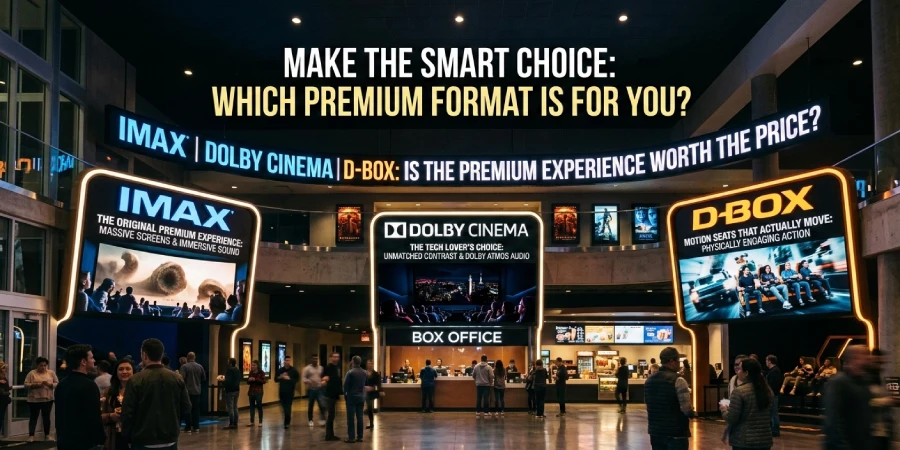

Remember when catching a movie meant grabbing a standard ticket and finding a decent seat? Those days feel like ancient history. Walk into any modern multiplex, and you’ll face a bewildering menu of premium cinema options—IMAX, Dolby Cinema, D-Box, 4DX, and more. Each promises to revolutionize how you watch films, but they also charge 50-100% more than standard admission.
The question isn’t whether these formats offer something different. They do. The real question is whether that difference matters enough to justify spending $20-30 per ticket when streaming services offer new releases from your couch for a fraction of the cost.
Let’s break down the three most popular premium formats and help you decide which (if any) deserves your hard-earned cash.
IMAX: The Original Premium Experience
IMAX has been around since the 1970s, but it’s evolved dramatically. Today’s IMAX theaters come in two flavors: true IMAX with massive screens (often 70+ feet) and IMAX Digital in converted standard auditoriums.
What You Actually Get
True IMAX theaters deliver an immersive experience that’s hard to match. The screen fills your entire field of vision, creating that “you’re actually there” sensation. Many blockbusters—think Oppenheimer, Dune, or Avatar—are shot partially or entirely with IMAX cameras, meaning you’ll see up to 26% more picture than standard formats.
The sound system uses proprietary technology with precision speaker placement. You’ll hear details buried in standard mixes, from subtle environmental sounds to dialogue clarity during action sequences.
The Catch
Not all IMAX screens are created equal. “LieMAX” (as film enthusiasts call smaller installations) offers marginally better experiences than premium large format screens at lower prices. Real IMAX theaters are rarer than you’d think, concentrated in major cities.
Best for: Visually spectacular films shot with IMAX cameras, especially sci-fi epics, nature documentaries, and Christopher Nolan movies.

Dolby Cinema: The Tech Lover’s Choice
Dolby Cinema represents the newest premium format, launched in 2014. It combines Dolby Vision projection with Dolby Atmos sound and specialized seating.
What Sets It Apart
Dolby Vision projection delivers unprecedented contrast ratios—blacks that actually look black and highlights that pop without washing out. The color accuracy surpasses standard digital projection significantly. You’ll notice this most in dark scenes and HDR-mastered content.
Dolby Atmos takes surround sound to another level with object-based audio. Instead of channel-based mixing, sounds move through three-dimensional space. A helicopter flying overhead actually sounds like it’s traveling above you, not just from left to right.
The reclining seats rumble subtly during appropriate moments—car chases, explosions, and bass-heavy music cues feel more tactile without the gimmicky intensity of motion seats.
The Reality Check
Dolby Cinema theaters are less common than IMAX, and not every film takes full advantage of the format. A dialogue-heavy drama won’t benefit much from Atmos or enhanced contrast. The magic happens with films specifically mastered for Dolby formats.
Best for: Films with Dolby Vision and Atmos masters, dark cinematography (horror and thrillers particularly shine), and sound-design-focused movies.
D-Box: Motion Seats That Actually Move
D-Box takes a radically different approach—your seat becomes part of the show. Actuators built into the chair move, tilt, and vibrate in sync with on-screen action.
The Experience
During a car chase, your seat mimics acceleration, braking, and turns. Explosions create rumbles. Flight sequences produce gentle lifting sensations. The technology can be surprisingly subtle or aggressively intense, depending on the film’s motion coding.
You control the intensity with a dial on your armrest, ranging from gentle hints to theme-park-ride levels. Most viewers find the middle settings most comfortable for feature-length films.
The Downsides
D-Box works brilliantly for certain genres—Marvel blockbusters, Fast & Furious films, and roller-coaster action movies deliver genuine thrills. But the movement can distract during quiet dramatic moments. Two-hour-plus runtimes become exhausting when your seat won’t stop moving.
The technology also costs theaters significantly more to maintain, which translates to premium ticket prices that can exceed IMAX in some markets.
Best for: Action-heavy blockbusters, shorter films under 2 hours, viewers who miss theme park attractions, and repeat viewings of familiar movies.
Making the Smart Choice for Your Wallet
Premium cinema formats aren’t inherently “worth it” or “not worth it”—context matters enormously.
When Premium Makes Sense
Go premium if you’re watching:
- Tent-pole blockbusters shot for large formats (Dune: Part Three, upcoming Avatar sequels)
- Films by directors known for technical mastery (Denis Villeneuve, James Cameron, Christopher Nolan)
- Movies you’ve been anticipating for months and want the definitive first experience
- Visual spectacles where home viewing can’t compete
When Standard Saves Money Without Sacrifice
Skip the upcharge for:
- Dialogue-driven dramas and intimate character studies
- Comedies (unless sound design is crucial to the humor)
- Films not shot or mastered for premium formats
- Movies you’re lukewarm about or seeing mainly for social reasons
- Repeat viewings (see it in premium once, then catch it again in standard if you loved it)
The Hybrid Approach
Many film enthusiasts use a selective strategy: premium tickets for 3-5 must-see films per year, standard admission for everything else. This balances memorable experiences with sustainable budgets.
Consider matinee premium showings when available—you’ll get the same experience for $5-10 less than evening shows.
Which Format Wins?
There’s no universal champion. Your ideal choice depends on the specific film and your priorities.
IMAX wins for: Pure scale and filmmaking vision—when directors shoot for IMAX, nothing else compares.
Dolby Cinema wins for: Overall technical excellence and comfort, especially for films with sophisticated sound design and HDR mastery.
D-Box wins for: Pure entertainment value and physical engagement, particularly for popcorn action movies.
The Bottom Line on Premium Movie Tickets
Premium cinema formats deliver genuinely enhanced experiences—when conditions align. The key is matching format to film rather than blindly upgrading every ticket.
Think of premium formats like concert tickets. You wouldn’t pay top dollar for nosebleed seats at every show, but you’d splurge for front-row access to your favorite artist. Apply the same logic to movies.
The streaming revolution hasn’t killed theatrical experiences; it’s forced them to evolve. Premium formats represent theaters fighting back by offering what your TV can’t match. Whether that’s worth the premium depends entirely on what you’re watching and how much that communal, larger-than-life experience matters to you.
Next time you’re buying tickets, ask yourself: “Will this specific film benefit enough from this format to justify the cost?” If the answer is yes, go premium and savor every minute. If not, save your money for a film that truly deserves it.
Your wallet—and your overall movie-going experience—will thank you for being selective.