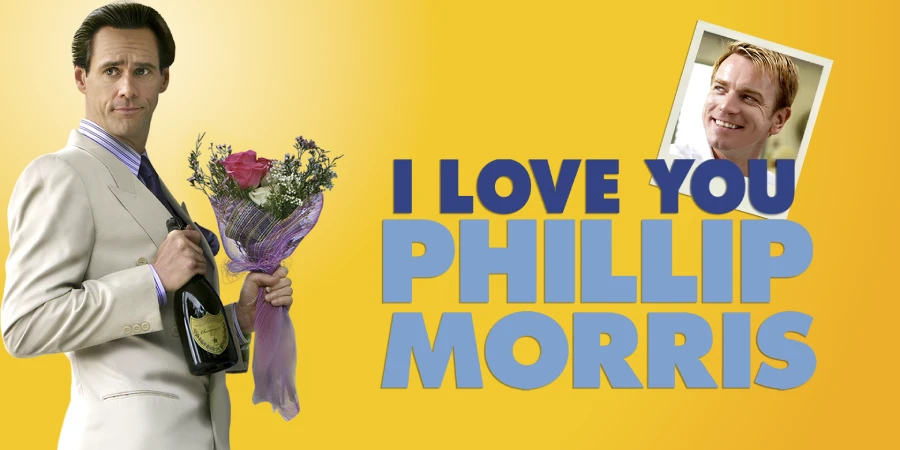

I Love You Phillip Morris is a bold, clever, and surprisingly heartfelt dark comedy based on the wild true story of Steven Jay Russell. The film mixes romance, crime, and biographical elements while delivering a sharp look at identity, love, and obsession.
Detailed Summary
Early Life and Transformation of Steven Russell
Steven Russell (Jim Carrey) begins as a seemingly ordinary family man: a police officer, a church musician, and a husband. But underneath, he hides a big secret—he’s gay. After a car accident triggers an epiphany, he vows to live life openly. This shift moves him from suburban husband to flamboyant con artist.
He embraces his identity and lifestyle fully, but his luxuries require money. Steven begins committing insurance fraud and identity theft. Eventually, his crimes catch up to him, and he lands in prison.
The Meeting That Changes Everything
In prison, Steven meets Phillip Morris (Ewan McGregor), a gentle and sweet-natured inmate. This meeting becomes the heart of the story. Steven falls deeply in love—a love portrayed as genuine and unconditional—and the two quickly become inseparable.
Their romance grows, leading Steven to promise Phillip a better life. His solution: fraud, impersonation, and more fraud. The movie blends the absurd with the touching, showing Steven’s desperate desire to build a life for Phillip, no matter how illegal the method.
Steven’s Elaborate Con Games
Once released, Steven pulls off a string of outrageous schemes: pretending to be a CFO, forging documents, and dipping into corporate accounts. His brilliance is both comedic and tragic—he’s a genius criminal driven not by greed but by love.
However, Phillip is unaware of the full extent of Steven’s crimes. When everything collapses and Steven is imprisoned again, Phillip feels betrayed, devastated by Steven’s lies.
Steven’s Ridiculous (but Real) Escape Attempts
Steven repeatedly escapes prison using tactics that seem impossible but are taken directly from real events:
- impersonating medical professionals
- forging release papers
- faking illness
- even attempting to appear dead
His escapes become more desperate with each attempt, fueled by his obsession with reuniting with Phillip.


Movie Ending
After multiple escapes, Steven creates his most extreme plan yet: he fakes having AIDS by starving himself, taking laxatives, and using makeup to appear terminally ill. Convinced he’s dying, prison officials move him to a care facility.
There, Steven orchestrates another escape by switching identities with a physician. He walks right out of the building. This escape works for a short time—until he is rearrested.
Meanwhile, Phillip learns of Steven’s extreme lengths and realizes that despite everything, Steven’s feelings were real. Phillip calls Steven in prison, telling him he still loves him. It’s a small moment, but emotionally powerful, showing that love persists even after layers of betrayal.
The film ends by revealing the real Steven Russell’s fate:
He is sentenced to a total of 144 years in prison, most of which stem from his escape attempts. As of the film’s timeline, he remains incarcerated in solitary confinement for 23 hours a day. Phillip is free, and although contact is limited, their connection is portrayed as lasting.
Are There Post-Credits Scenes?
No, there are no post-credits scenes in I Love You Phillip Morris. The film ends with title cards explaining the real-life outcomes for Steven and Phillip.
Type of Movie
This film is a dark romantic comedy infused with biographical crime drama elements. It blends outrageous true events with heartfelt romance, maintaining a witty yet emotional tone.
Cast
- Jim Carrey – Steven Jay Russell
- Ewan McGregor – Phillip Morris
- Leslie Mann – Debbie Russell
- Rodrigo Santoro – Jimmy
- Brennan Brown – Larry
- Michael Mandel – Cleavon
Film Music and Composer
The score was composed by Nick Urata, known for blending whimsical, romantic, and quirky themes. His music supports the film’s tone—light-hearted yet emotionally sincere.



Filming Locations
Filming took place primarily in:
- New Orleans, Louisiana
- Miami, Florida
These settings are important because they reflect the contrast of Steven’s life—from sunny, glamorous excess in Florida to the gritty, bureaucratic reality of Louisiana’s prison system. The bright visuals of Miami also underscore the absurdity and flamboyance of Steven’s schemes.
Awards and Nominations
While the movie wasn’t a mainstream awards magnet, it did receive recognition:
- Nominated for the Grand Jury Prize at Sundance
- Ewan McGregor won Best Actor at the Seattle International Film Festival
- Multiple nominations from LGBTQ+ film organizations for its innovative storytelling
Behind the Scenes Insights
- Jim Carrey studied the real Steven Russell’s mannerisms to portray him accurately.
- The real Steven Russell praised Carrey’s performance as “shockingly accurate.”
- Ewan McGregor called Phillip Morris “one of the most gentle characters I’ve ever played.”
- The film struggled with distribution due to its bold depiction of same-sex romance, delaying its US release.
- Many of the escape scenes are simplified; in reality, Steven’s methods were even more elaborate.
Inspirations and References
The film is based on the book “I Love You Phillip Morris: A True Story of Life, Love, and Prison Breaks” by Steve McVicker.
It draws heavily from real events, with many scenes—especially the escape attempts—taken directly from actual prison records.
Alternate Endings and Deleted Scenes
There are no widely known alternate endings, but some cut material includes:
- extended scenes of Steven’s early life
- a longer version of Phillip and Steven’s first meeting
- additional escape-planning sequences that slowed pacing
These were removed to keep the film’s rhythm tight and comedic.
Book Adaptations and Differences
While the movie follows the book closely, the main differences include:
- The book is more detailed about the logistics of Steven’s fraud schemes, where the film focuses more on romance.
- Steven’s childhood and psychological development are more deeply examined in the book.
- The film softens some of Steven’s more manipulative behaviors to maintain audience sympathy.



Memorable Scenes and Quotes
Key Scenes
- Steven’s revelation in the hospital: the moment he decides to live openly.
- Steven and Phillip’s first meeting in the prison law library.
- The CFO impersonation sequence where Steven “manages” corporate finances.
- Steven’s series of audacious escapes.
- The heartbreaking final phone call from Phillip.
Iconic Quotes
- “Being gay is really expensive.”
- “I never loved anyone like I love you, Phillip.”
- “I’m just trying to be the man you think I am.”
Easter Eggs and Hidden Details
- The real Phillip Morris appears briefly as a background prisoner in one scene.
- Steven’s fake death sequence uses makeup techniques historically used in actual prison escape attempts.
- Several courtroom documents in the film use real names from Steven Russell’s case files.
Trivia
- Jim Carrey took a significant pay cut because he believed in the film.
- The real Steven Russell said the movie was “80% accurate.”
- This is one of the rare films where both leads play gay characters without it being marketed as a “gay tragedy.”
- Many critics praised the movie as one of Jim Carrey’s most mature performances.
Why Watch?
Watch it for a genuinely unique blend of outrageous true crime and heartfelt love story.
The film delivers sharp humor, excellent performances, and a surprisingly emotional core. It’s especially appealing for those who enjoy stories that are stranger than fiction—because this one truly is.
Director’s Other Movies
Directed by Glenn Ficarra & John Requa:
- Crazy, Stupid, Love (2011)
- Focus (2015)
- Whiskey Tango Foxtrot (2016)