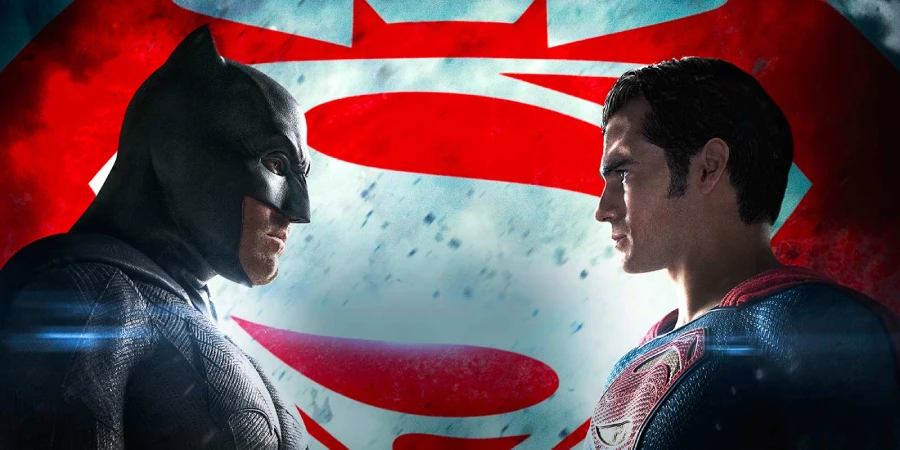

Two of DC Comics’ most beloved icons punching each other while a villain manipulates events from the shadows: Batman v Superman: Dawn of Justice promised the ultimate superhero showdown and delivered one of the most divisive blockbusters of the modern era. Zack Snyder’s 2016 spectacle arrived carrying enormous expectations, a $250 million budget, and a narrative so packed it practically groans under its own weight. However, it also contains genuine moments of operatic grandeur that deserve serious attention. Love it or hate it, this film changed the superhero landscape permanently.
Detailed Summary
The Death of Thomas and Martha Wayne
Snyder opens with the most retold origin story in comics history: young Bruce Wayne watches his parents die in a Gotham alley. This version lingers on Thomas Wayne’s pearls scattering in slow motion, a visual motif Snyder will return to obsessively. It establishes Bruce’s core psychological wound immediately.
The Battle of Metropolis, Seen Through Bruce Wayne’s Eyes
Snyder then reframes the climax of Man of Steel as a ground-level tragedy. Bruce races through the rubble of Metropolis while Superman and General Zod demolish skyscrapers overhead, and workers inside a Wayne Financial building die. This sequence is genuinely powerful; it recontextualizes Superman as a threat rather than a savior.
Bruce watches a Wayne employee lose her legs in the destruction. That specific, human detail fuels his hatred for Superman throughout everything that follows.
Eighteen Months Later: A World Divided
The film jumps forward to show a world deeply uncertain about Superman. Senate hearings debate his accountability. Meanwhile, Bruce operates as a brutal, brand-wielding Batman in Gotham, and we learn he has become darker over his twenty years of crime-fighting. A burned-out Wayne Manor sits behind him as a monument to exhaustion.
Lex Luthor’s Manipulation Begins
Lex Luthor, played by Jesse Eisenberg, drives the film’s central conspiracy. He gains access to Zod’s body and the crashed Kryptonian ship. Simultaneously, he lobbies Senator Finch for permission to import Kryptonite, framing it as a defensive measure against Superman.
Lex also manipulates Lois Lane’s investigation into a massacre in Africa, which was actually engineered by his mercenaries using military-grade bullets. His goal is to manufacture a war between Batman and Superman while building his own contingency weapon.
Clark Kent Investigates the Batman
Clark Kent actively works at the Daily Planet and grows troubled by reports of Batman’s increasingly brutal methods. He wants to expose Batman publicly. However, Perry White keeps killing the story, leaving Clark frustrated and idealistic in equal measure.
Bruce Wayne Hunts for the White Portuguese
Bruce investigates a weapons shipment connected to Lex Luthor by attending a Luthor fundraiser as Bruce Wayne. There, he encounters Diana Prince, who steals a drive from him. For a moment, she almost outsmarts the World’s Greatest Detective.
On that stolen drive, Bruce discovers Lex has been researching metahumans. He finds encrypted files containing footage of Aquaman, Cyborg, and the Flash, in addition to Diana herself. This is the film’s most awkward structural moment: a trailer reel dropped into the middle of a story that did not organically earn it.
The Kryptonite Theft and the Nightmare Sequence
Batman steals the Kryptonite from Lex’s convoy after a brutal freeway chase. He plans to forge it into weapons to kill Superman. Shortly after, Bruce experiences a vivid nightmare sequence set in a post-apocalyptic desert world where Superman rules as a fascist dictator and Batman leads a resistance.
A mysterious figure then tears through a time portal, screaming a warning about Lois Lane and a coming threat. This is the Flash, visiting from the future in a scene that confuses almost every first-time viewer. In context, it foreshadows the arrival of Darkseid.
Superman’s Senate Hearing and the Capitol Bombing
Lex orchestrates a bombing at the Capitol during Superman’s Senate hearing. He hides the bomb inside the wheelchair of a disabled veteran named Wallace Keefe, who had become a symbol of anti-Superman resentment. The explosion kills everyone in the chamber except Superman, who walks out of the fire unharmed and devastated.
Superman, overwhelmed by the weight of being unable to save everyone, retreats to a snowcapped mountain. The world watches and wonders if he is withdrawing from humanity entirely.
Lex’s Ultimate Leverage: Martha Kent
Lex kidnaps Martha Kent to force Superman into killing Batman. He gives Superman a hard deadline and makes the terms brutally clear: bring him Batman’s head, or Martha dies. This is the mechanism that forces the titular fight.
The Fight Between Batman and Superman
Batman lures Superman to an abandoned Gotham warehouse and ambushes him with Kryptonite gas. Superman weakens rapidly, and Batman dominates the fight with brutal efficiency. He uses armor, Kryptonite grenades, and a spear made from the stolen Kryptonite.
Batman pins Superman and raises the spear. Superman, struggling to breathe, gasps: “Save Martha.” Batman freezes. Lois Lane arrives and explains that Martha is Superman’s mother’s name, not a coded message. Batman pulls back from the edge, and the fight ends abruptly.
This moment famously divides audiences. Critics find it structurally absurd; defenders argue it literalizes Batman’s core trauma. Either way, it works as an emotional beat even if the logic strains credibility.
Lex Creates Doomsday
With his plan failing, Lex uses Zod’s body and his own blood inside the Kryptonian genesis chamber to create Doomsday. The ship’s intelligence initially refuses the process, warning of a “deformity,” but Lex overrides it. Doomsday emerges as a massive, evolving monster that immediately turns on Lex.
Movie Ending
Superman, Batman, and Wonder Woman converge on Doomsday in a brutal three-way battle near Stryker’s Island. Wonder Woman’s appearance here is one of the film’s genuine highlights; her theme music hits, and she grins while absorbing a massive energy blast. She holds her own against Doomsday in ways that make Batman and Superman look comparatively fragile.
Batman lures Doomsday with the Kryptonite spear, but Superman retrieves it himself. He drives it into Doomsday while Doomsday simultaneously impales him with a bone protrusion. Both die at the same moment. Superman sacrifices himself to save a city that largely feared and resented him, completing his arc from alien outsider to genuine martyr.
Lex Luthor is arrested at the ship. Before being taken away, he tells Batman that “the bell has been rung,” warning that a greater evil from beyond the stars now knows Earth exists. He means Darkseid. Batman promises to build a team in Superman’s absence, setting up the Justice League.
Lois drops the Kryptonite spear into a flooded area during the fight, then retrieves it at great personal risk; this is a clumsy piece of screenwriting that puts her in unnecessary danger largely to give her something to do.
Two funerals follow: a public ceremony in Metropolis and a quiet, private burial in Smallville. Bruce tells Diana that he plans to find the other metahumans. Diana agrees to help, and the partnership that will become the Justice League formally begins here.
The final shot lingers on Clark’s coffin. As the scene ends, dirt particles begin to rise from the surface of the coffin lid, trembling upward against gravity. Superman is not dead, not permanently. In contrast to the grief of everything preceding it, this ambiguous final moment offers a thread of hope.
Are There Post-Credits Scenes?
Batman v Superman: Dawn of Justice contains no traditional post-credits scene. The film ends with the coffin sequence described above, and nothing follows the credits. Moreover, this was a deliberate stylistic choice by Snyder, who was uninterested in replicating Marvel’s post-credits formula.
Type of Movie
This is a superhero action film with strong elements of political thriller and mythological drama. Snyder frames it as a serious, weighty examination of power, accountability, and what gods mean to ordinary people. Tonally, it sits at the darkest end of the superhero spectrum.
Admittedly, the film also functions as a franchise assembly piece, awkwardly inserting setup for future DC films. These two purposes clash constantly throughout.
Cast
- Ben Affleck – Bruce Wayne / Batman
- Henry Cavill – Clark Kent / Superman
- Amy Adams – Lois Lane
- Jesse Eisenberg – Lex Luthor
- Gal Gadot – Diana Prince / Wonder Woman
- Jeremy Irons – Alfred Pennyworth
- Laurence Fishburne – Perry White
- Diane Lane – Martha Kent
- Holly Hunter – Senator June Finch
- Kevin Costner – Jonathan Kent (flashback)
- Ezra Miller – Barry Allen / The Flash (cameo)
- Jason Momoa – Arthur Curry / Aquaman (cameo)
- Ray Fisher – Victor Stone / Cyborg (cameo)
- Scoot McNairy – Wallace Keefe
- Michael Shannon – General Zod (corpse)
Film Music and Composer
Hans Zimmer and Junkie XL (Tom Holkenborg) co-composed the score. Zimmer handled Superman’s themes, while Junkie XL built Batman’s industrial, percussive sound design. Their collaboration produced one of the most sonically distinctive superhero scores of its decade.
Wonder Woman’s theme, titled Is She with You?, became one of the most recognizable superhero musical motifs in recent cinema. Its electric cello riff generates more excitement than much of the actual action surrounding it. Junkie XL composed that specific piece.
Zimmer had previously scored Man of Steel and brought continuity to Superman’s musical identity. However, he later stated that Batman v Superman would be his last superhero film.
Filming Locations
Principal photography took place primarily in Detroit, Michigan, which doubled for both Gotham City and Metropolis. Detroit’s mix of grand, decaying architecture and modern infrastructure gave the film its distinctive grim aesthetic. Many of Gotham’s industrial scenes were shot in actual Detroit warehouses.
Additional filming took place in Chicago, Illinois and various locations in New Mexico. The African village sequences were filmed on sets built to represent a fictional country. Some exterior scenes used locations in Los Angeles as well.
Detroit’s architectural character was crucial; it made both cities feel historically heavy rather than clean and utopian, reinforcing the film’s political tone.
Awards and Nominations
Batman v Superman performed poorly at major awards ceremonies. It received several Razzie nominations, including Worst Picture, and Eisenberg’s performance attracted particularly divided critical attention.
Consequently, the film largely missed out on technical awards despite its impressive visual effects and sound design work.
Behind the Scenes Insights
- Ben Affleck underwent an intense physical transformation for the role, building a noticeably larger frame than any previous live-action Batman portrayal.
- Zack Snyder drew inspiration from The Dark Knight Returns and The Death of Superman comic storylines simultaneously, attempting to compress years of mythology into a single film.
- Jesse Eisenberg based his Lex Luthor performance partly on a youthful, tech-mogul archetype rather than the traditional older, corporate villain version of the character.
- Gal Gadot trained extensively for the role and performed many of her own stunts during the Doomsday battle sequence.
- Jeremy Irons described his Alfred as more of an active partner than a traditional butler, citing the character’s mechanical and tactical competence throughout the film.
- The theatrical cut runs approximately 151 minutes. An extended Ultimate Edition cut runs 182 minutes and adds significant context to Lois Lane’s Africa investigation and Superman’s Senate subplot.
- Zack Snyder’s daughter Autumn Snyder appears briefly in the film as a party guest at the Luthor fundraiser.
Inspirations and References
Frank Miller’s graphic novel The Dark Knight Returns is the most direct source material for Batman’s characterization and the fight between the two heroes. Specifically, the powered armor Batman wears during the battle comes almost directly from Miller’s artwork. Snyder lifted several visual compositions directly from Miller’s panels.
The Superman subplot draws heavily from The Death of Superman, the landmark 1992 DC Comics storyline in which Doomsday kills Superman during a battle in Metropolis. Notably, the film compresses and significantly alters the context of that story.
Alan Moore’s Watchmen also casts a long shadow over the film’s tone and its questions about whether superheroes should operate above democratic accountability. Snyder had previously adapted Watchmen directly, and his preoccupations clearly carried over.
Alternate Endings and Deleted Scenes
The Ultimate Edition, released on home video, adds approximately 30 minutes of footage that substantially changes the narrative coherence of the theatrical cut. It restores Clark Kent’s investigation into Batman’s methods and adds scenes that clarify how Lex’s Africa framing operation worked. As a result, several plot holes in the theatrical version simply do not exist in the Ultimate Edition.
A significant deleted scene involves Superman briefly considering killing Batman rather than simply asking him to save Martha. This addition makes Superman’s desperation feel more extreme and morally complex.
Furthermore, the Ultimate Edition adds more context around the metahuman files, showing Bruce spending more time analyzing each individual before passing the information to Diana. This makes Diana’s eventual involvement feel slightly less abrupt.
Book Adaptations and Differences
Batman v Superman: Dawn of Justice is not based on a single book or novel. It draws from multiple comic book storylines rather than adapting any one source directly. Therefore, there is no straightforward book-to-film comparison to make here.
A novelization of the film was published alongside its release, but it follows the screenplay rather than adding new narrative material.


Memorable Scenes and Quotes
Key Scenes
- Bruce Wayne racing through the collapsing streets of Metropolis while Superman and Zod battle overhead: one of the finest reframings of an established scene in superhero cinema.
- Batman’s warehouse rescue sequence, where he single-handedly dismantles a room full of armed men to save Martha Kent, widely considered one of the greatest live-action Batman action sequences ever filmed.
- Wonder Woman absorbing Doomsday’s energy blast and grinning: a single shot that generated more excitement about her solo film than any amount of marketing could have.
- The nightmare sequence featuring a dystopian desert future with Superman’s soldiers wearing his insignia as a cult emblem.
- Superman’s sacrifice: driving the Kryptonite spear into Doomsday while being impaled himself, with Lois screaming his name as he dies.
- The dirt rising from Clark’s coffin in the film’s final seconds.
Iconic Quotes
- “Tell me, do you bleed? You will.” – Bruce Wayne to Superman
- “If man won’t kill God, the Devil will do it.” – Lex Luthor
- “Men are still good. We fight, we kill, we betray one another, but we can rebuild. We can do better. We will. We have to.” – Bruce Wayne
- “Twenty years in Gotham, Alfred. How many good guys are left? How many stayed that way?” – Bruce Wayne
- “Is she with you?” / “I thought she was with you.” – Superman and Batman, regarding Wonder Woman
- “No one stays good in this world.” – Lex Luthor
Easter Eggs and Hidden Details
- The Robin suit displayed in the Batcave bears graffiti reading “Ha ha ha, joke’s on you, Batman,” strongly implying the Joker killed this Robin (widely assumed to be Jason Todd).
- Lex’s files on the metahumans each carry an Aquaman trident symbol, a Flash lightning bolt, and a Cyborg motherbox icon, previewing visual identities before those characters’ solo appearances.
- The scout ship in Metropolis carries a Kryptonian warning symbol associated with Darkseid in the comics, foreshadowing the larger threat Lex references at the end.
- Perry White tells Clark to cover a football game involving the Gotham City Rogues, a name taken directly from the Dark Knight Rises team.
- Bruce Wayne’s nightmare desert features an Omega symbol burned into the ground, Darkseid’s personal insignia from DC Comics mythology.
- Knightmare Batman wears a long coat and goggles, visually echoing the Owlman character from DC’s Elseworlds comics.
- Photographs on the wall in Bruce’s investigation room reference multiple decades of Batman activity, implying a longer, more complex history than the film explicitly shows.
Trivia
- This was the first time Batman and Superman appeared together in a live-action theatrical film.
- It was also the live-action theatrical debut of Wonder Woman as a costumed hero.
- Ben Affleck’s casting as Batman sparked enormous online backlash before filming began, generating one of the largest fan petition controversies in superhero film history.
- The film grossed over $873 million worldwide, making it a commercial success despite its critical reception.
- Henry Cavill’s mustache, grown for Mission: Impossible – Fallout, was later digitally removed for his scenes in Justice League; this was unrelated to Batman v Superman itself but became a lasting cultural footnote about Cavill’s Superman tenure.
- Jesse Eisenberg was cast as Lex Luthor while simultaneously in consideration for other roles in the DC universe, with producers ultimately landing on Luthor after seeing his work in The Social Network.
- Zack Snyder chose to set the film partly in Detroit specifically because the city’s visible economic scars suited the tone of a world still recovering from Superman’s battle damage.
- The film’s original title during production was Sage and Black to keep the project’s nature confidential.
Why Watch?
Even its harshest critics cannot deny that Batman v Superman swings for genuinely operatic ambition, treating its characters as mythological figures rather than action figures. Ben Affleck’s Batman, the warehouse fight sequence, and Hans Zimmer’s score alone justify the runtime. Furthermore, the Ultimate Edition genuinely improves the film’s coherence and earns a second look from anyone who wrote it off after the theatrical cut.
Director’s Other Movies
- Dawn of the Dead (2004)
- 300 (2006)
- Watchmen (2009)
- Sucker Punch (2011)
- Man of Steel (2013)
- Justice League (2017)
- Zack Snyder’s Justice League (2021)
- Army of the Dead (2021)
- Rebel Moon – Part One: A Child of Fire (2023)
- Rebel Moon – Part Two: The Scargiver (2024)