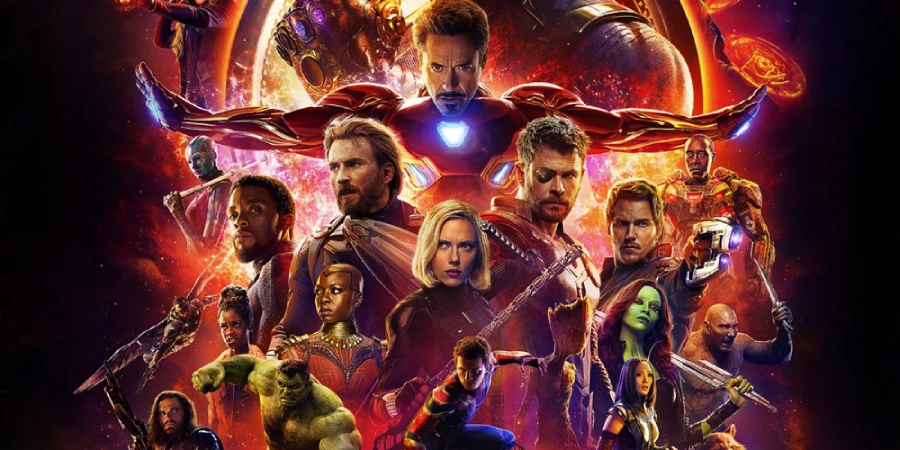

When Infinity War hit theaters in 2018, it wasn’t just another superhero movie. It was the cinematic equivalent of a cultural earthquake. Directed by the Russo Brothers and produced by Marvel Studios, the film brought together nearly every major character in the Marvel Cinematic Universe up to that point — and then did something most blockbusters are too afraid to do: it let the villain win.
Detailed Summary
The Opening Attack: Asgard Falls
The film wastes absolutely no time. It opens immediately after the events of Thor: Ragnarok. Thanos boards the Asgardian refugee ship and brutally defeats Thor, Hulk, and Loki. Loki attempts deception and is killed. Heimdall sends Hulk to Earth as a warning before being murdered.
Within the first ten minutes, the film establishes two crucial things:
Thanos is unstoppable.
This story will not play it safe.
Thanos’ Mission Explained
Thanos seeks the six Infinity Stones to balance the universe by eliminating half of all life. He genuinely believes he is the hero of this story. That ideological conviction is what makes him terrifying.
The stones:
- Space
- Mind
- Reality
- Power
- Time
- Soul
He already possesses the Power Stone at the start. From there, it becomes a cosmic scavenger hunt — except the Avengers are always one step behind.
Earth’s Heroes Divide
Iron Man, Doctor Strange, and Spider-Man head into space after Ebony Maw captures Strange. Meanwhile, Captain America reunites with Black Widow and Falcon to protect Vision, whose Mind Stone makes him a target.
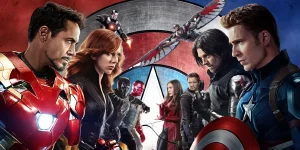
The fragmentation of the Avengers — lingering from Captain America: Civil War — plays directly into Thanos’ advantage. They are powerful, but they are not united.
The Guardians Enter the Story
The Guardians of the Galaxy intercept Thor in space. This crossover adds humor but also emotional weight, especially when Gamora reveals that she knows the location of the Soul Stone.
This becomes one of the film’s most devastating arcs.
The Soul Stone Sacrifice
On Vormir, Thanos learns from the Red Skull that the Soul Stone requires sacrificing someone you love. In one of the film’s most emotionally brutal scenes, he sacrifices Gamora.
This moment confirms something crucial: Thanos truly believes in his mission — enough to lose the person he loves most.
The Battle of Titan
Iron Man, Spider-Man, Doctor Strange, and the Guardians ambush Thanos on Titan. They nearly remove the Infinity Gauntlet. Then Peter Quill loses control upon learning Gamora is dead. That emotional reaction costs them everything.
Doctor Strange views 14,000,605 possible futures. Only one ends in victory. He surrenders the Time Stone to save Tony Stark’s life. This decision becomes incredibly important later.
The Battle of Wakanda
Meanwhile in Wakanda, Captain America, Black Panther, Thor, Hulk (in the Hulkbuster armor), and many others fight to protect Vision.
Thor arrives with Stormbreaker in one of the most crowd-pleasing entrances in superhero cinema. He nearly kills Thanos.
Nearly.
Movie Ending
The climax is devastating in its simplicity.
Thor drives Stormbreaker into Thanos’ chest. Instead of aiming for the head, he aims for the chest — wanting Thanos to suffer. Thanos responds with the now-iconic line: “You should have gone for the head.”
He snaps his fingers.
The Infinity Gauntlet activates.
Half of all life in the universe is erased at random.
And the film does not undo it. It does not soften it. It lingers.
We watch characters disintegrate:
- Spider-Man begs Tony Stark for help before turning to dust.
- Black Panther fades in Wakanda.
- Doctor Strange, Star-Lord, Drax, Mantis, Bucky Barnes, Groot, and many more vanish.
The survivors include:
Iron Man, Captain America, Thor, Hulk, Black Widow, War Machine, Rocket, Okoye, and Nebula.
Thanos, severely injured, retreats to a quiet planet and watches the sunrise — satisfied that he fulfilled his destiny.
The film ends not with triumph, but with silence and loss.
It is one of the boldest endings in blockbuster history because the villain wins completely.
Are There Post-Credits Scenes?
Yes — there is one mid-credits scene.
Nick Fury and Maria Hill witness people disappearing due to the Snap. As Fury begins to fade, he activates a pager that sends a distress signal. The symbol shown reveals it’s a call to Captain Marvel.
This sets up Captain Marvel and ultimately Avengers: Endgame.
There is no post-credits scene after the final credits roll.
Type of Movie
Infinity War is a large-scale superhero epic blending action, science fiction, fantasy, and tragedy. Unlike traditional ensemble films, it structurally functions almost as a villain-centered drama.
Cast
- Robert Downey Jr. – Tony Stark / Iron Man
- Chris Evans – Steve Rogers / Captain America
- Chris Hemsworth – Thor
- Josh Brolin – Thanos
- Scarlett Johansson – Black Widow
- Mark Ruffalo – Bruce Banner / Hulk
- Benedict Cumberbatch – Doctor Strange
- Tom Holland – Spider-Man
- Chadwick Boseman – Black Panther
- Zoe Saldana – Gamora
Film Music and Composer
The score was composed by Alan Silvestri. He reintroduced and expanded the Avengers theme, giving the film operatic weight. Thanos’ theme in particular carries a somber, almost tragic grandeur.

Filming Locations and Their Importance
Filming took place in:
- Pinewood Atlanta Studios, Georgia – primary production hub
- Edinburgh, Scotland – opening city battle with Proxima Midnight and Corvus Glaive
- Durham Cathedral, England – interior Wakanda-like architectural inspiration
While much of the film is CGI-heavy, real-world locations grounded the urban sequences before the story expanded fully into cosmic territory.
Awards and Nominations
- Nominated for Best Visual Effects at the Academy Awards
- Won Saturn Award for Best Comic-to-Film Motion Picture
- Multiple VFX and technical nominations across guild awards
Though it didn’t win the Oscar, its technical achievement was widely recognized.
Behind the Scenes Insights
- The script was so secretive that actors often received only their scenes.
- Tom Holland was frequently kept in the dark because he was known for spoilers.
- Josh Brolin performed Thanos through full motion-capture acting.
- The Russos described the film as “a heist movie told from the villain’s perspective.”
- Fake scripts and scenes were shot to prevent leaks.
Inspirations and References
The film draws inspiration from:
- The Infinity Gauntlet comic storyline
- Infinity arc by Jonathan Hickman
However, the MCU version simplifies the cosmic mythology and centers the emotional core around Thanos rather than Adam Warlock.
Alternate Endings and Deleted Scenes
- An extended Titan battle was trimmed for pacing.
- Some early drafts had different combinations of characters surviving the Snap.
- A deeper Hulk transformation arc was partially cut and saved for later development.
No alternate filmed ending has been officially released, but multiple structural variations were reportedly discussed.
Book Adaptations and Differences
While inspired by The Infinity Gauntlet comic, major differences include:
- In the comics, Death is a literal character motivating Thanos.
- Adam Warlock plays a central role in the comic but is absent here.
- The Snap is undone within the same storyline in the comics.
The film adaptation streamlines the mythology to fit the MCU’s grounded tone.

Memorable Scenes and Quotes
Key Scenes
- Thor’s arrival in Wakanda
- The attempted Gauntlet removal on Titan
- Gamora’s sacrifice on Vormir
- Spider-Man’s emotional disappearance
Iconic Quotes
- “I am inevitable.”
- “You should have gone for the head.”
- “We’re in the endgame now.”
- “Mr. Stark, I don’t feel so good.”
Easter Eggs and Hidden Details
- Red Skull reappears after last being seen in Captain America: The First Avenger
- Groot saying “I am Groot” before fading reportedly translates to “Dad.”
- Thanos’ farm at the end mirrors panels from the original comic
- The Infinity Gauntlet was teased in Thor
Trivia
- The film grossed over $2 billion worldwide.
- It was shot back-to-back with Avengers: Endgame.
- Over 40 major Marvel characters appear.
- The Snap effect was nicknamed “The Decimation” internally.
Why Watch?
Because it dares to let hope fail. Because it gives the villain emotional depth. Because it transformed blockbuster storytelling by proving that mainstream superhero films could end in tragedy.
Most importantly, it makes you feel the weight of consequence — something rare in franchise cinema.
Directors’ Other Works (Russo Brothers)
- Avengers: Endgame (2019)
- Captain America: The Winter Soldier (2014)
- Captain America: Civil War (2016)
- The Gray Man (2022)