
Edward Yang’s Yi Yi is often described as one of the most profound family dramas ever made. Released in 2000, this Taiwanese masterpiece observes everyday life with extraordinary patience and emotional intelligence. It doesn’t shout, rush, or manipulate. Instead, it quietly shows life as it is, with all its beauty, confusion, regret, and fleeting joy.
Detailed Summary
The Wedding and the Beginning of Emotional Turmoil
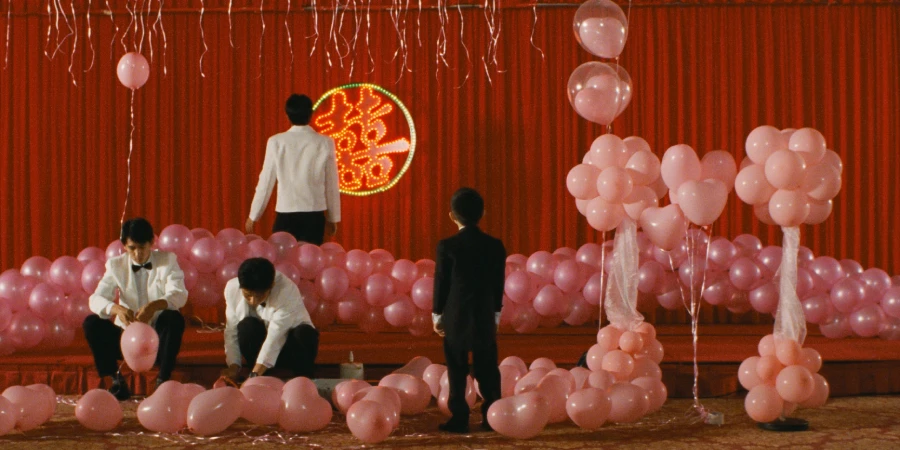
The film opens with a lavish wedding that should represent unity and happiness, yet immediately hints at emotional disconnection. During the ceremony, NJ’s mother-in-law suddenly collapses into a coma. This event becomes a silent but powerful symbol: life continues even when communication stops.
The wedding sets the tone for the entire film—people smiling outwardly while quietly struggling inside.
NJ’s Midlife Crisis and Unfinished Love
NJ, a middle-aged engineer, reconnects with Sherry, his first love. Their conversations are gentle, restrained, and filled with things left unsaid. NJ is not seeking an affair as much as seeking an answer to who he could have been.
Their meetings reflect a central theme of Yi Yi: we only see half of life, and we never know the other version of ourselves.
Min-Min’s Spiritual Breakdown
Min-Min, NJ’s wife, becomes overwhelmed by guilt and emotional exhaustion. Feeling responsible for her mother’s condition, she leaves her family to attend a spiritual retreat. Her absence is quiet but deeply felt.
Her storyline reflects the film’s exploration of modern anxiety, emotional burnout, and the desire for meaning beyond routine life.
Ting-Ting and First Love’s Pain
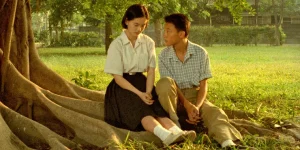
Teenage daughter Ting-Ting navigates first love, jealousy, and guilt. When a tragic accident affects someone close to her, she becomes consumed by responsibility and self-blame.
Her arc captures the painful moment when innocence fades and emotional adulthood begins.
Yang-Yang’s Camera and Innocent Philosophy
Young Yang-Yang becomes the film’s moral center. He starts taking photos of the backs of people’s heads, explaining that he wants to show them what they can’t see themselves.
This simple idea becomes the film’s core metaphor: no one can fully see themselves or understand their own life without others.


Movie Ending
The film concludes with the funeral of NJ’s mother-in-law, finally ending the long silence that began at the wedding. Life has come full circle.
Yang-Yang delivers a speech that quietly devastates the audience. He explains that he takes photos to show people the parts of themselves they cannot see, because half of the truth is always hidden from us. He says that by showing others what they can’t see, maybe they can understand life better.
This moment ties together every storyline:
- NJ accepts that he cannot relive or fix the past, only understand it.
- Min-Min returns home calmer but changed, realizing spiritual answers are not instant cures.
- Ting-Ting continues living with guilt but also emotional growth.
- Yang-Yang, despite his youth, articulates the film’s deepest truth with clarity and compassion.
There is no dramatic resolution, no forced closure. Instead, Yi Yi ends exactly as life does: quietly, honestly, and unfinished. The ending reminds us that understanding does not mean control—and that is both heartbreaking and comforting.
Are There Post-Credits Scenes?
No. Yi Yi does not include any post-credits or mid-credits scenes. The film ends definitively with its final emotional statement and allows the audience to sit with its meaning in silence.
Type of Movie
Yi Yi is a family drama and slice-of-life film that blends realism with philosophical reflection. It focuses on ordinary people facing universal emotional struggles, emphasizing observation over plot-driven storytelling.
Cast
- Nien-Jen Wu as NJ
- Elaine Jin as Min-Min
- Issey Ogata as Ota
- Kelly Lee as Ting-Ting
- Jonathan Chang as Yang-Yang
Film Music and Composer
The film’s music was composed by Peng Kai-Li, using subtle piano and ambient tones. The score is intentionally restrained, allowing silence and natural sound to carry emotional weight. Music appears sparingly, making its presence feel intimate rather than manipulative.



Filming Locations and Their Importance
Yi Yi was filmed entirely in Taipei, Taiwan, using real apartments, streets, offices, and schools.
These locations are crucial because:
- They ground the film in everyday reality.
- The urban environment reflects emotional isolation despite physical closeness.
- The lack of stylization reinforces the film’s authenticity and observational tone.
The city is not romanticized; it simply exists, much like the characters’ lives.
Awards and Nominations
- Best Director – Cannes Film Festival (2000) (Edward Yang)
- Widely ranked among the greatest films of the 21st century
- Frequently appears on critics’ lists from Sight & Sound, BBC Culture, and The New York Times
While not award-heavy, its critical legacy is enormous.
Behind the Scenes Insights
- Edward Yang drew heavily from his own family experiences.
- Many child performances were minimally scripted to preserve natural behavior.
- Yang avoided dramatic camera movements to maintain emotional realism.
- The film took several years to develop due to its complex, multi-character structure.
Inspirations and References
- Edward Yang’s personal life and observations of modern Taiwanese society
- Influence of Yasujirō Ozu, particularly in framing family dynamics
- Philosophical ideas about perception, time, and partial truth
Alternate Endings and Deleted Scenes
There are no known alternate endings. Yang was meticulous, and the final cut closely reflects his original vision. Some minor scenes were trimmed for pacing, but no major narrative elements were removed.
Book Adaptation and Differences
Yi Yi is not based on a book. It is an original screenplay. However, its structure resembles literary family sagas, unfolding gradually rather than following a traditional three-act plot.



Memorable Scenes and Quotes
Key Scenes
- Yang-Yang photographing people’s backs
- NJ and Sherry’s final, restrained goodbye
- Ting-Ting confessing guilt to someone who cannot respond
- The wedding opening mirrored by the funeral ending
Iconic Quotes
- Yang-Yang: “If you can only see what you know, how can you see what you don’t know?”
- NJ: “We don’t know how to live our lives. That’s why life is difficult.”
Easter Eggs and Hidden Details
- Mirrors and glass reflections frequently divide characters within frames.
- Many conversations happen off-center, emphasizing emotional imbalance.
- The film often places characters partially out of frame to suggest incompleteness.
Trivia
- Yi Yi means “one by one” or “each and every,” reflecting its observational nature.
- It was Edward Yang’s final completed film before his death in 2007.
- The child actor playing Yang-Yang had no prior acting experience.
Why Watch?
Watch Yi Yi if you want a film that respects your intelligence and emotions. It doesn’t tell you what to feel—it allows you to discover it. Few films capture the quiet weight of everyday existence this honestly.
Director’s Other Works
- A Brighter Summer Day (1991)
- The Terrorizers (1986)
- Taipei Story (1985)
- That Day, on the Beach (1983)