
The Laundromat is a political comedy-drama directed by Steven Soderbergh that exposes the dark, confusing and often absurd world of offshore finance. Inspired by real events behind the Panama Papers scandal, the film blends satire, real-world investigation and fourth-wall-breaking storytelling to explain how the global financial system enables corruption on a massive scale.
Detailed Summary
A Tragic Beginning: Ellen Martin’s Loss
The story begins with Ellen Martin, a recently widowed woman whose husband dies in a tragic boating accident. When Ellen attempts to collect the insurance money she is owed, she discovers that the insurance company behind the boat no longer exists on paper. This seemingly simple bureaucratic problem becomes her entry point into an international maze of shell companies.
Enter Mossack Fonseca
The film frequently cuts away from Ellen’s story to two eccentric lawyers, Jürgen Mossack and Ramón Fonseca, who directly address the audience. Speaking from lavish offices, they explain offshore finance using humor, metaphors and sarcasm. Through these explanations, the film introduces concepts such as shell corporations, tax havens and legal loopholes.
These segments serve as both narration and commentary, emphasizing that what is legal is not always ethical.
Following the Money
Ellen travels across borders trying to find where her insurance money went. Her investigation leads her to:
- Fake companies with no employees
- Addresses that exist only as mailboxes
- Layers of ownership designed to hide responsibility
As she digs deeper, Ellen realizes that her case is not unique. Thousands of people around the world are victims of the same invisible system.
Multiple Stories, One System
The movie expands beyond Ellen’s personal journey and introduces several interconnected stories involving:
- Wealthy families hiding assets
- Dictators laundering money
- Politicians using offshore accounts
- Corporations avoiding taxes legally
These narratives overlap thematically rather than chronologically, reinforcing the idea that offshore finance affects every level of society.
The System Protects Itself
As Ellen uncovers more information, it becomes clear that the offshore system is intentionally designed to be confusing. Lawyers, accountants and governments benefit from the complexity, while ordinary people are left powerless.
The film gradually shifts from mystery to moral critique, arguing that corruption does not require villains, only indifference.


Movie Ending
The ending of The Laundromat is both revealing and unsettling, fully embracing spoilers and moral confrontation.
Ellen finally tracks down Mossack Fonseca and confronts them directly. She accuses them of creating a system that protects the rich while destroying the lives of normal people like her. However, she is told that everything they did was legal, even if morally wrong. This moment delivers one of the film’s strongest messages: legality does not equal justice.
In a tragic twist, Ellen suffers a fatal heart attack shortly after the confrontation. Her death reinforces the film’s central argument that the system is emotionally and physically crushing for those without power.
The movie then breaks entirely from traditional storytelling. Ramón Fonseca turns directly to the camera and admits that although the Panama Papers exposed the scandal, nothing truly changed. Offshore finance continues under new names, in new countries, protected by governments that benefit from it.
The final moments reveal that wealth inequality persists because the system was never designed to serve everyone. The rich are not smarter, the film argues, they are simply playing a different game with different rules.
The ending is deliberately unsatisfying, mirroring reality. There is no justice, no courtroom victory, no dramatic downfall. Only exposure and the uncomfortable truth that awareness alone does not guarantee reform.
Are There Post-Credits Scenes?
No, The Laundromat does not include a post-credits or mid-credits scene. The film’s message concludes fully before the credits roll.
Type of Movie
The Laundromat is a satirical political drama that blends dark comedy with investigative storytelling. It uses humor and stylized narration to explain complex financial crimes rooted in real-world events.
Cast
- Meryl Streep as Ellen Martin and multiple supporting roles
- Gary Oldman as Jürgen Mossack
- Antonio Banderas as Ramón Fonseca
- Jeffrey Wright as Boncamper
- David Schwimmer as Mark Peterson
- Sharon Stone as Hannah
Film Music and Composer
The score was composed by David Holmes, a long-time collaborator of Steven Soderbergh. The music supports the film’s playful yet cynical tone, often contrasting upbeat melodies with grim subject matter to heighten the satire.


Filming Locations
The film was shot primarily in:
- Toronto, Canada
- Miami, Florida
- New York City
These locations were used to represent multiple countries and offshore hubs. Their importance lies in how visually similar modern financial centers appear, reinforcing the idea that corruption is global and borderless.
Awards and Nominations
- Screen Actors Guild Award nomination for Outstanding Performance by a Female Actor (Meryl Streep)
- Multiple critics’ circle nominations for screenplay and ensemble cast
While not a major awards contender, the film received attention for its performances and political relevance.
Behind the Scenes Insights
- Steven Soderbergh served as director, cinematographer and editor under pseudonyms.
- Meryl Streep plays several characters to emphasize how identity can be manipulated legally.
- The fourth-wall-breaking style was inspired by educational political theater.
- The script was based on real investigative journalism, not fictional imagination.
- Gary Oldman wore extensive prosthetics to fully transform into Mossack.
Inspirations and References
- Based on the book Secrecy World by Jake Bernstein
- Inspired by real documents from the Panama Papers leak
- References investigative journalism from the International Consortium of Investigative Journalists
- Stylistic influence from The Big Short (2015)
Alternate Endings and Deleted Scenes
No alternate endings were filmed. However, several explanatory sequences were shortened to reduce runtime. Early cuts reportedly contained more detailed breakdowns of offshore accounting mechanics, which were removed to maintain pacing and accessibility.
Book Adaptations and Differences
While based on Secrecy World, the film differs significantly from the book:
- The book is purely journalistic and non-fiction
- The movie adds fictional characters like Ellen Martin
- The tone shifts from investigative reporting to satire
- Real individuals are blended into composite characters
This approach allows emotional storytelling while preserving factual foundations.


Memorable Scenes and Quotes
Key Scenes
- The opening explanation of shell companies using everyday metaphors
- Ellen’s realization that her insurance company never truly existed
- Mossack and Fonseca casually explaining corruption while living in luxury
- The final direct-to-camera monologue admitting nothing has changed
Iconic Quotes
- “If you don’t know where the money is, you’re not the one who has it.”
- “The system isn’t broken. It’s working exactly as designed.”
- “Legal does not mean moral.”
Easter Eggs and Hidden Details
- Company names seen in the background reference real Panama Papers entities
- Multiple characters share identical addresses, hinting at fake corporations
- Meryl Streep’s costume colors subtly change to reflect shifting identities
- Real financial terminology is used without simplification in several scenes
Trivia
- Steven Soderbergh shot the entire film digitally using natural lighting.
- The movie was released directly on Netflix.
- Gary Oldman and Antonio Banderas often improvised their narration scenes.
- The film intentionally avoids naming specific politicians to emphasize systemic guilt.
- Over 214,000 shell companies were referenced in the real Panama Papers leak.
Why Watch?
You should watch The Laundromat if you enjoy films that challenge systems of power. It is educational without being dull, humorous without trivializing tragedy, and disturbing because everything it depicts is real. The movie makes complex financial crime understandable and emotionally personal, reminding viewers that corruption is not abstract. It affects real lives.
Director’s Other Works (Movies)
- Sex, Lies, and Videotape (1989)
- Out of Sight (1998)
- Erin Brockovich (2000)
- Ocean’s Eleven (2001)
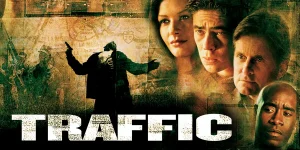
- Traffic (2000)
- Contagion (2011)
- Side Effects (2013)
- Logan Lucky (2017)
Recommended Films for Fans
- The Big Short (2015)
- Spotlight (2015)
- Margin Call (2011)
- Vice (2018)
- Dark Waters (2019)
- Official Secrets (2019)