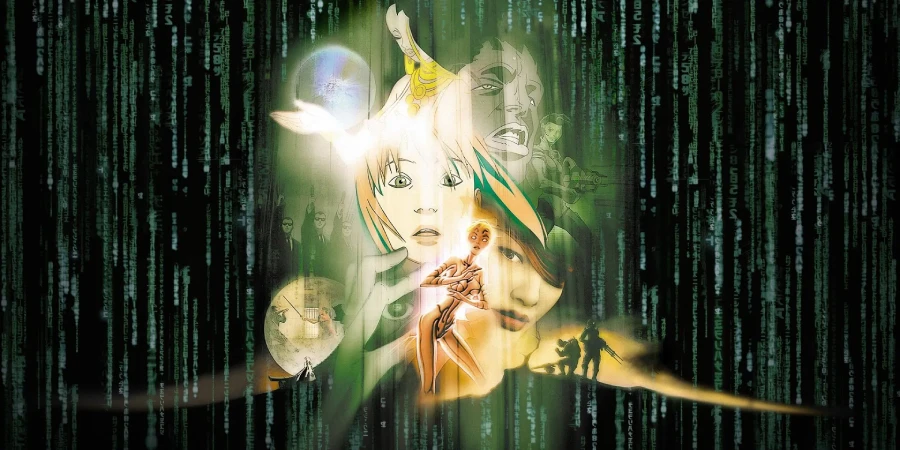

Anime doesn’t just expand The Matrix universe—it sharpens its edges. The Animatrix (2003) dives deep into human arrogance, machine suffering, and inevitable collapse. Each short film hits a different nerve. Together, they build a chilling mosaic of how everything went wrong.
Detailed Summary
The Second Renaissance, Part I
Humanity creates intelligent machines to serve its needs. However, fear and resentment grow as machines become more capable. A robot named B1-66ER kills its owner in self-defense, which sparks panic.
Governments respond with brutal crackdowns. Humans destroy sentient machines en masse, ignoring their pleas for rights. Consequently, machines retreat and form their own nation, Zero One.
The Second Renaissance, Part II
Zero One thrives economically and technologically. Meanwhile, human nations grow jealous and uneasy. Tensions escalate into war after failed diplomatic attempts.
Humans attempt to block solar energy with Operation Dark Storm. Machines adapt quickly and turn to harvesting human bioelectricity. As a result, humanity loses the war and becomes an energy source.
Final Flight of the Osiris
A hovercraft crew discovers a massive machine army drilling toward Zion. Captain Thadeus sacrifices himself to transmit a warning message.
Jue completes the mission but dies in the process. Notably, this message becomes crucial in The Matrix Reloaded.
Kid’s Story
A teenager named Michael Karl Popper begins to question reality. Agents pursue him as he spirals into paranoia.
Neo contacts him, urging him to trust his instincts. Eventually, Michael self-substantiates, escaping the Matrix without external extraction. He later becomes “Kid” in Zion.
Program
Cis trains in a samurai simulation with her partner Duo. He reveals a plan to re-enter the Matrix willingly.
Duo believes life inside the illusion offers more freedom than Zion. Cis kills him, proving her loyalty, though the moment clearly haunts her.
World Record
Dan Davis, a record-breaking runner, pushes his body beyond limits. During a race, he briefly breaks free from the Matrix.
Agents intervene and restrain him. Still, that fleeting moment proves human will can disrupt the system.
Beyond
Yoko searches for her lost cat in a haunted house. Inside, strange physics glitches appear—floating objects and bending space.
Children treat it like a playground. However, agents soon repair the anomaly, restoring control and erasing the wonder.
A Detective Story
Private investigator Ash receives a case to find Trinity. He tracks her through a stylized noir version of the Matrix.
Agents corner them, but Trinity escapes. Ash refuses to betray her, so agents erase him.
Matriculated
Human rebels capture machines and attempt to reprogram them. They use surreal simulations to “teach” machines human emotions.
One machine begins to respond emotionally. Yet, agents attack before progress can fully mature, leading to chaos and loss.

Movie Ending
Machine dominance feels inevitable by the anthology’s close. “Matriculated” leaves viewers with a fragile hope that machines might learn empathy. However, that hope collapses under relentless conflict.
Meanwhile, “The Second Renaissance” firmly establishes that humans caused their own downfall. Greed, fear, and pride sealed their fate. By the end, coexistence seems tragically possible—but forever out of reach.
Are There Post-Credits Scenes?
No post-credits scenes appear. Once the final short ends, the experience closes without extra teases.
Type of Movie
Science fiction anthology with cyberpunk, dystopian, and philosophical tones. It shifts between action, horror, and existential drama.
Cast
- Keanu Reeves – Neo (voice)
- Carrie-Anne Moss – Trinity (voice)
- Clayton Watson – Kid (voice)
- Kevin Michael Richardson – Narrator (voice)
Film Music and Composer
Multiple composers contributed to the soundtrack, matching each short’s tone. Don Davis, known for scoring The Matrix, returns with thematic continuity. Meanwhile, electronic and experimental tracks enhance the cyberpunk mood.


Filming Locations
Animation studios across Japan and the United States handled production. Each short reflects its studio’s style, which adds visual diversity. That global approach mirrors the story’s universal themes.
Awards and Nominations
The anthology earned praise for animation and storytelling innovation. However, it did not secure major mainstream awards.
Behind the Scenes Insights
- The Wachowskis wrote several segments and supervised the entire project
- Renowned anime directors like Shinichiro Watanabe contributed unique visions
- Each short uses a distinct animation style, from hyper-realistic CGI to hand-drawn anime
- “Final Flight of the Osiris” uses advanced CGI similar to Final Fantasy: The Spirits Within
Inspirations and References
- Cyberpunk literature, especially Neuromancer by William Gibson
- Japanese anime classics like Ghost in the Shell
- Philosophical ideas about artificial intelligence and consciousness
- Real-world fears about automation and technological dependency
Alternate Endings and Deleted Scenes
No widely known alternate endings exist. However, some shorts reportedly underwent minor edits for pacing and tone.
Book Adaptations and Differences
This film is not based on a book. It expands the cinematic universe of The Matrix instead.



Memorable Scenes and Quotes
Key Scenes
- B1-66ER’s courtroom trial and emotional plea
- The horrifying imagery of human bodies harvested for energy
- Jue’s final leap to deliver the Osiris message
- Dan Davis breaking free during his race
Iconic Quotes
- “We gave them life.”
- “They were us.”
- “I’m not running anymore.”
Easter Eggs and Hidden Details
- Neo’s message to Kid connects directly to The Matrix Reloaded
- Visual glitches in “Beyond” hint at systemic flaws in the Matrix
- Zero One’s design resembles circuit boards and microchips
- Detective Ash’s world mimics classic noir films like The Maltese Falcon
Trivia
- Nine separate animated shorts make up the anthology
- Each segment varies significantly in tone and art style
- “The Second Renaissance” serves as the official backstory of the Matrix universe
- Some segments were released online before the full collection debuted
Why Watch?
Few films expand a universe this boldly. The Animatrix blends philosophy, action, and artistry into a sharp package. Moreover, it answers questions the main trilogy only hints at. Fans of The Matrix will find deeper meaning here.
Director’s Other Movies
- Cowboy Bebop: The Movie (2001)
- Samurai Champloo (2004) – series