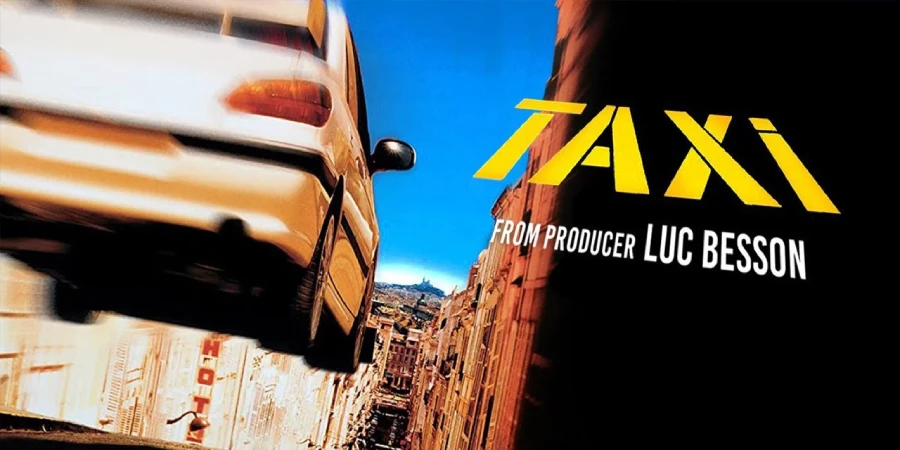

Luc Besson’s Taxi (1998) is a high-speed French action-comedy about a pizza-delivery driver turned taxi driver who ends up assisting a clumsy police officer in catching a team of professional criminals. Energetic, funny, and unapologetically chaotic, Taxi became a huge success in France and spawned multiple sequels and adaptations.
Detailed Summary
The Fastest Pizza Delivery Guy in Marseille
The film introduces Daniel Morales, a gifted motorbike deliveryman in Marseille with one dream: to become a professional racer. Tired of delivering pizzas, he quits his job and becomes a taxi driver. But this isn’t just any taxi; Daniel has fitted it with absurd, race-level modifications capable of reaching extreme speeds.
A Clueless Cop Needs Help
Meanwhile, we meet Émilien, a well-meaning but incompetent police officer who is desperate to solve a major case involving a group of German bank robbers terrorizing the city. After an embarrassing taxi ride with Daniel that ends with a speeding citation, Émilien decides to strike a deal: help the police catch the criminals, or lose his license forever.
A Race Against the Robbers
Daniel reluctantly agrees. Together, this unlikely duo begins tracking the gang. Their plan involves using Daniel’s extraordinary driving skills to anticipate the robbers’ escape routes. Along the way, their dynamic evolves into genuine friendship. Their interactions drive much of the movie’s humor, especially Émilien’s complete lack of driving ability.
The Big Chase
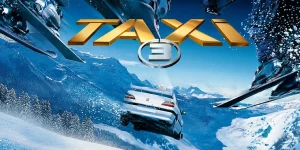
The robbers strike again, and Daniel joins the police operation. Using his extremely modified Peugeot 406, he speeds through Marseille in a masterfully executed chase scene. His precision driving, combined with Émilien’s guidance via radio, corners the robbers on a coastal road. Daniel pulls off a high-risk maneuver that blocks their escape, leading to their arrest.
Movie Ending
At the end, the robbers are captured thanks to Daniel’s extraordinary driving. Although he is technically a lawbreaker due to his illegal modifications and reckless driving, the police decide not to take his license, recognizing that without him, they would never have captured the dangerous gang. Daniel is celebrated as a hero, even though he technically broke half the traffic laws of Marseille in a single day.
Émilien earns respect within the police department and finally manages to impress Petra, the officer he secretly loves. Meanwhile, Daniel gets back to pursuing his racing dreams, solidifying the idea that although his life is chaotic, it is headed in the right direction. The movie ends humorously, with Daniel still driving insanely fast, hinting that he’ll never follow the rules completely.
Are There Post-Credits Scenes?
No. Taxi (1998) does not include any post-credits scenes or teasers. The movie concludes at the end of the credits.
Type of Movie
Taxi is a fast-paced action-comedy with strong car-chase sequences and a comedic police-and-robber premise that leans heavily on character chemistry and vehicular stunts.
Cast
- Samy Naceri as Daniel Morales
- Frédéric Diefenthal as Émilien
- Marion Cotillard as Lilly (Daniel’s girlfriend)
- Manuela Gourary as Émilien’s mother
- Emma Wiklund as Petra
- Bernard Farcy as Commissioner Gibert
Film Music and Composer
The soundtrack is a mix of energetic hip-hop and techno which reflects the late-90s era of French urban culture. Akhenaton (from the rap group IAM) composed parts of the music, helping the movie capture Marseille’s street style and youthful tone.
Filming Locations
The movie was shot primarily in Marseille, France, a coastal city famous for its steep streets, wide avenues, and chaotic traffic. These elements are crucial to the film, allowing for long, high-speed chase sequences and instantly recognizable local scenery that became part of the film’s identity.
Awards and Nominations
- Won César Award for Best Sound (1999)
- Nominated for Best Film Editing at the César Awards
- The film’s popularity launched a franchise with several sequels and a U.S. remake.
Behind the Scenes Insights
- Many car stunts were performed by professional drivers using real modified Peugeot vehicles, not CGI.
- Luc Besson wrote the film but did not direct; he oversaw production and action planning.
- The street chase sequences required special road blocking permissions from Marseille authorities, a rarity at the time.
- Some scenes had to be reshot because local residents kept running into the street to watch the car stunts.
Inspirations and References
The film draws inspiration from the French street racing culture of the ’90s and classic buddy-cop comedies. It also showcases France’s affection for Peugeot cars, presenting them almost as heroes of the story.
Alternate Endings and Deleted Scenes
- A longer version of the final chase was filmed but shortened to maintain pacing.
- A comedic scene involving Daniel teaching Émilien how to drive at high speed was deleted because it shifted too much focus away from the main investigation.
Book Adaptations and Differences
The film is not based on a book. However, after the movie’s success, novelizations and comic adaptations were later published.
Memorable Scenes and Quotes
Key Scenes
- Daniel transforms his taxi into “race mode” for the first time.
- Émilien panicking in the passenger seat as Daniel speeds through Marseille streets.
- The rooftop surveillance scene where Daniel and Émilien bond awkwardly.
- The final chase leading to the German gang’s capture.
Iconic Quotes
- “Don’t touch the car.” — Daniel
- “I’m a cop, not a driver!” — Émilien
- “If you can’t catch them, recruit someone who can.” — Commissioner Gibert
Easter Eggs and Hidden Details
- Daniel’s number plate changes between racing and normal driving shots, a playful continuity joke.
- The film includes subtle Peugeot brand placement, hinting at a partnership.
- One of the robbers’ vehicles uses racing techniques normally seen in rally championships, nodding to real motorsport culture.
Trivia
- Taxi was such a sensation in France that it inspired four sequels and a TV series.
- The U.S. version of Taxi (2004) starred Queen Latifah and Jimmy Fallon but was poorly received.
- Marion Cotillard, who plays Lilly, later won an Oscar, making her the movie’s most internationally successful star.
Why Watch?
Because Taxi combines clever comedy with real stunt driving. It delivers fast pacing, charismatic characters, and authentic action without CGI overload. It’s a perfect watch for anyone who prefers practical effects, smart humor, and stylish European car chases.
Director’s Other Works
Luc Besson did not direct Taxi but produced and wrote it. He is the creative force behind it. His notable directed films include:
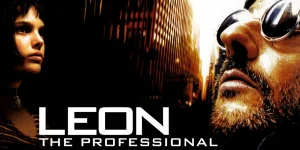
- Léon: The Professional (1994)
- The Fifth Element (1997)
- La Femme Nikita (1990)
- Lucy (2014)
- Valerian and the City of a Thousand Planets (2017)
Recommended Films for Fans
- Taxi 2 (2000)
- Taxi 4 (2007)
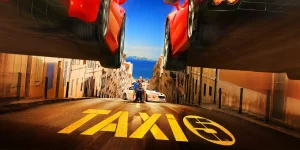
- Taxi 5 (2018)
- Léon: The Professional (1994)
- The Fifth Element (1997)
- District B13 (2004)
- Ronin (1998)
- Gone in 60 Seconds (2000)