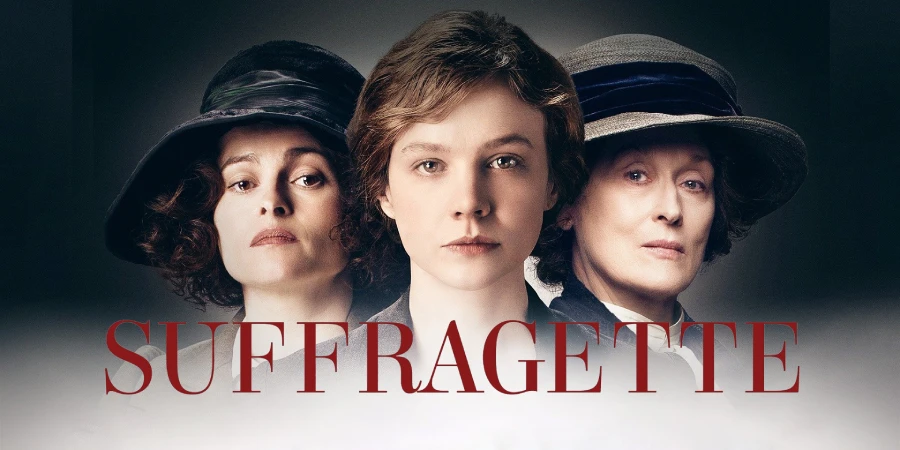

Suffragette (2015) is a historical drama that tells the story of ordinary women who took extraordinary risks to win the right to vote in early 20th-century Britain. Rather than focusing on famous leaders alone, the film centers on working-class women whose lives were deeply affected by inequality. It is grounded, emotional, and deliberately uncomfortable at times—by design.
Detailed Summary
Life Without a Voice
The film is set in London, 1912, at the height of the British suffrage movement. We follow Maud Watts, a young laundress who has worked since childhood. Her life is defined by long hours, unsafe conditions, low pay, and systemic abuse, both at work and at home. Politics is not her concern—survival is.
First Contact with the Suffragettes
Maud’s path crosses with women involved in the growing suffrage movement, particularly Violet Miller and Edith Ellyn. What begins as accidental exposure quickly becomes personal when Maud witnesses police brutality against peaceful protesters. She is asked to testify before Parliament, not as an activist, but as a working woman speaking truthfully about her life.
Radicalization Through Injustice
When peaceful protest leads nowhere, the movement escalates. Under the leadership of Emmeline Pankhurst, the suffragettes turn to civil disobedience: window-smashing, arson, and hunger strikes. Maud is arrested multiple times, force-fed in prison, fired from her job, and increasingly alienated from her husband.
This section of the film makes one thing painfully clear: activism has a cost, and that cost is often paid in isolation.
Surveillance and Betrayal
The state responds harshly. Suffragettes are monitored, infiltrated, and beaten. Inspector Steed, representing the government, follows Maud closely, turning her life into a constant state of fear. The movement is portrayed not as romantic rebellion, but as exhausting, dangerous resistance.
Motherhood and Loss
One of the most devastating aspects of Maud’s journey is her relationship with her son. As her activism intensifies, her husband uses the law to take the child away. This moment crystallizes the film’s core argument: women are denied political rights but still expected to be perfect mothers and wives.
Movie Ending
The film builds toward a real historical event: the 1913 Epsom Derby. The suffragettes plan a public action to force the nation—and the world—to pay attention. Maud believes she will take part, but at the last moment, it is Emily Wilding Davison who steps onto the racetrack.
Emily is struck by the King’s horse and later dies from her injuries.
Her death is not portrayed as heroic spectacle, but as tragic and shocking. The final sequence shows Emily’s funeral procession, attended by thousands of women dressed in white, marching silently through London. The image is powerful and mournful, emphasizing that progress was purchased with real lives, not symbolic gestures.
The film ends with on-screen text listing the years women gained the right to vote in different countries, reminding the audience that this struggle was global—and in some places, still unfinished. Maud’s personal fate is left understated, reinforcing the idea that the movement mattered more than any single individual.
Are There Post-Credits Scenes?
No. Suffragette does not include any post-credits or mid-credits scenes. The film ends definitively with historical context and allows the weight of the story to linger.
Type of Movie
Suffragette is a historical drama grounded in social realism. It blends political history with personal tragedy, focusing on emotional authenticity rather than large-scale spectacle.
Cast
- Carey Mulligan – Maud Watts
- Helena Bonham Carter – Edith Ellyn
- Anne-Marie Duff – Violet Miller
- Meryl Streep – Emmeline Pankhurst
- Ben Whishaw – Sonny Watts
- Brendan Gleeson – Inspector Steed
Film Music and Composer
The score was composed by Alexandre Desplat, who delivers a restrained and somber soundtrack. The music avoids melodrama, instead reinforcing tension and emotional fatigue, mirroring the suffragettes’ lived reality.
Filming Locations and Their Importance
- London, UK – Primary setting, recreating industrial districts and government buildings
- Bethnal Green & East London – Used to represent working-class neighborhoods, grounding the story in realism
- Parliamentary interiors (recreated) – Emphasize the physical and symbolic distance between lawmakers and working women
These locations reinforce the film’s central theme: power is centralized, while suffering is widespread.
Awards and Nominations
- Nominated for BAFTA Best British Film (2016)
- Carey Mulligan received several Best Actress nominations from critics’ associations
- Widely recognized for its historical importance rather than awards dominance
Behind the Scenes Insights
- The production team consulted historians to ensure accuracy in protest methods and prison conditions
- Carey Mulligan described the role as one of the most emotionally draining of her career
- Meryl Streep filmed her scenes in just a few days but insisted on portraying Pankhurst as a symbol, not a savior
- Real suffragette speeches were incorporated into the script almost verbatim
Inspirations and Historical Sources
- Based on real events from the British suffrage movement (1903–1918)
- Inspired by letters, court records, and prison accounts of suffragette women
- Emphasizes lesser-known working-class activists rather than iconic figures alone
Alternate Endings and Deleted Scenes
No alternate ending has been released. Some deleted scenes reportedly expanded Maud’s relationship with her son, but were cut to maintain narrative focus on collective struggle rather than individual reconciliation.
Book Adaptation and Differences
The film is not adapted from a single book, but from historical research. Unlike many historical dramas, it avoids romantic subplots or fictionalized triumphs, choosing a more fragmented and realistic structure.

Memorable Scenes and Quotes
Key Scenes
- Maud’s testimony before Parliament
- The first force-feeding scene in prison
- The Epsom Derby protest
- The funeral march finale
Iconic Quotes
- “I’d rather be a rebel than a slave.”
- “We break windows, we burn things, because war is the only language men listen to.”
Easter Eggs and Hidden Details
- Real suffragette slogans appear briefly on banners and walls
- The funeral scene mirrors actual historical photographs
- Costume colors subtly shift from muted tones to white as activism deepens
Trivia
- The film was partially shot in the same areas where real suffragette protests occurred
- Meryl Streep’s character appears for less than five minutes but anchors the movement historically
- Some protest chants are taken directly from police transcripts
Why Watch Suffragette?
Because it shows that rights are not given—they are taken, often at immense personal cost. It’s a film that refuses comfort and asks the viewer to confront how fragile progress can be.
Director’s Other Movies
- She Said (2022)
- Lore (2012)
Recommended Films for Fans
- Selma (2014)
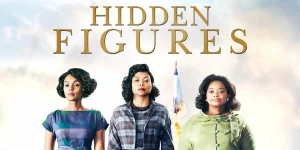
- Hidden Figures (2016)
- North Country (2005)
- The Post (2017)