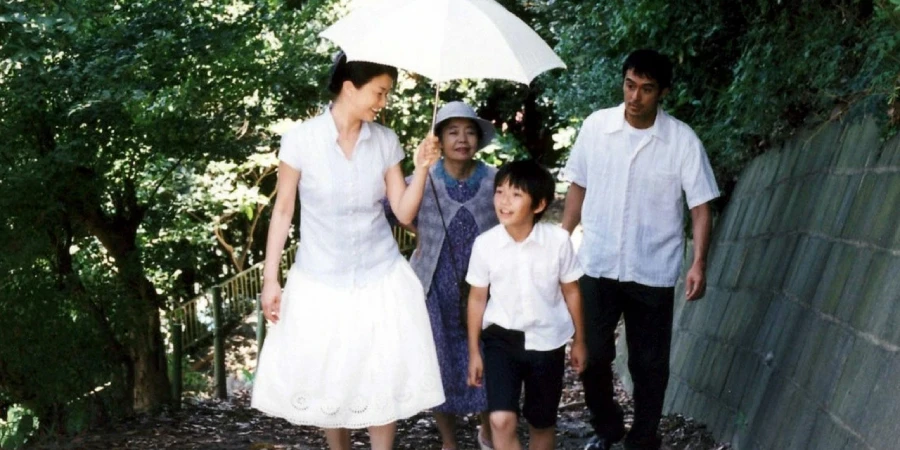

Still Walking (2008), directed by Hirokazu Kore-eda, is a quiet yet emotionally powerful Japanese drama that turns an ordinary family gathering into a profound meditation on loss, memory, and the slow passage of time. This is not a film driven by plot twists, but by glances, pauses, silences, and what remains unsaid.
Detailed Summary
The Family Reunion
The film takes place over roughly 24 hours, centered on the Yokoyama family’s annual gathering. The occasion is the commemoration of Junpei, the eldest son who drowned twelve years earlier while saving another child. His death still quietly defines the family dynamic.
Parents Kyohei (a retired doctor) and Toshiko (a devoted but sharp-tongued mother) host the gathering at their traditional home. Their surviving son Ryota, his wife Yukari, and her young son Atsushi arrive, along with Ryota’s sister Chinami and her family.
From the beginning, Kore-eda establishes a tone of gentle normalcy, where conversations about food, weather, and daily routines coexist with a heavy emotional undercurrent.
Subtle Conflicts and Emotional Distance
Ryota is clearly uncomfortable. He feels like a disappointment to his father, who had hoped he would follow in his footsteps as a doctor. Instead, Ryota works as an art restorer, a job Kyohei subtly belittles. The father-son tension is never explosive, but constantly present, simmering beneath polite conversation.
Toshiko, meanwhile, appears warm and welcoming, but reveals a quiet cruelty. She invites the man Junpei died saving to the memorial dinner every year, forcing him to relive his guilt. This ritual is presented calmly, yet it feels emotionally unsettling.
Memory, Food, and the Weight of Tradition
Food plays a major role. The preparation of corn tempura, the sharing of meals, and the repetition of old recipes emphasize how traditions persist even when people change or disappear. These moments are deceptively simple but emotionally loaded.
Yukari, Ryota’s wife, is an outsider to the family history. Through her eyes, we see how grief has hardened into routine. Atsushi, her son from a previous marriage, is accepted politely but never fully embraced, mirroring Ryota’s own sense of emotional exclusion.
Time Passes, Nothing Is Resolved
No dramatic confrontation occurs. Instead, the day slowly winds down. Old resentments remain unresolved. The parents cling to the memory of Junpei, while Ryota struggles with living in his shadow. The family goes to Junpei’s grave, returns home, eats again, and eventually says goodbye.
Life, as the title suggests, simply keeps going.
Movie Ending
The ending jumps forward in time through on-screen text, quietly devastating in its simplicity.
Toshiko passes away several years later. Kyohei becomes increasingly withdrawn and eventually moves into a care facility. Chinami later dies unexpectedly, leaving Ryota as the last remaining child.
In the final scenes, Ryota narrates that he now visits his parents’ home with his own family, repeating the same rituals he once resented. He realizes, too late, that he never truly understood his parents while they were alive.
The film ends without catharsis or closure. The central emotional realization is painfully human: we often recognize love, regret, and loss only after time has made it irreversible. The cycle continues, unchanged.
Are There Post-Credits Scenes?
No. Still Walking does not include any post-credits or mid-credits scenes. The film ends definitively with its final reflective moment, reinforcing its theme of quiet finality.
Type of Movie
Still Walking is a family drama and slice-of-life film that focuses on emotional realism rather than plot. It explores grief, generational conflict, and memory through everyday interactions rather than dramatic events.
Cast
- Hiroshi Abe as Ryota Yokoyama
- Yoshio Harada as Kyohei Yokoyama
- Kirin Kiki as Toshiko Yokoyama
- Yui Natsukawa as Yukari
- You as Chinami
- Shohei Tanaka as Atsushi
The performances are intentionally restrained, making the emotions feel earned rather than performed.
Film Music and Composer
The film uses minimal music, relying heavily on ambient sounds and silence. When music does appear, it features classical pieces, including works by Franz Schubert, which underscore the reflective, melancholic tone without overwhelming it.
Filming Locations
- Yokohama, Japan – The primary setting
- Traditional Japanese residential homes
The house itself is central to the story. Its narrow hallways and shared spaces visually reinforce emotional closeness and confinement. The realism of the location grounds the film in everyday life, making the emotional impact stronger.
Awards and Nominations
- Best Film – Asia Pacific Screen Awards (Winner)
- Best Director – Blue Ribbon Awards (Winner)
- Best Supporting Actress (Kirin Kiki) – Hochi Film Awards
- Official Selection – Toronto International Film Festival
Though not an awards-heavy film globally, it is widely regarded as one of the most important Japanese films of the 2000s.
Behind the Scenes Insights
- Kore-eda partially based the story on his own family experiences
- Many scenes were rehearsed like stage plays to capture natural rhythm
- Kirin Kiki improvised several lines that remained in the final cut
- The director encouraged actors to underplay emotions rather than express them openly
Inspirations and References
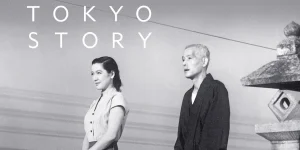
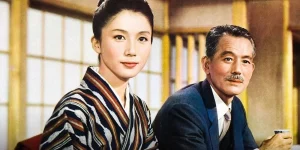
- Kore-eda cited Yasujirō Ozu, especially Tokyo Story, as a major influence
- Inspired by Kore-eda’s documentary background
- Themes reflect post-war Japanese family structures and expectations
Alternate Endings and Deleted Scenes
There are no known alternate endings. Some domestic scenes were trimmed for pacing, but Kore-eda has stated that the released version reflects his intended structure and emotional rhythm.
Book Adaptations and Differences
The film is not directly based on a novel, but Kore-eda later adapted it into a novelization himself, adding internal monologues and extended reflections that are only implied in the film.

Memorable Scenes and Quotes
Key Scenes
- The family preparing corn tempura together
- The uncomfortable dinner with the man Junpei saved
- Ryota silently watching his father from another room
- The final time jump revealing the fate of the family
Iconic Quotes
- “People can’t choose the family they’re born into.”
- “Time just passes. That’s all it does.”
Easter Eggs and Hidden Details
- The same house layout appears in later Kore-eda films
- Subtle camera placements echo Ozu’s signature low-angle shots
- Junpei is never shown in flashback, reinforcing his absence
Trivia
- The title refers to both physical walking and emotional continuation
- Kirin Kiki considered this one of her most personal roles
- Many meals shown were actually cooked and eaten during filming
- Kore-eda avoided background music during emotional scenes intentionally
Why Watch?
If you value emotion over spectacle, Still Walking is essential viewing. It captures how families hurt and love each other not through arguments, but through routine, habit, and silence. It’s a film that lingers long after it ends, especially for viewers who have experienced loss or complicated family relationships.
Director’s Other Works
- After Life (1998)
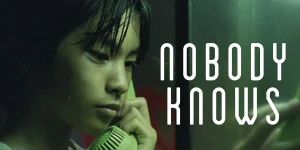
- Nobody Knows (2004)
- Like Father, Like Son (2013)
- Our Little Sister (2015)
- Shoplifters (2018)
- Broker (2022)